

On a week when Dallas leaders were also weighing street repairs and a tight budget, the City Council moved a long delayed public safety project a step closer to ground. Members cleared $20 million for the next phase of work on the Dallas police academy and set the stage for a larger request. Voters will be asked to approve additional bond funding that would raise the new sum sought to $82 million. The decision does not pour concrete by itself. It does tell recruits, neighbors, and taxpayers that the city intends to replace an aging training home with a campus built for the department Dallas says it wants.
A council vote that is also a political signal

Bond programs rarely arrive as pure engineering. They arrive as statements about what a city is willing to carry on its tax rolls and what it is willing to postpone. Clearing $20 million for the next phase is smaller than the full price of a modern training campus, yet it is large enough to change the conversation. Design work, site preparation, and early construction spending can lock in a direction long before a ribbon is cut. Council members who voted to advance the project were not only authorizing invoices. They were telling the public that police training belongs near the front of the capital list.
That signal matters in a city where public safety debates often split between people who want more officers on patrol and people who want those officers trained, supervised, and held to a higher standard. A new academy does not settle that argument. It does force both sides to talk about the same building. Supporters can point to classrooms, driving pads, and scenario rooms as tools for better policing. Skeptics can ask whether bricks and mortar will change culture, or whether the money would do more on streets, in housing courts, or in mental health response. The council chose, for now, to keep the project moving.
What the first twenty million is meant to do

Early money in a capital project is easy to misunderstand. It can look like a down payment on a finished campus when it is really the cost of making a finished campus possible. Site work, utility relocation, design refinement, and the first construction packages consume cash before a visitor can see a completed hall. City staff typically use this phase to reduce surprises: soil conditions, drainage, access roads, and the fit between a training schedule and a construction schedule. Delay at this stage is cheaper than delay after steel is up.
For the Dallas police academy, that sequencing is the point. Leaders have argued that the existing training setup no longer matches the volume or the variety of instruction a large department requires. Moving from concept to a funded next phase lets planners test whether the footprint, the traffic plan, and the operating budget can survive contact with real bids. If costs climb, the council will have to decide whether to shrink the program, seek more debt, or slow the calendar. None of those choices is painless. Making them with partial information is worse.
The eighty two million question on the ballot
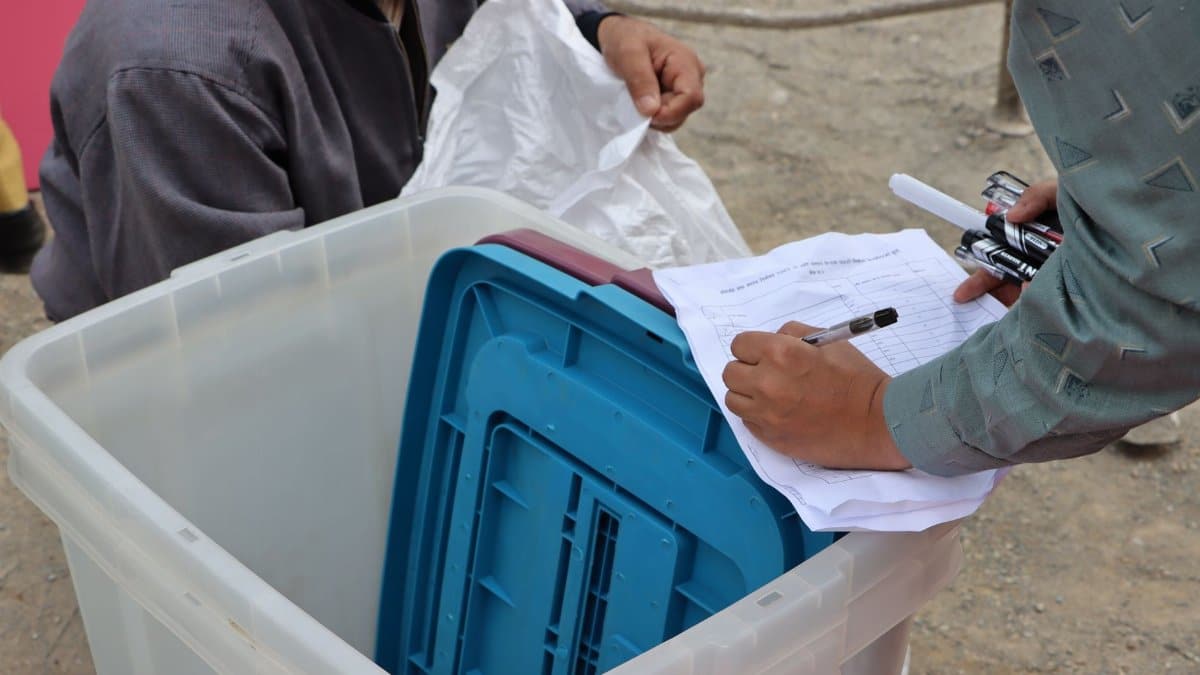
The larger figure, $82 million in additional bond funding, is the number residents will actually feel. Bonds are not free money. They are a promise to repay lenders over many years, usually through property taxes or other dedicated revenue. Voters who approve the package are agreeing that a training campus is worth that long obligation. Voters who reject it are not necessarily rejecting policing. They may be rejecting the price, the timing, or the trust that city hall will deliver what the pamphlet describes.
Dallas has asked this kind of question before, on streets, parks, libraries, and flood control. Public safety bonds tend to draw stronger emotion and weaker patience for fine print. A clear ballot explanation will matter. Residents deserve to know what the $82 million covers, what it does not cover, and which costs will return later as operating expenses: instructors, utilities, maintenance, vehicles, and the overtime that appears whenever a department tries to train and patrol at the same time. The construction vote and the operating budget are different decisions. Treating them as one sales pitch is how projects lose public confidence after the election.
An old training home and a newer job
Police work in a large American city is no longer a single skill learned in a few months and polished on the street. Recruits still need law, tactics, driving, and firearms. They also need practice in de escalation, crisis recognition, report writing that will hold up in court, and the judgment to know when not to escalate a contact. None of that is new as a slogan. It is new as a space requirement. Scenario villages, simulation rooms, and flexible classrooms take land and money that older academies were never designed to provide.
The case for replacing the Dallas police academy rests on that mismatch. An outdated building can still produce sworn officers. It can also signal, to the people inside it, that the city is asking for twenty first century performance inside a twentieth century shell. Instructors improvise. Classes double up. Driving and fitness schedules collide with neighborhood limits. Those frictions do not make headlines until a training failure becomes a street failure. Investing before that moment is the unglamorous version of reform.
Recruitment is a competition, not a slogan

Departments across the country are struggling to hire and keep officers. Pay matters. So do schedules, supervision, and whether a recruit believes the job is honorable and survivable. A training campus will not fix compensation by itself. It can change the first impression. Applicants compare agencies the way students compare campuses. They notice whether the city that wants their twenties and thirties has invested in the place where those years begin.
Dallas competes with suburbs that can offer quieter calls and newer facilities, and with other big cities that are also rebuilding training sites. If the academy project slips for another budget cycle, the loss will not show up as a single empty classroom. It will show up as a thinner applicant pool and a training pipeline that cannot replace retirements. That is a public safety problem even for residents who rarely think about architecture. Response times and investigation quality depend on people who were trained somewhere, by someone, with enough time to learn the job before they are asked to do it alone.
Neighbors, traffic, and the right to be heard
Every campus has a border. The people who live beside a future academy will live with construction dust, shift changes, siren practice, and the ordinary traffic of a workplace that runs early and late. Their questions are not obstacles to be managed out of the process. They are part of whether the project is a civic asset or a burden dropped on one corner of the map. Access roads, lighting, noise limits, and a real schedule for community meetings belong in the same packet as the bond language.
Dallas has learned, sometimes expensively, that neighbors remember when outreach is a formality. A police training site carries an extra charge. It is a symbol of authority as well as a construction site. If nearby residents feel unheard, the building will open under a cloud that no architect can design away. The council’s $20 million step should include money and time for that listening, not only for dirt work. Trust is cheaper to build before the fence goes up.
What a building can and cannot repair
There is a temptation, in capital campaigns, to treat a new facility as proof of a new culture. It is not. Walls do not write use of force policy. Classrooms do not choose supervisors. A beautiful campus can still graduate officers who were rushed, poorly mentored, or trained to see the public as a threat rather than the people they serve. Residents who care about accountability are right to ask what curriculum, what scenario work, and what outside review will live inside the new space.
They are also right to notice that bad facilities make good training harder. Instructors cannot run realistic exercises in rooms that do not fit the exercise. Recruits cannot learn patience in a schedule crushed by space shortages. The honest claim for this project is modest and still important: a sound Dallas police academy gives the department a better chance to teach the job it says it believes in. Whether leaders use that chance is a separate test, one that bond voters cannot complete at the polls and must keep watching after the doors open.
If voters decline the larger sum

A no vote would not erase the $20 million already directed to the next phase, but it would change the end of the story. The city might phase the campus more slowly, cut amenities that trainers consider essential, or return later with a revised ask. Each path has a cost. Slower construction means more years in the old setup. A smaller campus can lock in the very limits the project was meant to escape. Another campaign, soon after a rejection, can look like city hall did not hear the answer.
Supporters should say this plainly before election day. Overpromising a complete transformation, then delivering a partial shell, is how bond trust erodes for the next library and the next drainage project as well. Opponents should be equally plain about the alternative they prefer: continued training in inadequate space, a different public safety investment, or a cheaper design with named tradeoffs. “No” is a complete sentence only if the city is ready to live with what no produces.
The measure that will outlast the groundbreaking

Years from now, few residents will remember the exact week the council released the first $20 million. They will remember whether the campus opened on something close to the promised budget, whether it produced officers who could do a hard job without becoming careless or cruel, and whether the $82 million, if approved, bought more than a photo opportunity. That is a high standard. It is the right one for a project this large.
Dallas can build a training home worthy of the work it asks people to do. It can also build an expensive monument to a debate it never finished. The difference will not be settled by architecture alone. It will be settled by instructors given time, by leaders willing to be evaluated, and by a public that treats the academy as a civic obligation rather than a campaign prop. The council has moved the project forward. The voters, and then the years after the vote, will decide whether forward was the honest direction.