

On a gray morning in Center City, the elevators at the Comcast towers still moved with their usual hush, but the talk on the sidewalks had shifted. People who once compared notes on streaming launches and broadband upgrades were asking who might still have a desk when the quarter ended. The phrase Comcast Philly layoffs moved from private worry into public record after a state filing described more than 600 job cuts at the company headquarters. For a city that has treated the cable and broadband giant as both employer and civic symbol, the notice carried a weight that went beyond a single human resources memo.
What the state notice puts on paper

Large employers in Pennsylvania must give advance warning when a mass layoff is coming, and that paperwork is often the first hard number the public sees. Reporting in the Philadelphia Inquirer described a filing that put more than 600 headquarters jobs on the line. The cuts are tied to a companywide push to spend less and to rebuild how work gets done, with artificial intelligence named as part of the redesign. Executives have framed the overhaul as a transformation whose cost is expected to top 1 billion dollars.
A notice is not the same thing as a finished org chart. It does not tell a producer, an engineer, or an analyst whether a particular team survives. It does tell the city that the reduction is large enough to trigger formal disclosure, and that the timing is close enough that people should prepare. In headquarters work, preparation often means updating a resume while still showing up for meetings that may not exist next month.
Why a headquarters cut hits Philadelphia differently

Comcast is not a branch plant on the edge of a highway. Its towers sit in the middle of the business district, and for years the company has been one of the most visible private employers in the region. A reduction of this size does not empty a factory floor in a single afternoon. It thins out floors of offices, conference rooms, and the small economy that depends on people eating lunch nearby, riding regional rail, and spending a paycheck in the city.
That is why Comcast Philly layoffs read locally as more than a line in a national earnings story. Philadelphia has spent decades trying to keep corporate decision makers inside the city limits. When those decision makers shrink the staff around them, civic leaders hear a question they would rather not answer: if the flagship employer is getting leaner, what does that mean for tax revenue, for transit ridership, and for the idea that Center City is a place where ambitious careers still begin?
A transformation built around software and speed

Companies rarely describe layoffs as a retreat. They describe them as a redesign. In this case the public language points to cost cutting paired with heavier use of automated tools. Customer service scripts, internal reporting, marketing tests, and some technical chores can be handed in part to software that did not exist in usable form a few years ago. Leaders argue that the remaining staff can move faster if routine work is stripped away.
The argument is familiar across media, telecom, and tech. It is also incomplete. Software does not negotiate a franchise deal, repair a neighborhood node after a storm, or decide which local news story deserves a crew. Headquarters jobs sit in the messy middle, where judgment, relationships, and institutional memory still matter. Cutting those roles may lower a quarterly expense. It can also leave fewer people who know why a process exists in the first place.
The billion dollar bill for getting smaller

A layoff is often sold as savings. The near term reality is frequently the opposite. Severance, benefits continuation, unused vacation, outplacement, and the legal work around a large reduction all show up as charges. When a company says a transformation may cost more than 1 billion dollars, it is acknowledging that shrinking is expensive before it is profitable.
Investors tend to look past that bill if they believe the smaller organization will produce higher margins later. Employees look at the same bill and see a different ledger: their income, their health coverage, and the months it may take to find comparable work in a city where headquarters jobs are not infinite. Both views can be true at once. The tension between them is the real story of a cost program, not the slogan attached to it.
What workers hear in the weeks before a cut
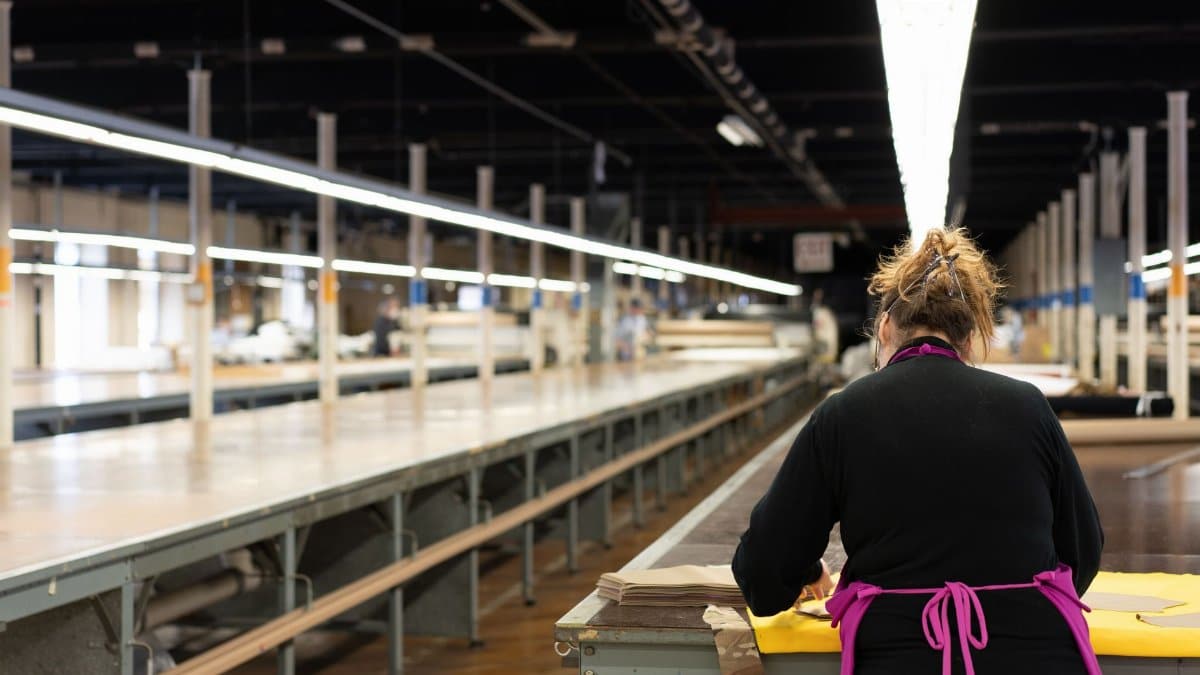
People inside a large company rarely learn their fate from a newspaper first, but they often learn the scale that way. Managers hold meetings that say little. Internal messages praise resilience. Recruiters outside the building start getting quieter inquiries from addresses they recognize. None of that is unique to one employer. It is the ordinary weather of a modern reduction in force.
The harder part is the unevenness. Some teams will be told they are essential to the new model. Others will be told their work can be done with fewer people and better tools. A third group will wait, which is its own kind of strain. Journalists covering labor have long noted that uncertainty can be as corrosive as the layoff itself, because it freezes decisions about mortgages, childcare, and whether to stay in the region.
How a city absorbs a headquarters shock

Six hundred jobs will not collapse the Philadelphia economy. The metro area employs well over a million people, and many of those who leave Comcast will find work at hospitals, universities, banks, startups, or public agencies. Still, headquarters roles often pay more than the regional median, and they cluster. When they disappear together, the effect shows up in apartment listings, in restaurant covers at lunch, and in the confidence of younger workers who moved here for a brand name on a resume.
City government has limited tools. It cannot order a private company to keep a department. It can make permitting faster, keep transit reliable, and support training programs that help displaced workers translate corporate skills into other sectors. Those steps matter, but they do not replace a paycheck in the month the severance clock starts.
The uneasy promise of new kinds of work

Artificial intelligence is easy to cast as a villain in a layoff story and just as easy to cast as a savior in an investor presentation. The more honest account is narrower. Some tasks will vanish or shrink. Some tasks will change shape, demanding people who can supervise tools, check their errors, and explain results to colleagues who do not trust a screen. A few tasks may grow, especially where human contact is the product.
That shift does not automatically create a job for every person whose old role is retired. Retraining helps some workers and misses others, particularly those late in a career or tied to a specific craft that the new org chart no longer funds. A spiritual reading of work, if one is useful here, starts with dignity rather than destiny. A person is not a software feature. A city that forgets that will measure the wrong things when the next filing arrives.
What investors are really pricing

Wall Street has rewarded companies that show discipline on costs, especially in businesses where subscriber growth has slowed. Cable and broadband face competition from wireless home internet and from households that are pickier about streaming bundles. A leaner headquarters can look, on a slide, like proof that management is awake to those pressures.
Slides do not capture service failures, regulatory fights, or the loss of people who knew how to keep a complicated company from tripping over itself. If customer complaints rise while payroll falls, the savings can leak away in credits, truck rolls, and reputation. The market will eventually price that too. The lag between the announcement and the evidence is where optimism and risk live side by side.
A civic symbol under quieter pressure

For a generation, the Comcast towers have functioned as a skyline argument: Philadelphia can hold a national company, not only host its warehouses. Skyline arguments are fragile. They depend on headcount, on local philanthropy, on intern classes, and on the simple fact of people walking in each morning. A smaller headquarters does not erase the towers. It does change what they symbolize, from expansion to maintenance.
Maintenance is not failure. Many mature companies spend years in that posture, returning cash to shareholders while investing just enough to hold their ground. The civic question is whether maintenance at the top still supports a ladder underneath. If entry level and midcareer roles vanish faster than new ones appear, the symbol becomes a postcard rather than a pathway.
Questions employees are entitled to ask

Workers facing Comcast Philly layoffs deserve plain answers, not a fog of transformation language. Which roles are ending, and which are being redesigned? What severance formula applies, and for how long does health coverage continue? Are internal transfers real, or are they a courtesy list that rarely converts? Will artificial intelligence tools be used to rank people, and if so, who audits those rankings for error and bias?
Those questions are practical, and they are also moral. A company can cut costs and still treat people as adults. Clear timelines, accurate lists, and managers who do not hide behind vague emails are the minimum. Anything less teaches the remaining staff a lesson the company may not intend: loyalty here is a one way street.
How peer companies have walked this road

Telecom and media firms have been through versions of this cycle before. Newsrooms shrank as advertising moved online. Phone companies reduced retail and back office staff as customers shifted to apps. Tech firms hired furiously and then reversed course when interest rates rose and growth cooled. The pattern is not destiny, but it is a warning against magical thinking. A tool that saves time in one department can become an excuse to hollow out three others.
The firms that handled reductions with less lasting damage tended to do unglamorous things. They named the business problem in specific terms. They protected roles that customers actually feel. They offered real placement help, not a portal no one uses. They accepted that culture takes a hit and did not pretend otherwise in the all hands meeting. Philadelphia can watch whether this chapter follows that better script or the cheaper one.
What families do with the news at the kitchen table

A headquarters layoff is a household event before it is a market event. Couples recalculate childcare. Adult children ask whether a parent will stay in the region. People who finally felt settled after the pandemic years confront another round of instability. Faith communities, neighborhood groups, and unions where they exist often become the first honest audience, because they do not need the story polished for investors.
There is no uplifting shortcut through that table. There is, sometimes, a clearer sense of what work was for. Not the brand on the badge, but the craft, the colleagues, and the bills the job quietly paid. Holding those things in view does not stop a reduction. It does keep the person larger than the filing that listed them as a number.
What the next quarter will reveal

The coming months will test the official story. If the company fills some openings even as it cuts others, the change is a reshuffle, painful but bounded. If departures spread into contractors and vendors, the footprint is larger than the notice. If service metrics slip, the savings thesis weakens. If new roles appear that genuinely require different skills, the promise of a redesigned workplace gains evidence.
Readers should watch the language as closely as the numbers. When leaders say transformation, ask what work stops, what work continues, and who is accountable when the software is wrong. When they say the program will cost more than 1 billion dollars, ask what employees receive from that sum and what shareholders expect in return. Precision is a form of respect.
A city that has seen this weather before

Philadelphia knows corporate weather. Mills closed. Banks merged. Publishers consolidated. Each time, the city was told that efficiency was the price of survival, and each time some of that was true and some of it was convenient. The Comcast Philly layoffs belong in that longer line, with a modern twist: the efficiency is now partly automated, and the headquarters doing the cutting is also the skyline the city likes to photograph.
None of that requires cynicism as a permanent address. It requires memory. A place that remembers past cuts is less likely to treat the current one as either apocalypse or minor paperwork. It can demand fairness in the process, support people who are leaving, and still argue for an economy in which a headquarters job remains a plausible future for someone growing up a few miles from those towers.
Where the story goes from here

The filing starts a clock. It does not finish the argument about what Comcast owes the city that helped make it a national name, or what workers owe a company that is rewriting their jobs in software. Those arguments will be settled in severance agreements, in hiring data, in service quality, and in whether people who leave can build a next chapter without leaving the region.
Until then, the most accurate sentence is also the plainest. Comcast Philly layoffs are not a rumor anymore. They are a plan with a price, a headcount, and a set of human consequences that no transformation memo can fully absorb. The towers will still catch the evening light. The question is how many of the people who used to work inside them will be there to see it.