
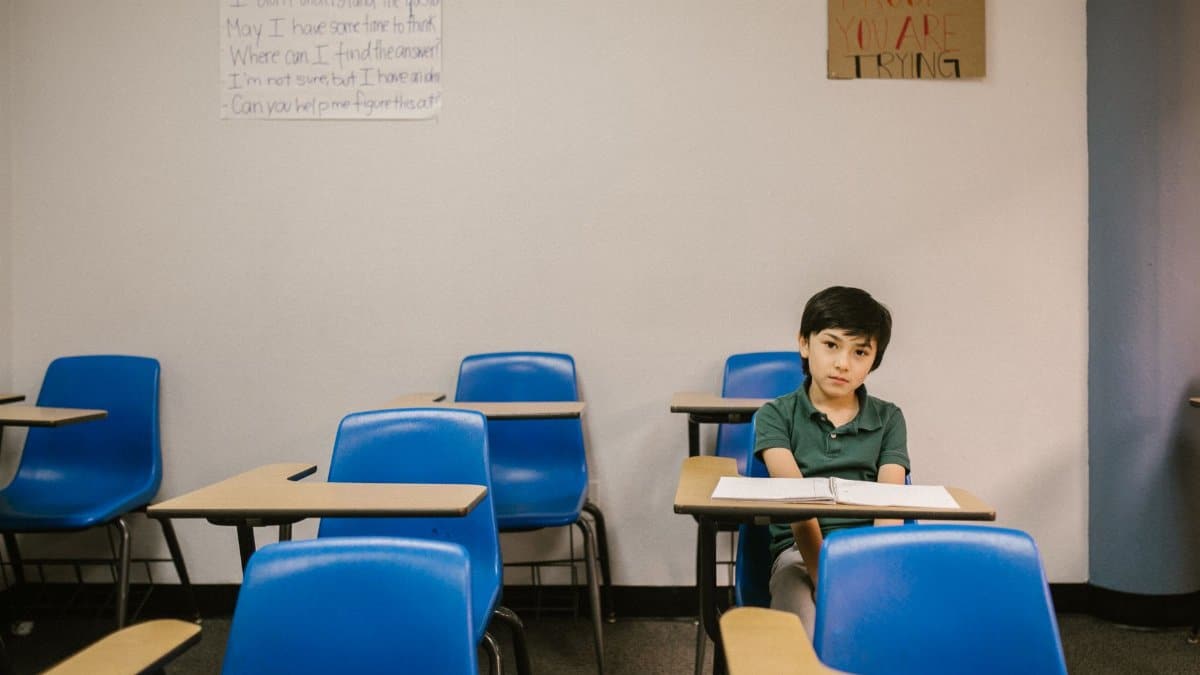
On a weeknight in Palo Pinto County, the argument about Texas schools does not begin in a committee room. It begins at a gym door, a church fellowship hall, and a kitchen table where a property tax bill sits beside a report card. That local argument is now traveling farther than Mineral Wells, because a former House member has turned his break with the governor into a public case. Readers looking for the Abbott education voucher column will find a blunt claim: Greg Abbott once spoke the language of local control and district funding, then spent political capital to build a statewide system that moves public money toward private and religious options.
A rural voice that refused the new line

Glenn Rogers represented a stretch of North Texas where the public school is often the largest employer, the Friday night gathering place, and the institution that keeps a small town on the map. He was a Republican, not a critic of parents, and not a man easily cast as hostile to faith. His objection was geographic as much as ideological. In counties with few private campuses, a voucher does not offer a neighborhood alternative. It offers a theory of choice that many families cannot use without driving long distances or leaving the community altogether.
Rogers has argued that the governor understood this reality and later set it aside. The charge is not that Abbott woke up one morning opposed to reading and math. It is that the priority shifted from sustaining the schools that already educate most Texas children to constructing an education savings account program large enough to reshape the politics of the House. For rural members, that shift felt personal. Dissent stopped being a policy disagreement and became a loyalty test.
What local control used to sound like
For years, Texas Republicans described public education as a partnership. The state set standards. Local boards hired superintendents, adopted calendars, and answered to voters who could see the bond projects from their front yards. Parents were not spectators. They served on booster clubs, spoke at board meetings, and judged schools by whether a child could get a teacher on the phone.
Abbott, in that earlier register, talked often about parents and about the burden of property taxes that fund so much of the system. Rural lawmakers heard a governor who wanted the existing structure to work better, not a governor preparing to route a growing share of education dollars around it. Rogers now says the later voucher drive abandoned that posture. Supporters answer that empowering a parent is the purest form of local control, because the decision moves from a board to a kitchen table. Both claims can be stated without caricature. They cannot both describe the same governing philosophy without a real change in emphasis.
The primaries that redrew the House

The break became unmistakable when voucher bills stalled and the governor took the fight to Republican primaries. Members who had blocked education savings accounts found themselves described as obstacles to parental rights. Allied political committees spent heavily. Some lawmakers survived. Rogers did not. His defeat was widely read in Austin as proof that the governor could enforce a new orthodoxy even in a district where private schools are scarce.
That campaign is the necessary context for any Abbott education voucher column that treats the legislation as a simple triumph of an idea. Ideas matter. So does the power to end careers. A Legislature that passes a program after a purge of dissenters has not merely persuaded the public. It has changed who is allowed to speak for the party. Rogers, writing from outside the chamber, is using the only forum left to him: the opinion page, the county audience, and the record of what was said before the votes were whipped into line.
A program sold as freedom and funded as policy

The education savings account that finally cleared the Legislature is not a small pilot tucked into a budget footnote. It is a standing promise that families may receive public money for private school tuition, and in many designs for other educational expenses, under state rules rather than under a local board. Supporters call that freedom. They point to parents who have felt ignored by large districts, to children who need a smaller setting, and to religious families who want a school that shares their convictions.
Critics, Rogers among them, ask a plainer question. If the state can find new money for accounts that leave the public system, why was basic funding for the schools that remain treated as a bargaining chip for so long? Teachers watched sessions come and go while raises and special education obligations waited on a voucher deal. When a funding package finally moved with the accounts, opponents saw a transaction. Allies saw a balanced victory: more help for districts, and a door for families who want out. The argument turns on whether those two checks were partners or whether one was the price of the other.
Counties where the alternative is mostly a highway
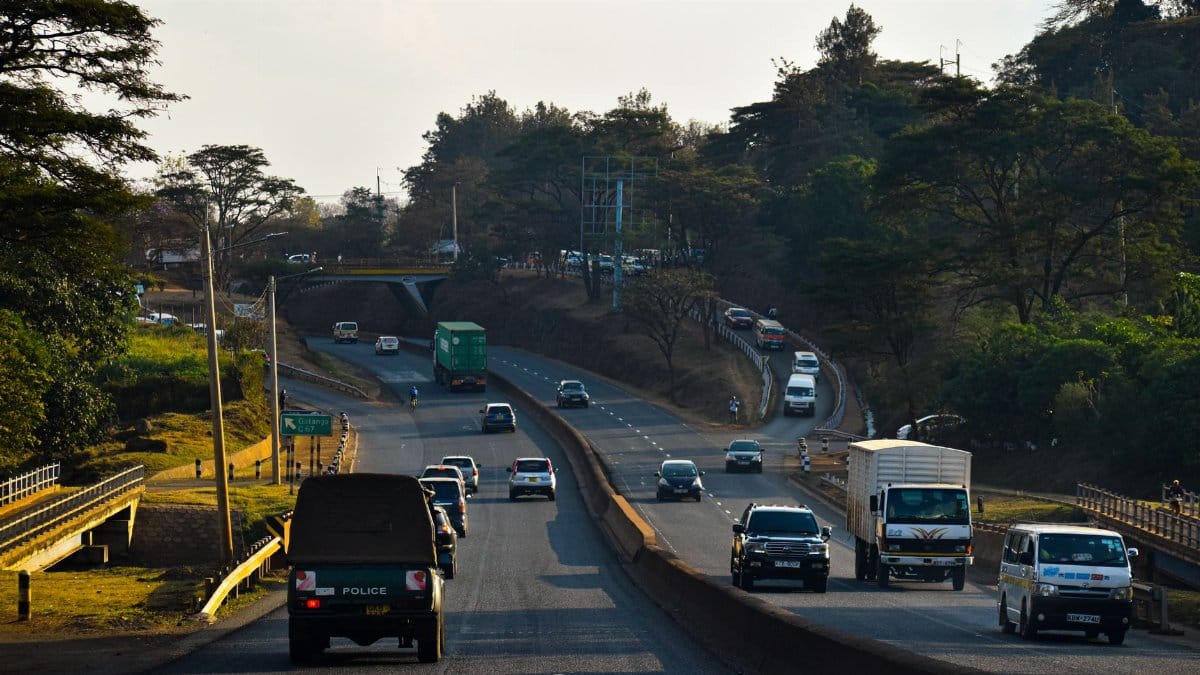
In Dallas or Houston, a parent can sometimes compare several private schools within a reasonable drive. In much of House District 60, that comparison is thinner. A voucher does not build a chemistry lab in a town that has never had a private high school. It does not create a special education team overnight. It can, over time, encourage new schools to open, and some communities may welcome them. It can also draw motivated families and stable funding away from the campus that must still serve every child who stays, including students who are expensive to educate and families who cannot move.
Rogers leans on that distinction because it is hard to dismiss as ideology. A market only works where a market exists. State leaders who live among abundant options can mistake their map for the whole state. Rural legislators who objected were not inventing a cultural excuse. They were describing roads, tuition, and the absence of desks. Any serious Abbott education voucher column has to sit with that inconvenience instead of treating rural resistance as nostalgia.
Faith, conscience, and the school next door

The spiritual dimension of this fight is real, and it is not owned by one side. Many parents seeking vouchers want a classroom where prayer, scripture, or a particular moral tradition is not an afterthought. Catholic, Protestant, Jewish, and other religious schools have educated children in Texas for generations, often on tight budgets and with a sense of mission that public accountability systems do not fully capture. For those families, an account can feel like recognition rather than a raid.
Yet in small towns the public school is also a civic congregation. It hosts funerals of students, food drives, Veterans Day programs, and the volunteer labor of churches that sit across the street. A pastor can support a parent’s right to choose a religious academy and still fear what happens when the only high school in the county loses teachers. Rogers occupies that uneasy middle, which is why reducing him to an enemy of faith misses the local texture. Conscience and community are both spiritual claims. Policy has to admit when they pull apart.
The record Abbott’s allies prefer

Fairness requires the other file. Abbott’s supporters say he did not flip so much as he clarified. They argue that parental authority was always his theme, that pandemic fights over masks and curriculum made the limits of district monopoly obvious, and that a governor is allowed to escalate when a House bloc repeatedly stops a priority he campaigned on. They note that public schools were not zeroed out. Pay, safety, and basic allotments remained part of the negotiation, and many Republican voters concluded that choice and district funding can rise together.
That defense is coherent. It does not erase the political method. Escalation by primary is still escalation. A leader can be consistent in his destination and changed in his willingness to punish the people who slow the trip. Rogers is asking readers to notice the difference between a governor who tolerates rural caution and a governor who treats that caution as betrayal. Readers can decide the destination was right and still dislike the route.
What parents are actually weighing

Strip away the Austin language and a parent is weighing concrete things. Is my child safe. Is the reading curriculum honest. Can I reach an adult who knows my child’s name. Can I afford a private tuition even with state help, or does the account cover only a fraction while transportation and uniforms remain mine. If I stay in the public school, will the debate in the Capitol leave my teacher underpaid for another year.
Those questions do not resolve neatly into a team. Some families will use an account and bless the day it passed. Some will never qualify in a practical sense and will judge the state by whether the campus down the street has a full staff in August. A commentary that pretends every Texas parent wants the same exit is as incomplete as a commentary that pretends no parent has a just complaint. The strength of the Rogers argument is its refusal to let the success stories in suburbs erase the map west of Fort Worth.
Funding is a moral choice, not only a spreadsheet
School finance in Texas is notoriously complex, with recapture, weights for student need, and a property tax system that voters experience as a blunt instrument. Complexity is not an excuse for vagueness about priorities. Every session reveals what leaders will trade. When voucher passage became the gate for other education bills, the state taught districts a lesson about power. When new dollars finally arrived, the state taught a second lesson: relief is available, but on terms set at the top.
Rogers calls the sequence a flip because he remembers speeches that put district stability first. Abbott’s team calls it leadership because a blocked promise is not a virtue. Middle aged readers who have watched school boards, church budgets, and tax appraisals for decades may recognize the pattern from other institutions. A mission statement stays gentle until a leader decides the mission has a deadline. Then the gentle words are reread, and people argue about whether they were revised or merely enforced.
Why the column still matters after the vote
The bill is law. The primaries have done their work. It would be easy to file the Rogers critique as sour grapes from a defeated incumbent. That dismissal is tempting and thin. Defeated members sometimes see the strategy more clearly than the winners, because they felt the cost. A state that has launched a major account program needs critics who will watch enrollment, tuition inflation, student results, and the health of districts that cannot opt out of their duty. Praise will be plentiful. Scrutiny should be, too.
An Abbott education voucher column in that spirit is not a request to repeal history by essay. It is a request to keep the before and after on the same page. Before: a rhetoric of local boards, taxpayer restraint, and rural partnership. After: a governor willing to remake his party’s caucus to pass accounts that route public funds beyond those boards. If the results for children are strong, the after may justify itself. If rural schools thin out while new private options cluster in cities, the before will look like a warning that was priced out of the room.
A test that will not be settled in one news cycle

Texas is large enough to make both stories true in different zip codes. A family in a metro parish school may feel seen for the first time. A family in Palo Pinto County may feel governed by someone else’s map. Glenn Rogers is betting that voters will eventually care more about that mismatch than about a primary night scoreboard. Greg Abbott is betting that parents will judge him by the doors he opened, not by the lawmakers he closed out.
The rest of us can hold the claim to evidence. Watch whether participating schools serve students with disabilities or counsel them away. Watch whether tuition rises to meet the account. Watch whether district campuses lose the very teachers the funding deal promised to keep. Watch whether religious schools gain room to breathe without being asked to become instruments of a campaign. Those are not talking points. They are the audit.
I have listened to enough of these fights to doubt that either slogan, choice or community, is sufficient alone. Children need adults who will fund what they praise. The Abbott education voucher column Rogers has pressed into the record insists that the governor changed the object of that praise. Agree or not, the sentence is clear enough to test. In a state this big, the test will take more than one school year, and it will be graded locally, in towns that still measure a Capitol decision by who shows up to teach on the first Monday in August.