

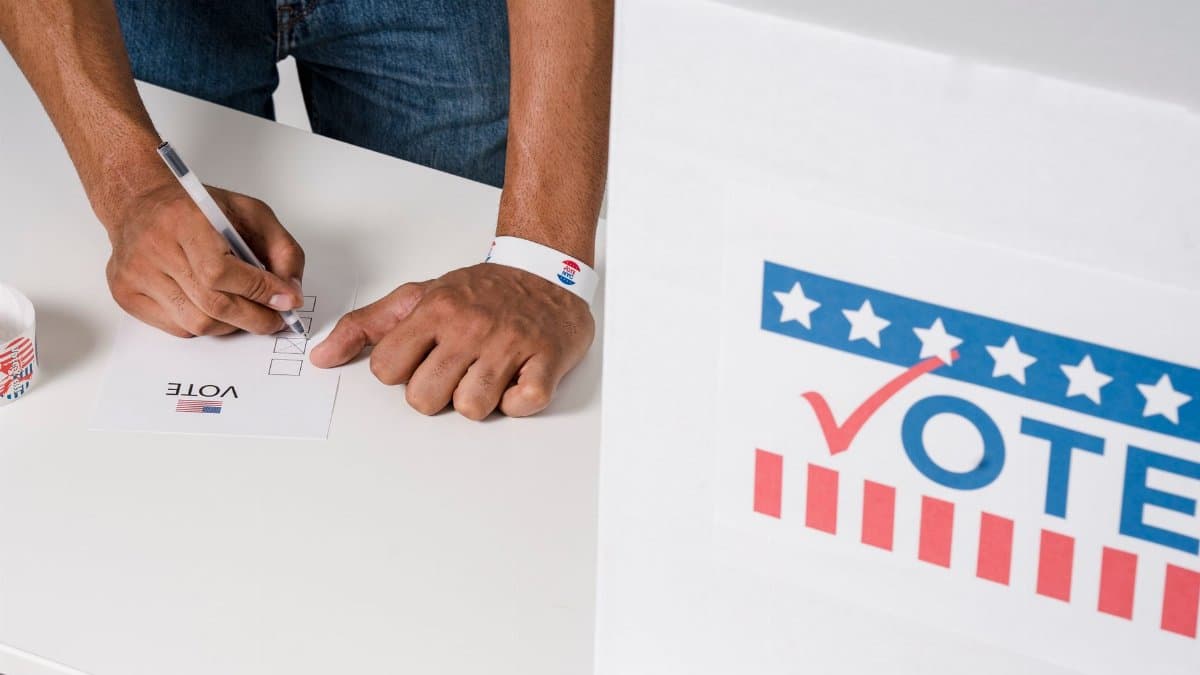
The gym at the middle school still smelled faintly of floor wax when the last tray of ballots was set on the table. Volunteers had been at it since the doors closed, sorting paper under fluorescent light while a handful of residents waited in folding chairs. Nobody expected drama. School questions in towns like this often pass or fail by comfortable margins, the kind that let people go home and sleep. This time the tally stopped the room. Out of about 3,500 ballots, the Cinnaminson school bond vote carried by nine. A proposal near $57 million, large enough to reshape classrooms for a generation, had survived by a number small enough to fit in a single row of a church pew.
A margin thin enough to feel personal
Nine votes is not a mandate in the ordinary sense. It is a whisper that happens to be legally loud. In a township where many people know the family across the street, a margin that small has names attached to it even when the ballots themselves do not. Someone skipped the question. Someone changed a mind in the parking lot. Someone mailed a ballot on the last day the post office would still count it. The law does not require a landslide to authorize debt. It requires a majority, and a majority of one is still a majority. Yet politics is not only law. A result this close asks neighbors to accept a future they nearly rejected, and to do so without the comfort of a decisive public mood.
That discomfort is not a flaw in the count. It is the point of a small electorate. When participation sits near 3,500 ballots, each household carries more weight than it would in a statewide race. The same arithmetic that makes local government intimate also makes it fragile. A flu day, a traffic jam, a sermon that runs long, a shift that will not yield, any of these can move the outcome. People who treat school finance as dull paperwork miss how bodily the decision becomes when the gap is nine.
What the money was meant to do
The question before voters was not abstract philosophy. It was a request to borrow, on the credit of the community, a sum near $57 million for school buildings that district leaders described as worn past the point of patchwork. Roofs, heating and cooling, classrooms that no longer match the way children are taught, security improvements, spaces for students who need quieter rooms or more hands on work: these are the usual contents of such proposals, and they were the contents here. Exact line items will be argued in budget workshops for years. The political fact is simpler. Residents were asked to accept higher debt service so that children now in elementary grades would not inherit the same leaking ceilings and unreliable systems.
Supporters framed the choice as maintenance of a public promise. Opponents framed it as a tax burden landing on households already counting grocery bills and property assessments. Both descriptions can be true at once. A building does not become less expensive because a vote is close, and a tax bill does not become lighter because the need is real. The narrow yes did not dissolve that tension. It only decided which side would have to live inside the other’s fear.
How a quiet suburb turned into a test of trust
Cinnaminson is not a place that usually supplies national metaphors. It is a South Jersey township of commutes, youth sports, church suppers, and school concerts that fill the auditorium on weeknights. That ordinariness is exactly why the Cinnaminson school bond vote mattered beyond the district line. Across the region, residents have grown wary of large public asks. They have watched costs rise, contractors slip schedules, and explanations arrive in language that sounds prepared rather than plain. Trust, once spent, does not refill on a mailing.
In the weeks before the election, conversations on sidewalks had less to do with interest rates than with character. Would the board spend as carefully as a family fixing its own roof. Would the work be visible, or would it vanish into change orders. Would people who voted no be treated as obstacles or as neighbors who had done their duty. Those questions are spiritual in the civic sense, even when no one uses that word. They ask what a community owes its children, and what it owes the people who will pay long after those children have graduated.
The arithmetic behind a school question

About 3,500 ballots is a modest pile of paper for a decision of this size. It is also a reminder that most eligible adults stayed home. A nine vote margin on that base means the winner’s share and the loser’s share were nearly twins. If a few dozen people had marked the other box, the headline would have flipped and the buildings would have waited. Certification will follow the ordinary path of canvassing and, if anyone demands it, a recount. Until that paperwork closes, the result is a fact with a shadow beside it.
Journalists sometimes treat turnout as a moral score. Low turnout means apathy, high turnout means virtue. The reality in a spring or off cycle school election is messier. Some residents never saw the notice. Some believed the outcome was settled. Some trusted a spouse to represent the household. Some regarded the question as already answered by rising assessments and chose silence as protest. Silence still counts. It simply counts as absence, and absence left nine marks to carry a generation of construction.
Kitchen table math and the tax bill

For many households the pamphlet was less persuasive than the calculator. A bond of this scale does not arrive as a single shock. It arrives as an increment on a bill that already includes county, municipal, and school levies, plus the quiet inflation of insurance and utilities. Retirees on fixed incomes hear one number. Parents who expect to be in the district for a decade hear another. Renters hear a third, knowing landlords may pass costs along without a ballot of their own. None of these listeners is imaginary, and none is required to feel grateful for being asked.
The honest case for yes was never that the debt would be painless. It was that delay has a price too. Emergency repairs, portable classrooms, energy waste, and the slow loss of families who can choose another district all show up somewhere, even if they do not show up as a single line called bond. The honest case for no was that a district can need work and still ask for too much, too fast, with too little proof that oversight will match ambition. The nine vote gap did not referee those arguments. It only chose a path.
Parents, empty nesters, and long memory

School elections often split along a line that is easy to caricature and hard to live with. Parents with children in the buildings vote for the rooms their kids will sit in. Older residents, some of whom funded earlier additions, vote against another round of debt. The caricature fails as soon as you sit in a diner and listen. Plenty of grandparents voted yes because they remember a boiler that failed in January. Plenty of parents voted no because they do not trust the last renovation, or because a raise at work did not match the rise in the quarterly bill.
What both sides share is memory. Public buildings keep the record of previous bargains. A wing added in one decade becomes the leak in the next. A promise of efficiency becomes a story told at the hardware store. When the Cinnaminson school bond vote passed by nine, it added a new chapter to that memory before the first shovel moves. People will remember not only what was built, but how barely the town agreed to build it. That memory can discipline spending. It can also curdle into grievance if leaders treat the win as permission to stop explaining.
Why nine ballots can reorder a town

A wide victory lets officials speak in the language of consensus. A nine vote victory does not. It reorders priorities anyway. Architects can be engaged. Timelines can be drawn. Debt can be structured. Teachers can be told that the room at the end of the hall will not stay as it is. Students who will never know the tally will sit in whatever comes of it. The minority, nearly half the people who marked a ballot, will pay as well. In a democracy that is not a scandal. It is the bargain. The scandal would be pretending the bargain was enthusiastic.
There is a spiritual habit worth naming here, though it belongs to civic life rather than to any one congregation. It is the habit of staying in the room after you lose, and of winning without contempt. Nine votes is a poor foundation for triumph. It is a decent foundation for humility. The town did not discover a hidden unity on election night. It discovered that it could proceed while divided, which is the more common American condition, and the harder one to honor.
After the count, the civic ritual
The night itself had the plain rituals of American local government. A clerk reading numbers. A board member staring at a phone. Someone in the back doing the subtraction twice because the first result seemed too narrow to trust. I have watched counts that ended in cheers and counts that ended in a quiet gathering of coats. This one belonged to the second kind. Relief on one side, a tight jaw on the other, and then the parking lot, where people who had argued for weeks still had to nod on the way to their cars.
Those nods matter more than speechwriters admit. A bond is a long marriage between a district and its taxpayers. Construction will bring dust, detours, and evenings when a gym is closed. Taxes will appear in envelopes that do not mention the nine vote margin. If the only memory of the election is bitterness, every later inconvenience will be read as proof that the winners took what they wanted. If the memory includes restraint, the same inconvenience can be read as the cost of a shared building. Leaders cannot force that reading. They can avoid making the bitter one inevitable.
What officials can claim, and what they cannot
A certified yes authorizes the borrowing the question described. It does not authorize a victory lap that erases the no votes. It does not prove that every dollar was perfectly sized. It does not silence the resident who believes the district should have phased the work, or sought a smaller ask, or waited for a different interest rate environment. Officials who speak as if nine votes were nine hundred will spend credibility they no longer have. Officials who speak as if the loss were almost theirs may keep enough trust to govern the construction.
The practical duties are unglamorous and therefore the real test. Publish bids. Explain change orders in sentences a neighbor can repeat. Show which projects moved and which slipped. Invite the people who voted no into the oversight, not as decoration, but as readers of the fine print. A close election is a standing audit. Treat it that way and the margin becomes a safeguard. Treat it as an inconvenience and the next question, whatever it is, will be harder.
A South Jersey habit of close calls

This result sits inside a wider pattern, even if each town insists on its own particulars. School questions in New Jersey suburbs have grown harder as property taxes occupy a larger share of household anxiety. Voters who support teachers in conversation will still reject a number that feels untethered from a kitchen budget. Boards that once assumed a spring election would pass on parental turnout now find empty nesters organized, informed, and unembarrassed about saying no. The Cinnaminson school bond vote is one data point in that shift, not a morality play about one township’s character.
The pattern cuts against easy regional stereotypes. South Jersey is not uniformly skeptical of public spending, nor uniformly willing to sign for it. It is a patchwork of river towns, farm edges, and postwar subdivisions where the school is often the main civic stage. When that stage hosts a nail biter, the rest of the county notices. Superintendents in nearby districts will read the nine vote margin as a warning about message, timing, and the danger of asking for everything in one evening. They should also read it as evidence that a careful yes is still possible.
Living with a result that almost was not

There will be a temptation, in the months ahead, to sand the story smooth. Winners will say the community chose its children. Losers will say a trick of turnout stole a sensible no. Both lines are too clean for a pile of about 3,500 ballots split by nine. The truer sentence is plainer. A narrow majority accepted a large debt for school buildings, and a near equal number refused. The buildings, if the work proceeds with discipline, will not record that split in brick. The town will record it in how people speak to one another at games and grocery stores.
Children are not responsible for the tone adults choose. They will inherit roofs and boilers and, with luck, rooms that do not distract from the work of learning. They will also inherit the example of whether adults could disagree about money without treating neighbors as enemies. That example is not on the ballot, and it cannot be borrowed at a favorable rate. It is made, or unmade, in the ordinary weeks after a headline fades.
The work that starts when the signs come down
Campaign signs are already losing their stake in the grass. What remains is administration, which is where romantic talk about democracy either becomes honest or becomes a brochure. Contracts, schedules, safety plans during construction, clear accounting of tax impact year by year: these are the sacraments of a secular promise, if the word can be used without offense. A community that prays in many ways, or in none, still shares the discipline of keeping its word.
The Cinnaminson school bond vote will be remembered first for its margin. Nine ballots. About 3,500 cast. Nearly $57 million in proposed work. Those figures deserve to stay attached to one another so that nobody later inflates the win or erases the doubt. The deeper test is whether the district can spend in a way that makes the doubt look cautious rather than prophetic. If the roofs hold, the bills match the forecasts, and the explanations stay in plain language, the nine vote yes may come to look less like an accident and more like a town deciding, barely, to keep faith with its own buildings. If the work wanders, the same nine votes will be cited as the moment caution was ignored. Either way, the count was not the end of the story. It was the moment the story became a debt, and a duty.