
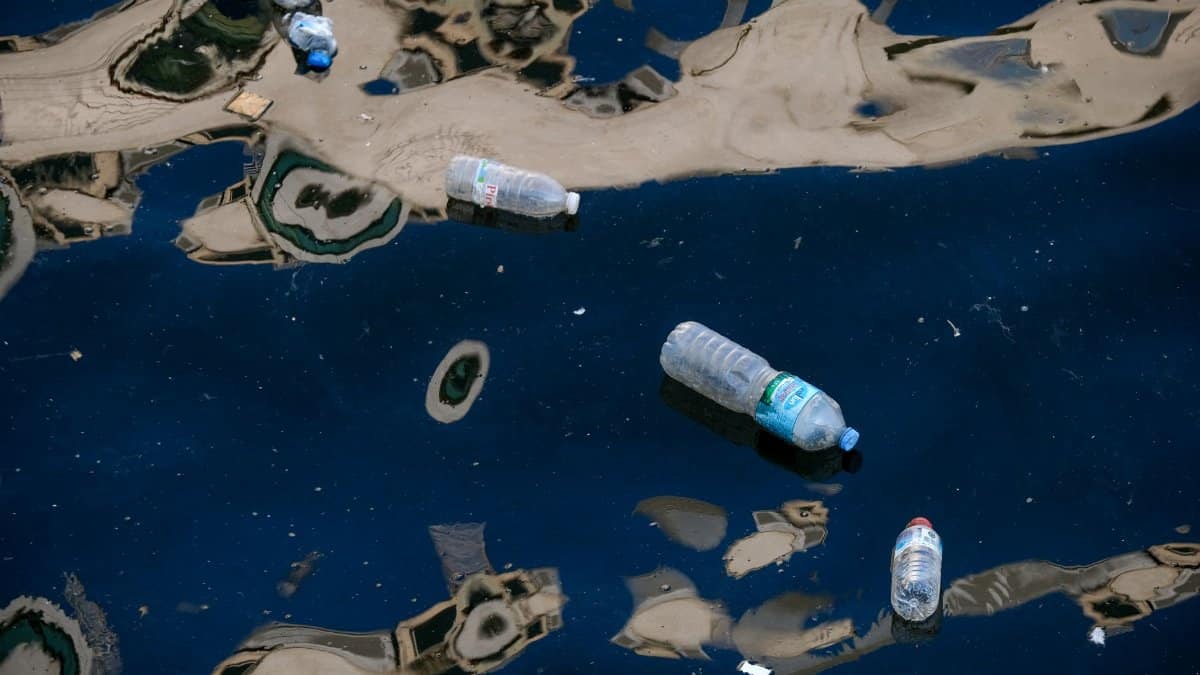
On a gray October afternoon, with Lake Michigan dull as pewter beyond apartment windows along the North Side, readers logged into a Chicago Tribune virtual gathering and heard researchers talk about bottles, fibers, and the water people drink. The plastic pollution event, held on October 16, 2026, was not a rally and not a product launch. It was a public conversation about how plastic moves through the Great Lakes, what that may mean for health, and why a problem once pictured as far offshore now shows up in fish, sediment, and drinking water in ways a city cannot politely ignore. I watched the stream the way I watch a budget hearing, notebook open, waiting for the plain sentences that outlast the graphics.
A newsroom hour rather than a spectacle

The Tribune framed the session as a briefing for people who live with the lakes as weather, recreation, and municipal supply, not as a distant wilderness. That framing kept the hour from sliding into a montage of littered beaches. A plastic pollution event can become theater. This one, as the paper described it in advance, stayed with specialists on health and environmental risk and with the blunt civic question of what clogged waters mean for cities that share one basin.
Virtual formats have their own manners. Faces arrive in boxes. A moderator keeps the clock. Questions from the audience arrive as text and get sorted for time. None of that is glamorous, and that is part of the point. The subject does not need a drumroll. It needs sequence: where the material comes from, how it breaks apart, who studies the fragments, and which public choices actually change the volume entering the water.
Readers who expected a single villain left with a more crowded map. Packaging, textiles, tire dust, construction waste, lost fishing gear, and the slow grind of litter in surf all feed the same ledger. Treating them as one blob makes for an easy headline and a weak remedy.
Why the Great Lakes are not a backdrop

Chicago drinks from the lake and also turns its back on the lake for long stretches of ordinary weeks. That double habit showed up, implicitly, in the way the discussion kept returning to shorelines people already know: harbors, breakwalls, river mouths, and the flat water visible from a train window. The lakes hold a huge share of the surface fresh water on the continent. They also sit inside an industrial and residential ring that has spent more than a century sending material downstream and then arguing about what counts as downstream.
Storms rearrange the evidence. After a hard rain, streets deliver cups, wrappers, and cigarette filters to storm drains that were built to move water fast, not to sort trash. Windrows of debris collect at piers. Much of what looks merely ugly is the visible fraction. The smaller fraction does not announce itself. It travels with silt. It settles. It rises again when a freighter wake or a winter blow disturbs the bottom.
The plastic pollution event mattered here because it refused to treat the lakes as a scenic illustration for a global story. The global story is real. The local one is the one a Tribune audience can inspect on a Saturday walk. A bottle in a slip is not a metaphor. It is an object with a manufacturer, a buyer, and a failure of capture somewhere between those two.
How large objects become a fine dust in water

Panel discussions of this kind usually begin with the obvious item, the bottle or the bag, and then walk the audience toward the less obvious residue. Sun, wave action, and mechanical abrasion crack rigid plastic into chips. Those chips crack again. Fibers shed from fleece and from dryer exhaust. Fragments small enough to pass a casual glance still large enough to be eaten by plankton or mistaken for food by fish enter the food web without a press conference.
Wastewater plants were engineered for sewage and for the chemistry of an earlier century. They catch a great deal. They were never designed as perfect sieves for synthetic lint. Sludge, effluent, and the land where sludge is spread become part of the circulation. Agricultural film and roadside litter join the same slow traffic toward ditches and rivers. None of this requires a conspiracy. It requires ordinary products meeting ordinary infrastructure.
Scientists who work on this problem often sound less alarmed in tone than activists expect, and more alarmed in detail. They talk about sampling methods, about whether a net misses the smallest pieces, about lab contamination, about the difference between detecting a particle and proving a harm. That caution is not evasion. It is how a field stays honest while the public, reasonably, wants a yes or a no.
Health questions that outrun the slogans

The health portion of such a briefing is where listeners lean in and where responsible speakers slow down. People want to know whether the water from the tap, the fish on the plate, or the air in a room with synthetic carpet carries a risk they can name. The honest answer, as it stood in the public scientific conversation around this Tribune session, is that exposure is widespread, that some laboratory and animal findings are troubling, and that the size of the risk for a given person over a given lifetime is still being mapped.
That gap is not a reason to shrug. It is a reason to separate what is known from what is feared. Known: plastic particles and associated chemicals are measurable in environments where people live. Known: some additives used to make plastic flexible, durable, or flame resistant have raised regulatory concern on their own, apart from the particle question. Less settled: which doses, through which routes, produce which diseases in human populations at the scale of a city.
A plastic pollution event that pretends the medical case is closed does readers no favor. One that pretends the uncertainty is comforting does them no favor either. Uncertainty cuts in more than one direction. Absence of a final verdict is not evidence of safety, and a frightening anecdote is not a study. The useful public posture is attention without panic, and pressure for better measurement rather than for a single frightening number repeated until it feels like law.
What cities can change, and what they cannot wish away

Municipal governments do not design global resin markets. They do run streets, sewers, parks, procurement offices, and the rules for events on public land. Those levers are smaller than the problem and larger than a scolding social media post. Litter capture in storm drains, better bins where people actually stand, contracts that favor durable goods over throwaway service ware, and enforcement that is boring enough to be consistent all move the needle in a harbor even if they do not rewrite the century.
State and federal rules sit above that layer. Bans and fees on particular items change what stores hand across the counter. Extended responsibility schemes, where they exist and where they are enforced, push some costs back toward producers. None of these tools is magic. Each fails when it is written as a press release and staffed as an afterthought. The lakes collect the difference between a rule on paper and a rule with inspectors, budgets, and political patience.
Readers sometimes ask whether personal habits are a distraction from structural change. The cleaner answer is that habits and structures are not rival religions. A household that washes full loads, skips the unnecessary fleece for a day at the office, and refuses the extra bag is not saving the basin alone. A city that ignores those same flows while waiting for a perfect national law is also not saving it. The Tribune conversation, aimed at a general audience, was valuable if it held both scales in the same sentence.
Recycling as a partial tool, not a moral alibi
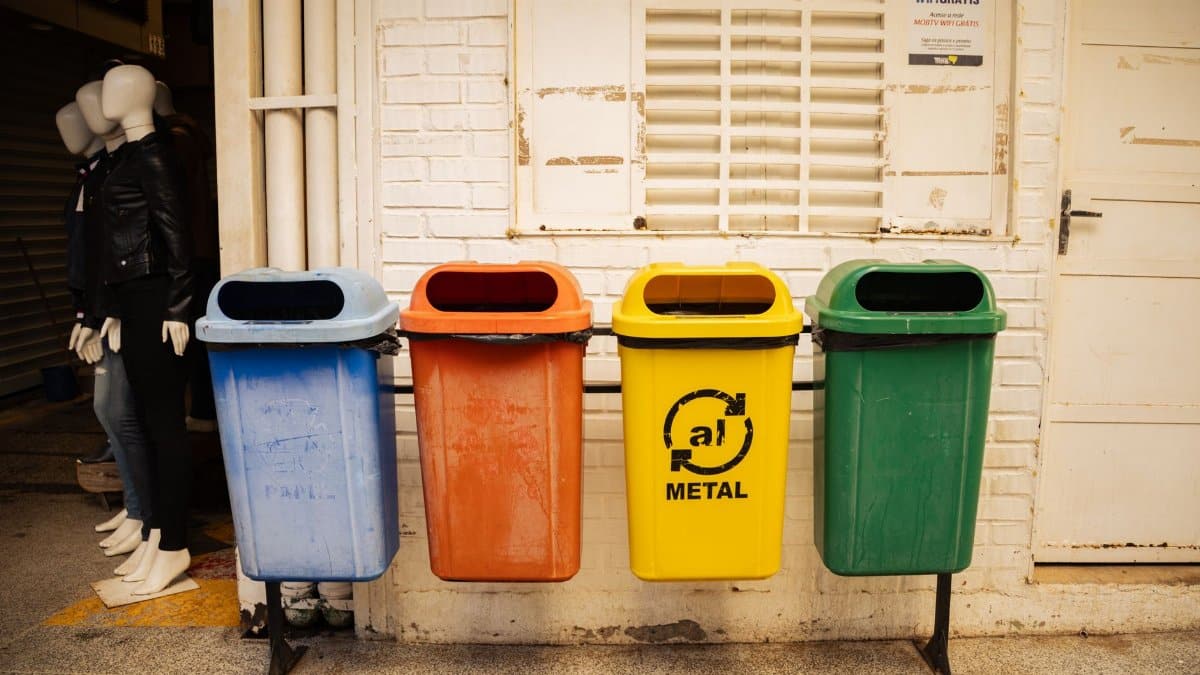
Few subjects in American environmental talk are as overloaded as the blue bin. People sort with care and then hear that much of what they sorted was never recyclable in their market, or that the resin had no buyer that month. Cynicism follows, and cynicism is an expensive public mood because it licenses carelessness. The accurate picture is plainer and less satisfying. Some plastics are recycled into new goods at meaningful scale. Many are not. Contamination, mixed materials, food residue, and weak demand all shrink the share that completes the loop.
Design comes before the bin. A package made of several materials bonded together asks the recycling system to perform a separation the package itself refuses. A product built to be used once and tossed asks households to be virtuous at the moment of disposal while the profit was taken at the moment of sale. Lectures aimed only at the last person in that chain are politically easy and technically thin.
Still, capture matters. Material that stays in a managed stream is material that does not blow into a river. Improving what the bin can honestly take, labeling that does not lie, and local processing that does not depend on a distant buyer of last resort are unglamorous reforms. They belong in any serious account of clogged waters. They do not replace reducing the amount of disposable plastic made in the first place.
Wildlife, fisheries, and the cost of looking away

Anglers on the Chicago shoreline already know the lake as a working water, not a postcard. They also know that a dead bird with line around its neck is an argument that does not need a footnote. Entanglement and ingestion are the visible harms. Less visible is the way small fragments enter prey and then predators, and the way chemicals can travel with those fragments. Fishery managers care about this because trust in a food source is part of the resource. If people stop believing the fish are fit to eat, the cultural and economic life around the harbors thins even before a formal closure.
Wildlife harm is also a class issue wearing waders. Subsistence and weekend fishing are not hobbies confined to people who can buy their way out of a contaminated dinner. When advisers hedge, communities with fewer grocery alternatives hear the hedge as a burden. Clear communication, fish advisories that people can actually parse, and cleanup of gear and litter at access points are modest duties. They are also tests of whether a city means what it says about a public lake.
A commons that congregations already understand

The Tribune session was a news conversation, not a service. Even so, the questions it raised travel easily into rooms where water is already treated as more than a utility bill. In churches, mosques, synagogues, and temples around this city, blessing, washing, and the image of a sea that is not ours to wreck are old language. I do not think piety substitutes for sampling protocols. I do think a culture that can only speak of the lake as property will underfund the unglamorous work of keeping it usable.
Stewardship, stripped of slogan, is a habit of refusing to export costs onto people who are not in the room, including people not yet born. That is a civic claim and, for many readers, a spiritual one. It asks who is downstream. On the Great Lakes the downstream neighbor may be the next town, the next generation, or the drinker at the other end of the intake. A plastic pollution event that stays only in the register of outrage misses that quieter obligation. Outrage fades. Maintenance does not.
Communities of faith already organize cleanups, food sharing, and care for people made sick by environmental burden. They can also ask harder questions of their own purchasing, their own events, and the officials they host. None of that replaces regulation. It keeps the subject from becoming somebody else’s specialty.
What a listener can do after the stream ends

The useful aftermath of a briefing is not a mood. It is a short list. Learn which items your hauler actually recycles, and stop wishing the rest into the bin. Notice storm drains on your block and the trash that sits beside them before rain. If you fish or walk the shore, carry out line and fragments you did not drop. Ask a park district or an alderman what capture projects are funded, not merely announced. Read health claims with the same skepticism you would bring to a miracle cure, including claims that soothe you.
Follow the next round of measurement. The science will move. Some fears will shrink under better data. Some will sharpen. A grown public can tolerate that motion without demanding a final parable every October. The lake will not grade us on our feelings about it. It will record, in silt and in fish and in the clarity of a glass, what we kept putting in and what we finally kept out.
The Chicago Tribune put experts in front of a general audience and asked them to talk about clogged waters without turning the hour into either a lullaby or a horror reel. That is a modest civic service, and modest services are how a city stays literate about its own shore. The plastic pollution event will not, by itself, clear a harbor. It can clear a certain kind of fog: the fog in which plastic is always someone else’s litter, always somewhere else’s river, always a problem for a future that never quite arrives.