

On a gray morning when the 28 and the 29 crawl past double parked cars, the decision lands with a particular sting for people who have already rearranged their days around a faster ride. Boston and the Massachusetts Bay Transportation Authority have dropped plans to lengthen the region’s first center running bus lane, the Columbus Avenue bus lane, leaving a corridor that was supposed to grow instead frozen at its current reach. I have walked this stretch enough times to know the difference between a lane that works and a promise that stalls. Riders wanted minutes back. City hall wanted a model. What they have now is a shorter experiment and a longer argument about who the street is for.
A corridor that was meant to keep going
The abandoned extension was never a decorative stripe. It was the next chapter of a bet that buses could claim the middle of a wide Boston avenue and move people who do not have the luxury of driving around a jam. Planners had talked for years about pushing the protected alignment farther, tying more stops into a continuous run and giving operators a lane that did not dissolve at the first difficult block. Scrapping that lengthening does not erase the lanes already painted. It does tell riders that the map they were shown is no longer the map they will get.
In a city where transit promises often arrive in phases, a cancelled phase is easy to shrug off. The shrug misses the point. Frequency, span, and reliability are built from continuity. A fast segment that dumps a bus back into mixed traffic is not a failure of physics. It is a political choice about where inconvenience is allowed to live.
What the existing lane actually changed
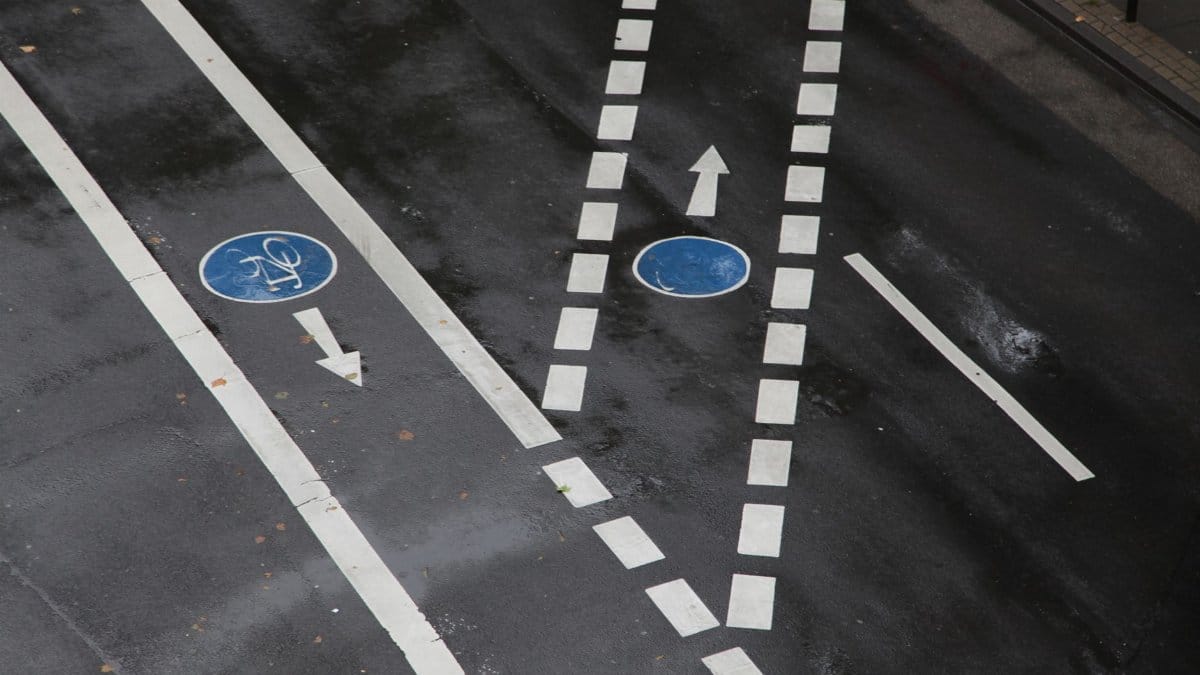
Center running bus lanes are blunt instruments, which is why they work when they are enforced. By pulling the bus away from the curb, they reduce the daily combat with parking, deliveries, and right turns. Riders board from islands instead of stepping into a travel lane. Drivers can see a red lane and, at least in theory, stay out of it. On Columbus Avenue the early miles of that design became a local proof that Boston could build something other cities had already normalized.
The gains were never magical. Buses still wait at signals. Operators still deal with wheelchairs, strollers, and the ordinary friction of a crowded city. What changed was the baseline insult of sitting motionless beside empty curb space while a single car occupied the only path forward. For people traveling between Roxbury, Jamaica Plain, and downtown jobs, that insult had been the commute.
Why length mattered more than symbolism

A short priority lane can be a demonstration. A longer one can be a service. The distinction is easy to lose in renderings, where every red segment looks equally bold. On the ground, the value compounds. Each additional block of clear running reduces the chance that a late bus misses its next window and drags the rest of the line with it. Extending the Columbus Avenue bus lane was supposed to turn a showcase into a spine.
Without that spine, the route remains a patchwork. Riders feel patchwork as variance. One morning the bus glides. The next morning it inherits every stopped truck the unprotected blocks can offer. Transit agencies sell averages. People live inside the bad days. An extension is how you shrink the bad days, not how you win a design award.
The curb, the shop, and the vote

No bus lane fight in Boston is only about buses. It is about parking meters, loading zones, church Sundays, and the fear that a street redesigned for transit will thin the foot traffic a small business counts on. Merchants along avenues like this one have legitimate reasons to ask who loses a space and who gains a minute. Those questions deserve answers with maps, not slogans.
They do not, by themselves, explain a retreat. Cities that treat every lost parking space as a veto will never build a bus network worthy of the ridership they already have. The people most dependent on these routes are often the least visible in a hearing room: shift workers, students, elders with a cart of groceries, parents timing a transfer. Their time is not less real because it is not attached to a storefront lease.
What officials appear to be walking away from

The city and the T have framed the decision as a recognition that the extension, as drawn, could not be delivered on terms they were willing to defend. That is a polite way of saying the coalition frayed. Engineering constraints, community pushback, construction cost, and the sheer difficulty of taking lanes in a neighborhood that already feels planned upon all sit in the same pile. When agencies drop a project rather than redesign it in public, they also drop the chance to show their work.
Transparency would not have guaranteed a yes. It might have produced a narrower build, a phased curb plan, or a clearer statement that parking loss was the price of a faster 29. Instead, riders are left with an absence. Absence is hard to organize against. You cannot testify at a meeting about a line that is no longer on the agenda.
Enforcement is the quiet half of design

Even the lanes that remain will only be as good as the city’s willingness to keep cars out of them. A center bus lane that becomes a casual loading zone at dusk teaches drivers the wrong lesson and teaches riders cynicism. Camera enforcement, clear signage, and a towing policy that does not blink are not accessories. They are the operating system.
Boston has learned this on other streets, sometimes slowly. Paint without consequence is a suggestion. The Columbus Avenue bus lane earned its reputation because, for stretches, the suggestion was backed up. If the extension is gone, the maintenance of that reputation becomes more important, not less. A shrinking project that is strictly protected is still useful. A shrinking project that is also casually blocked is a photograph.
Riders and the arithmetic of minutes

Transit debates love round numbers and hate the diary. A saved minute does not sound like policy until you multiply it by two rides a day, five days a week, and a year of weather. For a home health aide trying to reach a first patient, or a student connecting to the Orange Line, those minutes are the margin between composed and late. Dropping an extension does not add a formal fare. It adds a tax measured in standing and waiting.
I keep thinking about how rarely that tax is itemized. Highway delays get dashboards. Bus delays get a shrug and a note that ridership is complicated. Ridership is complicated because the product is complicated. When the product gets worse in a specific place, people adjust in specific ways: they leave earlier, they pay for a ride hail they cannot afford, or they stop trusting the schedule and stop showing up.
A neighborhood asked to absorb the experiment
Columbus Avenue is not a blank slate. It runs through blocks with long memories of planning done to them rather than with them. Any lane project that ignores that history will be read as another extraction, even when the intended beneficiaries live on the same blocks. The fair critique of the extension was never that bus riders do not matter. It was that process, mitigation, and local access had to be designed with the same seriousness as the red paint.
Walking away does not repair that distrust. It can deepen it. Residents who spent evenings arguing over islands and turn lanes now learn that the argument was provisional. Riders who were told to wait for the full corridor learn that waiting was the whole offer. Both groups have reason to doubt the next rendering.
What a narrower ambition could still do

Scrapping the lengthening does not have to mean scrapping attention. The city can still fix the weak points that make the current lanes feel provisional: signal priority that actually fires, islands that drain, markings that survive a winter, and intersections where turning drivers treat the bus as an obstacle rather than a vehicle with passengers. Those are smaller headlines. They are also the difference between a lane people believe in and a lane people route around in their heads.
There is room, too, for a redesigned extension that admits tradeoffs in advance. Say which curb spaces go. Say which loading hours remain. Say how churches, clinics, and corner stores get served without turning the bus lane into a suggestion box. A project that survives contact with those details is stronger than one that dies in a back office.
The regional habit of stopping short
Boston is not unique in building the easy miles and postponing the hard ones. American bus priority is full of segments that end where the politics begin. The result is a network that photographs well and operates like a dare. Regional rail gets tunnels and decades. Buses get pilot paint and a review. The hierarchy is old, and it keeps reproducing itself every time an extension is quietly dropped.
The T’s bus riders are the system’s majority in spirit if not always in budget. They are also the riders most exposed when a city decides that a lane has gone far enough. If this decision stands, other corridors will read it as permission. Why fight for the next block if the last fight can be undone by fatigue?
Safety is not a side plot

Center platforms and separated lanes are transit tools, but they are also street safety tools. They shorten crossing distances, organize wild midblock behavior, and make the presence of a bus predictable. Opponents sometimes talk as if the only thing being removed is convenience for drivers. What is also being withheld is a calmer geometry for people on foot, including people walking to the bus they were promised.
None of that requires pretending every design detail was perfect. Islands can be in the wrong place. Turns can be too tight for trucks that legitimately need the street. Those are reasons to revise a drawing. They are weak reasons to abandon the idea that a wide avenue can be organized around the vehicle carrying the most people per square foot.
How to read the silence

The absence of a ribbon cutting is not neutral. It teaches staff inside agencies which fights are career risks. It teaches advocates how much process they can be asked to repeat. It teaches drivers that resistance works if it lasts longer than the news cycle. And it teaches a rider standing at a stop past the end of the red lane that the city’s ambition had a boundary, and the boundary is here.
Journalism should not romanticize infrastructure. A bus lane is paint, concrete, cameras, and labor. It is also a moral allocation of delay. Someone will wait. The question Boston just answered, at least for now, is that the someone will keep being the person on the bus.
What would count as a responsible reversal
If city and T leaders want this to be a pause rather than a burial, they can say so in operational language. Publish the constraints that killed the extension. Publish a date by which a revised concept returns to the public. Protect the lanes that exist with enforcement that does not depend on a friendly news day. Fund the signals and the platforms as if the corridor still matters, because it does.
Until then, the story is simpler than the process memos. Boston built a rare thing, a center running bus lane that showed the region a different use of asphalt, and then declined to let it grow. The Columbus Avenue bus lane remains. The promise attached to it is shorter than the avenue, and riders will measure that shortage every time the bus leaves the red and rejoins the jam.