

The wooden benches filled early, the way they do when a city suspects that a routine calendar call has become something else. Lawyers shuffled folders. A clerk called the case in a flat voice. In the well of the room, the question was not whether Philadelphia sells property at auction. It was whether the office that runs those sales would keep a promise it had already made. That is the narrow door through which Philly sheriff contempt entered the public conversation, and it is wider than it looks.
A hearing that refused to stay technical

Contempt hearings have a reputation for drama they rarely earn. Most of them are about missed deadlines, incomplete files, and lawyers explaining why a schedule slipped. This one carried a different charge. The sheriff’s office had agreed to let an outside party supervise property auctions, then stepped back from that deal. A judge was asked to decide whether that retreat was a breach worthy of sanction, or a defensible change of mind by an elected official who answers to voters rather than to a private monitor.
People who follow City Hall know the difference between a spat and a structural fight. This felt structural. Auctions are how unpaid taxes, foreclosed claims, and tangled titles become cash, new owners, and, sometimes, fresh disputes. If the process is opaque, the harm does not stay inside a courtroom. It lands on blocks where a sheriff sale is already a rumor before it is a notice.
What the deal was meant to secure

The agreement, as described in the litigation that led to the hearing, was not a takeover of the sheriff’s office. It was supervision. An outside eye on auctions. A record of how bids were taken, how properties were listed, and how the office explained its choices when something looked irregular. In a city with a long memory of troubled sheriff sales, that kind of watching was the point.
Supporters of the deal argued that sunlight is not an insult. An office can be elected and still benefit from a second set of books. Critics inside and around the office heard something else: a court blessing a monitor who would sit over a constitutional officer. That tension, between independence and accountability, is the argument the hearing could not dodge.
Why the office said no

At the contempt hearing, the sheriff’s office rejected the audit posture the agreement implied. The rejection was not whispered. Lawyers for the office framed the retreat as a matter of authority. They said the sheriff cannot surrender core functions to an arrangement that, in their view, outran what the law allows and what the office can operationally accept. They suggested that cooperation had limits, and that those limits had been reached.
That is a serious claim, and it deserves to be heard in full. Elected sheriffs are not clerks of a private vendor. They run a law enforcement and civil process office with duties that include serving papers, holding people on lawful orders, and conducting sales that can strip or transfer title. If a monitor’s role grows from observation into direction, a sheriff can argue that the office has been hollowed out by stipulation.
The other side of the courtroom had an equally serious claim. A deal is a deal. Parties who settle a case trade uncertainty for terms. If one side can exit when the terms become inconvenient, settlements become theater. Judges exist, in part, to stop that. The hearing was the moment those two serious claims collided.
Auctions are not abstractions

It is easy, from a distance, to treat a sheriff sale as a spreadsheet event. A parcel number. A minimum bid. A hammer, or its modern equivalent, a click. On the ground it is a kitchen table event. A homeowner behind on taxes. An heir who never opened the mail. A small investor who thinks a bargain is a plan. A nonprofit hoping to keep a property from flipping through three owners in a year.
Philadelphia has spent years trying to make this machinery legible. Notices, postponements, online listings, and courtroom challenges have all been part of that effort. None of it removes the moral weight. A sale conducted cleanly can still feel brutal. A sale conducted sloppily can feel like theft even when every form was stamped. That is why supervision mattered to the people who fought for it, and why resistance to supervision alarmed them.
Contempt, stripped of the headline heat

In ordinary speech, contempt sounds like scorn. In court, it is a tool. Civil contempt is meant to compel compliance. It asks whether a party disobeyed a clear order and whether a sanction will bring that party into line. It is not a criminal conviction, and it is not a verdict on a person’s character, though the public often hears it that way.
Applied here, the doctrine forces a sequence of questions. Was there a binding obligation to accept supervision of the auctions? Was the obligation clear enough that an official could know what compliance required? Did the office violate it willfully, or did it assert a legal objection in good faith? And if a violation occurred, what remedy fits a public office that still has to function on Monday morning?
Those questions are drier than the phrase Philly sheriff contempt suggests. They are also the only questions that keep the story from becoming a personality contest. Rochelle Bilal is a public figure with supporters and critics. The hearing is about an office, a stipulation, and a judge’s power. Personality is context. It is not the element the court is asked to punish.
The audit that stalled at the door

An audit, in the plain sense, is a structured look at records. It asks whether numbers match actions, whether procedures were followed, and whether exceptions were explained. Applied to property auctions, it would look at listings, bid logs, postponements, fees, and the path from sale to deed. It would not, by itself, rewrite anyone’s mortgage or restore a house already sold.
The office’s rejection of that look is what gave the hearing its sting. Walking away from supervision reads, to many residents, as walking away from explanation. Officials can answer that reading. They can say an audit designed by adversaries is not a neutral audit. They can say staff time, security, and legal risk make open ended monitoring unworkable. They can say they will accept review by controllers, inspectors, or courts of competent jurisdiction, just not this review, on these terms.
Each of those answers can be true and still leave a gap. The public does not experience jurisdictional nuance. It experiences a closed door. When the door was supposed to be open because a case was settled, the closed door looks like a broken promise. That perception is a civic fact even if a judge later finds no contempt.
What the record will have to show

Hearings produce transcripts, orders, and, if the parties are diligent, a clearer map of what was agreed. The useful record here is not a stack of adjectives. It is the text of the deal, the letters that modified it, the dates on which access was offered or refused, and the precise scope of any monitor’s role. Without those documents, commentary becomes guesswork, and guesswork is how cities talk themselves into cynicism.
Reporters covering the case have a narrower job than advocates. They should say what the judge asked, what the office conceded, and what remains disputed. They should not pretend that a contempt motion is a finding. They should also not pretend that a technical defense erases the underlying worry about auction integrity. Both errors flatter someone. Neither serves readers.
Homeowners listening from the hallway

Outside the formal argument, the audience is practical. People want to know whether a sale next month will be postponed, whether a bid will be honored, and whether a notice that arrived late still counts. They want a phone number that a human answers. They want the same rules on Tuesday that were posted on Monday. Contempt litigation does not hand them those things by magic. It can, if it works, force an office to honor a structure that makes those things more likely.
There is a spiritual dimension to this that has nothing to do with a pulpit. A city holds together when residents believe the hard instruments of government are not rigged. Auctions are hard instruments. They convert failure, poverty, confusion, or calculation into a transfer of land. If people of good faith cannot tell a clean sale from a cloudy one, trust thins. Thin trust is expensive. It shows up as skipped notices, angry crowds, and lawyers hired too late.
Independence is not the same as isolation

Sheriff Bilal’s political identity has always included a claim of independence. That claim has value. An office that conducts sales and serves process should not be a subsidiary of the mayor, the council, or a private litigant. Independence, though, is a discipline, not a mood. It requires the office to show its work precisely because no one else is supposed to run it.
Isolation is the cheaper cousin of independence. Isolation says outsiders cannot understand the work, so outsiders should not see the work. That posture can protect staff from unfair attack. It can also protect error. The hearing put that cousin on the stand, even if no one used the word. Rejecting supervision after agreeing to it asks the public to accept isolation as prudence. Some will. Many will not.
Money, title, and the quiet victims
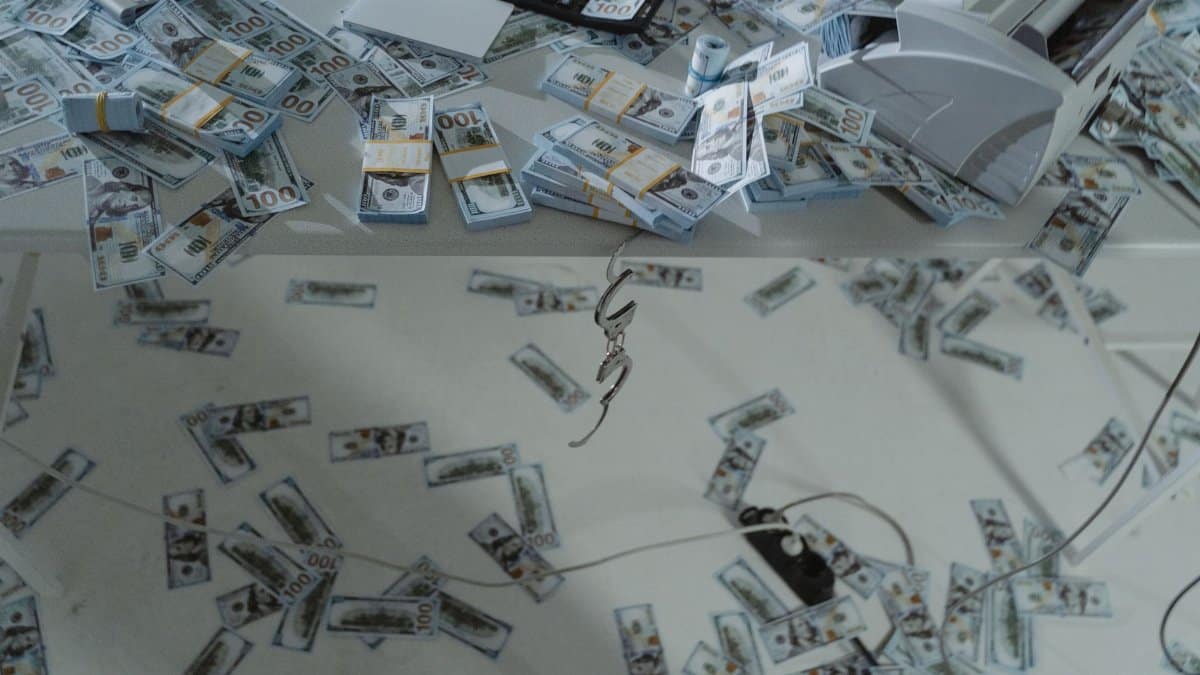
Every irregular auction has a balance sheet. A buyer may pay for a property whose title is worse than advertised. A former owner may lose a redemption window because a date was misstated. A lienholder may discover that notice went to an old address. These are not theoretical injuries. They are quiet, because the people who suffer them rarely have a press office.
A functioning supervision regime would not prevent every injury. It would create a trail. Trails matter when someone later asks a court to unwind a sale or to explain a fee. The absence of a trail is itself a kind of policy. It favors whoever already holds the paperwork. In a sheriff sale system, that someone is often not the person who slept in the house.
How a judge can thread the needle

A court has more options than a headline allows. It can find no contempt and still scold. It can find contempt and tailor a remedy that compels access without handing the office to a monitor. It can clarify the old agreement so both sides know what a Tuesday morning inspection actually includes. It can set deadlines, require status letters, and reserve sanctions for a second refusal rather than the first argument.
What a court should not do is treat the dispute as mere noise. Property auctions are a public function with private casualties. When an office rejects an audit it once accepted, the legal system either enforces the bargain or explains, in writing, why the bargain cannot stand. Silence, delay, and vague orders teach the wrong lesson. They teach that stipulations with the government are optional.
The phrase and the practice

Search interest around Philly sheriff contempt will rise and fall with the docket. The practice underneath it will not. Philadelphia will keep selling property to satisfy claims. The sheriff’s office will keep standing between statute and street. Advocates will keep asking for eyes on the process. The useful measure of this hearing is not whether a keyword trends. It is whether the next sale is easier to understand than the last one.
Readers who want a villain will be disappointed by a careful account, and that is fine. The office may have a sound legal reason for its refusal. The petitioners may have a sound equitable claim to the deal they signed. A judge may split the difference in a way that pleases no one and still improves the record. Civic life is mostly that kind of result, less cinematic than contempt and more durable.
What residents can reasonably demand

Demand is not the same as decree. Residents cannot order a sheriff to accept any monitor a plaintiff prefers. They can insist on published procedures, timely lists, consistent postponement rules, and a complaint path that does not vanish into a general inbox. They can ask council, the controller, and the courts to use the powers they actually have, instead of performing outrage at hearings they do not control.
They can also watch the language. Calling every dispute corruption trains people to ignore real corruption. Calling every demand for records an attack on law enforcement trains officials to hide. The middle path is dull and necessary. Show the sale. Explain the exception. Honor the order or get it changed in the open. That is not a radical program. It is the minimum a city owes the people whose homes pass through a public auction.
After the gavel

When the hearing ends, the benches empty and the building returns to its ordinary noise. The stakes do not empty with the room. Somewhere a notice is being printed. Somewhere a family is deciding whether to scrape together a payment or to let a sale proceed. The legal fight over supervision will not pause those lives, which is why the fight matters.
Philly sheriff contempt is a blunt label for a precise problem. An office faced a deal to allow watching of property auctions and, at the moment of enforcement, rejected the audit that watching required. A judge must now say whether that rejection defies the court or defines the limits of a settlement. Philadelphia should read the order, not just the headline, and then ask a simpler question. Can a stranger understand how a house changes hands? If the answer is no, the hearing was only the beginning.