
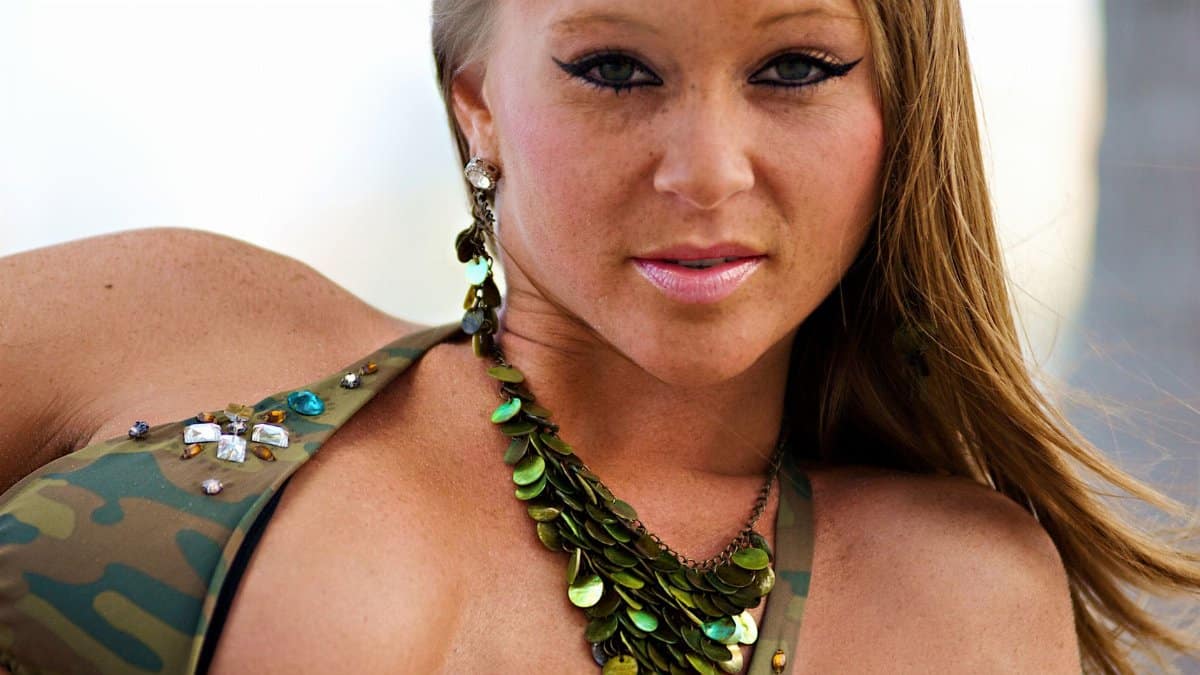
On a humid Florida night, with county tallies still scrolling and supporters thinning from a rented hall, the phrase Angie Nixon concession moved from rumor to fact. State Representative Angie Nixon, the Democrat who had asked voters to treat a special election for the United States Senate as a referendum on who gets heard in Washington, called the race and congratulated Republican Ashley Moody. The loss was not a surprise to most handicappers. It still landed with the weight of a door closing on a campaign that had tried to make a red state listen. Nixon did not treat the moment as an ending. She told allies she would be back, with 2028 already in her vocabulary.
What the concession actually settled

A concession is a civic ritual more than a legal instrument. Certification, canvassing, and the secretary of state still do the formal work. What Nixon did was withdraw the argument that the count might still turn. In a state as large as Florida, that choice matters. Campaigns can linger in partial returns and feed a mood in which every uncounted precinct looks like a plot. By speaking plainly, she gave her own voters permission to grieve without inventing a second reality. She also gave Moody a cleaner start. The winner will enter a chamber already sorted by party, and she will do it without a cloud of unfinished protest hanging over the certificate.
People who have worked Florida races know how long the night can feel. Urban counties report in bursts. Rural boxes arrive later. Mail ballots take time. A candidate who waits for mathematical certainty can look stubborn. A candidate who folds too early can look careless with the people who knocked doors. Nixon chose the middle path that experienced politicians prefer: acknowledge the trend, thank the workers, name the opponent, and keep a future tense alive. That is the practical content of the Angie Nixon concession, whatever the exact wording of the call turned out to be.
The candidate who stepped forward

Nixon built her name in Jacksonville politics before she carried it statewide. In the Florida House she became known less as a committee insider than as a voice willing to say uncomfortable things on the floor. Housing costs, maternal health, the daily grind of wages that do not keep up with rent: those were her subjects. She is a Black woman in a party that has struggled to hold diverse coalitions together in a state where Republicans have won the last several cycles at the top of the ticket. Her Senate bid asked Democrats to believe that a messenger with local roots could still move numbers that national consultants had written off.
Special elections are odd instruments. Turnout shrinks. The electorate skews toward habitual voters. Television is expensive and the calendar is short. Nixon had to introduce herself to millions of people who had never seen her name on a ballot outside Duval County and its neighbors. She ran as a Democrat without pretending Florida had suddenly become competitive in the way it was a generation ago. That honesty was part of her appeal to activists and part of her burden with swing voters who wanted a simpler promise.
Ashley Moody and the seat she kept in Republican hands
Moody came to the race with a different kind of familiarity. As attorney general she had spent years in the headlines, arguing the state’s legal positions and appearing beside Republican governors as a face of law and order politics. Voters who wanted continuity did not have to learn a new biography. They already associated her with the governing party. In a special election, name recognition is not everything, but it is a head start that money alone cannot always buy in a few weeks.
Republicans treated the seat as something to defend rather than something to discover. Their message was stability: keep Florida’s Senate voice aligned with the party that controls the governor’s office and, depending on the year, much of Congress. Moody did not need to reinvent herself as a populist outsider. She needed to show up, raise money, and remind habitual voters why they had backed Republicans before. That is a narrower task than Nixon faced, and narrower tasks are easier to finish.
Why this election felt different from a regular November
A special election compresses everything. There is no long presidential shadow to hide inside, and there is also no long presidential surge to ride. The Senate race had to justify its own existence to people who might otherwise skip an off calendar vote. Campaigns talk about energy. What they mean is whether volunteers will still show up on a Tuesday that does not feel historic. Nixon’s team tried to make it historic anyway, framing the contest as a chance to interrupt a streak. Moody’s team treated it as a duty to finish.
Florida’s size makes compression brutal. A candidate can be in Miami in the morning, Orlando at lunch, and the Panhandle by evening and still feel absent everywhere. Airtime costs a fortune. Digital ads chase people who have already decided. The voters who remain movable are few, older on average, and more likely to have a party habit. In that environment, a concession is often written into the polls weeks before anyone says the word. Saying it out loud is still an act of discipline.
The map that would not bend

Florida Democrats have spent several cycles searching for a map that still works. The old coalition of South Florida moderates, Tampa suburbs, and a reliable Black vote in urban cores has not been enough to overcome Republican strength in retirement corridors, rural counties, and the growing exurban rings. Nixon could win the rooms where she was already known. She could not, on the available evidence of recent statewide patterns, flip enough of the rest. Geography is not destiny, but it is a tax. Every mile between a rally and a persuadable precinct costs time the campaign does not have.
Observers who watched early vote and election day patterns saw a familiar shape. Democratic counties produced Democratic margins. Republican counties produced larger ones relative to their size and to who actually turned out. That is the unromantic story of the loss. It does not require a conspiracy. It requires arithmetic and a party that has not yet rebuilt the habit of winning among voters who moved to Florida for taxes, weather, and a political climate they already liked.
Money, message, and the limits of enthusiasm

Enthusiasm is real and it is not cash. Nixon drew people who wanted a fighter. They gave what they could. National Democratic committees, burned by expensive Florida experiments, were cautious about pouring unlimited sums into a race that private polls treated as uphill. Caution can look like abandonment to local activists. It can also look like stewardship to donors who have watched eight figure investments fail to move the statewide needle. Both feelings can be true in the same week.
The message problem was sharper than the money problem. Nixon spoke about affordability, health, and dignity at work. Those themes travel. What traveled less easily was the ask that voters reject a Republican they already knew in order to empower a Democrat they were just meeting, in a Senate that many Floridians experience as distant. Moody’s argument fit on a shorter sign. Nixon’s argument needed a conversation. Special elections rarely give you enough conversations.
How Democrats heard the loss

Inside the party, the night split into two conversations that barely touched. One was about Nixon herself: respect for a candidate who ran hard, pride in a campaign that did not sand off her voice, frustration that talent keeps meeting the same ceiling. The other was about structure: registration edges, the governor’s bully pulpit, a media market that rewards Republican frames, and a donor class tired of being told that this time the suburbs will save them. Neither conversation produces a senator by itself. Together they explain why a concession can feel both personal and institutional.
Some activists wanted a longer fight over ballots. Others wanted the party to stop performing hope it could not cash. Nixon’s choice landed closer to the second group without insulting the first. She did not scold people for believing. She declined to ask them to believe past the point where the numbers still moved. That is a kind of leadership that does not trend on social media and still matters to the people who have to recruit candidates next cycle.
The 2028 vow and what it can mean

Saying you will return in 2028 is easy on a concession night and hard in the years between. The Senate calendar, the governor’s race, House maps, and presidential coattails will all rearrange the board. Nixon may run for reelection to the state House, seek another statewide office, or build an organization that exists between campaigns. A vow is not a filing. It is a signal to staff, donors, and rivals that she does not accept this loss as a permanent verdict on her name.
Voters should hear that signal with two ears. One ear hears resilience, which Florida Democrats badly need if they want anyone serious to keep running. The other ear hears the risk of a permanent campaign, in which every loss is prewritten as a prologue. The healthiest version of a 2028 plan is quieter than a rally line. It is county chairs, small dollar lists, and a record in Tallahassee that can be explained without a slogan. If Nixon builds that, the line will have meant something. If she does not, it will join a long shelf of election night promises.
Concession as a civic habit worth keeping

American politics has grown suspicious of losers who admit they lost. The suspicion flatters the winner’s opponents and corrodes the habit that lets a democracy change hands without a fight in the street. Nixon’s decision sits in an older tradition. You thank the people who trusted you. You recognize the person who beat you. You leave the door open for argument on policy without leaving it open for fantasy about the count. That tradition is not naïve. It is a technology for living together after a binary choice.
I have watched enough election nights to know the temptation. A late batch of ballots arrives and someone in the room does the math out loud in a hopeful voice. Staff look at the candidate, waiting for permission to keep the lights on. The brave sentence is often the short one: we did not get there. Everything after that sentence can still be fierce. Policy fights do not end because a concession did. They end when people decide that only a stolen narrative can explain a result they dislike. Nixon declined that exit.
Faith, fatigue, and the people who still organize
In church basements and mosque social halls and synagogue community rooms, Florida organizers have long treated elections as moral work as well as political work. Not every voter frames it that way. Many do. They speak about neighbors, about who is seen, about whether public life still has a place for mercy and for truth telling at the same time. A loss presses on that language. It asks whether hope was foolish. The better question is whether hope was specific. Specific hope counts volunteers, tracks voter contacts, and accepts that a righteous message can still fall short of a majority.
Fatigue is the silent opponent in the next cycle. People who gave nights and weekends will wonder if the state is finished as a contested ground. Parties that tell them to feel nothing, or to feel only rage, will lose them. Parties that tell them the truth, that the climb is steep and the work is still local, have a chance to keep them. The Angie Nixon concession can be used either way: as proof that trying is pointless, or as proof that trying can be done with dignity when the math closes. Dignity does not win seats. It keeps the roster from emptying.
What Moody inherits besides a title

Moody takes a seat in a Senate that rewards seniority and punishes improvisation. She will have a Republican brand, a legal résumé, and a fresh electoral mandate of the special election kind, which is real and also narrower than a presidential year mandate. Constituents will want casework, disaster response, and a voice on insurance costs that dominate kitchen tables from the Keys to the Panhandle. None of that is solved by a victory speech. The winner’s burden starts when the cameras leave.
She also inherits an opponent who has not vanished. Nixon remains a state legislator with a platform and a list. Oversight, floor speeches, and local fights will keep her in the frame Moody’s team would prefer to close. Healthy competition looks like that. It is not a refusal to concede. It is the sequel to conceding, conducted under rules everyone can see.
The press, the narrative, and the morning after

Newsrooms will file the result, quote the statements, and move to the next storm, literal or political. The risk is a shorthand that flattens Nixon into a cautionary tale and Moody into an inevitability. Both flattenings are lazy. Nixon tested whether a forthright Democrat with a Jacksonville base could stretch a special election past its structural limits. She could not. That is information, not a moral. Moody proved that Republican habits in Florida still convert into Senate votes when the party fields a known quantity. That is also information.
Readers far from Florida may treat the story as one more data point in a national mood. They should be careful. Florida has its own migration patterns, its own insurance crisis, its own relationship to the Caribbean and to Latin America, its own governor centered political culture. A Senate result here does not automatically predict Michigan or Arizona. It does tell Democrats who fantasize about a quick southern comeback to budget for years, not months.
What remains unfinished

Unfinished work is the honest subtitle of the Angie Nixon concession. Ballots will be certified. Staff will close offices and argue over who gets paid last. Nixon will return to a Capitol where the majority does not share her priorities and where minority party members measure success in amendments that rarely pass and in oversight that sometimes does. Moody will hire a Senate staff and learn which Florida problems can be touched from Washington and which cannot. Voters will go back to work.
If there is a lesson that survives the spin, it is modest. Campaigns end. Argument does not. A candidate can lose badly by the standards of her hopes and still leave the public square cleaner than she found it, provided she tells the truth about the count and refuses to burn the rules on the way out. Nixon did that part. The 2028 question is whether she, and the people who believed her, can turn a clean ending into a sturdier beginning. Florida will not make that easy. It rarely does. The habit of showing up anyway is the only strategy that has ever rebuilt a party from a night like this one.