

People move through familiar routines convinced that only deliberate focus reveals what matters. A sudden sense that traffic always thickens near a certain corner or that a colleague tends to call just before lunch arises without effort. Such quiet noticing stems from Unconscious Pattern Detection, a process in which the brain registers regularities across sights, sounds, and sequences long before any intention to look for them forms. Recent experiments show this capacity operates even when attention is directed elsewhere, reshaping how scientists view everyday awareness and learning.
Foundations in Neural Timing
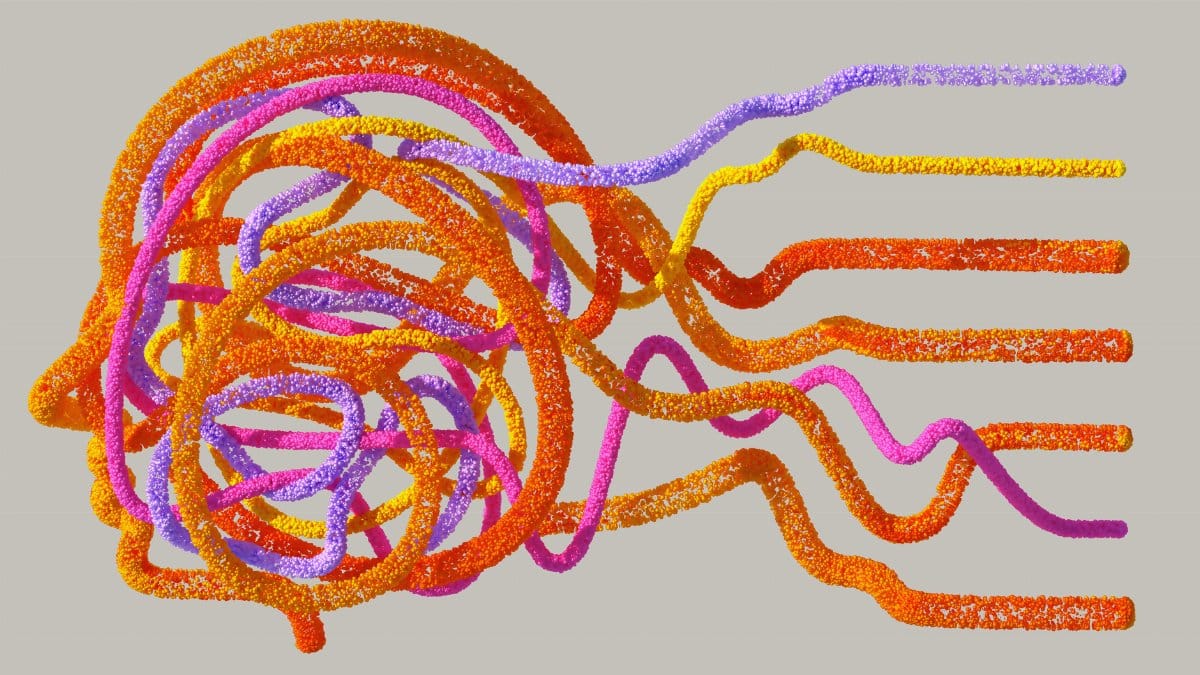
Brain imaging studies reveal that cells in the hippocampus and prefrontal areas fire in sequences that mirror repeating events. These firings occur within milliseconds of a repeated stimulus, building an internal model without any need for verbal description. When the model matches incoming data the person may report a vague feeling of familiarity rather than a clear insight.
Evidence From Controlled Experiments

Researchers at institutions tracking visual sequences asked volunteers to watch streams of shapes while performing an unrelated counting task. Later tests showed participants responded faster to patterns they had never consciously noted. The original work appears in detail at https://www.scientificamerican.com/article/how-your-brain-detects-patterns-without-conscious-thought/.
Implications for Skill Acquisition

Musicians and athletes often describe moments when performance improves overnight. Such gains trace in part to Unconscious Pattern Detection sorting practice repetitions during rest. The mind extracts timing ratios and spatial relations that later surface as smoother execution.
Links to Emotional Forecasting

People frequently sense tension in a room before anyone speaks. This forecast arises because prior social encounters created templates that the brain now matches to posture, tone spacing, and seating arrangements. The templates form without deliberate social analysis.
Boundaries of Conscious Access

Attempts to force awareness of the process can reduce accuracy. When subjects are instructed to name the rule they think governs a sequence their performance drops compared with those who simply respond. The finding suggests that verbalizing disrupts the statistical extraction still under way.
Relation to Sleep and Consolidation

Periods of quiet rest strengthen the connections supporting Unconscious Pattern Detection. Sleep allows replay of recent sequences at accelerated speeds, reinforcing statistical links while discarding noise. Participants deprived of rest show weaker transfer of learned regularities to new settings.
Applications in Professional Judgment

Traders and clinicians sometimes reach sound conclusions after only brief exposure to data displays. Their edge appears to rest on accumulated exposure that trained the brain to flag anomalies or alignments outside focal attention. Training programs that respect this mechanism emphasize repeated exposure rather than explicit rule teaching.
Interaction With Cultural Context

Regularities valued in one community may pass unnoticed in another. Listeners raised among tonal languages detect pitch shifts that others miss even when both groups hear identical recordings. Unconscious Pattern Detection therefore reflects both biology and the statistical structure of lived surroundings.
Future Questions for Research

Investigators continue to examine how this capacity changes across the lifespan and whether certain neurological conditions alter its reach. Early data suggest preserved function in some forms of amnesia, indicating that the mechanism can operate independently of episodic recall.
Practical Takeaways for Daily Observation

Allowing time for unstructured exposure to a domain often yields better recognition of its underlying structure than rushed analysis. Simple repetition across varied examples appears sufficient for the brain to update its internal models.