

Nestled amid the rolling hills of southern France, a visitor steps through an ancient stone archway into a world frozen in time. Lavender bushes frame gravel paths that twist in precise geometric patterns, while espaliered fruit trees cling to weathered walls. This is one of Europe’s monastic gardens, a medieval creation designed not just for sustenance, but for the soul. These enclosed paradises, born from the rigor of cloistered life, offered monks a blueprint for tranquility amid chaos. Their layouts, rooted in scripture and geometry, continue to draw seekers of peace today, whispering lessons from an era when gardens were both sanctuary and statement.
Roots in Early Christian Asceticism

The story of monastic gardens begins in the deserts of Egypt and Syria during the fourth century, where early Christian hermits cultivated small plots for survival. As monastic communities grew in Europe, these patches evolved into structured spaces. By the sixth century, Benedict of Nursia’s Rule emphasized manual labor, including gardening, as essential to spiritual discipline. Gardens became integral to abbey life, providing herbs for medicine, vegetables for the table, and flowers for altars. This fusion of practicality and piety laid the foundation for the elaborate designs that defined medieval monastic gardens.
The Cloister as Garden Core
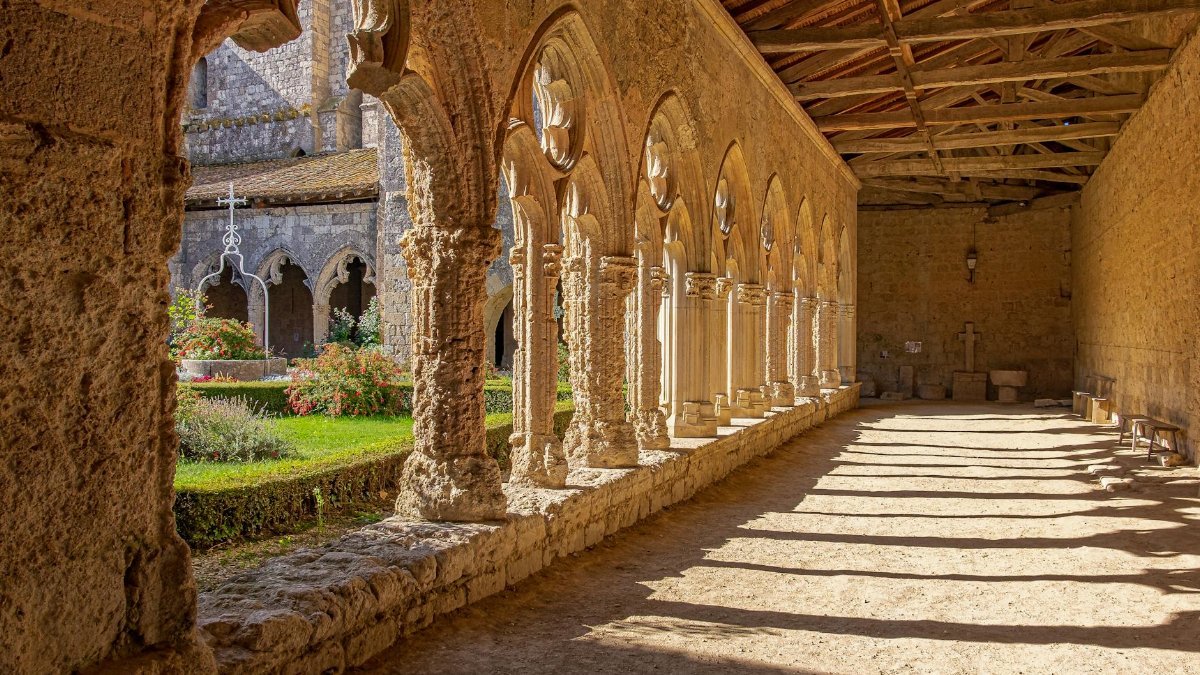
At the heart of every great monastery lay the cloister garden, a rectangular paradise surrounded by covered walkways. Typically 100 feet square, these spaces mirrored the heavenly Jerusalem described in Revelation. Monks paced the alleys during meditation, the enclosed walls shielding them from worldly distractions. The design promoted contemplation; paths divided the square into four quadrants, symbolizing the four rivers of paradise. Stone benches invited quiet reflection, while the central herb bed ensured self-sufficiency. This intimate scale made the cloister the prototype for all monastic gardens.
Geometry as Divine Order

Medieval builders wielded compass and square with theological intent. Monastic gardens followed strict proportions, often based on the golden ratio or Pythagorean principles absorbed from classical texts. Paths formed crosses or wheels, evoking Christ’s sacrifice or the cosmos. At Fontenay Abbey in Burgundy, the garden’s layout aligns with solar paths, blending astronomy and faith. Such precision countered the disorder of feudal Europe, offering monks a microcosm of eternal harmony. These patterns, etched in gravel and boxwood, endure as testaments to a belief in ordered creation.
Herbs and Healing in Monastic Plots

Monasteries pioneered herbal medicine, their gardens stocked with plants like sage, rue, and hyssop. Monks distilled essences for remedies, drawing from texts like the Capitula de re herbaria. Roses provided petals for rosewater, used in both liturgy and healing. These plots were pharmacies without shelves, where labor yielded cures for ailments from plague to melancholy. The sensory richness, scents mingling with earth, reinforced the garden’s role in holistic well-being, a practice influencing modern phytotherapy.
Water’s Role in Creating Serenity

Fountains and rills animated monastic gardens, their gentle sounds masking external noise. Inspired by Roman engineering and Islamic precedents, channels carried spring water through conduits, irrigating beds while symbolizing baptismal purity. At the Chartreuse de la Verne in Provence, a central basin collects rainwater, feeding fish ponds stocked with carp for Fridays. This hydrology not only sustained life but evoked the Psalms’ living waters, drawing monks deeper into prayer. The calming trickle persists, a acoustic anchor in restored sites.
Cross-Cultural Influences from the East

Crusaders and pilgrims brought Islamic garden ideals back to Europe, where paradise gardens with quadrants and fountains resonated with Christian imagery. Cordoba’s Alcazar gardens, once under monastic oversight, blended Moorish tiles with Christian herbs. Cistercian monks, known for austerity, adapted these elements sparingly, favoring utility over ornament. Yet traces appear in trellises and pools at places like the Abbey of Sénanque. This synthesis enriched monastic gardens, proving cultural exchange could enhance spiritual retreat.
Iconic Sites Preserving the Legacy

Europe boasts treasures like the cloister garden at Mont Saint-Michel, where tides frame tidal herbs, or Rievaulx Abbey in England, its ruins cradling wildflower beds. In Italy, the Subiaco gardens near Saint Benedict’s cave feature terraced vines echoing his rule. Germany’s Maulbronn Abbey showcases a physic garden revived in the 19th century. Each site reveals variations: Carthusians favored solitude with narrow paths, while Benedictines emphasized communal harvest. Visiting these demands humility before nature’s quiet persistence.
Seasonal Rhythms and Monastic Calendar

Gardens pulsed with the liturgical year. Spring sowing aligned with Easter, autumn harvests with Michaelmas. Monks pruned in Lent, weeding as penance. This calendar ensured abundance; orchards bore apples for cider, nuts for winter stores. Bees in hives produced honey, the only permitted sweetener. Such cycles taught impermanence, blooms fading as reminders of mortality. Modern recreations, like those at the American College in Louvain, mimic these rhythms to educate on sustainable living.
Decline and Rediscovery After the Reformation

The Dissolution of the Monasteries under Henry VIII razed many English gardens, their stones repurposed. Continental wars scattered others. Yet fragments survived, inspiring 19th-century Romantics. William Morris championed their revival, influencing the Arts and Crafts movement. Today, organizations like the International Dendrology Society restore plots using medieval seeds from banks like those at Kew Gardens. These efforts reclaim not just plants, but a philosophy of stewardship lost to industrialization.
Modern Echoes in Urban Oases

Contemporary designers draw from monastic gardens for stress relief. New York’s Cloisters replicates a 12th-century unicorn tapestry garden, its beds bursting with medieval flora. In London, the Chelsea Physic Garden thrives on monastic precedents. Architects like Piet Oudolf incorporate their wilder edges into public parks. Studies from the University of Exeter ( here ) link such green geometry to reduced cortisol, validating ancient wisdom for today’s harried lives.
Challenges of Preservation Today

Climate shifts threaten these relics; droughts parch lavender at Sénanque, invasives crowd cloisters. Funding lags, with restoration costing millions, as at Villers Abbey in Belgium. Volunteers and EU grants help, but overtourism erodes paths. Balancing access with conservation demands ingenuity, like elevated walkways at Fontevivo. These gardens, fragile as parchment, urge us to protect shared heritage amid global upheaval.
Why Monastic Gardens Still Captivate

In an age of digital noise, monastic gardens offer unplugged solace. Their medieval blueprint, simple yet profound, teaches restraint and reverence. Walking their paths, one senses the monks’ presence, their labor echoing in every leaf. For urban dwellers, these spaces promise respite, a return to roots where earth heals. As Europe confronts modernity, these gardens stand as verdant anchors, inviting all to pause, breathe, and remember.