

South of Burlington, where farm roads meet the bluffs above the Mississippi, a storage problem has turned into a public event with a court stamp on it. Federal officials told judges that drums of degraded material had reached a point where delay itself carried danger, and an appeals court cleared crews to destroy the contents under emergency rules rather than ship them out. Army lead explosives Iowa is the plain phrase many residents now use for a plan to detonate about five tons of lead azide held in 68 drums at the Iowa Army Ammunition Plant. The case sits at the junction of safety, memory, and trust, because this plant has employed neighbors for generations and has also left a long record of contamination fights.
What the appeals court cleared

The legal question was narrower than the fear it produced. Judges did not bless a new weapons program. They cleared a disposal, a one time destruction of material the Army says can no longer be stored or hauled with confidence. Public descriptions of the plan put the load at about five tons, divided among 68 drums of degraded lead azide, with the work set near Burlington under emergency provisions rather than a slower permitting path.
That distinction matters. An emergency finding tells regulators and neighbors that waiting is itself a risk. It does not erase the duty to explain blast effects, fallout, and what will be measured afterward. For people who live downwind, the court order is permission, not reassurance. They still want to know who stands on the pad, who watches the instruments, and who answers if the plume does not behave as the models promised.
Why moving the drums is treated as the greater risk

Lead azide is a primary explosive, the kind of compound used to start a larger detonation. When it ages, reacts with its container, or takes on moisture in the wrong way, it can become less predictable. Army managers have argued that loading such drums onto trucks and sending them across public roads would multiply the chance of a shock, a fire, or a handling error far from any controlled pad.
Critics hear a familiar logic: the dangerous thing stays where it already is, and the community that has hosted it for decades absorbs the last, loudest step. Both claims can be true at once. Transport risk is real. So is the cumulative burden on a single county. A serious public account has to hold those facts together instead of treating one as a slogan and the other as an afterthought.
Lead azide in ordinary language

Most readers will never handle this chemical, and they should not need a lab manual to follow the news. Lead azide is a salt that releases energy very quickly when struck, heated, or otherwise initiated. In military work it has long served in detonators and related devices. The lead in its name is not a metaphor. The metal remains after the blast chemistry runs its course, which is why air and soil questions follow any open detonation.
Degraded does not mean harmless. It means the material no longer matches the condition in which it was made and stored. Crystals can grow, containers can corrode, and sensitivity can shift. That is the practical reason crews prefer a controlled destruction on a range they know to a journey through towns that did not agree to become a corridor for failing drums.
A plant that has long defined the river bluffs

The Iowa Army Ammunition Plant is not an abstraction on a map. It is a major employer, a fenced landscape of production lines and storage magazines, and a neighbor to farms, schools, and the river towns that orient themselves toward Burlington. Generations have drawn paychecks there. Generations have also watched cleanup arguments stretch across decades, from groundwater plumes to questions about what was burned or buried when rules were looser.
That history shapes how a new detonation is heard. A family that trusts the plant because an uncle retired from it will not hear the same sentence as a family that has spent years asking about wells. Journalism that flattens either experience into a single mood of panic or pride will miss the town. The plant is both livelihood and liability, and residents are allowed to feel both without being cast as naive or obstructive.
Emergency provisions and the chain of responsibility

Emergency authority is a legal tool, not a mood. It lets an agency move faster when officials certify that ordinary timelines would increase danger. In this case, the Army has pointed to emergency provisions to detonate the drums on a short clock, with an appeals court declining to stand in the way. Speed can be justified. Speed also compresses the chance for independent review, for local briefings, and for a record that someone outside the chain of command can later audit.
Responsibility does not stop at the judge’s signature. Installation commanders, Army environmental staff, state regulators, and federal pollution offices each hold a piece. If those pieces are not named in public, the phrase emergency becomes a curtain. Neighbors are entitled to a roster: who ordered the shot, who modeled the plume, who will sample the ground, and who pays if the sampling finds more than the briefing slides allowed.
What people near Burlington may notice

A detonation of this scale is not a silent administrative act. People in the nearer rings may hear a report, feel a pressure change, and see a column of smoke if weather and charge design allow it. Windows rattle in stories that circulate after range activity, whether or not every rattle traces to the same event. Schools, clinics, and shift workers will want a clock they can plan around, not a vague window that stretches across a day.
Notice is part of safety. Road closures, airspace limits, and advice for anyone with respiratory illness belong in plain language, repeated through local radio, county channels, and plant gates, not only in a filing. If the Army expects trust, the first evidence is whether a person without a lawyer can learn, before the blast, what to do with children, livestock, and open windows.
Soil, air, and water after the blast

Open detonation destroys the unstable compound. It does not erase the lead. Fine particles can travel with wind, settle on fields, and wash toward ditches that eventually remember the Mississippi. The relevant public question is not whether a single event will poison a river by itself. It is whether this shot, added to decades of range activity, stays within limits that health agencies already use for lead in soil and dust, and whether anyone will publish the numbers without being asked twice.
Sampling has to be designed before the smoke clears. Upwind and downwind sites, surface soil, and a plan for rain in the following days are the minimum of a credible program. A press note that says monitoring occurred, without methods or results, is not monitoring. It is a sentence. Residents who have followed earlier plant cleanups have learned to read the difference.
The argument from neighbors and advocates

Opposition here is not a single voice. Some neighbors accept the detonation and reject the process. They want more days of notice, clearer maps, and a commitment that emergency shortcuts will not become the default for every aging magazine. Others argue that any open blast of lead bearing material is the wrong ending, and that the Army should have invested earlier in technologies that capture metals instead of lofting them.
Advocates who have tracked munitions waste nationally see Burlington as another chapter in a long dispute over open burning and open detonation. They argue that emergency labels arrive late, after years in which a safer destruction method might have been built. The Army answers that the drums in front of them cannot wait for a perfect system. A fair article records both clocks: the clock of unstable chemistry, and the clock of institutional delay that let the chemistry become the emergency.
Memory of earlier contamination

Trust is a balance sheet. At this plant, the credits include steady work and a mission that communities were asked to treat as patriotic duty. The debits include contamination that outlasted the wars it served, and a cleanup vocabulary that often sounded more complete in reports than in kitchens. When officials say this detonation is controlled, many listeners hear earlier assurances that also used that word.
Memory is not nostalgia. It is evidence about how institutions behave when attention moves on. If past sampling was slow to reach the public, people will assume this sampling will be slow unless a different habit is visible now. Publishing a schedule, naming a local liaison, and keeping that person available after the cameras leave would cost little beside the cost of another generation of doubt. Army lead explosives Iowa will be remembered less for the size of the charge than for whether the follow through matched the briefing.
The day of the detonation
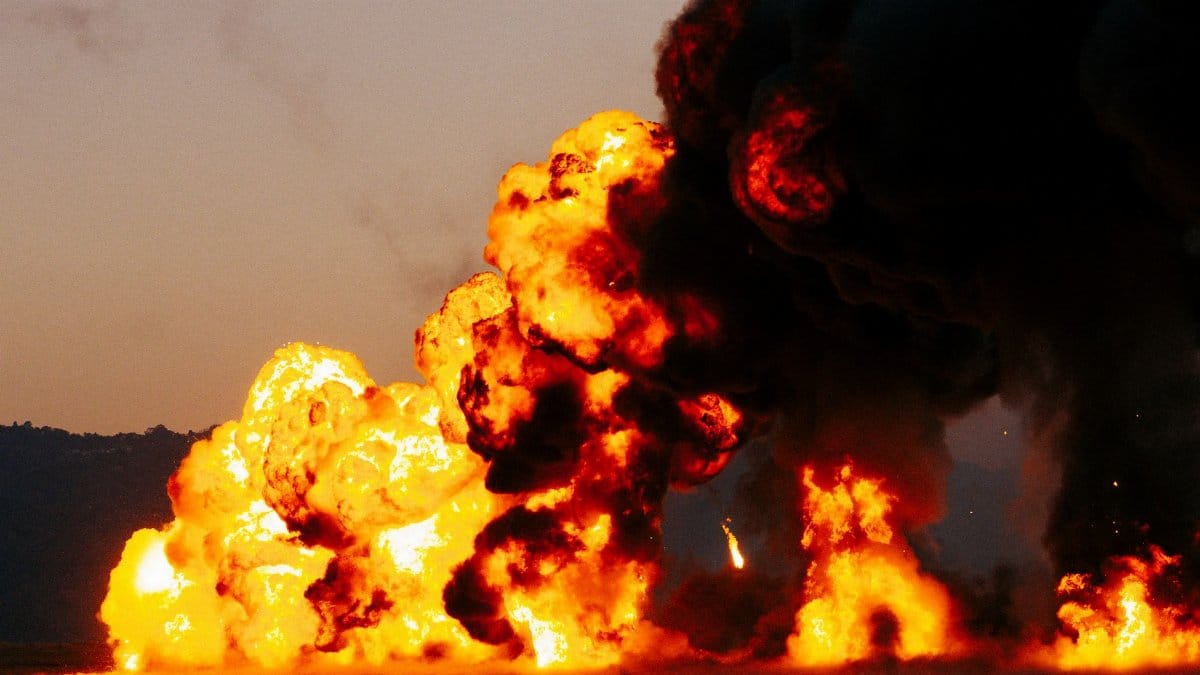
On the day itself, the useful story is procedural. Crews will set exclusion zones. Weather will be checked against criteria for wind and stability, because a blast into the wrong air mass is a different event from a blast into air that lifts and disperses as planned. Charges are arranged so the material is consumed as fully as the method allows. Observers, some in uniform and some from regulatory offices, are supposed to confirm that the work matches the cleared plan.
Readers should be wary of theater. A livestream, if one appears, shows a flash. It does not show lead in a field a mile away. The meaningful record is written in logs: time of detonation, wind direction, any deviation from the plan, and the first round of samples. Those logs should not require a freedom of information fight to see. Emergency speed at the front end ought to be matched by ordinary transparency at the back end.
Questions that will outlast the smoke

Several questions will remain after the drums are gone. How many other lots at this plant, or at sister installations, are approaching a similar judgment? What investment is actually underway in destruction methods that trap metals rather than relying on open pads? Will state agencies treat this shot as a precedent, or as a narrow exception tied to these 68 containers? And who, six months from now, will still be assigned to answer a farmer who finds dust on a machine shed and wants a test?
Those questions are not a demand that the Army pretend risk can be set to zero. They are a demand that emergency logic stay exceptional. If every aging stockpile is one inspection away from the same shortcut, then the shortcut is policy. Policy deserves hearings, budgets, and alternatives. A single cleared blast does not settle that larger design.
Stewardship when the urgent choice is still a hard one

There is a moral register to this story that does not require a sermon. People were asked, over many decades, to live beside work that served national defense. The land took the residue. The fair reply, when the residue becomes unstable, is not only a legal finding that a blast may proceed. It is a posture of care: tell the truth early, measure what the blast leaves, and do not ask the same households to absorb uncertainty as if uncertainty were their civic duty.
Care is concrete. It looks like a liaison who picks up the phone, a sampling map that a non specialist can read, and a refusal to hide behind the phrase emergency once the danger of delay has passed. It also looks like honesty about limits. No detonation plan can promise a silent sky or a spotless field. It can promise that the people who bear the noise are not treated as an afterthought to the paperwork.
Army lead explosives Iowa will fade as a headline. The plant will still be there, the river will still take the runoff, and the families on the bluffs will still decide whether the next assurance is worth believing. That decision will rest less on the appeals court than on what officials publish, what they sample, and whether they stay present when the unusual day has become an ordinary Wednesday again. A community can accept a hard necessity and still insist that necessity be accompanied by respect. That insistence is not obstruction. It is the minimum owed to people who did not choose the drums, and who will live with whatever the blast leaves behind.