
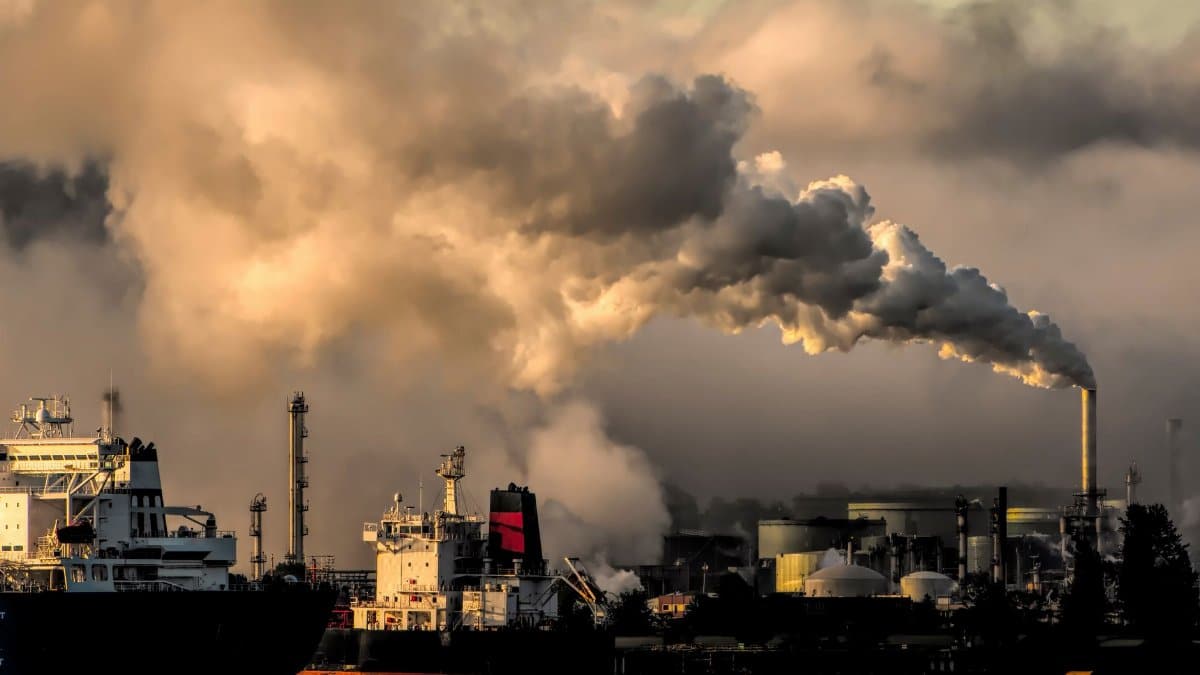
On a gray morning in Woods Hole, the first boat for Martha’s Vineyard eases off the slip with a diesel rumble that regulars no longer notice. Cars sit in tight rows. Commuters cradle coffee. The wake fans across the harbor, and for a minute the smell of fuel lingers after the stern clears the pilings. That ordinary departure is also a climate problem in plain sight. Steamship Authority emissions are supposed to fall by half before 2030, yet the public line that stitches the Cape to the Islands still runs on the fuel habit that made the promise necessary.
A public promise with a short clock
The Steamship Authority is not a private cruise brand. It is the legislated lifeline for Martha’s Vineyard and Nantucket, a quasi public agency whose boats carry workers, groceries, patients, school teams, and the summer surge that pays so many local bills. When its leaders set a goal of cutting carbon output in half by 2030, they were speaking to islanders who cannot choose another highway. They were also speaking to a state that has told every major institution to treat warming as a planning fact, not a slogan.
A goal like that only means something if the fleet, the docks, and the fuel contracts move with it. Calendars do not negotiate. 2030 is close enough that a new vessel ordered today would barely have time to prove itself before the deadline. Waiting for a perfect technology is a choice, and on the water that choice looks a lot like standing still.
What the boats actually burn

Ferries of this size are hard machines. They push heavy steel through tide and wind, on schedules measured in minutes, in weather that would cancel a pleasure cruise. Diesel has been the reliable answer for decades because it is dense, familiar, and available at the slip. It also releases carbon dioxide, nitrogen oxides, and fine particles that settle over harbors where people live within a short walk of the terminal.
Reporting on the authority’s climate path has described diesel use growing rather than shrinking, which is the opposite of a glide path toward a halved footprint. The Boston Globe account of the electrification gap is here: Steamship Authority electrification and the 2030 climate goals. If fuel burn is rising, Steamship Authority emissions rise with it, no matter how earnest the resolution that sits in a board packet.
Why the numbers are moving the wrong way

Demand is not a moral failure. More people live on the Islands year round. More freight has to cross. A canceled trip is not an abstract inconvenience. It is a missed shift at the hospital, a grocery delivery that does not land, a student who does not get home. When ridership and truck traffic climb, a fleet that still burns diesel will emit more unless each crossing becomes much cleaner.
That is the trap. Service can improve, on time performance can look respectable, and the climate ledger can still worsen. Efficiency projects that shave a little fuel help at the margin. They do not halve a rising total. The authority can be good at its historic job, moving people and goods safely, and still be failing the job it assigned itself for this decade.
Reliability came first, and still does

Anyone who has waited out a gale in the terminal knows why captains and mechanics worship redundancy. A boat that cannot sail is a broken public service. Island politics remembers winters when the freight boat was the difference between a stocked pharmacy and a bare shelf. That memory shapes every capital decision. New propulsion has to work in January, not only in a vendor brochure.
The trouble is that reverence for the known fuel becomes an argument against every alternative. Electric drives, hybrid arrangements, cleaner fuels, and shore power each carry a risk of early trouble. Diesel carries a certainty of carbon. Treating only the first risk as serious is how a 2030 goal slips from plan to aspiration.
The electric boat that has not taken the run

Electrification is the path most often named, and the hardest to fake. A true electric or mainly electric ferry needs batteries with serious weight and cost, charging gear that can refill a vessel between trips, and a grid connection stout enough for the harbor. It also needs crews trained on a different machine and a maintenance shop that can support it. None of that appears because a board votes for a percentage.
Other ferry operators have begun to put battery boats into regular service, especially on shorter routes where charging windows are kinder. The Cape and Islands runs are not a science fair. They are long, exposed, and packed with freight. That difficulty is real. It is not a reason to let Steamship Authority emissions drift upward while studies multiply. A pilot that never leaves the drawing board is not a transition. It is a delay with better stationery.
What riders feel, and what they do not

Most passengers judge a crossing by whether the boat leaves, whether the car deck is orderly, and whether the island is there at the end. Carbon does not announce itself in the snack bar. The exhaust that riders do notice is the local kind, the bite in the air near an idling stack, the film on a window in a cottage downwind of the terminal. Those irritations are health issues as well as climate issues. Particle pollution and smog forming gases hit waterfront neighborhoods first.
I have stood on that pier in a wind that pushed the exhaust back over the queue and thought how strange it is that a public boat can be both indispensable and quietly harmful. The people in line are not villains for needing the crossing. The institution that runs it is the one with the duty to change the machinery.
Islands that cannot opt out

Mainland towns can argue about highway lanes and bus routes. Vineyard and Nantucket residents do not have that luxury. The ferry is the road. When Steamship Authority emissions stay high, the climate burden of island life is concentrated in a single fleet that everyone must use. Tourism multiplies the load in summer, when extra trips stack up and freight boats run hard. Year round residents then live with the baseline all winter.
There is a fairness question inside the technical one. Visitors enjoy the beaches and leave. Island workers breathe the harbor air and pay the fares. A climate plan that protects the schedule for summer dollars while postponing cleaner boats asks the people who stay to subsidize everyone else’s delay.
Docks, dollars, and the wires on shore
Cutting fuel burn is not only a naval architecture problem. Shoreside power has to exist before a plug in boat can do its job. Substations, cables, and utility agreements move on their own slow calendar. If the authority waits for the grid, and the utility waits for a signed vessel, nothing happens. Capital budgets feel the strain. A new ferry is a once in a generation purchase. Choosing another conventional diesel boat in that window locks in emissions for the life of the hull, which will outlast 2030 by a long stretch.
Federal and state climate money exists for ports and vessels, but it favors projects that are ready, not projects that are still being admired. Grant cycles punish indecision. So does inflation in shipyards. Every year of study raises the price of the boat that was supposed to be the solution.
A deadline that is already crowded

Halving emissions by 2030 requires a sequence, not a speech. Design, bid, build, crew training, dock work, and a first season of real service all have to fit inside a handful of years. Even an aggressive hybrid retrofit takes time in dry dock, and the authority cannot pull half the fleet out of the water at once. The schedule that makes the Islands livable is the same schedule that makes rapid change difficult.
That tension should produce urgency, not resignation. If the current path cannot hit the mark, leaders owe the public a revised plan with dates, vessel names, and fuel totals, not a softer adjective in front of the same goal. Steamship Authority emissions will not fall because a paragraph in an annual report says they should.
What halving would actually take

A credible cut starts with an honest inventory. How much fuel each boat burns, on which route, in which season. Which crossings can take a battery or a hybrid first. Which freight runs will stay on liquid fuel longer, and what cleaner fuel, if any, can serve them without a fairy tale about availability. It includes shore charging sized for peak turnarounds, not for a demonstration on a quiet Tuesday.
It also includes a rule for new purchases. No additional conventional diesel hull unless the board can show, in public, why that hull does not wreck the 2030 math. Transparency is not a substitute for hardware. It is how islanders tell the difference between a hard problem and a postponed one.
The crossing still has to be made
None of this argues for fewer boats or a romantic thinning of island life. People will keep needing to cross. The moral and practical task is to make that crossing less costly to the air and the climate that the Islands themselves depend on. Beaches, harbors, and basements already know what higher seas and harder storms do.
The authority’s goal was a promise to treat that knowledge as operational. Right now the promise and the fuel tickets point in different directions. Steamship Authority emissions are the scoreboard. Until diesel use bends down in a way riders can see in fewer stacks, quieter terminals, and a fleet plan with dates on it, the 2030 mark is not a destination. It is a sentence the agency has not yet decided to keep.