

On a warm November evening in the Rio Grande Valley, volunteers stacked unused yard signs beside a folding table and tried to make sense of a result few strategists in Austin had treated as likely. The congressional lines drawn to enlarge a Republican majority had instead trimmed it. Texas redistricting 2026 was supposed to prove that Latino voters had moved, and would stay, in the Republican column. The ballots offered a colder reading. A map built to add five House seats finished, by the count that matters in Washington, with a net loss of one.
The bet behind the new lines

Republican mapmakers entered the cycle with a clear theory. President Donald Trump had improved his standing with Latino voters in 2024, especially in South Texas, and party leaders treated that shift as the start of a realignment rather than a temporary protest. If those voters could be gathered into districts where a modest Republican edge would hold, the state could send a larger delegation to the House and protect a national majority that had grown thin.
The theory was not invented in a back room on election week. It grew out of years of county returns, church parking lot rallies, and arguments about border security, energy jobs, and the cost of groceries. Consultants told donors that culture and economics were pulling working class Latino families away from Democrats who seemed more fluent in college towns than in colonias and refinery towns. The new map was the legislative expression of that confidence.
Confidence, though, is not the same thing as a census of individual voters. A presidential year and a midterm are different elections. Turnout falls. The names at the top of the ticket change. Local grievances that were quiet under a national storm can become loud again when the race is about a representative who will vote on hospitals, water projects, and military bases. The architects of the map discounted that difference. They priced in a lasting conversion and drew lines as if the conversion were already complete.
What five extra seats were supposed to look like

The public goal was simple enough to fit on a donor slide. Gain five House seats. Protect incumbents who had grown nervous about diversifying suburbs. Keep Democratic strength packed into a smaller number of urban districts where it could not spill into neighboring turf. In political language this is ordinary hardball, and both parties have played it when they held the pen. What distinguished this round was the demographic wager sitting inside the geometry.
Several new or redrawn districts leaned on Latino majorities or large Latino pluralities that had edged Republican in the last presidential contest. The margins were not landslides. They were the kind of edges that look sturdy on a spreadsheet and fragile on a rainy Tuesday when older voters stay home and younger voters do not. Map drawers treated those edges as a floor. Campaigns later discovered they had been a ceiling.
Democrats, shut out of the line drawing in a state where Republicans control the Legislature and the governorship, spent the year arguing that the map cracked communities that had voted together for decades and packed others so tightly that a single member could not speak for neighborhoods with different needs. Those legal and moral claims mattered in court filings. They mattered less, in the short run, than whether the assumed Republican Latino vote would show up and stay loyal. It did not, at least not in the volume the map required.
South Texas refused the script
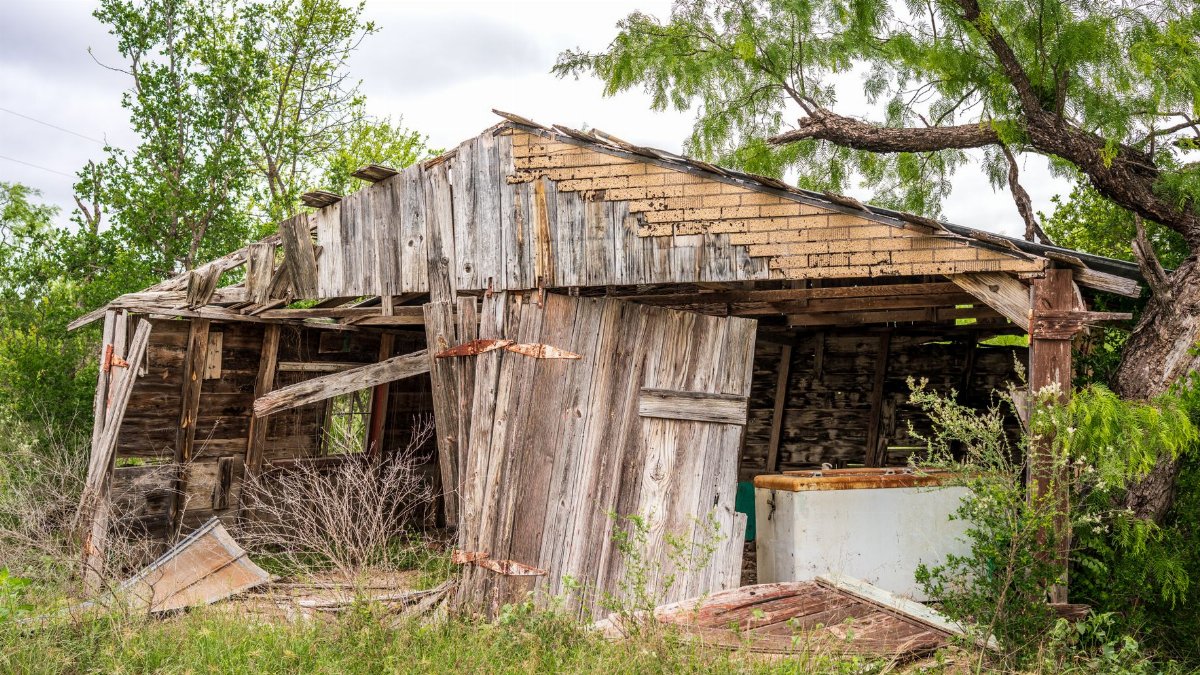
The Rio Grande Valley and the counties just north of it were the emotional center of the Republican story. For two cycles, party leaders had pointed to gains in places long described, too casually, as Democratic machines. Local officials who switched parties became national exhibits. The 2026 map tried to freeze that exhibit in place by attaching growing Republican precincts to districts that still contained large Democratic cities and colonias, on the hope that the new mix would hold.
It did not hold evenly. In several South Texas contests, Democratic candidates who spoke in practical terms about Medicaid, flood control, and cross border trade rebuilt margins that presidential year maps had shrunk. Republican candidates who ran almost entirely on border imagery found audiences, but not always majorities. Voters who had cast a ballot for Trump did not treat that choice as a lifetime membership card. Many split their tickets, or simply stayed with the party that still delivered casework on veterans benefits and disaster aid.
Interviews after the count, gathered by local reporters and by party trackers alike, returned to the same themes. People wanted order at the border and they wanted their cousins treated with dignity. They wanted cheaper electricity and they did not want their hospitals used as bargaining chips. A map cannot resolve that tension. It can only assume one side of it will dominate. In South Texas, neither side dominated enough to cash the five seat promise.
Cities and suburbs rewrote the arithmetic
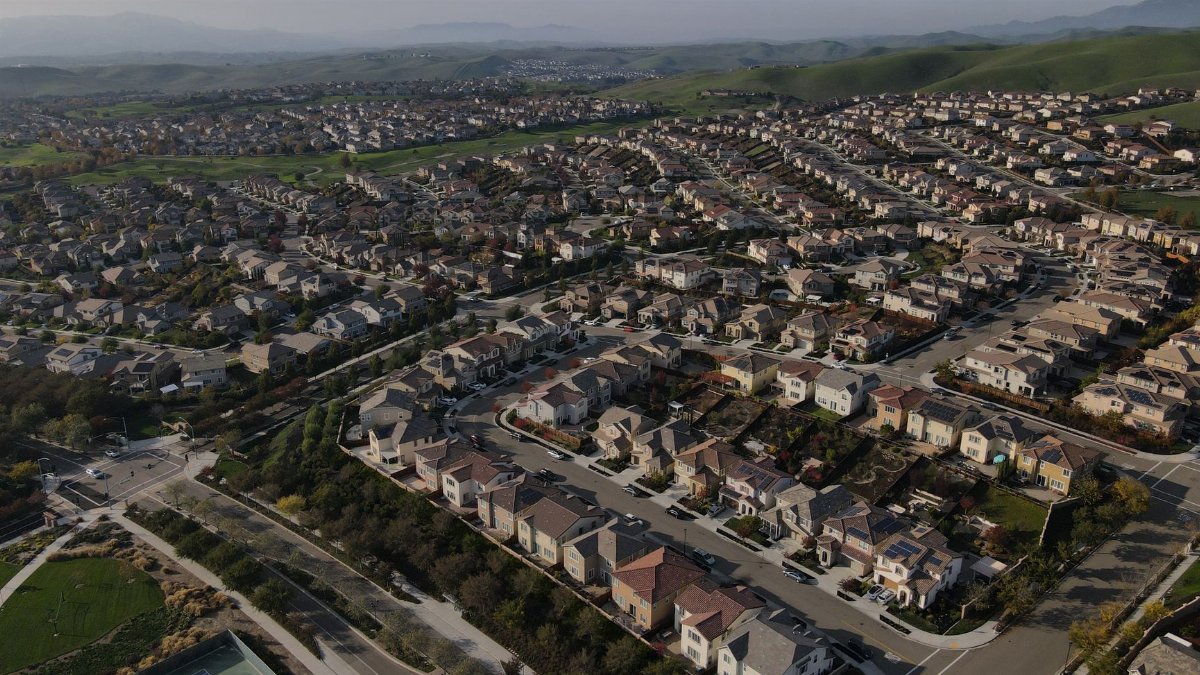
The loss of one net seat was not only a Valley story. In the Houston area and along the Interstate 35 corridor, population growth continued to scramble old categories. Master planned communities filled with nurses, warehouse supervisors, and software contractors do not vote as a single ethnicity, and they do not vote as a single party. Republican mapmakers had tried to tether fast growing suburbs to more rural counties where the party remains dominant. In more than one district, the tether frayed.
Latino voters in these suburbs were not a photocopy of Latino voters in the Valley. Many were born in Texas, college educated, and angry about insurance premiums and school funding rather than about a presidential ad. Others were recent citizens whose first midterm felt less like a culture war and more like a report card on rents. Democrats recruited candidates who lived in those subdivisions and sounded like them. Republicans often sent messages written for a national cable audience. The gap showed up in early vote and in Election Day lines outside community centers.
Black voters and white moderates mattered in the same districts, and any honest account has to say so. Still, the specific failure of the map was that it had counted on Latino movement to offset suburban erosion elsewhere. When Latino voters swung back toward Democrats, the offset disappeared. Seats that were supposed to be pickups became holds, and one seat that was supposed to be safe became a loss. Arithmetic is indifferent to talking points.
Messages that landed and messages that did not

Campaigns are not maps, and maps are not destiny. Republican candidates who talked about energy jobs, school choice, and small business taxes kept a real share of Latino support, especially among men and among older voters. That share is larger than it was a decade ago, and pretending otherwise would be a different kind of spin. The problem for the party was scale. A realignment that wins 40 percent of a community can reshape politics. A map that needs 52 percent cannot survive on 40.
Democrats, for their part, did not win by resurrecting an old machine. Several of their successful candidates kept a distance from national figures and ran as skeptics of their own party on policing and on spending. They invested in Spanish language radio without assuming that language equaled loyalty. They knocked on doors in precincts that presidential campaigns had written off. The swing back was partial, uneven, and enough.
Inflation fatigue cut both ways. Some voters blamed Democrats for prices that had strained family budgets. Others blamed Republicans in power in Texas for property taxes and utility bills that felt just as immediate. When both parties are associated with cost, the candidate who shows up at the neighborhood association often beats the candidate who shows up on a party mailer. That is an old rule. Texas redistricting 2026 tested whether a new map could repeal it. The rule held.
Courts, calendars, and a map that had to run

Lawsuits trailed the map from the hour it passed. Civil rights groups argued that the lines diluted Latino voting strength under the Voting Rights Act and under constitutional protections against racial gerrymandering. Republican defenders answered that the lines followed partisan data, not race, and that partisanship, however ugly, is not the same offense. Federal courts moved on a timetable that left the map in place for the midterms, as courts often do when an election is close and a full remedy would scramble ballots already printed.
That procedural fact shaped the political one. Candidates had to run in districts they disliked. Voters had to learn new numbers and new names. Some counties were split so that neighbors on the same block had different members of Congress. Confusion is not a neutral force. It tends to reward the party with more money for voter education, and in Texas that party was Republican. Even with that advantage, the outcome slipped.
Appeals will continue. A later ruling could order yet another set of lines before the next presidential year. For the people who already voted, those arguments are retrospective. They chose representatives under the lines they were given. The judgment on Texas redistricting 2026 is therefore not only a legal judgment. It is an electoral one, written in returns that no brief can fully rewrite.
What one seat means in a narrow House
A net loss of one sounds small until you remember how the House is organized. Majorities in recent years have been measured in a handful of seats. A delegation that was supposed to supply five new Republican votes instead supplied one fewer. Committee chairs, floor strategy, and the ability to pass a budget without begging a rival faction all feel that difference. National Republican leaders who had treated Texas as a reserve bank of seats spent the days after the election looking at California, New York, and a scatter of Midwest districts for a replacement cushion that was not there.
Democrats should not mistake a narrow rescue for a restoration. They did not reclaim the broad Latino loyalty of an earlier generation, and several of their wins were close enough to reverse if turnout patterns change. What they did prove is that a presidential improvement for Republicans among Latino voters is not a permanent deed to congressional districts. Realignment, if it is happening, is slower and more conditional than a single map cycle can capture.
For readers outside Texas, the lesson travels. States that try to bank demographic change before it has settled will sometimes discover that voters are not deposits. They move, they split, they punish overconfidence. Texas offered the largest stage for that discovery in 2026, which is why the rest of the country watched the count with more attention than a state legislative map usually earns.
Communities are not blocs

The deepest flaw in the Republican bet was not mathematical. It was categorical. Latino voters in Texas include Tejanos with roots older than the state, Mexican immigrants who became citizens last year, Cubans and Venezuelans in Houston, Puerto Ricans in military towns, and families that do not sort neatly into any of those labels. They are Catholic, evangelical, and secular. They own trucks and they take the bus. Drawing a district around a surname and a presidential trend treats a public as a unit. The public declined the role.
Journalists and consultants share the blame for that habit. It is easier to write a national narrative about a rising Republican tide among Latinos than to sit through a school board meeting in Brownsville or a chamber breakfast in San Antonio. The tide was real in places and real among some voters. It was not a tide that filled every channel the map had dug for it. When reporters returned to those channels after Election Day, they found eddies, crosscurrents, and a fair number of people who were tired of being discussed as a strategic resource.
That fatigue may be the most durable result of the cycle. Voters who feel used by one party do not automatically enlist in the other. They become harder to model. Parties that want their votes in 2028 will have to earn them with candidates and records, not with software that paints a district red because a neighboring precinct went red two years ago.
What each party carries forward

Republicans still hold commanding power in Texas government, and one disappointing congressional map does not erase that. They will argue, with some evidence, that candidate quality and national headwinds, not the lines, produced the shortfall. They will also face donors who were promised five seats and received a lecture in humility. Internal arguments have already begun over whether the party moved too fast in South Texas or not fast enough in the suburbs, and over whether cultural appeals crowded out economic ones.
Democrats leave the cycle with a reprieve and a warning. The reprieve is a delegation slightly stronger than the map intended, and a story they can tell about Latino voters coming home. The warning is that home is not automatic. Where Democratic candidates sounded abstract or entitled, they lost or barely won. Where they sounded local, they rebuilt coalitions that include, but are not limited to, the voters Republicans had claimed.
Texas redistricting 2026 will be taught in campaign schools as a case of a wager placed too early. The lines were legal enough to be used, ambitious enough to be noticed, and wrong enough, in their human assumptions, to miss the target by the margin that decides a House. Maps can concentrate power. They cannot manufacture loyalty. On that point, the midterms were clearer than any brief.