
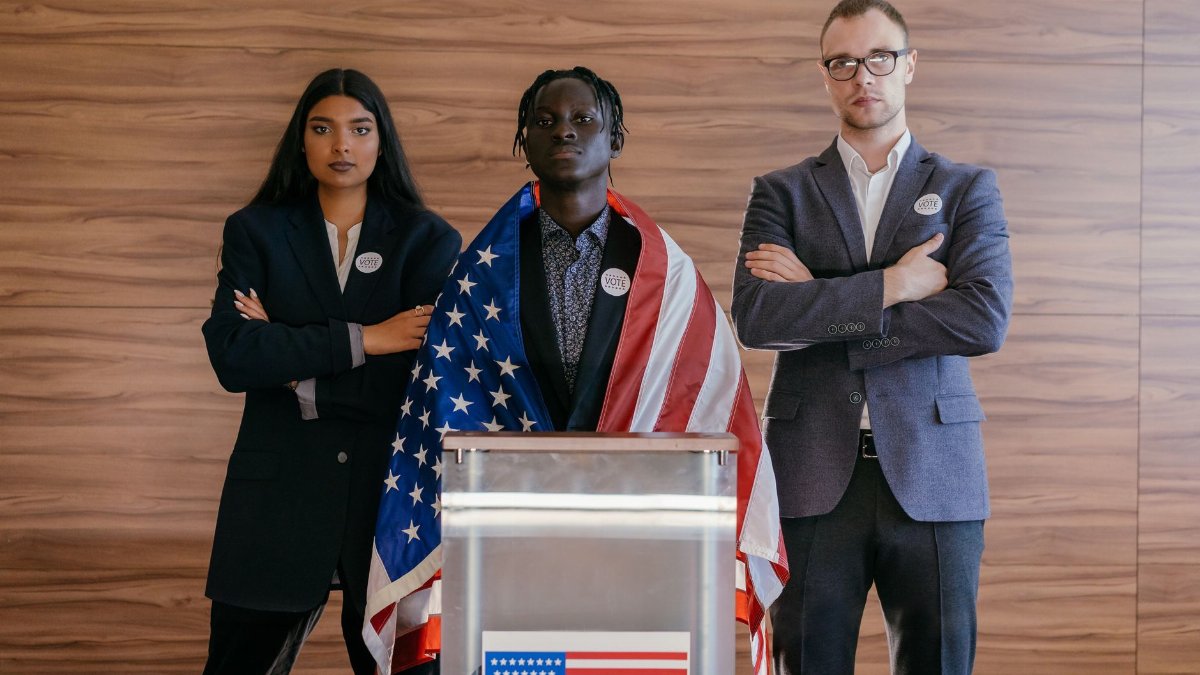
The lights in a television studio do not care who wants the presidency. They care who shows up, who qualifies, and whether anyone at home stays past the first commercial. That plain fact sits behind the party plan for Democratic primary debates in the 2028 race: twelve sessions, the first of them in June, each stage limited to twenty candidates, and a pledge against dark money required before a contender can take a podium. The Boston Globe reported the outline on November 23, 2026, and the calendar alone is enough to reorder how ambitious Democrats spend the next two years.
A calendar that starts earlier than many voters expect

June is not the dead of summer for politics anymore, if it ever was. Filing deadlines, donor calls, and state party dinners already crowd the months before the first votes. Placing the opening debate in June pulls the public phase of the nomination forward by a season. Candidates who hoped to linger in listening tours will have to decide whether they are running in earnest while school is still in session in much of the country.
Twelve nights is a long commitment for a party and for an audience. It is also a bet that repetition can do what a single splashy forum cannot. Viewers who miss one evening may catch another. Journalists who cover the race will have a running record rather than a handful of set pieces. The risk is fatigue. The promise is that no single gaffe or viral clip has to stand in for an entire campaign.
Why twelve nights instead of a shorter sprint

Party officials have lived through cycles in which the debate schedule felt either stingy or chaotic. Too few forums leave early state voters with little more than advertisements. Too many, stacked without rules, turn the stage into a shouting match that rewards volume. Twelve is a middle number, large enough to reach different regions and small enough that each night can still feel like an event.
Spacing matters as much as the total. If the sessions are scattered from June through the heart of the primary calendar, candidates can adjust after a weak night instead of treating one appearance as a final exam. Campaigns will still hunt for a breakout moment. They will also have to sustain an argument over months, which is closer to the work of governing than a single evening of rehearsed lines.
The twenty candidate ceiling and what it leaves out
A cap of twenty names on any one stage is both generous and severe. Generous, because recent fields have swollen past the number of podiums a studio can hold without splitting the night into lotteries. Severe, because twenty is still a crowd. Moderators will struggle to give each person more than a few minutes. Viewers will struggle to remember who said what.
The cap also creates a second contest before the first question is asked. Who counts toward twenty, and who is told to wait for a later round or to drop the idea of a televised introduction altogether? Long shot candidates have used debates to force better known rivals to answer uncomfortable questions. A hard limit protects coherence. It can also protect frontrunners from the nuisance of dissent. Party lawyers and state chairs will spend real time on the cutoff, because lawsuits and hurt feelings follow every list that leaves someone off.
Dark money as a ticket to the stage
The most pointed rule in the plan is not about polling thresholds or donor counts, though those may still appear in the fine print. It is the requirement that candidates disavow dark money to qualify. In plain language, a contender who wants the microphone must reject the kind of outside spending that hides donors from the public.
That demand will thrill reformers and annoy operatives who have built whole firms on undisclosed checks. It is also easier to announce than to police. A candidate can swear off a super PAC on Monday and discover on Thursday that allies have formed one anyway. The party will need a definition of disavowal that is more than a press release: what counts as coordination, what counts as a sincere break, and what happens if a group spends heavily after the pledge. Without that detail, the rule risks becoming a slogan that sophisticated campaigns learn to step around.
Still, the instinct is sound. Debates are a public good hosted, in practice, by private networks and a private party. Asking participants to forgo hidden money is a way of saying the stage is not for sale in the same way a thirty second spot can be. Voters who never read a campaign finance report may still understand the difference between a name on a podium and a name on an ad paid for by people they cannot identify.
What earlier cycles taught the people writing the rules
Anyone who sat through the crowded forums of the last open Democratic nomination remembers the lottery feel of the early nights. Random draws decided who stood next to whom. Time limits chopped answers into fragments. A candidate with a genuine record on housing or trade could vanish between two louder personalities. The new plan reads as a response to that memory, even if it cannot repeal human nature.
It also reads as a response to the opposite problem: a late winnowing that leaves the party with a nominee who has not been tested in front of a national audience. Starting in June gives lesser known figures a chance to become known before winter. It gives party actors a chance to see who can take a follow up question. The Globe account of the schedule does not pretend this will produce consensus. It does suggest that Democrats would rather argue in public, under rules they wrote, than discover their divisions only after the nominee is chosen.
Television, streaming, and the voter on the couch
Debate night is no longer a single channel event. Some viewers will watch a network feed. Others will catch clips on phones between errands. A twelve debate plan has to work for both habits. A sharp exchange that lasts forty seconds may travel farther than a careful six minute discussion of hospital costs. Campaigns know this. They will write lines for the clip and paragraphs for the transcript, and moderators will have to decide which kind of politics they are willing to reward.
Networks, for their part, will want hosts, advertisers, and a sense that the evening matters. A party that promises twelve sessions must also promise an audience, or at least a reason for programmers to keep the slot. That bargain has always been uneasy. The public interest in hearing candidates is not the same as the commercial interest in keeping people from changing the channel. The dark money rule may even complicate sponsorships if outside groups are part of the advertising mix around the broadcast. Those are solvable problems, but they are not small ones.
June and the map of early states
An opening debate in June lands before many voters in Iowa, New Hampshire, Nevada, and South Carolina have settled into campaign season as a daily fact. It also lands while large states with later contests are still abstract to most candidates. The party will have to choose cities and partners with care. A June forum in a community that rarely sees presidential traffic can signal that the nomination is not only a conversation among early state activists. A June forum that feels like a coastal television production can confirm the opposite suspicion.
State parties will lobby hard. So will universities, civic groups, and local newsrooms that still have the staff to host a serious night. The best of those partners treat a debate as a reporting project, not a pep rally. They press for questions rooted in the place: water, wages, clinics, schools. If the twelve night plan is only a tour of friendly ballrooms, it will waste the one advantage a long schedule has, which is the chance to meet the country in more than one mood.
How campaigns will rearrange themselves
Staff lists will change because the calendar changed. Debate prep, once a burst of activity before a handful of dates, becomes a standing department. Researchers will track not only rivals but the party rules on money and eligibility. Candidates who lack a national donor list will treat the qualification window as the real first primary. Those who already have one will try to look inevitable without looking afraid of the pledge.
There is a human cost in that machinery. Spouses, children, and day jobs do not pause because a committee published a schedule. A long debate season asks people who are not yet nominees to live as if they were, for months, under lights. Some of them should not run. Some of them should, and will be better for having been questioned before a crowd rather than only in a donor living room. The plan does not sort those groups. It only builds the room.
Arguments the format still cannot settle

No rule about podiums can tell a party what it believes. Democratic primary debates can reveal whether a candidate has a theory of housing, of China, of the border, of the cost of insulin. They cannot force the audience to agree. They can also flatten differences that matter in office and inflate differences that vanish the week after a convention. A good format lowers the chance of pure theater. It does not eliminate theater.
Voters who want substance will still have to do some of the work themselves. Read the transcript. Notice who answers the question that was asked. Notice who changes the subject to a rival’s biography. Notice who treats a moderator as an enemy and who treats a voter question as a gift. Twelve nights give that habit room to form. One night never did.
The pledge, the cap, and the test of seriousness

Taken together, the June start, the dozen sessions, the limit of twenty, and the dark money disavowal amount to a theory of fairness. Access to the stage should be broad but not infinite. Money should be visible. Time should be long enough for a campaign to be more than a launch video. Whether the theory holds will depend on enforcement. A cap ignored under pressure is not a cap. A pledge without consequences is a costume.
Reporters covering the qualification fights should ask simple questions. Who paid for the travel to the forum. Which outside groups are on the air in the same media markets. Whether the party will publish the criteria in language a precinct captain can explain. The Boston Globe story put the skeleton of the plan in front of the country. The flesh will be the memos, the appeals, and the nights themselves.
What a long season asks of the rest of us

Middle aged voters have sat through enough nomination fights to be skeptical of any promise that this time the debates will be different. Skepticism is healthy. Withdrawal is not. The nomination process is one of the few moments when a party has to speak in full sentences to people who have not already joined a list. Democratic primary debates, done with a real cap and a real rule on hidden money, are a chance to watch that speaking happen before the general election narrows the choice to two names and a flood of ads.
I do not expect twelve evenings to restore anyone’s faith in politics by themselves. I do expect them to make evasion a little harder. A candidate who will not disavow dark money does not get the stage. A candidate who cannot survive a follow up does not get to hide inside a thirty second spot forever. That is a modest standard. It is also more than the country often gets. From June onward, the test will be whether Democrats meant the standard, and whether the rest of us are willing to watch long enough to tell.