
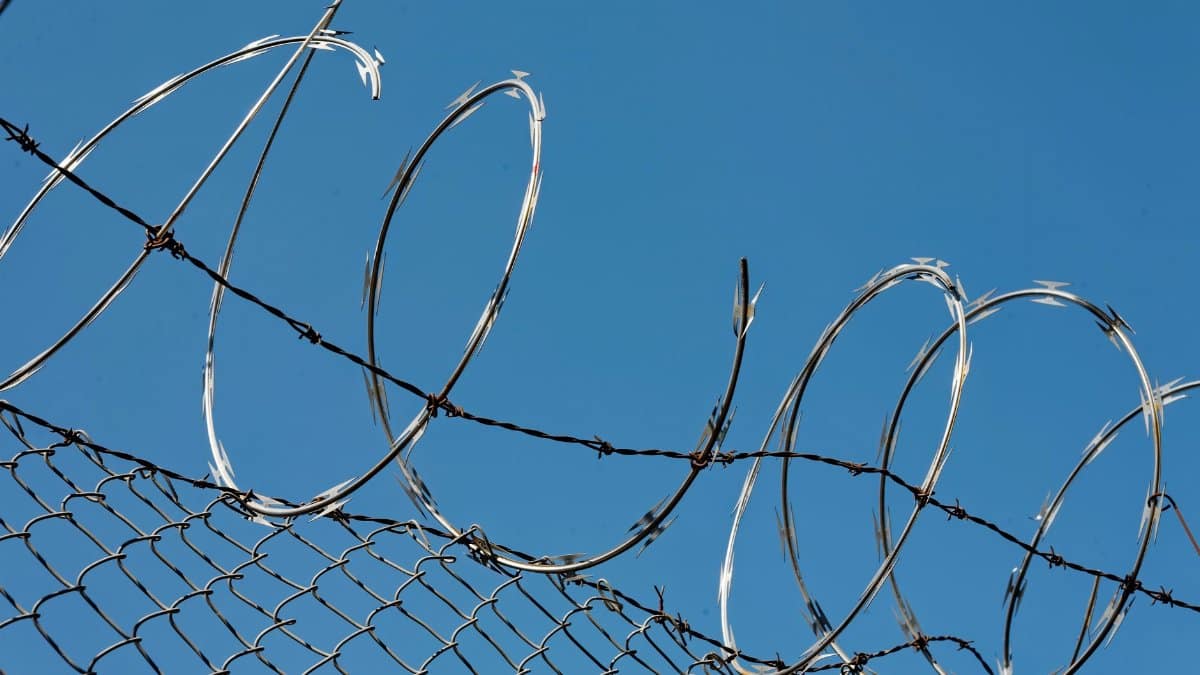
On a stretch of the Rio Grande near Eagle Pass, coils of steel still catch the late light long after the argument around them was supposed to have moved on. Texas Attorney General Ken Paxton said this week that the state and the federal government have agreed to leave border razor wire in place in the Del Rio Sector for the next 30 years, with federal agents barred from cutting it except in emergencies. If that account holds, a fight that has defined the Texas riverbank for several years would settle into something closer to a standing arrangement, with steel, law, and politics sharing the same ground.
What Paxton says the deal does

Paxton framed the settlement as a victory for state authority along a sector that became a national symbol during the busiest years of crossings. Under the terms he described, Texas may keep the wire where it stands, and federal officers may not cut it unless an emergency requires immediate action. Thirty years is an unusually long horizon for a border tactic that began as a rapid response. It is long enough to outlast several presidencies, several Congresses, and more than one generation of agents who will inherit a barrier they did not install.
The announcement did not, in the public telling, resolve every operational question. Emergencies are not self defining. A medical crisis, a drowning, a fire, or a pursuit can look different to a state trooper and a Border Patrol agent standing a few yards apart. The value of the agreement will depend on whether both sides accept the same meaning of urgency when the river is high and the radio traffic is loud.
How the wire entered the argument

Texas did not invent concertina wire, and the river did not become contested only when the first coil went down. What changed was the decision to treat the wire as a durable assertion of state power rather than a temporary tool. Governor Greg Abbott’s Operation Lone Star placed National Guard members, state police, and miles of steel along the bank, especially around Eagle Pass, and invited a direct collision with federal officers whose job is to control the same line.
For supporters, the wire was a practical answer to repeated crossings and to a federal system they viewed as unwilling or unable to hold the line. For critics, it was a hazard placed in a river corridor where people already drown, and a political message aimed as much at Washington as at anyone approaching from the south. Both readings can be true at once. A coil of wire is a physical object and a slogan, and it has been asked to do the work of both.
The court fight that came before

The settlement sits on top of litigation that already reached the Supreme Court. In January 2024, the Court vacated a lower court order that had limited the ability of federal agents to cut wire Texas had installed, allowing the Department of Homeland Security to proceed while the broader case continued. The order is public, and it did not declare a winner on the constitutional merits. It did signal that, at least for a time, federal officers would not be frozen in place by a state barrier.
That history matters because Paxton is now describing a negotiated freeze rather than a judicial command. A settlement can be narrower than a ruling and more durable than a headline. It can also be fragile if either party later argues that the other has broken the emergency exception, or if a new administration decides the bargain no longer serves federal interests. Readers who want the Court’s own language can find the 2024 order on the Supreme Court website. Paxton’s account of the newer deal was reported by the Texas Tribune.
A sector, not the whole border

The Del Rio Sector is not the entire southern boundary, and it is easy to let one famous bend of river stand in for a system that runs for many hundreds of miles. Eagle Pass drew cameras because the confrontations there were visible: state forces, federal agents, migrants, and local residents sharing a small geography. A 30 year understanding in that sector would still leave other sectors, other states, and other tactics outside its text.
That limit is easy to miss in a national argument that prefers a single image. Wire in one sector does not answer visa backlogs, asylum processing, workplace enforcement, or the reasons people leave home. It answers a narrower question: who may alter this particular barrier, and under what conditions. Precision about that scope is not a dodge. It is the only way to judge whether the announcement changes daily work or mainly changes the political story.
Agents, medics, and the emergency clause

The exception for emergencies is the clause most likely to be tested. Federal agents have said in past disputes that they cut wire to reach people in distress, to open a lane for patrol, or to prevent a dangerous crowd from stacking against steel. Texas officials have treated some of those cuts as defiance. A written settlement can reduce that friction only if the people on the bank know, in advance, which cuts count as allowed and which count as a breach.
Medical workers and local first responders sit in the middle of that definition even when they are not named in the legal papers. A person injured on the bank does not experience a constitutional theory. They experience delay or access. Any arrangement that lasts for decades will be judged, quietly and repeatedly, by whether help can still reach the water without a lawsuit attached to every decision.
What permanence does to politics

Thirty years is also a political technology. It converts a controversial deployment into something that can be described as settled, and settlement has a calming sound even when the object itself remains sharp. Paxton can tell Republican voters that Texas held its ground. Federal officials, if they accept his description, can tell their own constituencies that they preserved an emergency authority and avoided a wider rupture with a large state.
I have covered enough bargains of this kind to know that permanence is often a word for postponed conflict. The wire will weather. Paint will fade on nearby vehicles. New officers will arrive who know the coils only as scenery. The next fight may not be about whether the wire exists, but about who pays to maintain it, who is liable when someone is cut, and whether a future court reads the emergency clause more broadly than the negotiators intended.
Local life beside a national symbol

Eagle Pass and the smaller towns along this reach of river have lived with federal presence for generations. What felt new in recent years was the density of state hardware and the sense that a local landscape had been drafted into a campaign. Landowners, city officials, and business owners do not speak with one voice. Some welcomed the show of force. Others resented closed parks, restricted river access, and a town reduced to footage.
A long agreement could bring a grim kind of predictability. Predictability is not the same as peace. It means people can plan around an object that is no longer treated as temporary. Schools, clinics, and shops already do that kind of planning whenever a policy hardens into infrastructure. The wire, if it stays, becomes part of the ordinary map, which is a stranger outcome than either triumph or removal.
Lawful authority and its limits

The deeper legal tension has never been only about steel. It is about whether a state may install an obstacle that interferes with federal immigration officers, and whether those officers may remove it in the course of their duties. The Constitution gives the national government prime responsibility for the border. States retain police powers and a real interest in public safety. Those principles collide when both governments claim the same riverbank at the same hour.
A settlement does not erase that collision. It manages it. Management can be wiser than endless injunctions, especially if it reduces dangerous standoffs between uniformed services that are supposed to be on the same side of the law. Management can also launder a hard question. If the federal government agrees not to cut wire except in emergencies, it is choosing restraint. Restraint can be prudent. It can also look, to people who want more removals or fewer barriers, like a concession dressed up as cooperation.
The human cost that paperwork cannot file away

Any honest account has to hold two facts without smoothing them into a slogan. Crossings without authorization are unlawful, and governments are allowed to deter them. Razor wire also injures. It does not distinguish between a person seeking work, a person fleeing violence, a smuggler, or a child. Reports from the river in recent years have included cuts, entrapment, and deaths by drowning in a channel that was already perilous before the coils arrived.
Those injuries do not, by themselves, decide the legal case. They do decide the moral weight of a 30 year choice. A barrier that remains for a generation will harm some number of people who touch it. Officials who celebrate the settlement should be willing to say that plainly, just as officials who demand immediate removal should be willing to say what enforcement would replace it. Refusal to name costs is how border policy becomes theater.
What readers should watch next

The useful questions now are concrete. Will the written settlement match Paxton’s description, including the Del Rio limit and the 30 year term? Will federal agencies confirm the same terms in their own words? How will supervisors define an emergency in field guidance, and will that guidance be public? Who maintains the wire, and who answers if it fails or if someone is badly hurt?
Those questions are less stirring than a victory lap, and they are the ones that determine whether this is governance or press release. Border arguments often end at the microphone. This one, if the deal is real, will be lived out in shift briefings, incident reports, and the slow rust of metal beside moving water.
A long bet on a short stretch of river

There is something stark about tying a generation of policy to a single material. Border razor wire is visible, cheap relative to a wall, and easy to photograph. It is also a poor substitute for a system that decides claims, returns people who have no lawful claim, and offers a credible path to those who do. Leaving it in place for 30 years may reduce one kind of conflict between Austin and Washington. It does not build the missing system.
Paxton has every incentive to call the bargain a lasting win. Federal officials have every incentive to say they kept the power to act when lives are at risk. Residents of the Del Rio Sector will measure it differently: by whether the riverbank becomes more orderly, or merely more fixed. The steel will not interpret the settlement. People will, every time someone reaches it and someone else decides whether this hour counts as an emergency.