

On a bright Saturday the sidewalks along Colorado Boulevard fill with strollers, coffee cups, and the slow shuffle of people who treat this Eagle Rock stretch as a main street rather than a freeway approach. Traffic still stacks at the lights. A few buses nose through the same lanes as everyone else. Into that ordinary congestion comes a fight that has outlasted several election cycles: whether a Colorado Boulevard bus lane belongs on a street that already feels full. Residents say the plan would take lanes, turns, and parking they use every day. Transit planners say the same curb is the only practical path for a faster ride between the valleys.
A boulevard asked to be everything
Colorado Boulevard has never been a single purpose road. It carries shoppers to small storefronts, commuters toward the 134, parents to schools, and buses that already stop every few blocks. In Eagle Rock the commercial strip is narrow enough that a lost parking space is not an abstract planning unit. It is the spot in front of a dentist, a taco window, or a church hall on Sunday. Neighbors describe a street that works, barely, because drivers still have room to turn, to pause for a delivery, and to find a curb without circling for twenty minutes. Any redesign, they argue, has to start from that tightness rather than from a map drawn at regional scale.
The boulevard also absorbs habits that a corridor study can flatten. Weekend crowds spill from sidewalks toward the curb. Rain sends people who usually walk back into cars. A new apartment building adds trips the old street was not sized to swallow. Residents who oppose a dedicated lane are not always opposing transit in the abstract. Plenty of them ride it. What they oppose is a drawing that treats their block as spare capacity for someone else’s longer trip, with the inconvenience landing on the same few corners every afternoon.
The valley to valley plan
The larger project is a bus rapid transit line meant to link the San Fernando Valley with the San Gabriel Valley, passing through Glendale, Eagle Rock, and Pasadena. Planners have long treated Colorado Boulevard as the workable path through this hillside neighborhood because parallel routes either climb, dead end, or leave riders far from the shops and apartments that generate trips. In agency briefings the Colorado Boulevard bus lane appears as a tool for reliability: a place where a bus can keep moving when general traffic stalls. Supporters say minutes saved on this segment compound across a 19 mile ride.
The line is meant to run largely on surface streets, with stations spaced farther apart than a local bus and with signal priority so a green light arrives more often for the transit vehicle. Frequency is the other half of the promise. A lane does little if the next bus is still twenty minutes away. Staff have described a service frequent enough to replace some car trips, not merely to decorate a map. Eagle Rock sits near the middle of that promise, which is why a dispute here carries weight past one neighborhood council.
What neighbors say they would lose
The opposition is specific. People who live within walking distance of the boulevard talk about travel lanes converted to transit, left turn pockets shortened or removed, and curb parking replaced by red paint. They worry that a Colorado Boulevard bus lane would push cars onto Yosemite, Hermosa, and other residential streets that were never built for through traffic. Parents describe school drop off that already clogs side streets. Older residents say they cannot walk several blocks with groceries if the nearest space disappears. None of this is exotic urban theory. It is a list of errands.
There is also a fear of the construction season itself. Even neighbors who might accept a finished street dread months of cones, shifted lanes, and delivery trucks with nowhere legal to stop. Small landlords worry that a tenant will leave rather than endure a summer of blocked access. Those fears do not settle the design question, but they explain why a hearing can fill even when the vote is still months away. People are reacting to a disruption they can picture, not only to a travel time table in a slide deck.
The morning scramble at the curb
Stand at a signal before nine in the morning and the conflict is visible without a microphone. A delivery truck stops in the right lane. A driver waits to turn left across two directions of traffic. A bus loads passengers while cars stack behind it. Residents fear that removing a general lane would turn those small delays into a standing queue. Planners answer that the queue already exists and that separating the bus is how you stop one slow boarding from punishing everyone behind it. Both descriptions can be true on the same block.
Emergency access sits in the same picture. Fire crews and ambulances already thread a street that tightens when someone double parks or when a line of cars refuses to yield. A clear transit lane can help a responder if drivers actually leave it open. It can also remove a gap that drivers now use to pull aside. Neighbors want that question answered block by block, not waved off as a detail for later. The argument, at bottom, is about which delay the city is willing to accept, and who feels it first.
Riders who cannot choose another street
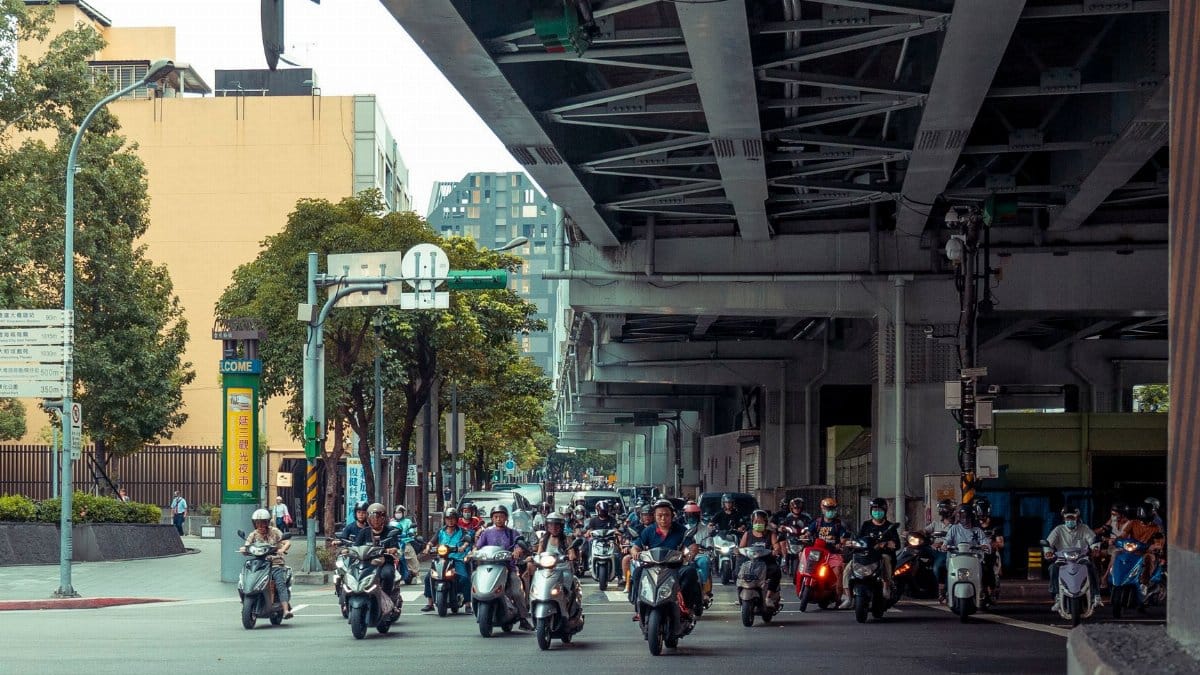
Not everyone in the dispute owns a car. Students heading toward Pasadena City College, home health aides with split shifts, and retail workers who close after the last convenient space has been taken already ride the buses that crawl along this corridor. For them a lane that stays clear is not a luxury amenity. It is the difference between a transfer that works and a transfer that is missed. Transit advocates in Northeast Los Angeles have said for years that Eagle Rock should not be the place where a regional line goes slow so that curb parking can stay untouched.
They also ask for a fairer count of who uses the street. A car with one occupant is easy to see. A bus with thirty people looks, from the sidewalk, like one more vehicle in the way. If the public conversation only photographs the empty lane and never the full bus, the political math will always favor the driver who can show up at a weeknight meeting. Riders who work evenings rarely get the same microphone. That imbalance does not make every transit drawing correct. It does mean the room can miss half the street.
Merchants and the parking math

Shop owners occupy an uneasy middle. Some like the idea of more visitors who do not need a space. Others say their customers arrive by car from Glendale and Pasadena and will not walk from a garage that does not exist. A florist, a hardware counter, a restaurant with a short lunch rush: each can describe a Tuesday when three spaces out front decided whether a sale happened. City transportation staff often reply that turnover matters more than raw counts, and that a space used for an hour by one commuter serves fewer people than a space that turns over every twenty minutes.
That reply is logical and still cold comfort to a tenant whose lease assumes the curb will look roughly as it does now. Merchants also distinguish between all day employee parking and the short stops that keep a counter alive. A redesign that removes both, without a nearby lot or a loading zone that drivers can actually find, lands as a tax on the stores least able to absorb it. The ones with a parking lot behind the building will be fine. The ones that rented the sidewalk as their lot will not.
How the design choices actually differ

The fight is sometimes described as bus lane or no bus lane. The drawings are more particular. A side running lane sits next to the curb or next to a parking lane, which can preserve some spaces but puts buses in the path of right turns and driveways. A center running lane keeps the curb for parking and local access, but it needs stations in the middle of the street, new signals, and a wider right of way than some blocks can give without touching sidewalks or trees. Hybrid segments try to switch treatments where the street widens or narrows.
Residents who followed the workshops learned to read those variations because a block with retained parking and a block with a red curb are not the same proposal, even if both carry a transit label. The details decide whether a driver can still turn into a side street, whether a bus stop lands in shade or in a travel lane, and whether a bike rider is given a real space or a painted suggestion. Treating every option as identical is how trust erodes. People can accept a compromise they can see. They resist a slogan.
What the public record is really weighing

Environmental review for a project like this is not a referendum on whether buses are good. It is a comparison of alignments, lane takes, construction months, and who bears the traffic during the build. Noise, street trees, and access for people with disabilities all sit in the same binder as vehicle delay. Neighbors who feel unheard often discover that a comment about a single left turn does not register unless it is tied to a section of the document. A speech at a microphone and a comment in the record are not the same act, however similar they feel in the room.
Agencies, for their part, cannot redesign a 19 mile corridor around every local preference without breaking the travel time that justified the project. If every city along the route keeps its full set of lanes and its full curb, the bus is back in mixed traffic and the investment buys a new paint scheme. That constraint is real. It is also easy for an agency to hide behind. The useful reviews are the ones that show, in plain maps, which blocks keep a turn pocket, which blocks lose parking, and which blocks simply cannot host a station without a taking that nobody has admitted yet.
Meetings, petitions, and the tone of the room

Eagle Rock has shown up. Church basements and school auditoriums have held the familiar ritual of posters, colored dots, and a microphone line that runs long. Some speakers accuse regional planners of treating a neighborhood boulevard as a spare part for a larger machine. Others accuse opponents of protecting a driving habit while claiming to defend small businesses. Petitions circulate with photos of a choked intersection and with photos of a crowded bus, each set offered as the whole truth. Both images are local. Neither is complete.
The tone matters because a project that survives a board vote can still fail in daily use if the people who live beside it treat the lane as something to dodge, block, or fight in court for years. Courtesy is not a substitute for design, but contempt makes every later adjustment harder. Staff who dismiss a left turn as nostalgia lose the room. Residents who dismiss every rider as a commuter from somewhere else lose the argument about fairness. A boulevard this shared cannot be governed by either caricature.
A street that still has to choose

No version of this corridor leaves every user whole. A Colorado Boulevard bus lane will inconvenience drivers who are used to a full set of lanes and an easy curb. Rejecting it will leave bus riders in the same mixed traffic that already makes the trip unpredictable. The honest question is not whether change has costs. It is which costs are counted, and whether the final drawings keep enough parking, enough turn pockets, and enough clear pavement that both the storefront and the schedule can survive.
Eagle Rock has spent years forcing that question into the open. The next drawings should answer it in specifics: where a truck may stop, where a driver may turn, where a bus may pass, and where a person on foot still has a sidewalk wide enough to pass a stroller. Paint will eventually settle what meetings only rehearse. The neighborhood does not have to love the outcome. It does have to be able to live with the street that remains, on an ordinary Tuesday, when the posters are gone and the lights simply change.