
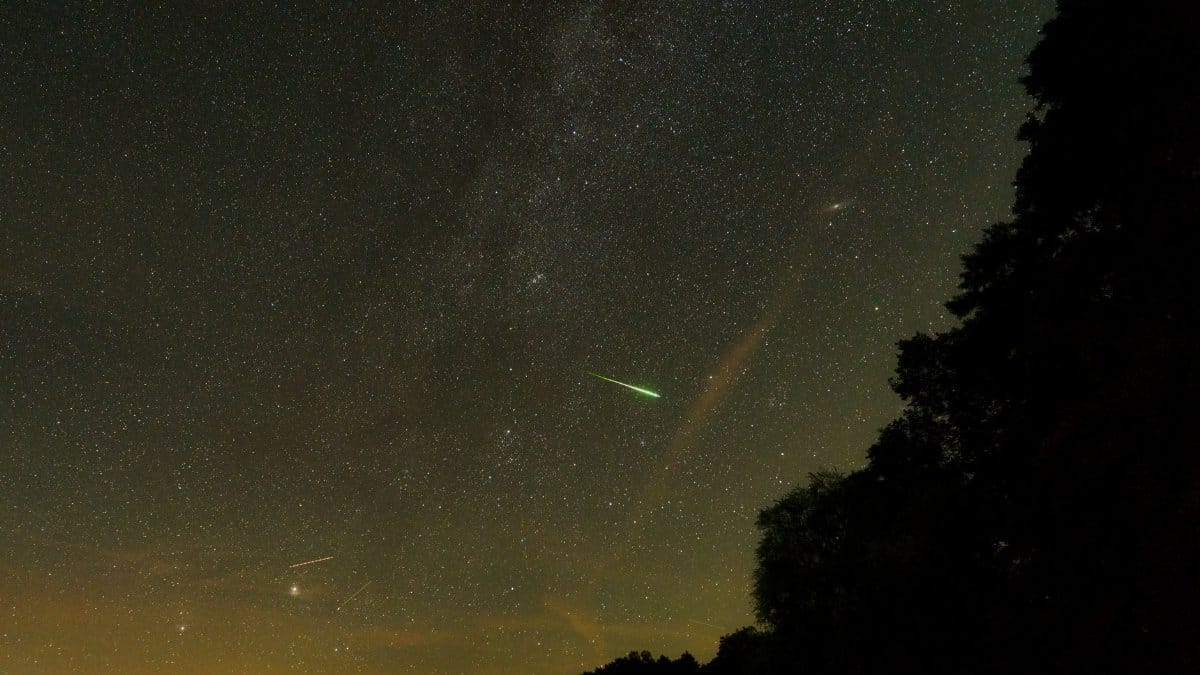
On a clear November morning, long before traffic stacks up along Central Expressway, the sky over North Texas can still feel almost rural. Step past a porch light, wait while your eyes adjust, and you may see the Leonids meteor shower doing what it has done for centuries: drawing brief white lines across a cold, quiet dark. For people who live under the glow of Dallas and Fort Worth, the show is modest rather than theatrical, but it remains one of the few sky events that asks almost nothing of you except time, a coat, and a place with fewer lights.
What those streaks actually are

The Leonids are not stars falling out of the sky. They are bits of dust and grit, most of them smaller than a grain of sand, burning as they hit the upper atmosphere at tremendous speed. Earth crosses that debris every November. The parent body is comet Tempel Tuttle, a dirty snowball that leaves a trail of particles along its path. When our planet plows through the trail, the particles heat the air around them and produce the flash we call a meteor.
NASA and long running watch programs such as the American Meteor Society treat the Leonids as a reliable annual shower, famous less for steady high numbers than for rare storms. In 1833, 1966, and again near the turn of this century, rates climbed into the thousands an hour. Those storms are not on the calendar for an ordinary November. What most viewers can expect near the peak is something closer to 15 meteors an hour under a dark sky, with many of those meteors faint. A few may be bright enough to notice even from a suburb.
When North Texas should look up
The Leonids meteor shower peaks on the night of Nov. 17 into the morning of Nov. 18. Meteors can appear for several nights on either side of that window, so a cloudy peak does not end the chance. The useful hours are after midnight, and the best of them often fall in the last hours before dawn, when this part of the planet faces into the debris stream.
That timing is awkward for anyone who has work or school the next day. It is also the reason so many people miss the shower and then assume it was a dud. If you can manage only one outing, set an alarm for around 3 a.m. or 4 a.m., dress warmer than the forecast suggests, and give yourself at least an hour outside. A ten minute glance from a lit driveway will tell you very little.
Why the constellation Leo matters
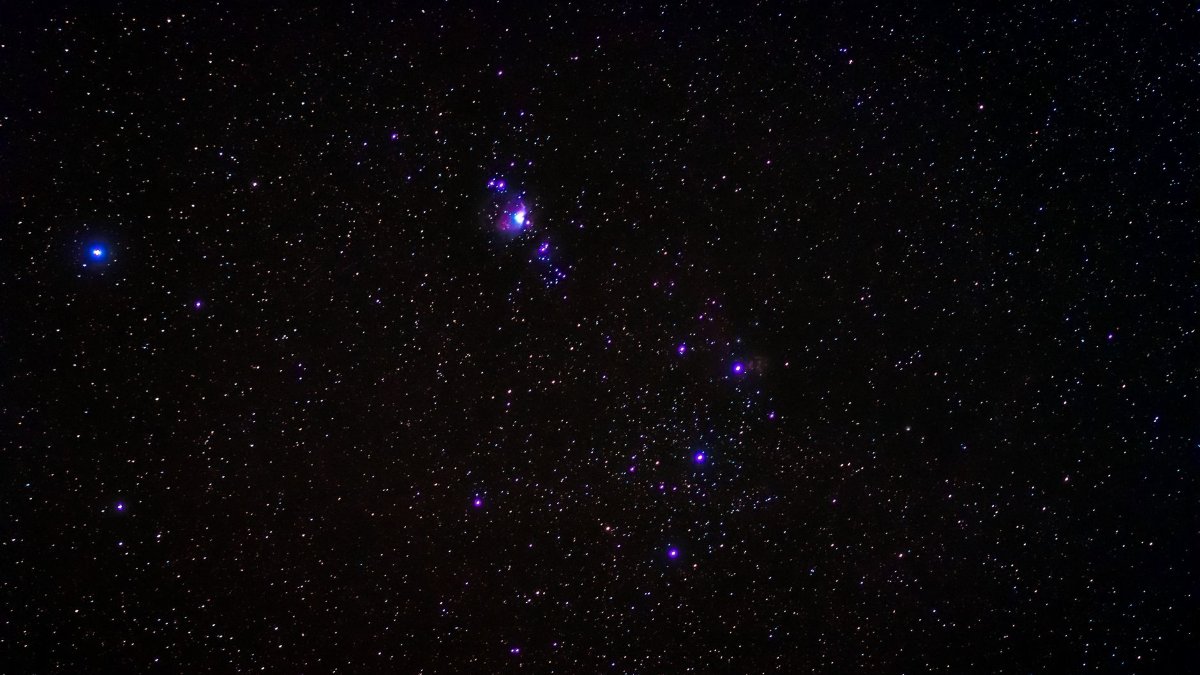
The meteors appear to radiate from the constellation Leo, which is how the shower got its name. Leo rises in the east during the late night hours in November. You do not need to find the lion shape in order to see meteors. In fact, staring only at the radiant is a common mistake. Trails are often longer and easier to notice if you look a bit away from that point, taking in a wide patch of sky.
A simple plan works. Face generally east or southeast after midnight, then let your gaze wander. Recline if you can. Necks tire fast when people stand and crane upward. A lawn chair, a blanket on the ground, or the bed of a truck all beat a stiff upright pose. Bring a second chair if you are with someone. Conversation is fine. Just keep lights off while you talk.
How to set up a viewing night

Eyes need time. Full night vision takes roughly 20 to 30 minutes, and a single glance at a phone screen can undo it. If you must check a map or the time, drop the screen brightness in advance and use a red filter or a red flashlight. Red light disturbs night vision less than white light.
Leave binoculars and telescopes in the house for this event. They shrink the field of view. Meteors are sudden and they cross a large piece of sky. Naked eyes are the right instrument. A star chart is optional. So is any app, provided you set it before you go outside and then put the phone away.
Clothing matters more than gear. November mornings in North Texas can sit near freezing even when the afternoon felt mild. Layers, a hat, gloves, and something between you and the ground will keep you out longer than enthusiasm alone. A thermos helps. So does telling a neighbor or a family member where you plan to be if you drive out of town in the dark.
Where the metroplex still offers darkness
Downtown Dallas and the bright corridors of Fort Worth are poor seats for a faint shower. Light pollution does not erase every meteor, but it hides the dim majority and makes the bright ones seem rare. The practical move is to drive toward the edge of the urban glow and then a bit farther.
State parks and wildlife areas north and northwest of the cities often serve viewers well if skies are clear and gates or hours allow a late arrival. Ray Roberts Lake, Eisenhower State Park near Denison, and the open country around Lyndon B. Johnson National Grassland put more distance between you and the worst of the glow. South and southwest, Cedar Hill State Park and the roads toward Cleburne can help, though the southern horizon still carries city light. Farther drives toward Possum Kingdom or the land west of Mineral Wells buy darker skies if you are willing to spend the night or start very early.
Call ahead or check posted hours. Some parks close gates overnight. A rural roadside pull off on private land is not an invitation. Stick to public access, respect quiet hours, and do not wander into fields. The Leonids meteor shower is not a reason to trespass.
What 15 meteors an hour really feels like
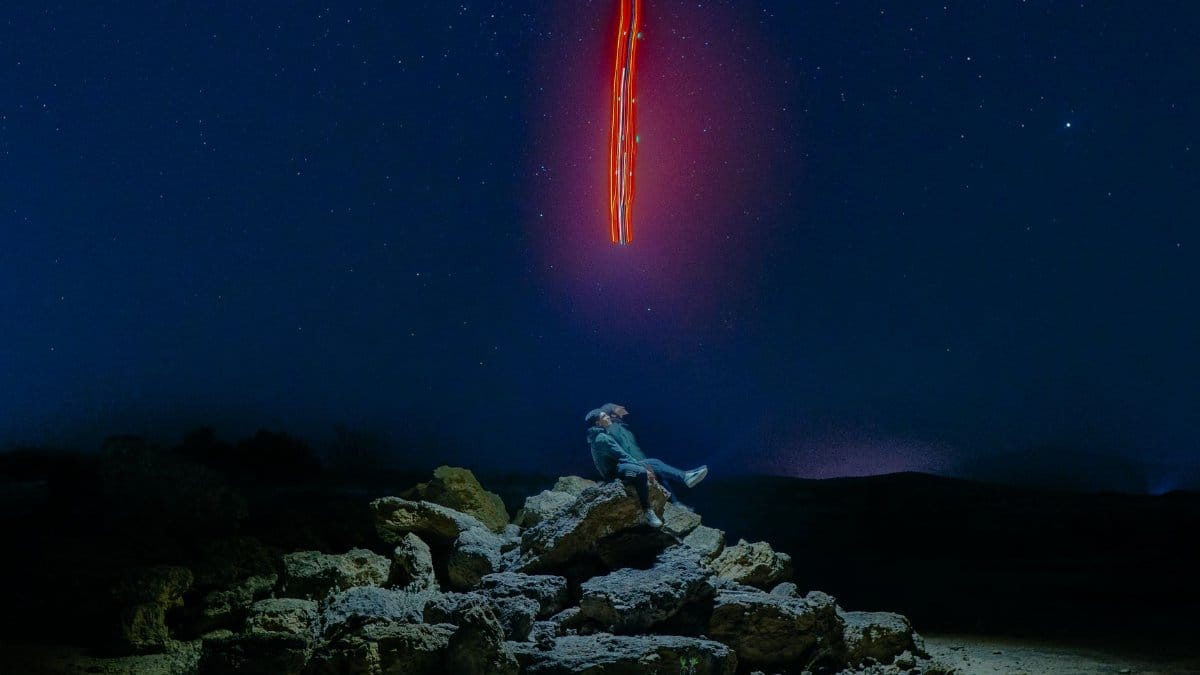
A rate of 15 an hour is an average under ideal conditions, not a promise of a meteor every four minutes on your particular hill. Clouds, haze, moonlight, and city glow all cut the count. You may see three in ten minutes and then nothing for a long stretch. That uneven rhythm is normal. People who expect a fireworks schedule often leave just before a bright one appears.
Leonid meteors are also fast. They strike the atmosphere at roughly 44 miles per second, among the quickest of the major showers. The flash can be gone before you finish turning your head. That speed is part of the appeal. A slow, lingering meteor from another shower can look almost leisurely. A Leonid often looks like a scratch of light that was never fully there.
Occasionally one is bright enough to cast a brief shadow or to leave a glowing train that hangs for a second or two. Those are the memories people retell. They are luck, not a schedule. If you see one, you were outside at the right moment. If you do not, you still watched a clear sky, which is rarer in this region than the brochures suggest.
Moonlight, weather, and honest odds
Check two things before you commit to a drive: cloud cover and the moon. A bright moon washes out faint meteors the same way a neighbor’s floodlight does. If the moon is high and near full during the peak morning, you will still see the brighter streaks, but the total will drop. A thin moon or a moon that has set is a gift. Forecast pages from the National Weather Service will tell you more about your county than a statewide headline will.
North Texas in November can flip from mild to raw in a day, and low clouds often sit over the counties even when the radar looks quiet farther west. If the peak morning is socked in, try the mornings just before or just after. The shower does not switch off at sunrise on Nov. 18. It fades. A clear night with a slightly lower rate beats a cloudy peak every time.
What to leave behind

Skip the playlist on a loud speaker. Sound carries in open country, and other people may be there for the same reason you are. Skip drones. Skip laser pointers aimed at the sky. They ruin night vision for everyone nearby and can create a hazard for aircraft. A small group is pleasant. A tailgate party with headlights on is not a meteor watch.
Pets are a judgment call. A calm dog on a leash may be fine at a park that allows animals. A dog that needs a lit path and constant attention will keep you from looking up. Children can love this if the outing is framed as a short adventure rather than a test of endurance. Bring a backup plan for the cold, and be ready to go home without apology if someone is miserable. There will be another clear morning.
If clouds or schedules win
Missing the peak is not a personal failure. The region produces plenty of cloudy November nights, and not everyone can be awake at 4 a.m. on a weeknight. Later in the season, the Geminids in December usually offer higher rates, though they arrive with their own moon and weather problems. Sporadic meteors, the ones that belong to no shower, appear on any clear night. Once you know how to get away from lights and how long to wait, you can use that skill all year.
If you want a record of what you saw, a notebook beats a camera for most people. Note the time, the direction, and whether the meteor left a trail. Photography of meteors takes a tripod, a wide lens, and long exposures, and it pulls attention toward settings instead of the sky. There is no shame in simply watching.
A shared sky over a bright region

It is easy, in a metro area of this size, to treat the night as wasted space between evening and the commute. The Leonids meteor shower is a small correction to that habit. It does not require a ticket, a belief system, or a new device. It asks for a dark enough horizon and a willingness to be briefly unproductive.
Stand out there long enough and the city becomes a glow on one side of the world rather than the whole of it. Planes blink. A satellite may crawl in a steady line, which is not a meteor and is still worth noticing. Then, if you are patient, something faster cuts across and is gone. That is the whole event. For North Texas, in the middle of November, it is enough.