
On a cold November night in central Minnesota, a narrow victory redrew a familiar political map. Abdi Daisane St. Cloud voters chose a Democrat for House District 14A, and with that choice they made him the first Somali American legislator to represent this part of the state. He took about 52 percent of the vote. The margin was not a landslide. It was a local decision, made precinct by precinct, in a city that has argued for years about immigration, schools, policing, and who gets a lasting seat at the civic table. For many residents the result felt less like a national symbol and more like a neighbor accepting a job that had always gone to someone else.
What a close count actually means

About 52 percent is a win under any ordinary reading of an election. It is also a number that refuses triumphal language. Nearly half the district preferred another representative, and that half did not vanish when the returns were certified. In St. Cloud a split like this is not an abstraction on a spreadsheet. It appears in school board meetings, in arguments over city budgets, and in the ordinary friction of a mid sized regional center that has changed faster than some of its institutions.
Outside commentators have often flattened this place into a single story: a growing East African population set against an older civic establishment. The returns suggest something less tidy. A candidate does not clear 50 percent in District 14A on community pride alone. Enough voters with no personal tie to Somali migration decided that this person could carry ordinary worries to St. Paul. Housing costs, wages, classroom staffing, and the feel of downtown all sat beside identity in that calculation. Treating the night as only a milestone of representation misses the blunt fact that campaigns are still won by people who think a candidate might help them.
A life built before a ballot
The public record of the new lawmaker follows an arc Americans like to claim and then complicate. He came from Somalia, made a life in central Minnesota, and became visible in local civic work before he became visible on a legislative ballot. Campaign talk emphasized small business, mentoring, and the unglamorous habit of showing up. That biography helped in rooms where voters wanted proof of roots. It also became a target in rooms where culture, language, and faith were treated as reasons to withhold trust.
Neither reaction was invented for this race. St. Cloud has spent years negotiating what belongs in public life: mosque and church, newcomer and longtime resident, English and Somali, downtown retail and campus energy. A legislative campaign compresses those arguments into yard signs and doorstep conversations. People who backed him tended to describe competence, steadiness, and a belief that the Capitol should hear from someone who has had to translate between worlds. People who opposed him sometimes described unease that is harder to quote cleanly and easier to recognize in turnout. Both conversations were real. Only one produced a seat.
The district that had to be persuaded
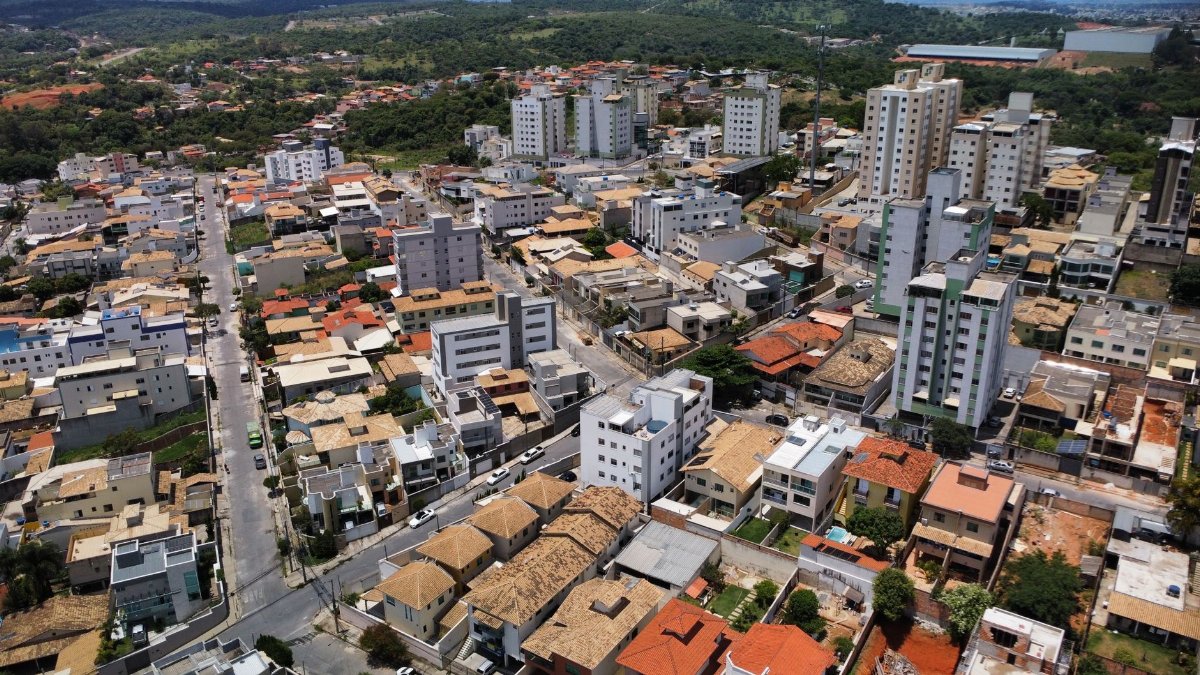
House District 14A is not a cartoon of either coastal politics or rural nostalgia. It holds neighborhoods of St. Cloud and the surrounding civic life of a city that serves as a medical, educational, and retail hub for a wide ring of smaller towns. Students pass through. Workers commute. Congregations anchor blocks that look very different from one another on a Sunday morning or a Friday afternoon. A winning coalition here has to be assembled, not assumed.
That geography matters for how the victory should be read. A first of its kind can be true and still be local. The first Somali American legislator from central Minnesota did not win a statewide mandate, and he did not erase the political habits of Stearns County. He won a House district by a margin that will keep him attentive. Colleagues in St. Paul may treat the result as a sign of demographic change. Constituents are more likely to treat it as a hire. The job begins with calls about roads, schools, and bills that do not care who made history on election night.
Faith rooms and civic habits
Any honest account of this election has to pass through religious life, because religious life is how a large share of St. Cloud still organizes time, charity, and argument. Mosques have become ordinary landmarks. Lutheran and Catholic parishes remain thick with volunteer networks. Evangelical congregations shape moral language about family, work, and authority. These rooms do not vote as blocs, and it is a mistake to pretend they do. They do, however, form people who then vote.
For Somali American residents, the mosque is not only a place of prayer. It is a switchboard for mutual aid, for advice about schools, for news that never quite makes the evening broadcast. For many older residents, a church basement is the same kind of switchboard. The campaign that lifted a new lawmaker had to be legible in both kinds of rooms without pretending they share a creed. That is a spiritual fact as much as a political one. Belonging in this city is often negotiated through potlucks, funerals, and Friday gatherings before it is negotiated through party platforms. A legislature seat does not settle those negotiations. It gives them a new address.
The arguments that would not stay polite

The race carried the usual municipal subjects: public safety, classroom discipline, taxes, housing, and the condition of local business. It also carried subjects that people lower their voices to discuss and then vote on loudly. Immigration. Assimilation. Whether a city that recruited refugee resettlement years ago still recognizes itself. Whether criticism of crime or of cultural change is honest policy talk or a polite cover for rejection. These arguments did not begin with one candidate, and they will not end because he won.
Journalists do no one a favor by sanding that friction into a celebration. Voters who felt unheard before the election still feel unheard. Voters who felt unseen in the Legislature now have a voice and will be judged by what that voice does with power. The healthy version of this moment is specific. It asks what the member will sponsor, whom he will meet, and which local failures he is willing to name even when naming them is uncomfortable inside his own coalition. The unhealthy version collects the win as a moral trophy and stops listening to the 48 percent.
What St. Paul will actually require

A first term in the Minnesota House is a crash course in procedure. Committee assignments, bill deadlines, and the strange theater of caucus loyalty can swallow a newcomer who arrived with a clear neighborhood agenda. Central Minnesota has not always felt well served by that machinery. Rural and regional members often say the metro dominates the conversation. Urban members often say greater Minnesota misunderstands the cost of density. A Somali American Democrat from St. Cloud sits at an awkward and useful intersection of those complaints.
He will be asked to be a symbol and a specialist at the same time. Symbol work is the part cameras like: the first, the barrier broken, the photograph in the chamber. Specialist work is duller and more valuable. It means learning which agencies actually move money to a school district, which sentences in a housing bill help a landlord and which help a tenant, and how a freshman avoids becoming a mascot for fights he did not pick. Constituents will not grade him on symbolism alone. They will notice whether a phone call from St. Cloud gets a serious answer.
Pride, caution, and the morning after

Inside Somali American households the result landed as pride with a practical edge. Parents who have spent years explaining their children to teachers and employers could point to a public office and say the explanation is no longer theoretical. Young people who have heard their names mispronounced in civic settings could see a name on a legislative roster. That matters. It changes what a teenager thinks is possible in a city where possibility has sometimes felt rationed.
Pride did not cancel caution. Community leaders know that visibility attracts scrutiny. A mistake by one elected official will be treated, unfairly, as a report card on thousands of neighbors. That burden is familiar to every group that arrives late to formal power, and it is exhausting. The fair response is not to demand perfection. It is to judge the member as a member: by votes, by constituent service, by whether he tells the truth when the truth is inconvenient. Abdi Daisane St. Cloud politics will be healthier if celebration and accountability are allowed in the same sentence.
Neighbors who voted the other way
A durable democracy keeps a chair for the people who lost. In District 14A that chair is occupied. Some of those voters fear cultural displacement. Some dislike the Democratic program on taxes or policing and would have opposed any nominee of that party. Some simply did not know the winner and declined to take a chance. Lumping them together as relics insults them and misreads the map. A representative who wants a second term will have to spend time in rooms that did not cheer on election night.
That work is not capitulation. It is the job. Listening does not require agreeing that every anxiety is justified. It does require refusing the lazy idea that opposition to a Somali American candidate is always and only bigotry, or that support for him is always and only enlightenment. People contain more than one motive. A city that has absorbed real demographic change in a short generation is allowed to feel the strain of that change. It is not allowed to lock the door of self government against the people who already live there. The election drew that line more clearly than a speech could.
Schools, shops, and the issues that outlast a headline

If the next two years are serious, they will be boring in the best sense. St. Cloud families talk about class sizes, special education, and whether a teenager can find a job that leads somewhere. Shop owners talk about theft, rent, and the thin margin between a good month and a closed sign. Patients talk about drives to specialty care. Renters talk about deposits. These subjects do not photograph as well as a historic first. They are the subjects that decide whether historic firsts become trusted incumbents.
The new member arrives with a particular fluency that could be useful if he chooses to use it as skill rather than as costume. He can hear, in a way some colleagues cannot, how a state rule lands in an immigrant household and how the same rule lands in a household that has been in Stearns County for generations. That double hearing is not automatic wisdom. It is an advantage only if it produces bills and oversight that make daily life less brittle. Voters have a short patience for representatives who are famous and ineffective. They should.
A first that still has to earn a second

History will record the milestone, and it should. Central Minnesota had not sent a Somali American to the Legislature before this count. The absence was not an accident of talent. It reflected who had been recruited, who had been funded, who had been treated as a plausible face of the district. Breaking that pattern is real. It widens the picture children carry of who governs them. It also obliges the winner to govern, which is a less lyrical task than being first.
When Abdi Daisane St. Cloud residents look toward the coming session, the useful questions are plain. Will he show up for the unglamorous hearings. Will he tell supporters no when no is the honest answer. Will he visit the precincts he did not carry. Will he treat faith communities as partners in service rather than as props. Will he remember that 52 percent is permission to work, not permission to lecture. Those questions belong to journalism and to citizenship alike. They are how a first becomes a representative rather than a headline that fades when the next race begins.