
On a weekday afternoon at Neshaminy Mall, the food court is quieter than it used to be, but the Boscov’s entrance still pulls a steady line of shoppers with carts, coats, and lists. That small contrast is the story of Boscovs mall survival in a region where many enclosed shopping centers have lost anchors, tenants, and purpose.
A family name that still means a full store
Boscov’s is not a national chain chasing the latest retail fashion. It is a Pennsylvania company with roots in Reading, built over generations by the Boscov family and still closely identified with that name. In the Philadelphia area, the stores at Neshaminy, Exton Square, and Echelon function as large, fully stocked department stores rather than leftover boxes waiting for a redevelopment plan.
Shoppers still expect clothing, housewares, cosmetics, toys, and furniture under one roof. That old promise sounds ordinary until you walk a mall where other anchors have gone dark. A working department store changes the feel of a corridor. It gives people a reason to park, and it gives smaller tenants a chance at foot traffic they would not get from a vacant Sears.
Why these three malls still matter
Neshaminy Mall in Bensalem sits in a dense suburban market north of Philadelphia, with households that still drive for errands rather than treating every purchase as a delivery. Exton Square, west of the city, draws from Chester County communities that grew up around the mall and still use it as a landmark. Echelon, in Voorhees, serves South Jersey shoppers who have long crossed county lines for a familiar store.
None of these properties is immune to the broader retreat from enclosed malls. Each has lost tenants. Each has had to rethink space. What distinguishes them, at least for now, is an anchor that has not abandoned the building. Boscovs mall survival is visible in ordinary ways: lights on, departments staffed, seasonal displays up, and a parking row that is not empty at noon.
The long retreat of the traditional mall
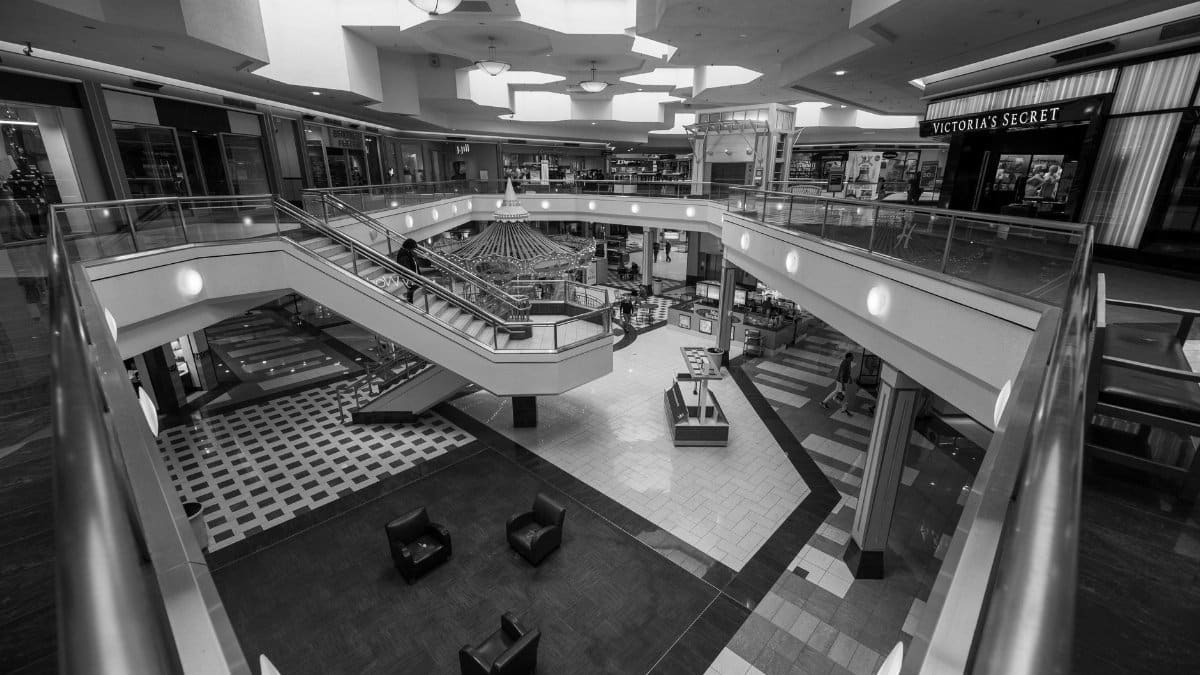
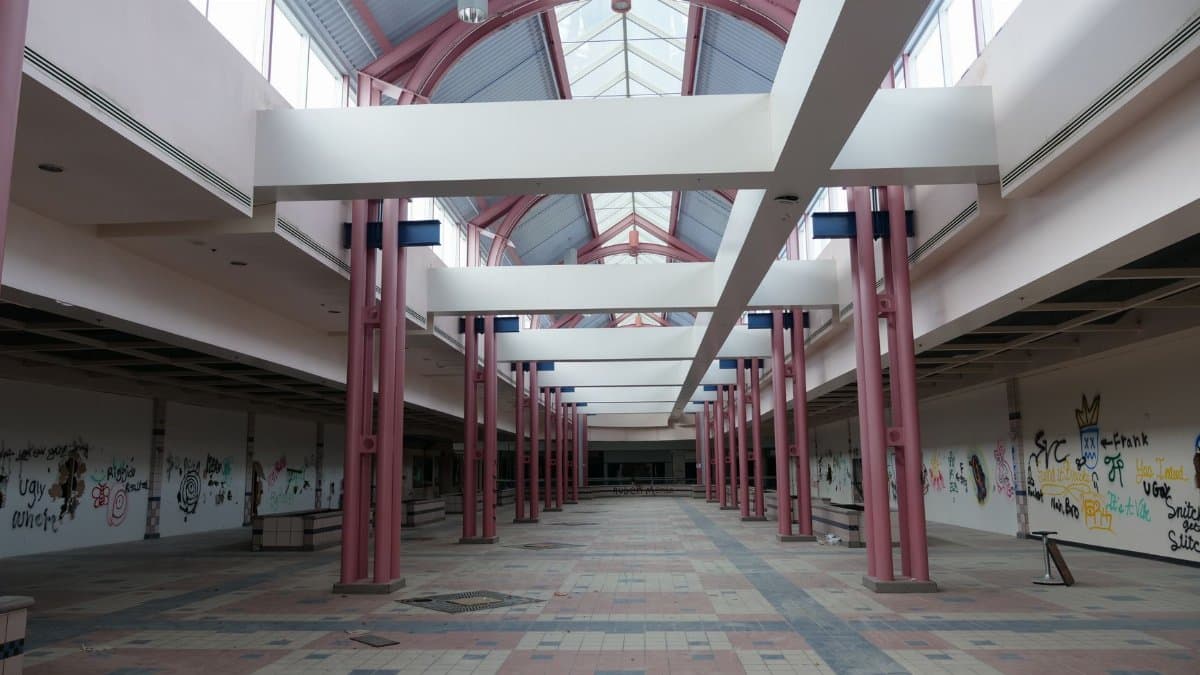
For decades, the American mall depended on a simple diagram. Department stores at the ends. Specialty shops in the middle. A food court as the social center. That diagram broke when shoppers moved online, when discount chains undercut mid priced apparel, and when too many centers were built for the same customers.
In the Philadelphia region, the result has been uneven. Some malls have been torn down or converted toward housing, medical offices, and open air retail. Others limp along with a mix of entertainment, services, and vacant storefronts. The decline is not a single event. It is a slow loss of reasons to visit. When an anchor leaves, the loss is larger than one store. It removes a destination that once justified the trip.
What Boscov’s kept when others left
Competitors exited for different reasons. Some national chains decided that aging malls no longer fit a smaller, more selective store fleet. Some could not carry the cost of huge buildings with declining sales. Boscov’s made a different bet. It stayed in markets where a broad assortment and a local reputation still produced enough business to justify the space.
That bet has not been painless. The company went through bankruptcy during the financial crisis and later rebuilt. Survival in that period did not guarantee survival now. It did leave a chain more willing than many rivals to operate in secondary locations, to stock goods that big specialty shops ignore, and to treat community events as part of the business rather than a distraction from it.
The merchandise mix is part of the strategy. A grandmother can buy a coat, a pan, and a gift in one stop. A parent can find school clothes without a separate trip. In a fragmented retail landscape, that convenience is not glamorous. It is useful, and usefulness is what many struggling malls lack.
The customer who never fully left
Department store obituaries often assume that every shopper under forty has abandoned the format. The parking lots tell a more mixed story. Older customers remain loyal, and they bring purchasing power that retailers sometimes underestimate. They want to see fabric, compare sizes, and speak with a person who knows the department.
Younger shoppers have not vanished either. They come for specific needs, for sales, and sometimes because a parent insisted. The point is not that Boscov’s has reversed the national shift to phones and delivery. The point is that a large minority of households still prefers a store that feels complete. In the suburbs, that minority can be large enough to keep a mall anchor alive.
Anchors as the last argument for the building
Mall owners talk about experiential retail, medical tenants, and apartments on former parking fields. Those ideas can work. They also take years, capital, and zoning fights. In the meantime, an operating department store is the most straightforward argument that the building still has a retail purpose.
Boscovs mall survival matters to landlords because rent from one large tenant is only part of the value. The store validates the address. It supports holiday traffic. It makes a lease pitch to a nail salon, a phone shop, or a local restaurant slightly less desperate. When that anchor is credible, the mall can decay more slowly, which is not a slogan anyone puts on a brochure, but it is often the real plan.
Exton Square and the west suburban test
Exton Square has long been a test of whether a mall built for a growing county can adapt after that growth finds other outlets. Shoppers in the western suburbs have plentiful alternatives, from open air centers to stores along major roads. A department store has to earn the drive.
Boscov’s does that less with novelty than with range. The Exton location offers the kind of one building errand that specialty retail split apart. If the store remains busy enough to look alive on an ordinary Thursday, it gives Exton Square a center of gravity that vacancy cannot provide. If it ever thins out, the rest of the mall will feel the absence immediately.
Neshaminy and the density advantage
Neshaminy benefits from population. Bensalem and nearby towns are not sparse exurbs. People live close enough that a mall trip can be a short drive rather than a planned outing. Density does not save a weak store, but it gives a competent one more chances to be useful.
That is a humble advantage, and it fits the chain. Boscov’s has rarely sold itself as a luxury destination. It sells coverage: enough categories, enough sizes, enough reasons to stop. In a dense suburb, coverage can outperform concept. Neighbors do not need the mall to reinvent shopping. They need it to work when they have a list.
Echelon and the South Jersey habit
Echelon sits in a different state and a familiar habit. South Jersey residents have shopped Philadelphia’s orbit for generations, choosing malls based on traffic, selection, and memory as much as on a county line. A surviving department store keeps Echelon inside that habit.
Regional identity matters here. Shoppers talk about “their” store in a way they rarely talk about a website. They know which entrance to use. They know which department is worth the walk. That knowledge is a form of loyalty that national marketing cannot easily copy, and it helps explain Boscovs mall survival even where the surrounding center shows its age.
Community events and the unfashionable draw

Boscov’s has long used events, charity ties, and local visibility to stay present between major sales. Critics can dismiss that approach as old fashioned. Customers often experience it as proof that the store belongs to the place. A chain that shows up for the community is harder to treat as interchangeable.
This is not spirituality in a formal sense, though the ritual is real. People return to the same aisles at the same seasons. They meet relatives. They mark holidays with purchases that are also visits. A mall that still hosts those routines has a social function that vacancy statistics miss. The function is modest. It is also one reason some buildings refuse to empty on schedule.
What survival does not guarantee

Staying open is not the same as thriving without limit. Mall traffic can fall even when an anchor holds on. Online competition will not pause. Real estate owners may still decide that housing or medical use pays better than retail. A family company can make good local decisions and still face costs that a single strong Christmas cannot cover.
The honest reading is narrower. In Neshaminy, Exton Square, and Echelon, Boscov’s has remained a functioning reason to enter the building while many peer anchors have not. That is a retail achievement in a hard era. It is also contingent. Another decade of weak specialty leasing could isolate even a healthy department store inside a mall that no longer feels worth the trip.
Lessons for landlords and for shoppers

Landlords watching these properties should resist the idea that every enclosed mall needs the same rescue. Some sites will convert. Some can persist if the remaining anchors are treated as partners rather than as temporary occupants of future construction zones. Cutting services, neglecting common areas, or letting corridors go dark around a strong store is a good way to waste the asset you still have.
Shoppers, meanwhile, are already voting with routines rather than with nostalgia. They go where the store is staffed, the goods are findable, and the trip does not feel like a tour of absence. Boscovs mall survival will last only as long as that practical vote continues. For the moment, in these Philadelphia area malls, enough people are still casting it.