
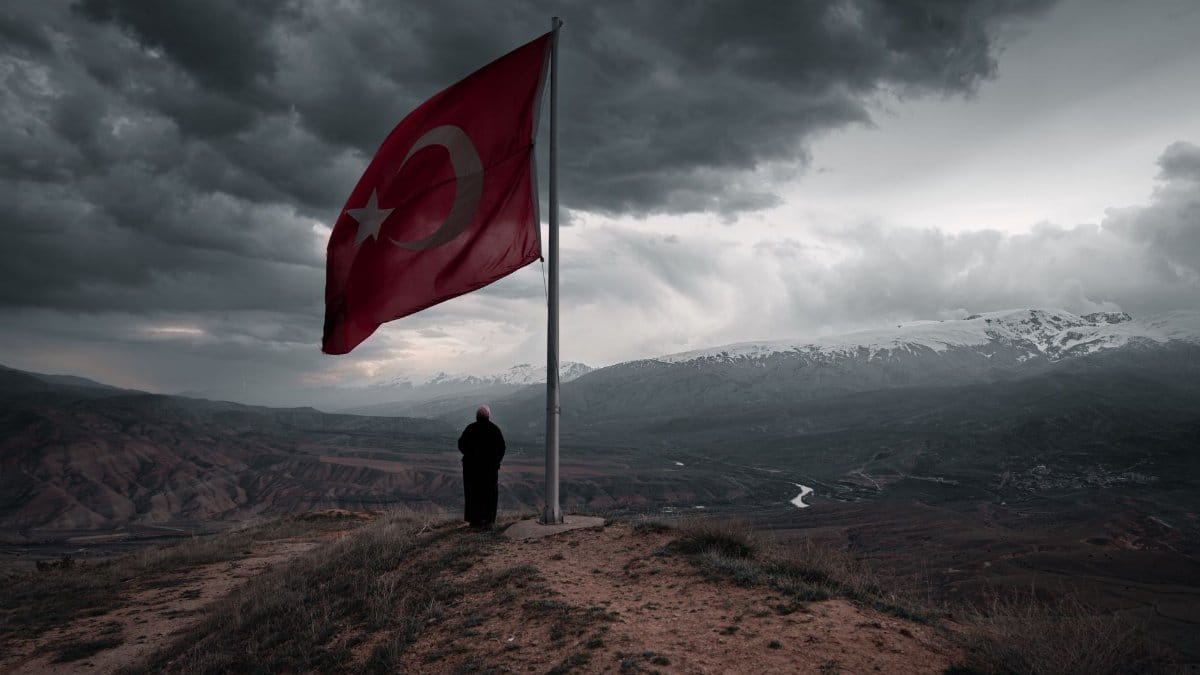
On the morning the talks opened, the Mediterranean looked almost polite. Fishing boats moved in a thin line beyond the hotels, and the air over Antalya carried the ordinary salt of a late autumn coast. Inside the conference halls, the mood was not ordinary at all. Delegates had arrived for COP31 Antalya after a year in which heat, flood, fire, and failed harvests made climate policy feel less like a distant negotiation and more like an argument about survival already underway. The banners were new. The grievances were not. What had changed was the difficulty of pretending that the weather outside the tent was someone else’s problem.
A year that refused to stay abstract

For a long time, climate meetings could still be conducted in the future tense. Targets sat in 2030 or 2035. Damage was projected, modeled, and then filed. This year stripped away some of that distance. Heat settled over cities that had planned for milder summers. Rivers rose through neighborhoods that had not flooded in living memory, and in other places the rain simply failed. Wildfires moved through landscapes already dried by successive seasons. Insurers raised prices or left markets. Farmers replanted, then replanted again. None of this required a new theory. It required attention.
Scientists have said for years that a warmer atmosphere holds more moisture and stacks the odds toward extremes. The public did not need a seminar to recognize the pattern. What people needed, and what many still lack, is a politics equal to the pattern. That is the uncomfortable assignment sitting in front of the delegates: not to discover the problem, but to act as if the last twelve months were evidence rather than anecdote.
Why the talks landed on this coast
Turkey offered Antalya as a stage with practical advantages and symbolic weight. The city can house a large summit. It sits between Europe, the Middle East, and Central Asia, regions that do not experience climate risk in the same way and do not hold the same leverage over energy markets. Hosting is never a neutral act. It is a claim that a government wants to be seen as a convener, and a test of whether that claim survives contact with the agenda.
COP31 Antalya also arrives while energy politics remain jagged. Wars, sanctions, shipping risks, and price spikes have reminded governments that fuel is strategy as well as commodity. Some capitals answered disruption by rushing back to coal, oil, and gas. Others treated the shock as a reason to accelerate cleaner power, storage, and grids. Both impulses are in the room. The coast outside is calm. The bargaining is not.
What the agenda actually contains

The formal list is familiar to anyone who has followed these meetings. Countries are expected to show whether their national plans match the temperature goals they have already endorsed. There is pressure to move from pledges about ending unabated fossil fuel expansion toward dates, sectors, and enforcement that finance ministries will recognize. Adaptation, long treated as the poor cousin of emissions talks, has a stronger claim this year because the damage is no longer hypothetical.
Then there is money. Who pays for protection in places that did little to cause the problem. Who pays when protection fails. How quickly public funds can unlock private capital without turning climate finance into a slogan. Diplomats can spend a week arguing over verbs. The verbs matter, because a promise to “consider” is not a promise to deliver. Still, readers far from the plenary should not mistake procedural combat for emptiness. Procedure is how obligations become, or fail to become, real.
Energy shocks and the temptation to delay

Geopolitics has given every hesitant government a ready excuse. If pipelines are uncertain and electricity prices are politically explosive, why retire a plant that still runs. If a rival is buying cheap fuel, why accept a competitive disadvantage. These are not fake concerns. Households feel energy bills before they feel atmospheric chemistry. Leaders who ignore that sequence lose the public, and then lose the policy.
The harder truth is that delay has a bill of its own. Rebuilding after flood and fire is not cheap. Import dependence is not security. A grid that cannot handle heat waves is not a modern economy. At COP31 Antalya, the countries arguing for a slower transition are not only bargaining with activists. They are bargaining with physics and with their own future treasuries. A serious outcome would treat energy security and emissions cuts as the same project: more diverse supply, less waste, faster permitting for clean power, and honest timelines for workers in industries that will shrink.
The people who cannot wait for a perfect text
Summit coverage often lingers on leaders and limousines. The more revealing conversations happen with mayors, water managers, hospital administrators, and farmers who have already changed planting dates. A coastal district does not need a final communique to know that sea level and storm surge are redesigning the map. A mountain town does not need a footnote to know that snowpack no longer behaves like a reliable reservoir.
These officials arrive in Antalya with shopping lists that sound mundane and are in fact moral. Early warning systems that reach people without smartphones. Cooling centers that stay open when the power flickers. Building codes that assume the next storm, not the last one. Crop insurance that pays before a family sells the seed stock. None of this is glamorous. All of it is climate policy in the form that a household can use. If the summit cannot connect its declarations to that scale, it will be judged, fairly, as theater.
Faith, stewardship, and a question of meaning

Because this gathering sits inside a year of visible loss, it has also drawn religious leaders who do not usually dominate the climate beat. Their language is not a substitute for emissions inventories. It does supply something the technical talks often lack: an account of obligation that does not expire with an election cycle. Stewardship, care for the stranger, restraint in the use of power, duties to children not yet born. These are old ideas. Applied to a heating planet, they become uncomfortably current.
I keep returning to a simpler question that the communiques rarely answer in plain speech. What do we owe people who will live with decisions made in rooms they will never enter. Faith communities are not unanimous, and piety is not a plan. But a summit that speaks only in tons and dollars can forget that citizens experience climate change as grief, displacement, and a test of whether institutions still tell the truth. Antalya will be remembered, if it is remembered, for whether that moral register changed any signature on any check.
The fights over finance and fairness
No issue divides the hall more cleanly than money, and none is more easily caricatured. Wealthy countries hear demands for transfers as open ended liability. Developing countries hear hesitation as bad faith from nations that grew rich on the very fuels now under indictment. Both descriptions contain a political truth. Neither is a workable end state.
A credible package would do several plain things. It would put more grant money, not only loans, behind adaptation in low income countries. It would clarify how loss and damage funds are triggered after a disaster, so survivors are not left waiting on a committee. It would push development banks to stop treating fossil expansion as ordinary business while labeling every solar project a special case. And it would admit that private capital follows rules, risk, and return. Sermons do not clear a project through a credit committee. Predictable policy does.
COP31 Antalya will not settle the full history of industrial emissions in a week. It can narrow the gap between what has been promised since earlier summits and what treasuries have actually booked. That narrower task is less stirring and more serious.
What success would look like by Friday

Success, in this setting, is easy to fake and hard to achieve. A longer document is not a victory. A photograph of leaders in a row is not a victory. A useful week would leave behind a small number of commitments that can be checked without a decoder ring. National plans submitted on time, with sector detail. A published path for public climate finance that names years and amounts. A signal, strong enough for investors, that new unabated coal is finished and that oil and gas expansion will face rising constraints rather than quiet exceptions.
It would also leave behind something less formal: an agreement that adaptation is not an admission of defeat. Cutting emissions remains essential. Preparing societies for the warming already stored in the system is equally essential. Treating those tasks as rivals has wasted years. The weather of the past year made the rivalry look especially foolish.
The limits of a single coastal week

Even a strong text will not replant a failed crop or rebuild a burned town. Implementation happens in parliaments, regulators, utility commissions, and corporate boards after the delegates fly home. That is where loopholes reappear, where subsidies quietly continue, and where the phrase “national circumstances” becomes a blanket. Readers should watch the follow through, not only the closing gavel.
There is also a risk of despair that helps no one. The year was disastrous in places, and uneven, as climate impacts always are. Unevenness is not innocence. Countries that were spared the worst headlines still sit inside the same energy system and the same atmosphere. Antalya is a reminder that geography assigns different wounds, not different planets.
Leaving with the weather still in charge
By the time the meetings end, the fishing boats will still go out, and the hotels will still sell the view. The test of COP31 Antalya is whether the week changes the decisions that shape the next storm, the next harvest, and the next power plant. Leaders can leave with a carefully balanced statement and an unchanged energy system. They can also leave with fewer places to hide.
The Mediterranean can look polite on a clear morning. Politeness is not the climate. After a year that made the stakes visible to people who never read a negotiating text, the summit’s job is simpler to say than to do: match the paperwork to the weather, and the money to the people already living with the result.