

Before sunrise on the last Saturday of early voting, a line already curled past the book drop at a southwest Houston library. People held coffee, folded sample ballots, and the kind of patience that midterm years do not always earn. Harris County early voting closed this cycle on a number county leaders had not recorded in a midterm: more than 862,000 ballots cast before the final day of early voting, a total reported by the Houston Chronicle. For a county larger than many states, that is not a curiosity. It is evidence that a huge share of the decision was already made while campaign ads were still running and while Election Day itself remained a week of ordinary errands.
A midterm total that rewrote the local benchmark

The Chronicle reported that Harris County set a new midterm record with more than 862,000 ballots in before the last day of early voting had run its course. Presidential years have produced larger early totals here, because a national ticket pulls infrequent voters into the stream. A midterm is a harder test. There is no White House race at the top of the ticket, and the ballot is crowded with judges, county posts, and statewide offices that do not always break through the noise of daily life. A record in that setting says something sturdier than a viral afternoon. It says a large number of registered voters decided the wait was worth it before the calendar reached Election Day.
Records invite exaggeration. One strong early period does not prove that every neighborhood participated at the same rate, or that the final result was already locked in a back room. It does show that voting before Election Day has moved from a convenience for the highly motivated into something closer to the normal path. When more than eight hundred thousand people use that path in a midterm, campaigns stop treating the early period as a side door. In Texas, in person early voting generally opens on the seventeenth day before Election Day and runs through the Friday before it. That span is long enough to build a record and short enough that a late surge still matters.
Why this county is built for an early ballot
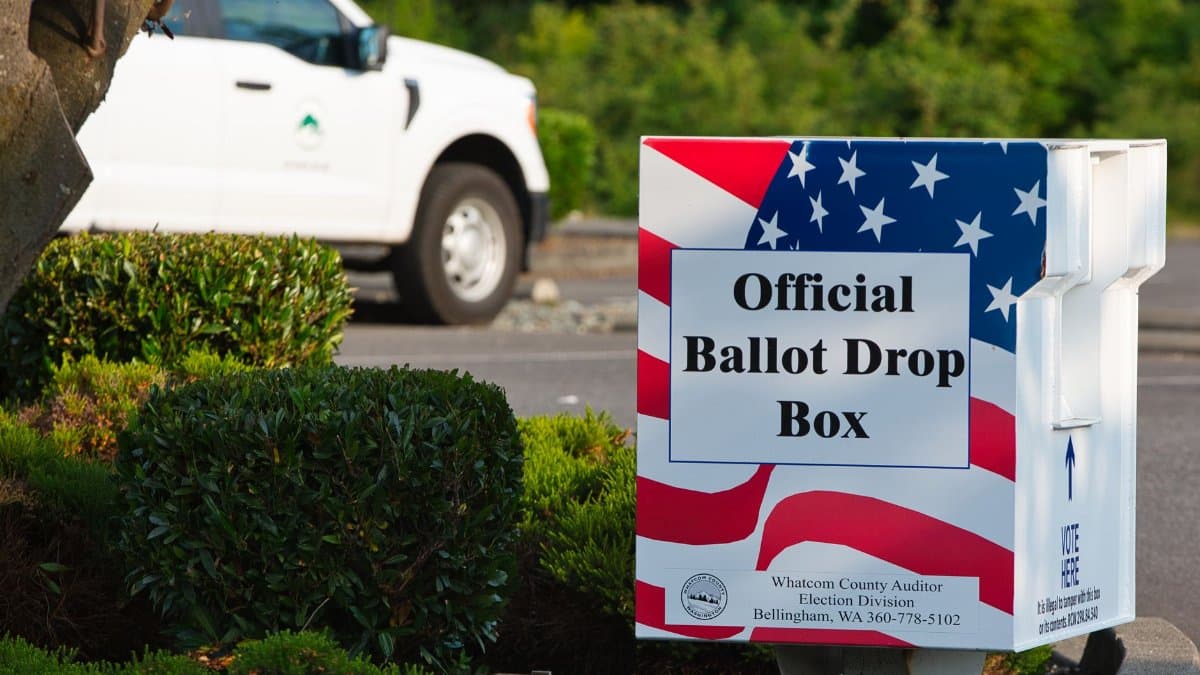
Harris County covers Houston and a ring of suburbs, industrial corridors, and neighborhoods that do not share a single commute. A voter in Baytown and a voter in Katy may face the same ballot and entirely different clocks. Early voting exists, in practical terms, because a single Tuesday cannot absorb a county of this size without turning the act of voting into a contest of traffic and shift schedules. Polling places in libraries, community centers, and civic buildings stay open across many days, and a registered voter may cast a ballot at any countywide early site rather than only at a home precinct.
That flexibility matters for shift workers, caregivers, and people who cannot risk a long line after a late bus. It also changes how campaigns spend money. The persuasion window does not end on the Monday before Election Day. It narrows every morning as ballots accumulate. By the time a record is visible to the public, a large part of the electorate has already left the field. What remains is not the whole county. It is the share that prefers, or is stuck with, the traditional Tuesday.
Habit, urgency, and the quiet majority of a record

Harris County early voting has become a civic routine, closer to a standing appointment than to a last minute scramble. Voters talk about it the way they talk about renewing a license: better to handle it when the location is open and the line is a known quantity. Party workers still chase Election Day turnout, but the arithmetic has shifted. A campaign that waits until the final Tuesday to find its people is hunting in a thinner crowd, and it knows it.
Habit is not the same thing as enthusiasm. Some of the ballots in a record year come from voters who feel urgent about courts, schools, or the direction of the state. Others come from people who have simply learned the system and refuse to gamble on a single day. Both count the same. The danger in reading a record only as passion is that it flatters the loudest interpretation and ignores the quieter one: access, repetition, and a county apparatus large enough to process the load without turning every voter into a story.
Mail ballots and in person lines move at different speeds

Early voting is not one experience. Some voters request a mail ballot, fill it at a kitchen table, and send it back under rules that Texas has tightened in recent years. Others stand in person, show identification, and feed a ballot into a scanner while a poll worker watches the line. The Chronicle figure of more than 862,000 combines those paths into a single early total. That combination is useful for measuring scale. It is less useful for describing how people felt in the room, or how many envelopes never made it through review.
In person voting still carries the public face of a record: photographs of lines, comments about wait times, the small theater of a Saturday at a community center. Mail ballots are quieter and more exposed to signature questions, delivery deadlines, and changes in who may vote by mail at all. A county can break a record and still leave some voters angry about a rejected envelope. Scale and fairness are related, but they are not the same sentence. Anyone celebrating the total should be willing to ask who found the process easy and who did not.
The administrators who have to make the number real

A figure like 862,000 is also a stress test for election staff. Ballot paper, voting machines, poll workers, and the handoff from early sites to a central count all have to hold. Harris County has spent recent cycles under a bright and often hostile light. Delays, paper shortages on Election Day in 2022, and partisan fights over who should run elections have made trust itself part of the story. A heavy early period does not erase those arguments. It does show that the county can move a very large number of ballots when the sites are open and supplied.
Voters rarely see the warehouse, the logic and accuracy testing, or the overnight work of uploading results. They see whether the machine accepts the ballot and whether the line moves. When it does, confidence rises in a small, local way. When it does not, a large turnout becomes an exhibit in a larger fight about competence. That is the odd burden of a big county: success must be both large and ordinary, or it will be treated as an accident.
Campaigns that live inside the early window

Once early voting opens, the campaign calendar compresses. Television ads still matter, but so do text messages timed to a voter who has not yet checked in, rides to a site across town, and the decision to stop spending on someone who has already voted. The operational meaning of Harris County early voting is that the decisive days arrive early. In a county this large, that targeting is not a boutique tactic. It is how a modern race is run, because the early pool is big enough to shape margins in statewide contests that finish close.
Candidates talk as if Election Day is the main event. Their field plans tell a different story. The record reported this cycle will be read in campaign offices as a map: which areas showed up before the deadline, which ones still have ballots left on the table, and where a final push is wasted motion. Turnout is not a mood. It is a schedule, and the schedule now favors the candidate who treated the first week of early voting as seriously as the last night of the race.
A record is not a verdict
High early turnout tempts commentators to declare a wave. Anyone quoting Harris County early voting as proof of a coming sweep should slow down. A record says more people used the early option than in prior midterms. It does not say they agreed with one another. This county is not a single political color, even if Houston often anchors Democratic strength and some suburbs pull in another direction. A large early total can contain opposing surges that cancel in the final math, or one surge that does not. The ballots do not announce their contents when they drop into the box.
Coverage should also resist the sports language of blowouts and momentum. Ballots are not points on a scoreboard until they are counted in full, including Election Day and provisional ballots. The early record is a chapter, not the last page. Treating it as destiny is how reporting gets ahead of voters who have not yet gone to the polls, and how a real achievement gets turned into a prediction nobody can yet cash.
What remains after the early sites go dark

When early voting ends, the county does not exhale. Sites close, equipment returns, and the public argument moves to Election Day lines, to mail ballots still in transit, and to the long night of results. The people who already voted go back to work. The people who have not voted inherit a shorter clock and, often, a louder one. Campaigns make their last claims. Election judges try to keep the day procedural, which is harder when every delay is filmed and every shortage is treated as proof of a plot.
Harris County early voting will be cited for years as the midterm benchmark, the way old totals are cited when someone wants to argue that this year is different. That citation will be fair only if it keeps its qualifiers: a midterm, early ballots, more than 862,000, reported before the final day had fully closed in the Chronicle account. Strip those qualifiers and the number becomes a slogan. Keep them and it remains what it is, a measure of how many people in the largest county in Texas decided not to wait for a single Tuesday to carry the weight of the entire election.