
On a humid June morning in Worcester, a voter who has never joined a party can still be told that the most important choice of the year has already been narrowed before she reaches the booth. Massachusetts Question 3 asks whether that habit should end. The statewide measure would scrap separate party primaries and place every candidate on one preliminary ballot, sending only the two highest finishers to November, whatever labels they carry.
A ballot question with a blunt premise
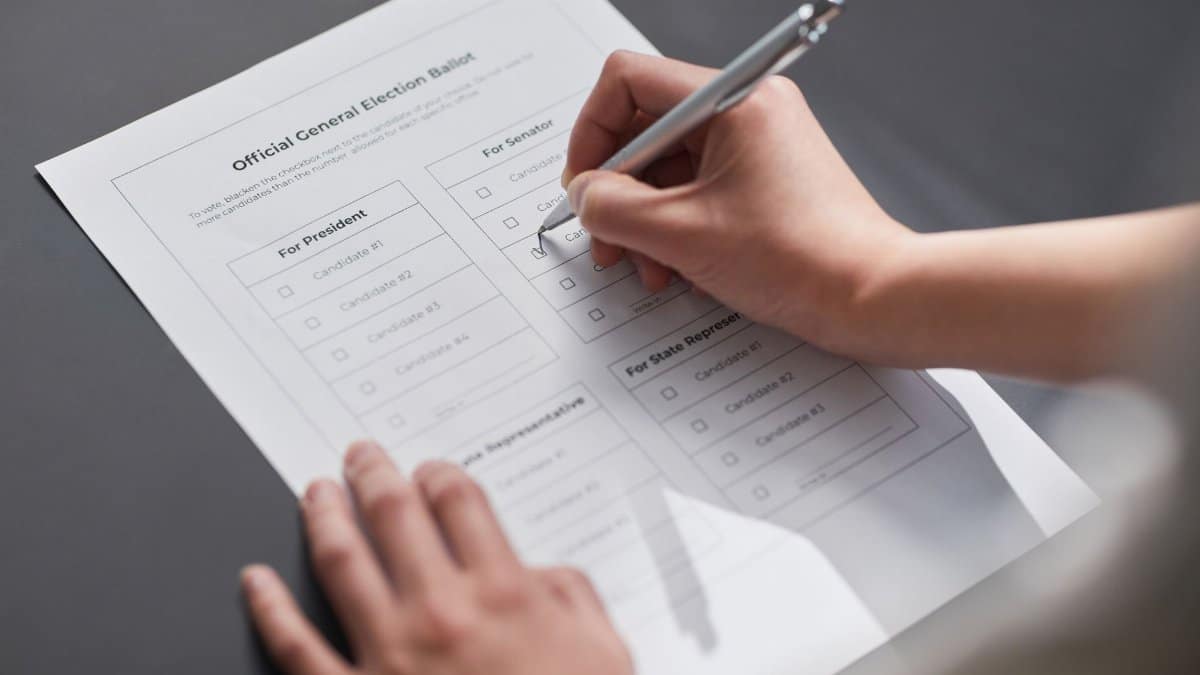
The premise is simple enough to fit on a palm card and large enough to rearrange how power is won in the Commonwealth. For generations, Democrats have chosen Democratic nominees and Republicans have chosen Republican nominees. Unenrolled voters, who make up a huge share of the Massachusetts electorate, may pick a party ballot on primary day, but they do not get a ballot that treats every contender as a peer. Question 3 would replace that sorting with an all party preliminary election. The two candidates with the most votes would advance. A November race could feature two Democrats, two Republicans, or one of each, along with any independent who clears the first cut.
Supporters call this a repair for a system that rewards the most intense slice of each party. Opponents call it a demolition of parties as meaningful organizations. Both descriptions can be true at once. What cannot be true is the claim that nothing important would change. Primaries are where many Massachusetts contests are decided in practice, because one party dominates so many districts that November is a formality.
How the top two round would actually work

Under the proposal, candidates would still be allowed to state a party preference. The preference would be a label, not a gate. A Democrat, a Republican, and an unenrolled candidate could all appear together. Voters would mark one choice. The two names with the largest totals would move forward, even if they share a party, and even if a third candidate finishes a few hundred votes behind with a coalition that might have won a traditional general election.
That last point is the mechanical heart of the fight. A top two system does not ask voters to rank candidates. It does not transfer votes. It simply discards everyone below second place. In a crowded field, two candidates from the same party can advance while a unified minority party is shut out of November entirely. Campaign strategists already know how to game pluralities. They would learn this game quickly.
Why reformers say the old primary is the real problem

The case for change starts with a map, not a slogan. In large parts of Massachusetts, the Democratic primary is the election. Republican primaries in those places are thin or empty. The voters who show up in September, or whenever the calendar places the preliminary vote, are fewer, older, and more ideological than the November electorate. Candidates calibrate. They speak to the room that can end their careers, not to the larger public that will ratify the result.
Advocates argue that a single preliminary ballot would force candidates to hunt for a broader first round coalition. A Democrat in a deep blue district would still need to finish in the top two, but a challenger from the same party could no longer be dismissed as a spoiler who only helps the other side. The other side may not be on the November ballot at all. In that world, the argument goes, the real debate happens in front of everyone, twice.
The party case against opening the gate

Party leaders hear something else in that design. They hear the loss of a basic associative right: the ability of people who share a program to choose their own standard bearer. A party is not only a logo. It is a mechanism for recruiting candidates, enforcing some consistency, and giving voters a shortcut in a world of limited attention. If two Democrats can both reach November, the party no longer performs that shortcut. Voters must do the sorting themselves, often with less information than party elites like to admit and more advertising than anyone enjoys.
There is also a minority party fear that deserves a straight answer. In a state this blue, a top two preliminary can produce November ballots with no Republican at all in race after race. Republicans would not merely lose. They would vanish from the general election conversation in places where they are already weak. Some reformers treat that as a feature, a way to make the left compete with itself. Voters who want a genuine alternative may treat it as a lockout.
What other states have already shown

California and Washington have lived with top two preliminaries for years. The record is mixed in the way real records usually are. Some races became more competitive in November because two candidates from the dominant party had to keep campaigning. Some races became less representative because the second slot was captured by a pluralities game rather than by a coherent opposition. Political scientists disagree about whether moderation increased, and they disagree for a reason: the same rule can moderate one district and freeze another, depending on who files and who spends.
Alaska took a different path, pairing an all party first round with ranked choice in the general election. That is not what Massachusetts Question 3 proposes. Conflating the two is a common campaign habit and a bad one. Ranked choice tries to salvage the votes of eliminated candidates. A pure top two system throws those votes away after the first round. Anyone evaluating this measure should judge the rule on the ballot, not the cousin that failed or passed somewhere else.
Unenrolled voters and the myth of the unused majority

Massachusetts has long had more unenrolled voters than Democrats or Republicans. That fact is waved around as if it proved the primary is illegitimate. It does not, by itself. Many unenrolled voters are reliable partisans in practice. They skip the label and keep the habit. Still, the size of that group matters. A system that requires a party ballot, even a temporary one, tells a large share of the public that full participation has a costume requirement.
The harder question is whether those voters want the change enough to use it. Preliminary elections, under any name, draw fewer people than November. A top two ballot that only the usual primary electorate bothers to mark will not magically become a town meeting. Reformers sometimes speak as if a new rule manufactures a new public. It does not. It rearranges incentives for candidates and for the voters who already show up. The rest is organizing, weather, and whether the race feels alive.
Money, names, and the crowded first round

Crowded ballots reward fame and cash. That is true now, and it would be truer if ten candidates shared one list and only two survived. A well known incumbent starts with a cushion. A wealthy challenger can buy name recognition in a few weeks. A serious candidate with a small base and a thin treasury can finish third and disappear, even if that candidate would have won a party primary and then a general election against a weaker foe.
This is not an argument for freezing the status quo. Party primaries also reward fame and cash, and they add the further reward of pleasing a narrow activist core. It is an argument against romance. Question 3 would not humble money. It would change the audience money has to persuade. In some districts that audience would be broader. In others it would be a fog of similar names, and the candidate with the clearest brand would advance by default.
What November would stop meaning

General elections currently carry a civic story, even when the outcome is obvious. They are the moment when the whole electorate, not a party slice, is invited to accept or reject a nominee. If two members of the same party advance, November remains open to every voter, which is a gain. It also stops being a choice between programs that parties have sorted. It becomes a runoff. Runoffs can be healthy. They can also be sour, personal, and thin on policy, because the ideological distance between the finalists is small and the temptation to go negative is large.
Voters who like sharp contrasts will feel robbed in those races. Voters who hate partisan theater may feel, for the first time, that November is about them. Both reactions are rational. The measure does not pick a side between them. It picks a procedure and lets the feelings follow.
The legislature this would quietly reshape
The sharpest effects would not be in marquee statewide races, where both parties can usually field someone capable of finishing in the top two. They would be in the House and Senate districts where one party has owned the seat for decades. There, the preliminary election would become an open audition, and the general election would become an intramural final. Incumbents would face same party challengers who no longer need to win a closed primary against the activist base alone. Challengers would face a longer, more expensive calendar, because surviving round one would not end the fight.
Over several cycles, that pattern could change who even bothers to run. Some prospective candidates would see a path that the party primary never offered. Others would see a system in which finishing a respectable third is a kind of erasure, and they would stay home. Recruitment is the part of election law that statutes never fully describe and outcomes always reveal.
Claims that should be retired before Election Day
A few arguments deserve to be set down gently and left there. This measure will not end polarization by Thanksgiving. It will not hand the state to secret moderates, and it will not abolish parties, which can still endorse, spend, and whip votes inside the building. It will not make every district competitive in a partisan sense. It may make some districts competitive in a personal sense, which is a different good, and a smaller one.
Nor is the status quo a neutral tradition that only cranks want to touch. Closed and semi closed primaries are choices. They empower the people willing to affiliate, and they discourage everyone else. Keeping them is a decision with winners. Replacing them is a decision with different winners. The adult version of this debate admits both facts and then argues about which set of winners a democracy should prefer.
A narrower way to read the choice

Readers who want a single verdict will be disappointed, and they should be. The evidence from other states does not deliver a clean moral. It delivers a design lesson. If you want party members to control nominations, you should vote no. If you want the first round to include every candidate and every voter on the same list, and you accept that November may offer two people from one party, you should vote yes. Those are not slogans. They are descriptions of the machine.
Massachusetts Question 3 is easy to oversell and easy to caricature. It is harder to sit with, which is the actual job. The measure would upend primary elections in the most literal way: it would end them as party events and restart them as a statewide cutoff. After that, the Commonwealth would learn, race by race, whether a top two finish line produces better campaigns or only different casualties. No endorsement can spare voters that experiment if they choose to run it. The only dishonest move is pretending the rule is small.