
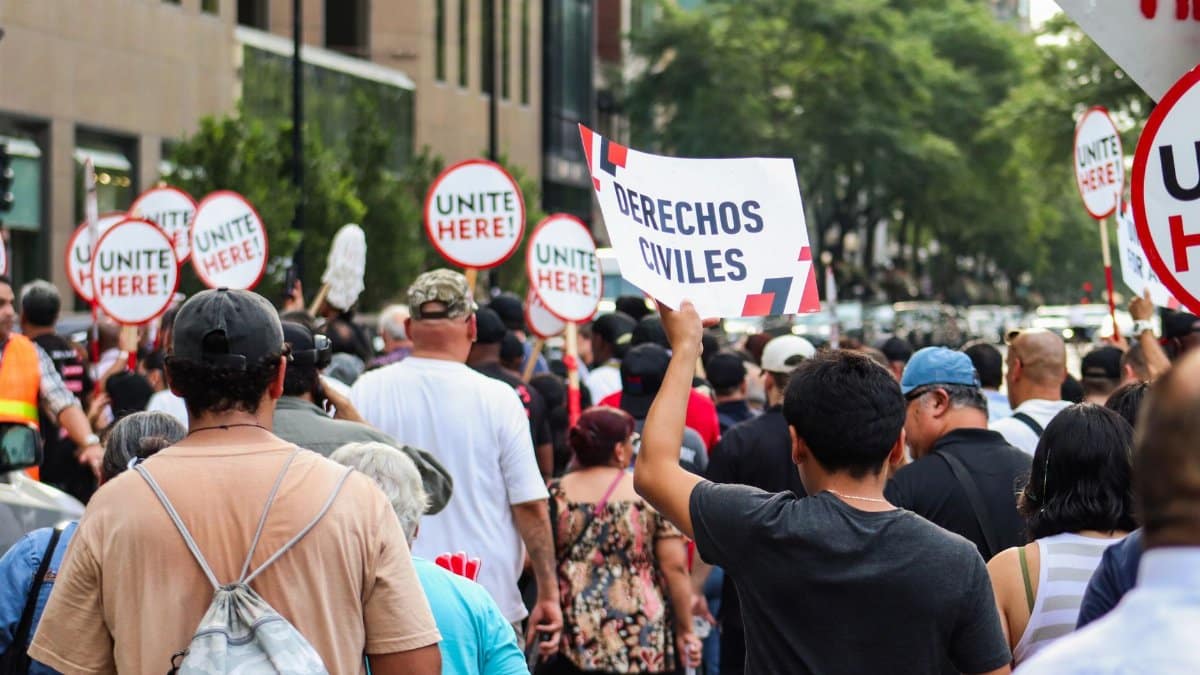
The clocks in the Loop do not care about contract calendars, but the people who take tickets, sweep stairwells, and wave cars into tight spaces do. With a labor agreement set to expire on Halloween, workers at Chicago parking garages voted by more than 98 percent to authorize a strike if bargaining fails to produce a deal. The Chicago parking strike, still an authorization rather than a shuttered entrance, has already altered the mood of a city that treats parking as background noise until the background stops. Drivers may not know the names of the attendants they pass each morning. They will notice if those attendants are gone.
The meaning of a near unanimous ballot
A vote above 98 percent is not a shrug. It is a message that patience has thinned across shifts, garages, and job titles that rarely share a break room. Authorization does not force a walkout on the first unanswered hour. It hands negotiators a credible threat and tells members that their coworkers are willing to stand together. In labor relations, that unity often matters as much as the specific dollar figure on the table. Employers can dismiss a narrow vote as the work of a loud minority. They have a harder time dismissing a room that speaks almost with one voice. For readers who rarely follow contract talks, the number is the story before any picket sign appears. It says the grievance is widely felt, not confined to a handful of vocal stewards. That kind of ballot changes the temperature of a negotiation even when the gates are still open and the ticket machines are still printing.
A contract that ends on Halloween
Halloween is an odd date for a labor deadline, and that oddness is part of the pressure. Costumes and late parties will fill downtown streets while bargainers argue over wages, staffing, and what happens when a garage runs short. A holiday deadline can speed a settlement because neither side wants headlines about closed ramps on a night when people already feel unsettled. It can also harden positions if each camp thinks the other will blink first. The expiration itself is not a strike. Work can continue under an extension, or it can stop. The calendar only marks the moment when the old rules no longer bind unless both sides agree to keep them. Families planning a night out will read the date as festivity. Workers will read it as the hour when a promise either gets renewed or gets tested in public. Both readings can be true on the same evening.
Who keeps the ramps moving
Parking work looks simple from the driver seat. Pull a ticket. Find a stall. Pay on the way out. The job is more physical and more social than that glance suggests. Attendants manage backups when a ballgame lets out. They watch for people who seem lost or unsafe. They handle cash, cards, and angry customers who blame the booth for a price set floors above them. Many work nights, weekends, and holidays because cars do not keep office hours. A strike vote is, among other things, a claim that this labor is skilled enough to withhold. The city notices parking only when it fails. The vote asks the city to notice the people who prevent that failure. Stairs get swept. Spills get cleaned. A driver who cannot find an exit gets pointed the right way. None of that shows up in a rate sign, yet all of it keeps a garage from becoming a hazard.
Wages, hours, and the cost of standing still

I do not pretend to know the final numbers on the table, and neither should anyone reading a single news cycle. What is public is the scale of the yes vote and the timing. Workers who authorize a strike are usually arguing about more than one line on a paycheck. They talk about how fast a shift moves, how many people cover a ramp, whether benefits survive a sick day, and whether a raise keeps up with rent. Chicago is expensive in the neighborhoods where many service workers live, even when downtown rates make drivers groan. A stalled contract means those questions stay open while the work continues. Authorization is a way of saying the open questions have waited long enough. Standing still has a price. It is paid in hours that do not stretch, in schedules that collide with child care, and in the quiet calculation that another year on the old terms would feel like a loss even if the lights stay on.
What a walkout would do to a weekday

If talks fail and the Chicago parking strike moves from ballot to gate, the effect would not be evenly spread. A commuter with a reserved stall in a private building might barely feel it. A visitor hunting for an evening space near a theater might circle for blocks. Hospitals, courthouses, and train stations depend on nearby garages that turn over quickly. A slowdown at those sites spills into side streets, bus lanes, and tempers. Delivery drivers lose minutes that their own employers count. The point of a strike, from the workers side, is exactly this inconvenience. It makes invisible labor visible by removing it. The civic question is how long the city can absorb that removal before pressure returns to the bargaining table. Some blocks would look ordinary. Others would stack cars to the corner. That unevenness is why a walkout in this trade feels local and citywide at the same time.
Bargaining without a spectacle
Most contract fights are dull until they are not. Lawyers trade proposals. Schedules slip. A union counts votes in a basement or a union hall while managers count cars. The public sees little of that until a deadline looms. That quiet is not the same as peace. A 98 percent authorization suggests members believe the gap is real, not theatrical. Companies in this industry often argue that margins are thin, that apps and automation are changing the business, and that a strike would hurt workers as well as owners. Those claims can be true and still fail to answer a workforce that has already voted. The useful question for the next few days is whether either side has room to move before costumes come out and garages face a choice. Spectacle is a poor guide. A late night meeting that produces a tentative deal will not trend. It may still be the outcome that keeps ramps staffed on Saturday morning.
Memory as a kind of leverage
Chicago has a long memory for labor disputes, from teachers to hotel staff to the trades that built the skyline. Parking attendants do not occupy the same civic pedestal, which is precisely why this vote matters. Service jobs at the edge of downtown life are easy to overlook until a holiday weekend or a strike vote puts them in the paper. Past disputes in the city show a pattern. Public patience is short. Political leaders prefer a deal to a disruption. And workers who stay unified tend to win something, even if it is less than the first demand. None of that predicts this outcome. It does explain why a near unanimous ballot is a form of leverage before a single shift is missed. Memory works on both sides of the table. Owners remember lost revenue. Workers remember promises that faded after the last settlement. Each memory walks into the room before anyone speaks.
Commuters are not the only audience
The people most exposed are not only the office workers who badge in at nine. Night shift nurses finishing at dawn, parents collecting children after a game, and tourists who budgeted one garage fee into a weekend all rely on the same ramps. So do the workers families, who would lose pay if a walkout stretches. A strike is a shared risk, which is why authorization votes are solemn even when the percentage looks fierce. Solidarity is not free. It is a bet that short pain beats a longer erosion of wages and staffing. Readers can hold two thoughts at once. Disrupted errands are real. So is the calculation that led more than 98 percent of voting workers to accept that risk. A city that only asks how to park has missed half the story. The other half is who can afford to stop, and for how long, before the bills at home start to dictate the next move.
Dignity, not drama

This story sits in a season when many people are asking what work is for, not only what it pays. That question is older than any contract. It shows up in how a city treats the person in the booth, whether as a nuisance between the driver and the exit or as someone whose time has value. A strike vote is a secular ritual of sorts. Members gather, they count, they decide whether to withhold the one power they fully own, which is their presence. You do not need a sermon to see the moral outline. People who keep a system running are asking to be counted inside it. The Chicago parking strike authorization is that ask, made numerical and public. Drama will come if gates close and horns rise. Dignity is already on the record, in a percentage that leaves little room for the claim that workers are divided or unsure. Counting, in this case, was the point.
The practical days ahead
Between now and the Halloween expiration, several paths remain open. Bargainers can reach a tentative agreement and send it back to members. They can extend the current terms and keep talking. Or they can let the deadline pass and test whether the vote becomes a walkout. Each path has costs. An extension can look like delay to workers who already voted. A strike can drain savings and public sympathy if it lasts. A rushed deal can leave both sides claiming victory while the next contract inherits the same fight. What readers can watch for is simple. Are the sides still meeting. Are garages posting notices. Are workers describing a plan for the first morning without a contract. Those signs will tell more than any slogan. A city can prepare without panic. Know a second option for a car. Leave extra time if a night out depends on a downtown ramp. Preparation is not the same as taking sides.
Why the vote deserves more than a traffic alert
It is tempting to file this story under inconvenience. Where do I park. How long will the line be. Those questions matter, and they will dominate radio chatter if gates slow. They are not the whole piece. A workforce that votes above 98 percent is describing a workplace, not a traffic jam. The Chicago parking strike, should it begin, would be a test of whether downtown can see the labor inside a routine errand. If it never begins, the vote still leaves a record. Unity at that level rarely appears without a grievance that feels widely shared. Chicago can hope for a settlement and still take the ballot seriously. The attendants already did. Treating the story as a mere alert about congestion flattens people into obstacles. They are neighbors who decided, almost together, that the next contract has to look different from the last one. That decision is the news, whether or not a single gate stays down.