
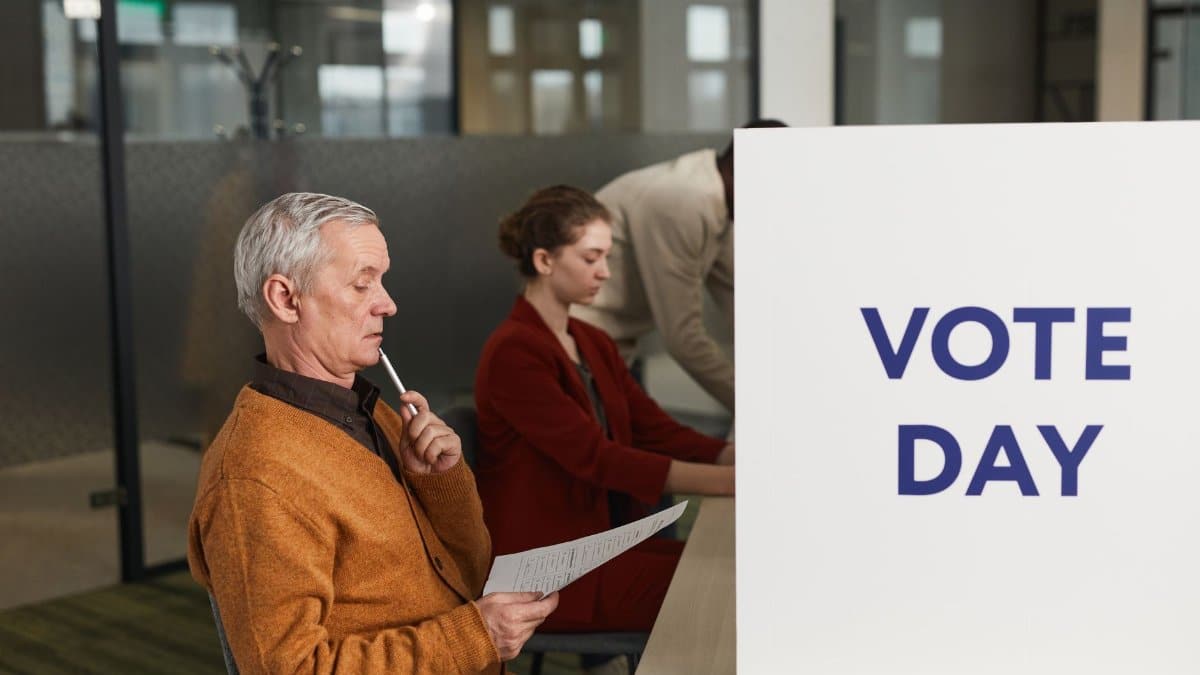
Before sunrise in Harris County, the line outside a community center already bent around the parking lot. People held coffee cups and folded sample ballots, shifting their weight as the sky lightened. By the time poll workers unlocked the door, the queue had the feel of a holiday morning rather than an ordinary weekday in late October. Scenes like that, repeated from El Paso to Beaumont, help explain how the state produced a Texas early voting record in a midterm year. The Dallas Morning News reported that more than 6.4 million ballots had been cast by October 30, 2026, a total that pushed past every previous midterm benchmark in the state.
The figure that reset the midterm baseline
More than 6.4 million early ballots is not a rounding error. It is a new floor for a midterm in the second largest state. The Texas early voting record matters because midterms usually draw fewer people than presidential years, when the White House itself is on the ballot. A total this large suggests that a slice of the electorate treated this cycle as something closer to a presidential contest, even without a national ticket at the top. Population growth explains part of the jump. Texas has added residents for years, and a larger pool of registered voters can lift raw totals even if the share of eligible adults who participate rises only modestly. Still, clerks and party workers described lines that felt different from the quieter midterms of a decade ago. The number is a count of ballots, not a measure of enthusiasm in every county, but it is large enough to force every campaign to redraw its assumptions about who has already spoken.
A Senate race that kept people in line
The competitive Senate race sits at the center of the story the campaigns tell. When a statewide contest is close, both sides spend early, buy television time in expensive markets, and treat the first days of voting as a deadline rather than a prelude. Volunteers knock on doors with a simpler ask. They do not say remember November. They say go this week. That shift changes the calendar of a campaign. Money that once waited for the final weekend moves forward. So do attacks, defenses, and the anxious reading of daily county reports. A tight Senate fight does not by itself create a Texas early voting record, yet it gives infrequent voters a reason to treat October as the election. Races further down the ballot, for the Legislature, for judges, and for local offices, ride that wave even when their own advertising never reaches a living room. The Senate contest supplies the heat. The rest of the ballot collects the benefit.
Urban cores, outer suburbs, and rural counties

Texas does not vote as one place. Harris, Dallas, Bexar, and Travis counties hold huge numbers of registered voters, and a strong early period in those counties can move the statewide total by itself. The outer suburbs, stretching along toll roads and new school zones, have become the more contested ground. Growth there is not only one party’s story. It is a story of new houses, new commutes, and voters who may not have a long habit of showing up in a midterm. Rural counties still matter in a state this wide, especially when local sheriffs and school boards share the ballot with Washington. Their raw numbers are smaller, but high participation there can offset a soft day in a big city. The early total of more than 6.4 million almost certainly reflects strength in more than one kind of county. Until the state publishes a full county table, it is wiser to describe the pattern than to pretend the map is already colored in.
Why so many Texans voted before Election Day
Early voting in Texas is no longer a convenience reserved for travelers. For a large share of the electorate it is the election. The state offers an extended window for voting in person, and that window has trained people to expect a choice of days rather than a single Tuesday. Work schedules, school pickup, and long drives make a flexible calendar rational. Campaigns reinforce the habit because a ballot already cast cannot be lost to rain, a sick child, or a sudden shift at work. Ballots sent by mail remain a smaller channel than in states that mail a ballot to every registered voter. Texas still requires a qualifying reason for a ballot by mail, so the surge described this October is, by the structure of the law, mostly people standing in line rather than people dropping an envelope in a box. That distinction shapes what a record means. It is a record of presence as much as a record of preference.
Clerks, machines, and the strain of volume

A record is also a stress test. County clerks must staff early voting sites for many days, keep machines online, and move ballots under rules that leave little room for improvisation. When volume spikes, the ordinary frictions show. A printer jams. A voter discovers that a registration sits in another county. A site runs short of the forms used to cure a small error. None of that is glamorous, and none of it should be confused with fraud. It is the machinery of a large state absorbing a demand it helped create. Election administrators have asked for years for earlier funding and clearer statutes so that a busy October does not become a crisis on the night of the count. The public rarely sees that work until a line slows or a rumor fills the gap. The healthier reading of this cycle is that high volume is a planning problem, not a scandal, and that counties which prepared for a load closer to a presidential year will look calmer when the final canvass arrives.
How the parties spun the same totals
Both parties looked at the same daily releases and claimed momentum. That is an old craft. Republicans pointed to strong early days in counties they have long carried and argued that their voters no longer wait for Election Day. Democrats pointed to large urban totals and to suburban sites where newer residents have been drifting their way. Each claim can be partly true. Early vote totals do not reveal candidate choice in real time. Texas does not report how many ballots came from each party in the way some states do through party registration, because Texas voters do not register by party. Analysts are left with geography, past results, and models that can be wrong at the margins. A wise reader treats a triumphant email from either side as advertising. The Texas early voting record tells us how many people have already participated. It does not, by itself, tell us whom they chose.
Age, habit, and who showed up early
Older voters have long dominated early voting, in Texas and elsewhere. They are more likely to have a fixed plan, a flexible morning, and a personal history of treating the franchise as a calendar item. Younger adults often intend to vote and then collide with work, class, or the simple fact that a first or second election does not yet feel automatic. If this midterm broke that pattern in any serious way, the evidence will show up in studies of the voter file after the election, not in the raw statewide number. Campaigns certainly tried. They sent text messages, hosted campus events, and paired Senate messaging with local issues such as housing costs and school funding. Whether those efforts moved people who do not usually vote in a year without a presidential race is the question that will separate a larger electorate from a merely large count of familiar voters. Until that file is public, claims about a youth wave are hopes wearing the costume of data.
What a record cannot yet decide

I have watched enough Octobers to distrust the romance of a long line. A line is a fact about logistics and motivation. It is not a verdict. The Texas early voting record, impressive as the 6.4 million figure is, leaves several questions open. Some voters who cast a ballot early would have voted on Election Day anyway, so the record may shift timing more than it expands the circle. Others may be new, pulled in by the Senate fight or by a local controversy that never makes the national news. Turnout can rise in both parties at once, which produces a larger number and a familiar result. Fights over rejected mail ballots, provisional ballots, and the pace of the count can still shape trust even if they do not change the winner. The grown up response is patience. Participation on this scale is worth noticing. It is not yet a portrait of what Texas has decided.