
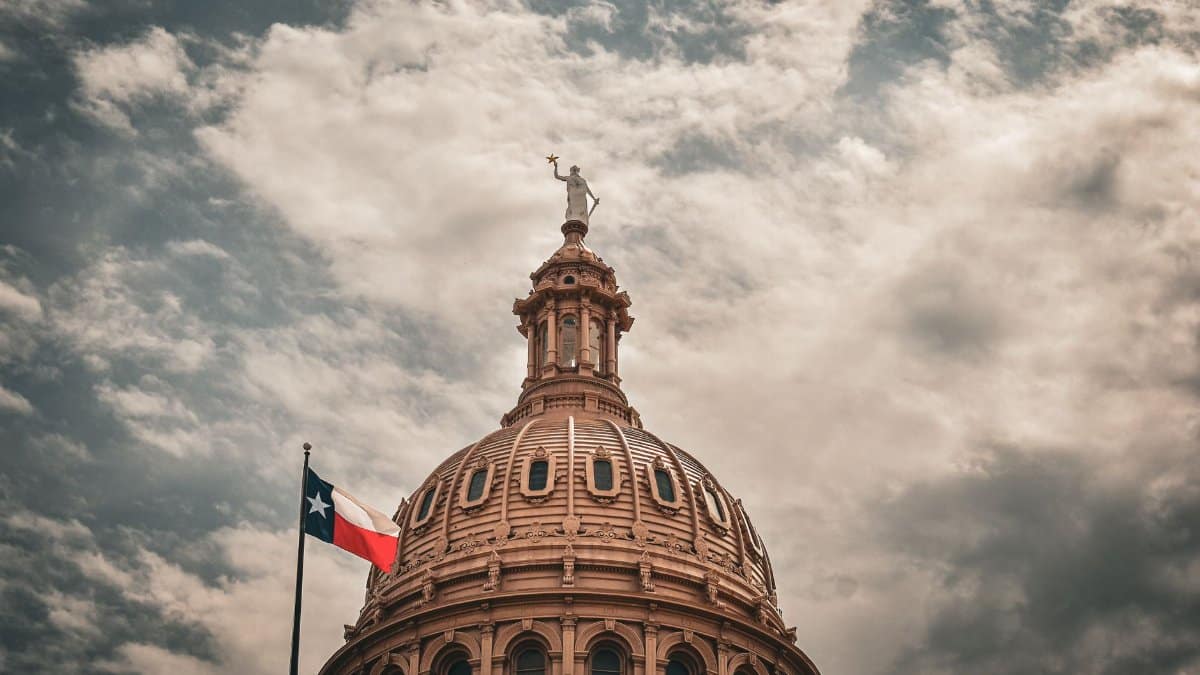
On a weeknight in Austin, the appeal can sound almost like a benediction: a young lawmaker talking about neighbors, scripture, and what a public life owes the vulnerable. Then the finance report lands, and the pastoral cadence has to share the stage with a sum that political professionals usually reserve for presidential contests. Talarico Senate fundraising has ceased to be a niche story about an eloquent state representative and has become a test of whether a Democrat can build a national money machine in a state that has frustrated that party for a generation.
A number that rearranges the map
James Talarico, the Texas Democrat and former public school teacher who has built a following by arguing politics in the language of faith, reported a haul that his allies describe as a record for a Senate contender in the state. Reporting in the Dallas Morning News put the third quarter figure at 64 million dollars, a total that would have seemed fanciful for a Texas Democrat only a few cycles ago. Whatever the final certified ledgers show once the Federal Election Commission finishes its routine review, the political meaning is already clear. Money at that scale changes who returns your calls, which counties you can visit in person, and how early the other side must begin answering you on television.
The figure also exposes a tension that older voters, especially those who still write checks after reading a Sunday paper, tend to feel in their bones. A campaign that speaks about humility is now operating at a volume once associated with corporate brands. That tension is not a scandal by itself. It is the ordinary price of a statewide race in a place with more than thirty million residents, multiple expensive media markets, and a calendar that punishes any candidate who waits until fall to introduce himself.
Who James Talarico is when the ads go dark
Before the war chest, there was a biography that did not look like a finance story. Talarico came up through classrooms, not donor retreats. He won a seat in the Texas House from the Austin area, lost it after redistricting, then returned, and along the way became known for floor speeches that treated moral language as something more than decoration. He has studied for the ministry. He quotes prophets more readily than pollsters. For a slice of the electorate that still wants politics to sound like a vocation, that resume is the product. The money is the distribution system.
Supporters hear in him a rebuke to the idea that Christian conviction belongs to one party. Critics hear a polished performer who has learned that sincerity, clipped into short video, travels farther than any white paper. Both descriptions can be true at once. What the quarter proves is that a meaningful number of people, inside Texas and far beyond it, have decided the performance is worth funding at a level that forces every other candidate in the field to explain their own totals.
Why Talarico Senate fundraising broke out of Texas
A state legislative record does not, by itself, produce eight figure quarters. The breakout depended on a media environment that rewards moral clarity and punishes muddle. Clips of Talarico arguing about school vouchers, guns, or the uses and abuses of scripture moved through feeds that do not stop at the Red River. Small dollar donors who will never attend a Houston luncheon could still feel enlisted. Large donors, scanning for a Democrat who might make Texas expensive for Republicans, saw a vessel that did not require a full reintroduction.
That combination matters more than any single gala. National money follows a story that can be retold by volunteers without a script. Talarico Senate fundraising rode that story: a believer who refuses to cede faith to the right, a teacher who talks about public schools as a common good, a Democrat willing to say Texas is not a lost cause. Whether the story survives contact with a year of advertising is the next question. Fundraising is a leading indicator, not a verdict.
The Republican field he is spending against
The assigned drama of this race often collapses into a single name, Ken Paxton, the attorney general whose legal troubles and loyal base have made him a defining figure in Texas Republican politics. Many Democratic strategists already budget as if Paxton, or a nominee forged in the same primary fires, will be the opponent in the fall. That habit is understandable and also premature. Incumbent John Cornyn and other Republicans have their own claims on the ballot, and a primary can spend fortunes before a Democrat ever shares a stage with the winner.
Still, the money Talarico is raising is aimed at a general election that will be fought in the shadow of those Republican fights. Paxton’s coalition is organized, culturally confident, and capable of matching outrage with cash. A Democrat who posts a towering quarter is not merely impressing donors. He is trying to prove that the cost of ignoring him will exceed the cost of answering him. In a state this large, that proof has to be purchased month after month, not announced once.
Faith, asking, and the unease of plenty

There is a spiritual discomfort here that a campaign memo will not resolve. Religious traditions that Talarico invokes are full of warnings about wealth, about the way money bends the asker as well as the giver. A candidate who preaches neighbor love while building one of the largest Senate treasuries in the country invites a fair question from congregants and from skeptics alike: does the treasury serve the neighbor, or does the neighbor serve the treasury?
Honest campaigns answer that question with budgets, not verses. They show field offices, rural travel, translation, and a refusal to treat the Rio Grande Valley or the Piney Woods as afterthoughts. They also accept a harder truth. In the American system, the ability to speak at all in October is purchased in July. A pastor who will not ask cannot compete with interests that never feel awkward about asking. The moral risk is not the ask. The moral risk is forgetting, once the money arrives, whom the ask was for.
What a fortune can and cannot buy in Texas
Texas is not a single media buy. Dallas, Houston, San Antonio, Austin, and the border cities each demand their own creative, their own validators, and their own patience. Digital ads can harvest email addresses from people who already agree. They are weaker at moving a voter who has punched a Republican ballot for twenty years and still thinks of Democrats as a coastal import. The fortune, if it is spent with discipline, buys repetition: the same face, the same argument, in living rooms that have not heard a competitive Democratic Senate case in a long time.
It cannot buy a favorable map, a friendly electorate, or a news cycle that cooperates. It cannot erase the structural advantage Republicans hold in statewide offices. Advisers who treat 64 million dollars as a prophecy rather than as inventory will waste it. The wiser reading is industrial. This is fuel. Fuel does not choose the destination. The candidate, the message, and the voters do.
Donors, small and large, and the stories they tell themselves

Every large haul hides two donor psychologies. The small giver wants to belong to a cause that feels clean. The large giver wants leverage, or at least a seat near a possible upset. Talarico Senate fundraising appears to have satisfied both for a quarter, which is rarer than either camp admits. The small giver stays if the candidate keeps sounding like the person in the clip. The large giver stays if internal polls, or at least the absence of disaster, suggest the money is not a bonfire.
Journalists should resist the romance of either group. Small donations can be whipped up by fear as easily as by hope, and they can dry up when a newer clip from another state goes viral. Large donations can arrive with quiet expectations about judges, energy, or the border that never appear in the sermon. The public record of contributions, filed on the legal schedule, is the only reliable way to see who is actually in the room. Until those details are read line by line, the headline number is a silhouette, not a portrait.
The ad wars and the claim of historic expense
Operatives already talk about this contest as if the airwaves will buckle under the combined weight of both parties, outside groups, and the presidential shadow that falls on every Senate race in a national year. Some of that talk is salesmanship. Consultants are paid to describe the next cycle as unprecedented. Some of it is arithmetic. Texas media is costly, both nominees will be famous or will become famous, and independent groups face fewer restraints than the candidates themselves.
Readers should separate two claims. One is solid: Talarico’s quarter is enormous and will pull more money into the race from people determined to stop him and from people determined to imitate him. The other, that this will be the most expensive Senate fight in American history by some round advertising total, is a forecast, not a fact. Forecasts belong in the last paragraph of a memo, not in the first sentence of a news story. What can be said now is plainer. If both sides raise at this pace, Texans will live inside a paid argument for a year, and the unpaid argument in churches, union halls, and kitchen tables will have to work harder to be heard.
A test for the faithful and the merely interested
For readers who come to politics through a spiritual lens, the useful discipline is neither cynicism nor cheerleading. Watch whether the campaign’s spending matches its stated love of the overlooked. Watch whether opponents answer the moral argument or only the bank balance. Watch whether Talarico Senate fundraising remains a bridge to new voters or hardens into a closed circuit of people who already liked the videos.
For everyone else, the stake is simpler and just as large. Control of the Senate, the shape of the courts, and the daily government of a state that anchors the national energy economy will be influenced by whether this money is converted into votes. A record quarter is a door, not a destination. James Talarico has shown he can open it. The months ahead will show whether Texas walks through, looks in, or shuts it with the same firmness it has shown other Democrats who arrived with hope and left with unspent conviction.