
On a gray morning outside a federal courthouse, the question that traveled fastest was not who would speak next but whether anyone would speak at all. A controversial Justice Department attorney has taken over the Broadview Six case and told the judge that the defendants have not agreed to cooperate. In a prosecution already thick with protest, detention, and public anger, that single statement redraws the map. Cooperation is the quiet currency of federal court. Refusing it, or simply not offering it, can look like defiance, prudence, or faith, depending on who is watching.
A transfer that changed the temperature

Attorney changes are routine. This one did not feel routine to people who have followed the matter from the start. When a prosecutor known for hard charging filings steps into a case already branded controversial, every subsequent sentence is read for motive. The new lawyer did not announce a deal. The lawyer announced the absence of one. That is a narrower claim than guilt or innocence, and it is also a louder one. It tells the court that the government is not building its next move on insider testimony from the people it has charged.
Judges hear that kind of update more often than the public does. Plea discussions fail. Defendants stay silent. What made this moment travel was the setting. The case sits at the intersection of street protest and federal power, and the community most affected has spent years arguing that the building at the center of the dispute is not an abstraction. It is a place where neighbors have stood, prayed, and been arrested.
What the phrase actually does in court

To say that defendants have not agreed to cooperate is not the same as saying they have been offered a formal bargain, rejected it in writing, or promised never to speak. It is a status report. It tells the judge that the government cannot presently count on their assistance. In practical terms, that can slow a case or harden it. Prosecutors who expected a shortcut through testimony may have to prove every element with documents, video, and outside witnesses. Defense lawyers may treat the statement as a line in the sand, or as a premature characterization of talks that were never real.
Cooperation, in federal practice, usually means substantial assistance: information that helps the government charge or convict someone else, often in exchange for a recommendation at sentencing. It is not the same as pleading guilty. A person can admit a charge and still refuse to inform. A person can also negotiate in private and never reach a meeting of minds. The public hears a moral verdict. The docket records a procedural one.
Silence as a legal choice
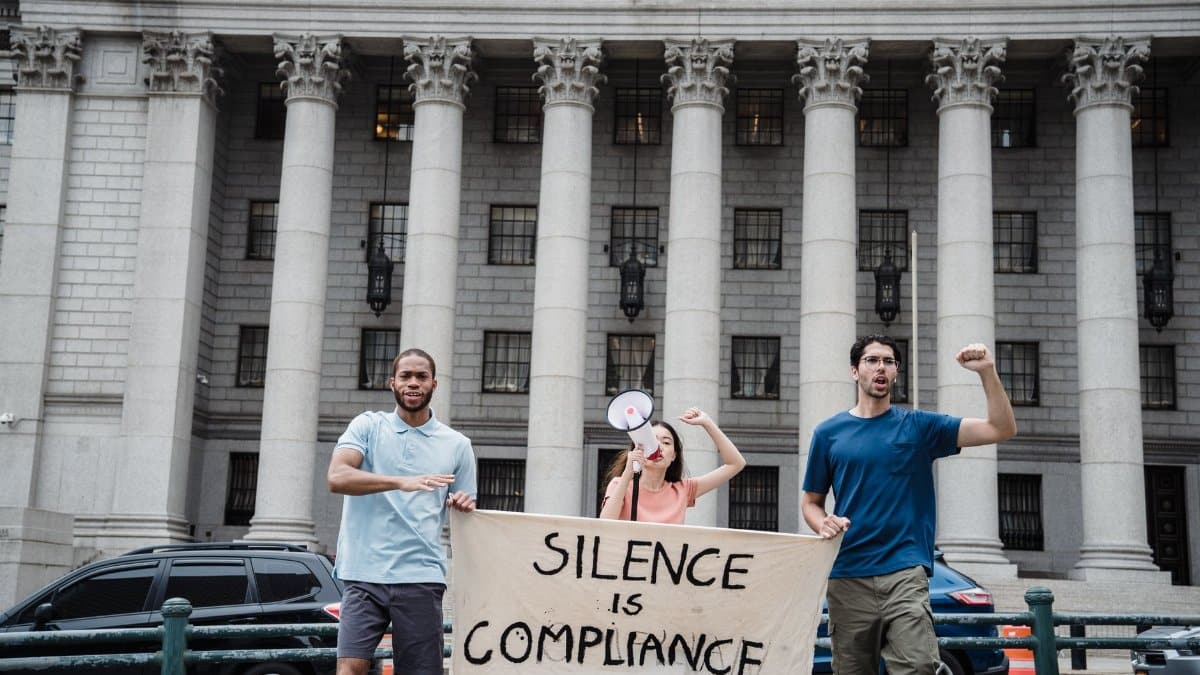
The right to remain silent is older than this prosecution and larger than any one lawyer’s reputation. Defendants do not owe the government a narrative. They owe the court attendance, candor when they choose to speak under oath, and compliance with lawful orders. Choosing not to cooperate can protect them from self incrimination. It can also protect other people whose names would surface in a proffer session. That protection has a price. Sentencing guidelines reward assistance. Judges may look more harshly on a defendant who fought every count and lost.
None of that arithmetic decides whether silence is noble. It decides what silence costs. Families listening from the gallery often understand the cost before they understand the statute. A parent hears “not agreed to cooperate” and wonders whether a child is being brave or being badly advised. Both can be true in the same afternoon.
The prosecutor in the doorway
Controversy attaches to lawyers the way weather attaches to a city. It does not prove misconduct, and it does not erase skill. A prosecutor with a reputation for aggressive charging brings that reputation into the well whether or not the new filing is harsh. Opposing counsel will test tone, timing, and fairness. The judge will test relevance. The public will test something vaguer: whether the government looks like it is seeking accountability or making an example.
Taking over a case midstream also means inheriting another lawyer’s theory. Witness lists, video stills, and charging decisions were not born in the new attorney’s office. The fresh voice can tighten them or discard them. What the court heard this week was not a new indictment. It was a refusal to pretend that the defendants had joined the government’s side. In a media climate that rewards implied betrayal, that clarity may have been the point.
Broadview as more than a caption
Place matters here in a way captions rarely capture. Broadview is not a metaphor invented for a headline. It is a suburb where a federal immigration processing site has drawn years of protest, clergy visits, and arguments about who is visible to the law and who is hidden by it. People who live nearby have watched buses, fences, and prayer circles occupy the same block. When a case carries that town’s name, readers import the whole argument: detention, due process, and the question of whether protest at the gate is protected speech or a crime.
I have stood near enough to similar fences to know how quickly a vigil becomes a police line, and how little either side trusts the other’s account of the first shove. That memory is not evidence in this prosecution. It is a reminder that the Broadview Six case will be tried in a room, and also in a community that already believes it knows the story.
Faith communities and the refusal to inform

The file is legal. The audience, in part, is spiritual. Congregations that have accompanied migrants to check ins, or that have kept night watches outside detention sites, hear cooperation as a theological word before they hear it as a guideline. To inform can look like bearing witness. It can also look like handing a neighbor to the state. Religious traditions do not agree on which reading is faithful. They do agree that conscience is not a slogan you attach after the plea colloquy.
Pastors who showed up for earlier hearings have been careful, at least in public, not to dictate legal strategy. Their language has been about accompaniment: sitting with the accused, feeding families, refusing to treat a criminal charge as a final moral grade. That posture does not erase the possibility that someone in the group broke a law. It refuses the shortcut that equates a federal accusation with a settled soul.
How judges read a stalled bargain

A judge told that cooperation is off the table has several ordinary tools. The court can set a trial date, press the parties on discovery, and ask whether any defendant wants a separate track. Severance, scheduling, and protective orders are dull words that decide whether six people rise or fall together. If the government truly has no cooperating defendant, joint trial problems grow. Statements by one accused may be harder to use against another. That is not a gift to the defense. It is a constraint the Constitution already imposed.
Judges also watch for rhetoric that tries the case in the hallway. A status line about noncooperation can be spun, by either side, into a story about loyalty or obstruction. The cleaner course is to treat it as what it is: a report that negotiations have not produced an agreement. Trials exist for the residue that bargains do not absorb.
The politics sitting in the back row

No one should pretend this is only a workshop in criminal procedure. Immigration enforcement, protest policing, and the Justice Department’s credibility are national arguments that have found a local docket. Supporters of strict enforcement will hear a necessary line against people they view as obstructing federal officers. Civil liberties advocates will hear a warning about protest cases being used to chill the next march. Both camps will claim the attorney’s reputation proves their point. Reputation is not an element of the offense.
What the political reading often misses is the defendant who is not a symbol. Six people are not a single conscience. One may want a trial on principle. Another may want to go home. Another may be silent because counsel has not yet seen the video. Collapsing them into a movement slogan is useful for rallies and unfair to the record.
Evidence without an inside witness

If no defendant cooperates, the government must win the old way. Officers testify. Cameras are authenticated. Messages are explained by the people who sent them or by experts who did not. That path is slower and sometimes stronger, because a jury can distrust a deal witness who traded years for a story. It is also riskier. Gaps that a cooperator would have filled stay gaps. Reasonable doubt lives in gaps.
Defense teams, for their part, cannot assume that public sympathy is admissible. A jury may respect a vigil and still convict on a narrow assault or obstruction count if the footage is plain. The moral frame and the statutory frame are not enemies, but they are not the same frame. Lawyers who confuse them lose cases that their clients thought were sermons.
What families are counting

Outside the legal theory, people are counting days. Pretrial conditions, jobs on hold, children asking why a parent cannot travel, the cost of a lawyer who will not be paid by a viral fundraiser forever. A statement that cooperation is not agreed can extend that limbo. It can also end a different fear: the fear that someone in the group will purchase freedom by naming the others. In small circles of activists and congregants, that fear is not theoretical. It is the story they tell about every past case that cracked.
Trust, once spent that way, does not return at sentencing. Whatever the court ultimately does, the social verdict on who spoke and who did not will outlast the judgment.
A standard for the next hearing
The next time the parties stand up, the useful questions are plain. What evidence does the government have that does not depend on the accused? What offers, if any, were actually made? Are the six charged on a theory that requires them to be tried as one body? Has the new attorney changed the charges, the recommended penalties, or only the voice reading the status? Those questions respect both the power of the office and the dignity of the people in it.
Commentary that skips them and jumps to villain and martyr will feel satisfying and age badly. Federal court is built to be slower than a feed.
Conscience after the gavel
Spiritual communities that claim this story should be honest about what they can and cannot know. They can know that accompaniment is not the same as endorsement of every act at a protest line. They can know that the state is not owed a confession, and that victims of real harm, if any are proved, are not served by romance. They can know that a controversial lawyer is still an officer of the court, answerable for overreach and entitled to prove a case that is actually there.
The Broadview Six case will eventually produce verdicts, dismissals, or pleas that no press line can preview with integrity. Until then, the most accurate sentence remains the one already spoken in court: they have not agreed to cooperate. Everything else is argument about what that silence is worth, and to whom.