
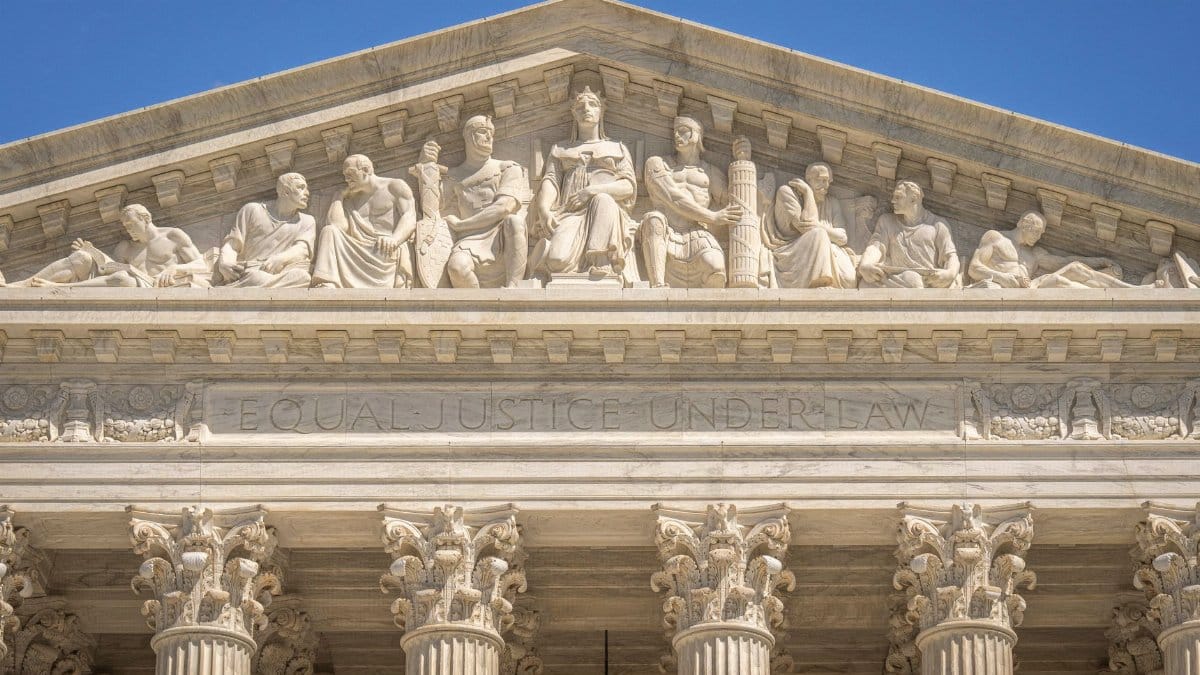
On a wet evening in Tacoma, a retired nurse laid a voters pamphlet beside a cooling cup of tea and tried to choose a justice she had never heard speak. The biographies were short. The endorsements were names she half recognized. Nothing on the page explained how either candidate would treat a contested statute when politics pressed in from every side. That small domestic puzzle sits inside a much larger argument. The WA Supreme Court race has become a debate about political influence, about who speaks softly to the court, and about whether voters can still tell a legal judgment from a factional brief.
A contest that rarely raises its voice

Washington elects its supreme court justices on a statewide, nonpartisan ballot. The jobs last six years. The work is technical, slow, and mostly invisible until a ruling lands on schools, housing, policing, or the limits of legislative power. Most cycles, these races pass with little noise. This one has not. Position 5 has drawn unusual attention because the choice is being read as a signal about the court’s ideological direction, not merely as a personnel matter.
Incumbent Theo Angelis is asking voters to keep him. Dave Larson is asking them to replace him. Neither appears with a party label. Both must campaign in a system that forbids the blunt cues voters use for governor or legislator. The absence of those cues is precisely why money, endorsements, and coded language have become the story.
What the court actually decides

The Washington Supreme Court is the last word on the meaning of state law and the state constitution. It reviews decisions from lower courts. It can strike down statutes. It can refuse to. It sets the tone for how trial judges read precedent. A single seat does not rewrite the docket, yet one justice can supply a decisive vote, shape a concurrence that later becomes doctrine, or slow a majority that seemed inevitable.
Readers who follow only national courts sometimes miss this. State high courts handle the disputes that touch daily life: land use, public defense, labor rules, ballot access, environmental duties, and the reach of local government. When people say a race is about politics, they often mean it is about which of those disputes will find a sympathetic ear.
Two names, two arguments

Angelis campaigns as a steward. His public case is continuity, craft, and a promise that the bench should not become a second legislature. Supporters describe a justice who reads the record closely and resists the temptation to announce a program from the bench. Critics answer that continuity can be a polite word for a court already leaning in a direction they dislike, and that temperament is not the same thing as neutrality.
Larson campaigns as a correction. His public case is that the court has drifted toward outcomes that track political fashion more than text, history, or restraint. Allies say a challenger is healthy in a system that otherwise renews itself quietly. Detractors say the language of correction is itself a political program, dressed in the vocabulary of law. The WA Supreme Court race turns on which of those descriptions voters find more credible.
Money as a kind of message

Judicial campaigns in this state are not supposed to look like congressional brawls. They increasingly do, at least in the ledger. Lawyers, unions, business groups, and advocacy organizations have reasons to care who sits on the high court. Their checks do not buy opinions. They do buy mail, digital ads, and the ability to define an opponent before the opponent speaks.
The ethical problem is not secret. A donor who appears later as a party, or whose frequent allies do, creates an appearance that ordinary litigants cannot match. Disclosure rules exist so the public can see the pattern. They do not tell a voter what the pattern means. A large gift from a civil liberties group and a large gift from a business association can both be lawful and both be troubling, depending on what one fears. The debate in this race has focused less on a single scandal than on that ambient suspicion.
Ideology without a party box

Nonpartisan does not mean nonpolitical. Candidates cannot easily say how they would rule on a pending case. They can talk about judicial philosophy, which is a polite map of future votes. Words like restraint, equity, textual fidelity, and lived experience function as flags. Voters who know the code hear a coalition. Voters who do not hear only adjectives.
That gap is where influence thrives. Outside groups translate the adjectives into sharper claims. A mailer can imply that one candidate will side with police or with protesters, with landlords or with tenants, without the candidate ever uttering the sentence. The candidate can then disown the mailer while benefiting from it. Washington has seen versions of this dance before. The present contest has made the dance the subject, not the background.
Endorsements and the company one keeps
Newspapers, bar associations, labor councils, and former judges all offer seals of approval. Each seal carries a history. A rating from lawyers may reward collegiality and writing skill. It may also reward familiarity with the existing culture of the court. A union endorsement may reflect a sincere view of worker cases. It may also reflect a calculation about the next decade of litigation. None of this is corrupt by default. All of it is political in the plain sense: organized people trying to shape power.
Voters are left to ask a harder question than the pamphlet poses. Whose confidence matters, and why? A candidate surrounded only by one professional tribe has a different problem from a candidate surrounded only by one activist tribe. Breadth is not proof of wisdom. Narrowness is not proof of capture. It is evidence, and evidence is what a judicial election strangely asks citizens to weigh without a trial record they can read in full.
The moral weight of a quiet office

Courts ask the public for a kind of civic faith. Not faith that every ruling is pleasing, but faith that the reasons are real, that like cases will be treated alike, and that the losing side was heard. When that faith thins, people look for hidden hands. They assume a donor, a governor, or a movement wrote the opinion in advance. Sometimes the assumption is unfair. Sometimes the opinion really does read like a brief with a seal on it.
This is why the argument over influence is not a side issue for specialists. It is the legitimacy question. A justice who treats the job as a pulpit spends down a reserve of trust that no election can quickly refill. A justice who hides behind procedure while ignoring plain injustice spends it down another way. The mature demand is neither naivete nor cynicism. It is a public that can tolerate disappointment without assuming a conspiracy, and a bench that earns that tolerance.
How a single seat can still matter

Nine justices share the work. Majorities form and dissolve. Yet close cases are not rare on a court that already contains strong views. A new member can change which petitions get a sympathetic fourth vote for review, which concurrences become the seed of a later majority, and which tone the institution uses when it scolds the legislature or the governor. Personnel is policy, even when the personnel refuse the slogan.
That is the practical stake for people who will never meet either candidate. A ruling on public defense funding, on the scope of a local tax, or on the standard for police searches can outlast the justice who wrote it. The WA Supreme Court race is easy to ignore because the effects arrive late, in footnotes, in cases with forgettable names. Late is not the same as small.
What campaigns are allowed to say

Judicial ethics limit the stump speech. Candidates may discuss general philosophy. They should not promise results in identifiable disputes. The rule protects litigants. It also produces a strange campaign, full of implication and short on commitment. Voters sense the evasion and reach for proxies: donor lists, allied groups, the adjectives in a questionnaire.
Reformers have offered partial remedies for years. Public financing would reduce the donor shadow. Richer voter guides could explain recent major decisions in plain language without telling people how to vote. Stronger rules on outside spending might narrow the gap between the candidate’s voice and the chorus around it. None of those changes will arrive before this ballot. The electorate has the system it has, which rewards attention and punishes shrug.
Reading the race without a team jersey

A useful habit is to separate three questions that campaigns mash together. First, is the candidate competent, meaning able to write clearly, manage a heavy docket, and treat lawyers and colleagues with basic respect. Second, is the candidate’s philosophy one you can defend when it costs your side a case. Third, is the network around the candidate so tight that independence becomes implausible.
Competence is the easiest to fake in a brochure and the hardest to judge from afar. Philosophy is the part voters are entitled to care about, even in a nonpartisan race, because constitutions are interpreted by people, not by machines. Networks are the part this contest has pushed into the foreground. If every serious backer of a candidate would celebrate the same outcomes, voters should at least notice the pattern, then decide whether the pattern is a shared legal view or a shared political errand.
The incumbent’s burden and the challenger’s
An incumbent runs on a record that most citizens will never read. That is an advantage and a risk. The advantage is institutional gravity: the title, the presumption of fitness, the reluctance to fire a judge without a clear scandal. The risk is that opponents can select three controversial opinions and ignore a hundred ordinary ones. Angelis must explain continuity without sounding complacent. He must also answer, in general terms, why critics see politics in the court’s recent posture.
A challenger runs on absence. Larson does not have a supreme court record to defend, which frees him to criticize and binds him to persuasion. Voters must infer how he would behave from lower court work if he has it, from professional reputation, and from the company he keeps. The inference can be fair. It can also be a caricature written by the other side. Both men are asking for trust under rules that make trust hard to inspect.
Outside voices and the quiet campaign

Much of the argument will not happen on a debate stage. It will happen in digital ads, in union newsletters, in bar emails, and in conversations among lawyers who already know how they will vote. That quiet campaign is where influence is least visible to a nurse in Tacoma with a pamphlet. Independent spenders can frame Larson as a threat to established rights or Angelis as a captive of fashionable causes, then vanish behind a committee name.
Citizens who want a cleaner picture can do a few unglamorous things. Read the official voter guide with suspicion but not contempt. Look up who is actually paying for the ads, not merely who appears to benefit. Notice whether a claim is about character, about philosophy, or about a specific case the speaker hopes you will not check. The WA Supreme Court race rewards that slower reading more than it rewards team loyalty.
What a loss of faith would cost

If voters come to believe that seats are simply prizes for the louder coalition, two bad habits follow. One is apathy, the decision that judicial elections are costume dramas for donors. The other is escalation, the decision that only total political capture of the court can protect one’s interests. Both habits weaken the idea that reasons can restrain power. Washington has not reached that point. The attention on this race is a warning light, not a collapse.
The healthier response is narrower and more adult. Demand disclosure. Reward candidates who can describe a legal disagreement without sneering. Accept that a court will sometimes rule against the bloc that elected it, and treat that discomfort as evidence of a working system rather than as betrayal. Influence will never leave the process. Lawyers will always care. Groups will always organize. The standard is not purity. The standard is whether the influence is visible, contestable, and still subordinate to the record in the case.
Before the ballots are returned

Position 5 will not dominate the news the way a gubernatorial fight does. That is not a reason to treat it as decoration. Angelis and Larson are offering different stories about the same institution: one of stewardship under criticism, one of correction under suspicion. Voters do not need a law degree to judge the stories. They need a willingness to ask who is paying to tell them, what philosophy is being signaled, and whether the person seeking the robe sounds like someone who can lose a popular argument and still explain the loss.
The WA Supreme Court race will be settled by people who may spend ten minutes on the choice, or none. Those minutes matter more than the campaign’s volume. A court keeps its authority only as long as the public believes the reasons are doing the work, not the donors, not the mailers, and not the mood of a season. That belief is not automatic. It is rebuilt, awkwardly, every time a name is circled on a kitchen table.