
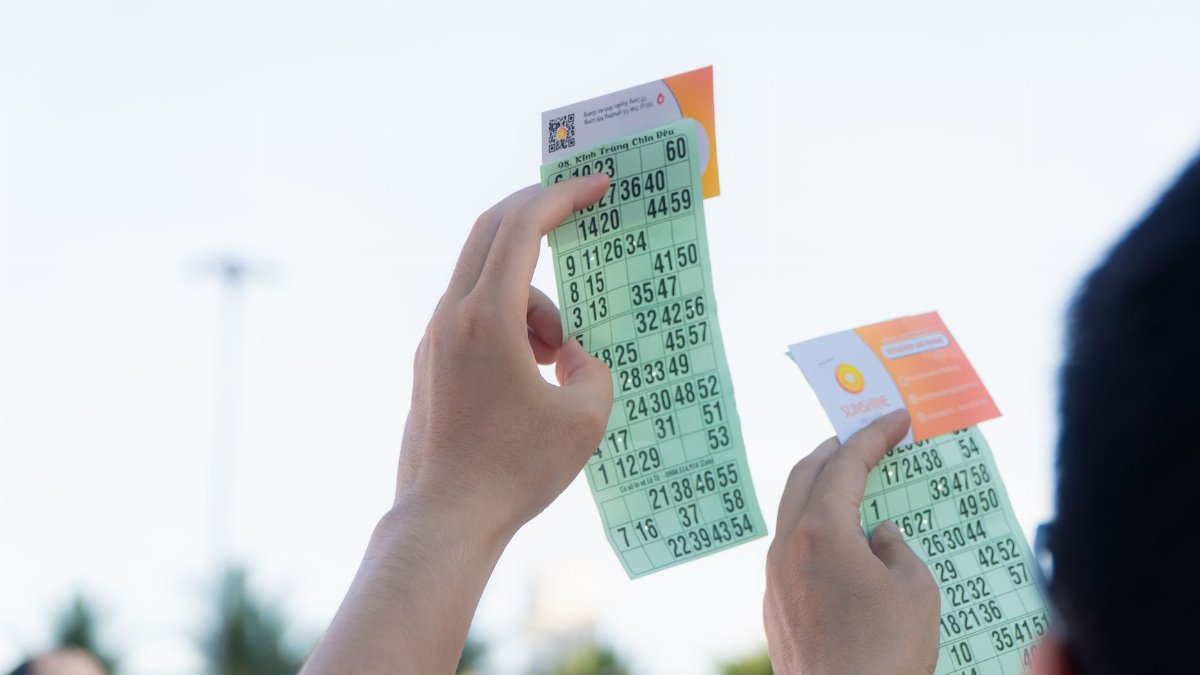
On a clear afternoon in Aurora, a city more often associated with the Fox River and a long manufacturing past than with carnival clocks, people leaned toward a table covered in Powerball slips. The instruction was simple and a little absurd. When the signal came, each person had five seconds to take as many tickets as two hands could hold. The Aurora Powerball event turned an ordinary lottery habit into a public sprint, and the sprint revealed how readily chance becomes theater when a timer starts.
A promotion built on a very short clock
The Illinois Lottery staged the gathering as a promotion, not as a quiet sales counter. Participants were invited to grab as many Powerball tickets as they could in five seconds. That is barely time to register a pile, much less to read numbers, check a favorite date, or decide whether a particular slip feels lucky. The design favors speed, reach, and nerve. A person with long arms and no hesitation has an edge that has nothing to do with probability.
Five seconds is long enough to make a mess and short enough to feel fair. Nobody can negotiate. Nobody can sort. The pile either yields or it does not. In that sense the format is honest about what a promotional lottery often is: a moment of permitted greed, bounded by a rule everyone can understand. The Chicago Tribune described the scene as an Illinois Lottery event in Aurora built around that grab. The description is enough to see the point. This was not a drawing. It was a scramble with official blessing.
Why a suburb becomes a stage
Aurora is large enough to fill a room and close enough to Chicago to draw a regional crowd, yet it is not so anonymous that a stunt disappears into the noise of a downtown. A lottery needs bodies, cameras, and a sense that something happened in a real place. A timed grab supplies all three. People remember the clock more easily than they remember a jackpot figure that changes by the hour.
There is also a civic convenience to holding such a moment outside the biggest city. Local officials do not have to endorse the odds. They only have to tolerate a crowd, a table, and a burst of laughter that may or may not cover disappointment. The Aurora Powerball event fits a pattern lotteries have used for years: take a private wish and make it visible, then let visibility do the advertising.
What the hands are actually doing

Watch a person reach for paper under a deadline and you learn more about bodies than about fortune. Some cup both hands and scoop. Some pinch the top layer and lose the rest. Some freeze for a half second, which in this game is a serious tax. Tickets stick. Edges bend. A slip that looked like ten may be six once it is counted on a table away from the noise.
The lottery, if it runs the promotion cleanly, has to decide what counts. A ticket that tears may be void. A ticket that falls on the floor may be out. Those details matter more than the cheer that follows the buzzer, because a promotion that feels playful can turn sharp the moment someone believes a slip was taken from them. Five seconds leaves little room for witnesses. That is part of the thrill and part of the risk.
The arithmetic the scramble does not touch
A larger stack of tickets improves the chance of holding a winning number. It does not repeal the structure of the game. Powerball publishes the odds of matching all five white balls and the red Powerball at about 1 in 292 million. That figure is available from the game itself at powerball.com. Buying ten tickets instead of one moves a person from a very small chance to a slightly less small chance. It does not create a strategy.
This is the fact promotional language tends to step around. The grab feels like skill because skill is visible. Reaching faster is a real ability. Selecting a winning combination at random is not. Confusing the two is how a spectacle recruits players who would not have stood in a regular line that morning. The Aurora Powerball event makes the confusion vivid. You can see the effort. You cannot see the odds.
Hope dressed up as a ritual

Lottery counters have always attracted small private ceremonies. People choose birthdays, anniversaries, jersey numbers, verses they half remember from childhood. Some say a short prayer over the slip. Some refuse to say anything, as if speech could spoil the paper. A five second grab strips most of that away. There is no time to assign meaning to a number. Meaning arrives later, when the person gets home and looks at what their hands happened to take.
That delay is spiritually interesting, in the modest sense of the word. The culture still wants chance to feel addressed, as if the universe might notice a wish if it is held with enough focus. A timed promotion laughs at focus and then hands the laugh back as a ticket. Participants can tell themselves they were bold. They can also tell themselves they were chosen, which is a different story and a more dangerous one. Boldness ends when the clock ends. Chosenness can linger for days, especially if a friend says the pile looked meant for them.
Who shows up for a public want

A crowd at a ticket grab is not a single type. Some people come for the joke and will frame the slips on a refrigerator even if every one loses. Some come because a few dollars is a manageable bet and a spectacle makes the bet feel shared. Some come because money is tight and a jackpot, however unlikely, is one of the few large numbers that still seems open to them. A journalist does no one a favor by pretending those motives are the same.
The setting flattens them anyway. Everyone hears the same countdown. Everyone looks a little foolish in the reach, which is a kind of equality. Then the counting starts, and equality ends. One person walks away with a thick stack. Another has two bent slips and a story about hesitating. The Illinois Lottery gets photographs of both. The photographs will not show the household budget that made the second person drive across town.
The money question nobody prints on the banner

Tickets cost money. A promotion that encourages people to take as many as they can hold is, among other things, a sales device. If the tickets are given rather than sold, the cost is still real. It is shifted to the lottery budget, which in Illinois is tied to state revenue and to the long argument about whether that revenue is raised fairly. Grab events do not settle that argument. They decorate it.
Winners, if any small prizes turn up in the stack, face the ordinary rules. Taxes apply above certain thresholds. Shared tickets among friends require trust that a five second frenzy does not create. A group that planned to split a pile can discover, once the paper is in different pockets, that memory is a weak contract. The funniest part of the afternoon can become the least funny part of the week.
A sober look after the buzzer

The useful question is not whether the event was entertaining. It almost certainly was, for people who like crowds and do not mind being a little ridiculous in public. The useful question is what the format trains. It trains the idea that more paper is more hope, and that hope should be seized before thought can interfere. That is an effective lesson for a lottery and a poor lesson for almost everything else a person has to manage.
None of this requires scolding the people who reached. Wanting a sudden change in circumstances is ordinary. Standing in a line for a legal game is ordinary. What deserves a cooler eye is the packaging: a clock, a pile, a cheer, and a city name attached to a product whose central promise remains extraordinarily unlikely. The Aurora Powerball event is easy to enjoy as a clip. It is harder to enjoy if you stay with the clip until the laughter stops and the slips are just paper again.
What remains when the table is cleared

By evening the table is gone, the floor is swept, and Aurora returns to traffic, dinner, and the ordinary news. A few participants will check numbers with more attention than usual, because the tickets were won by speed and therefore feel different from tickets bought at a counter. They are not different. A drawing does not know how a slip was acquired. It does not award points for nerve.
Still, the story will travel, which is the promotion working as designed. People who never stood in the room will hear that strangers had five seconds to grab what they could. Some will smile. Some will wish they had been there. A smaller number will buy tickets the next time they pass a counter, carrying a picture of hands and paper that has nothing to do with the math. That gap, between the picture and the math, is the whole business.
I do not think the gap makes the participants foolish. It makes the format legible. We like to watch desire move faster than judgment, especially when the desire is harmless on its face and the judgment can be postponed until a televised drawing. The Aurora Powerball event offered that postponement in a compact, local form. Five seconds of reaching, then a long wait to learn whether reaching mattered at all.