

On a humid afternoon in Tallahassee, a planning note did something most highway documents never do. It treated aircraft that rise from a pad and land like a car as a possible use of money Congress set aside for electric vehicle chargers. The Florida flying cars plan, as opponents quickly came to call it, put nearly 197 million dollars in federal funds beside a technology that still lives mostly in prototypes, investor decks, and air show demonstrations. The state later softened the wording. The argument did not fade with the edit.
The document that started the argument

Transportation plans are usually dull on purpose. They list corridors, timelines, and eligible expenses so that auditors and local governments can follow the money. This one drew attention because a passage appeared to open the door to infrastructure for advanced air mobility, the industry term for small electric aircraft that might someday carry passengers over traffic. Readers who expected a map of highway chargers found language that sounded closer to a bet on the future of flight.
Florida has reasons to like that bet. The state is flat, warm, and crowded along the coasts. Tourism, retirees, and freight already strain roads. A short hop from a waterfront hotel to an airport sounds, on paper, like relief. Yet a planning sentence is not a flight schedule. Once the passage circulated, lawmakers, climate advocates, and drivers who still cannot find a reliable charger asked a simpler question. Was this still a charging program, or had it become something else?
What the federal money was meant to do

The funds at issue come from a national effort to build a network of electric vehicle chargers along major routes and in communities that the market has been slow to serve. Congress designed the program so states would fill gaps, especially where private companies see too little profit. The point was practical. A family driving from Jacksonville to the Keys, or a worker commuting in a used electric car, should not have to gamble on whether a plug works.
Federal rules are not a blank check. They describe eligible sites, power levels, reliability standards, and reporting duties. States can shape priorities inside those lines. They cannot quietly rewrite the purpose of the statute because a newer technology is more exciting. That distinction is the heart of the dispute. Supporters of a broader reading say ground facilities for future aircraft might include power equipment that also serves cars. Critics say that is a stretch, and a costly one, when ordinary charging remains incomplete.
How flying machines entered a charger program
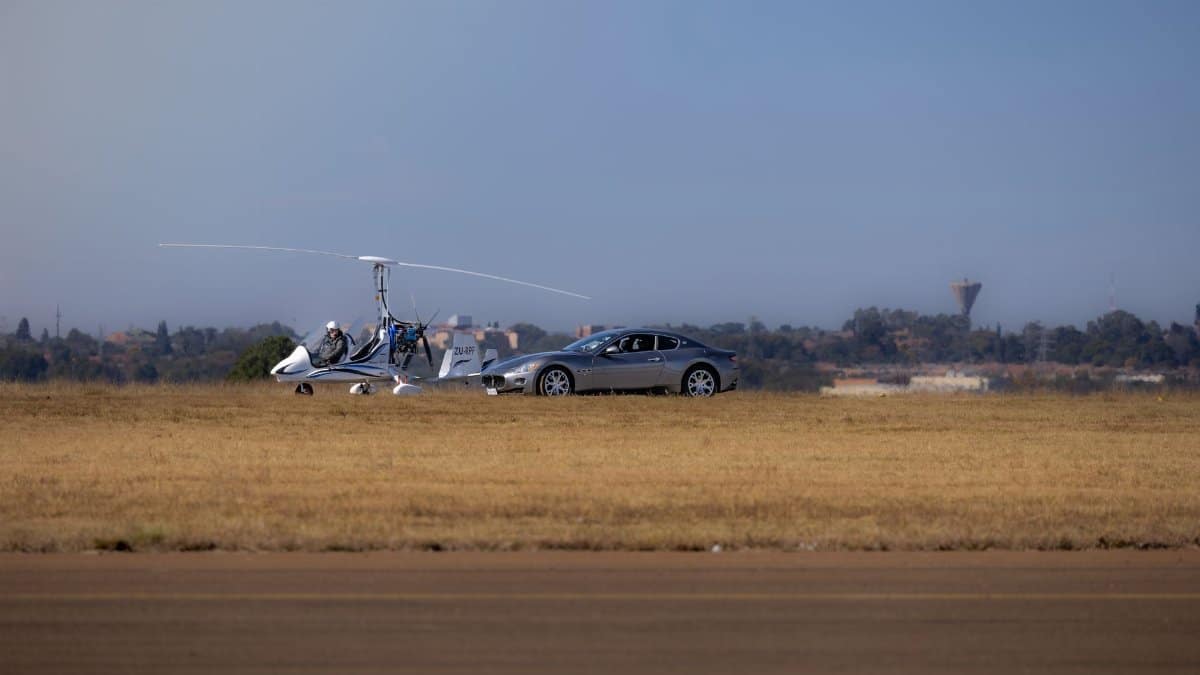
Advanced air mobility companies have spent years courting statehouses. They promise quieter aircraft, shorter trips, and jobs in manufacturing and maintenance. Florida, with its airports, military aviation history, and appetite for spectacle, has been a willing audience. Officials have hosted demonstrations and spoken warmly about being first. Warmth is not the same as a budget line, but the two can blur when a draft plan tries to look visionary.
The appeal is easy to understand. Roads are visible and politically thankless. A flying taxi is a photograph. It suggests that government is not merely patching asphalt but preparing for a different century. For a journalist who has sat through too many ribbon cuttings, the pattern is familiar. Novelty crowds out maintenance. The charger that fails on a Sunday afternoon does not trend. The aircraft that hovers for eight minutes does.
The phrase that officials later softened

After scrutiny, the Florida Department of Transportation adjusted the language. The revision did not announce a full retreat, and it did not confess an error in plain words. It narrowed, qualified, and made the flying car idea sound less like a commitment and more like a possibility that would still have to clear federal review. In bureaucratic terms, that is a real change. In political terms, it is an admission that the first draft overreached.
Softening matters because plans become applications, and applications become contracts. A loose sentence can be cited later by a vendor who wants a site, a power upgrade, or a study contract. Tightening the sentence makes that citation harder. It also signals that someone in the agency heard the criticism and decided the headline risk was not worth the flexibility. Readers should still read the revised text closely. Qualified language can preserve a path even while it lowers the volume.
Why the revision matters more than the headline

A softened plan is not the same as a rejected idea. Agencies often keep a concept alive in a footnote so they can return to it if Washington relaxes the rules or if industry funding appears. The public argument, then, is only partly about one paragraph. It is about whether Florida intends to treat flying vehicles as a side experiment paid by someone else, or as a claimant on money meant for drivers who have already bought electric cars.
I have watched similar pivots in other states, where an early bold sentence becomes a careful one after a news cycle. The careful sentence is better. It is also incomplete. If the state still wants to explore aircraft infrastructure, it should say so with state dollars, a separate bill, and a public hearing. Mixing that ambition into a federal charger account invites exactly the suspicion that followed the first draft.
A technology still waiting for a market

None of this requires mockery of engineers. Electric aircraft face hard problems of weight, battery range, noise, weather, certification, and pilot or autonomy rules. A vehicle that works on a closed course is not a transit system. Certification by aviation authorities is slow because the cost of failure is a crash, not a stalled car on the shoulder. Insurance, local zoning for landing pads, and emergency response are unfinished business.
There is also the matter of who would ride. Early services, where they appear, are likely to be short, expensive, and aimed at travelers who already have options. That is a legitimate private market if investors want to fund it. It is a weaker case for scarce public charging money. A program built to widen access should not be redirected toward a service that, for years, will serve the few.
Chargers, airports, and the blur between them

Defenders of a flexible plan argue that power is power. A high capacity electrical site near an airport or a vertiport might later serve trucks, buses, or cars. Shared equipment, they say, avoids building the same substation twice. There is a kernel of sense in that. Grid upgrades are expensive, and Florida storms already expose weak points in local distribution.
The kernel does not settle the question. A charger for a family sedan and a pad for an aircraft are not interchangeable in practice. They differ in location, safety rules, operating hours, and the agency that must approve them. If the state wants shared power planning, it can publish a grid study. It does not need to imply that flying car facilities are an eligible substitute for the corridor network drivers were promised. Clarity is cheaper than a lawsuit or a rejected reimbursement.
Rural counties and the promise that may slip

The sharpest objection is geographic. Federal charger money was sold in part as a way to reach places private networks skip. Inland counties, smaller cities, and stretches of highway far from tourist corridors still have thin coverage. Every dollar steered toward a speculative landing site is a dollar that does not install a plug in a town where the nearest working station is an hour away.
Florida officials often speak of equity and resilience in the same breath as innovation. Those words should be tested against a map. Where are the gaps today. Which projects are shovel ready. Which communities have waited through multiple funding rounds. A flying vehicle will not evacuate a flooded neighborhood or get a nurse to a night shift. A working charger might. The hierarchy of need is not romantic, but it is the hierarchy Congress wrote into the program.
Private companies and public patience
Companies in this sector are not shy about public partnership. They ask for sites, tax treatment, workforce grants, and the prestige of a state that will pose for photographs. Some of that is ordinary economic development. The line is crossed when partnership becomes a claim on a fund with a different legal purpose. Patience is a public virtue here. Let the aircraft prove routine service. Let fares, safety records, and local noise complaints become visible. Then decide whether taxpayers should help with pads and power.
Investors already price the risk. They know certification can slip and that local boards can say no to a landing site behind a shopping plaza. Public agencies should not quietly absorb that risk inside an electric vehicle account. If the Legislature wants a pilot, it can debate a pilot in daylight, with a cap, a sunset, and a report that names what was spent and what flew.
What a careful reader should ask next

The softened wording is a start, not an ending. Residents who care about this should ask for the revised plan in full, not a summary. They should ask which projects remain in the queue for the 197 million dollars, which sites have utility commitments, and which sentences still mention aircraft. They should ask the federal agency that oversees the program whether the earlier language would have been eligible at all.
They should also ask a question that sounds unfashionable. What does success look like in three years for a driver who does not own an aircraft and never will. If the answer is a denser, more reliable charger network, the state can still get there. If the answer drifts back toward spectacle, the Florida flying cars plan will have survived its edit in spirit, whatever the new verbs say.
The politics of being first

Florida likes to be early. That instinct has built ports, theme parks, and a space economy. It has also produced projects that looked inevitable until the invoices arrived. Being first in advanced air mobility may matter to a governor, a mayor, or a company hunting the next round of capital. It matters less to a household comparing the cost of a home charger with the cost of gasoline. Public plans should be able to hold both thoughts without letting the louder one spend the quieter one’s money.
There is room for wonder without raiding the wrong account. Engineers may yet build aircraft that earn their keep. Cities may yet design pads that do not ruin a neighborhood. None of that requires pretending, in a charger plan, that the future has already cleared the tower. The honest sentence is the one officials moved toward after the outcry. Federal electric vehicle funds should buy electric vehicle charging. Anything else needs its own argument, its own vote, and its own receipt.
A narrower plan is a better plan

Softening is not weakness. In public finance it is often the return of judgment. The state can court aviation firms, expand airports, and study grid capacity without folding those hopes into a program drivers were told would serve them. The Florida flying cars plan, in its first telling, asked the public to accept a leap. The revision asks for something more adult. Read the rules. Spend the money on the purpose named in the law. Keep the marvels on a separate page until they can stand without a subsidy meant for someone else.
That standard will not satisfy everyone who wants Florida to look futuristic by Thursday. It will satisfy the purpose of the fund, and it will leave a cleaner record if auditors come calling. In infrastructure, boredom is a kind of integrity. The revised language is closer to boring. For nearly 197 million federal dollars, boring is the right destination.