

On a bright morning outside a county elections office, a clerk sorted envelopes that had arrived one day too late in a previous contest and set them aside. They would not be counted. That quiet stack is the reason local officials are now urging residents who still hold South Florida mail ballots to carry them in by hand before November 3, rather than trust a final trip through the postal system.
A warning rooted in missed deadlines
The message from Broward and Miami Dade is practical, not theatrical. Vote by mail remains a lawful and widely used option in Florida. The risk sits in the calendar. A ballot that leaves a kitchen table with sincere intent can still miss the legal cutoff if it spends too long in transit. Officials would rather see a voter walk a completed envelope to a secure box than discover, after the polls close, that the piece of mail never made it.
That advice has grown louder as Election Day approaches because the margin for error shrinks by the hour. A ballot mailed with a week to spare often arrives without drama. A ballot mailed in the final days asks the postal network to do something it cannot always guarantee. County leaders have said as much in voter guides and public reminders: if you still have the envelope, bring it in.
The rule that a postmark cannot save you
Florida law is plain on this point. A vote by mail ballot must be received by the supervisor of elections no later than 7 p.m. local time on Election Day. A postmark, however early, does not extend that hour. Unlike some states that accept late arriving ballots when the stamp shows they were mailed on time, Florida counts only what is physically in hand when the clock runs out.
That distinction surprises people who remember other rules from other places. A voter who moved from a state where a timely postmark was enough can easily assume the same courtesy applies here. It does not. The envelope has to be inside the elections office, or inside an official drop box, by the deadline. Anything still riding in a truck at 7:01 p.m. is too late, no matter how carefully it was sealed.
The Florida Division of Elections explains vote by mail deadlines on its public site at https://dos.myflorida.com/elections/. County pages repeat the same cutoff in plainer language because the consequence is absolute: a late ballot is a ballot that does not count.
What Broward and Miami Dade are asking voters to do

Supervisors in both counties have spent the final stretch telling voters to stop using the mailbox if November 3 is close. The request is the same on both sides of the county line. Complete the ballot. Sign the envelope in the space provided. Then deliver it yourself to an elections office or an official drop box.
Broward Voters, at https://www.browardvotes.gov/, lists office hours and drop box locations that change as early voting opens and closes. Miami Dade Elections posts its own map and hours at https://www.miamidade.gov/global/elections/home.page. Those pages, not a social media rumor, are the right place to confirm a site before driving across town.
The shared counsel is meant to protect South Florida mail ballots that are already in voters’ hands. It is not a suggestion that voting by mail is suspect. It is a suggestion that the last mile is the fragile one.
How the postal service fits into the timeline
The United States Postal Service still moves the great majority of domestic mail on schedule. Elections are simply a moment when ordinary delay becomes a legal problem. A missed truck, a weather hold, or a sorting backlog that would annoy a birthday card can void a vote. Postal officials have long advised voters to mail ballots at least a week before Election Day. County supervisors, watching return rates in real time, have tightened that advice further: if you have not mailed it yet and the election is days away, do not mail it at all.
Voters sometimes picture a single local post office and a short ride to the elections building. In practice a ballot can travel to a regional processing center and back. That loop is invisible from a kitchen counter. It is also why two neighbors who drop envelopes in the same blue box on the same afternoon can see different arrival dates. One ballot clears the loop. The other waits behind a bin.
None of this requires a conspiracy story. It requires a calendar and a little humility about logistics. The people who run elections would rather remove chance from the equation than litigate it afterward.
Drop boxes and election offices as the safer path
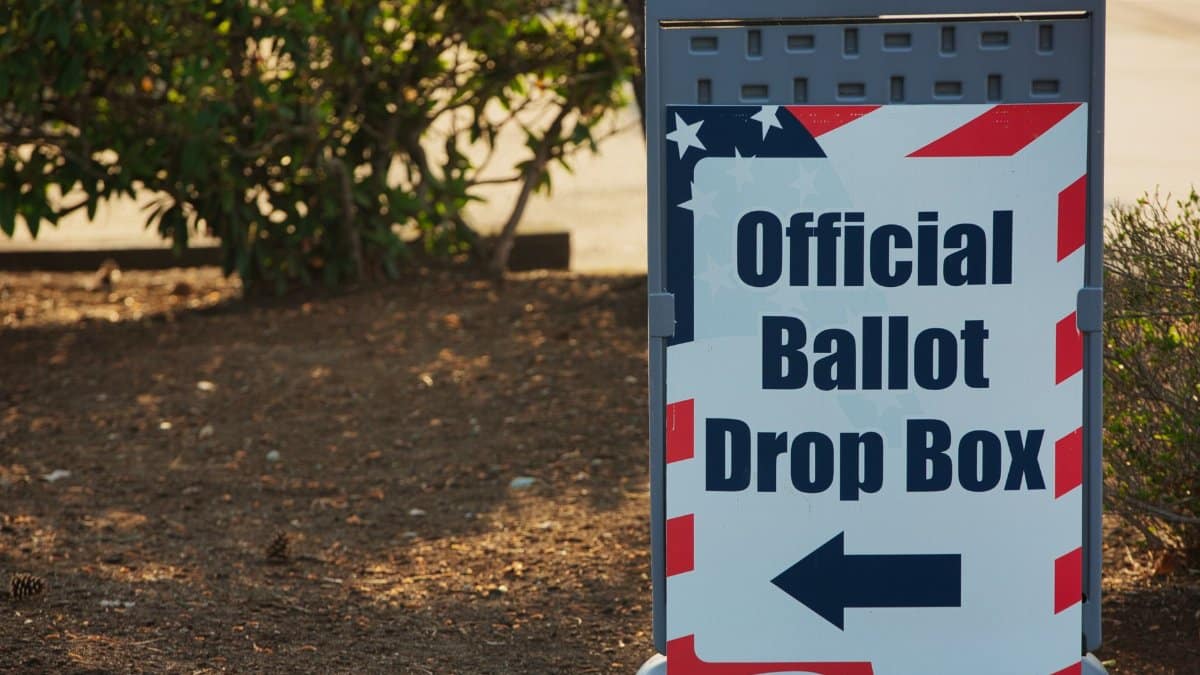
A secure drop box is not a casual bin on a street corner. Florida limits these boxes to locations under the supervision of the elections office, typically at the supervisor’s headquarters and at early voting sites while those sites are open. Hours matter. A box that is available on a Saturday morning may be locked on a Sunday evening. Reading the posted schedule before the drive saves a second trip.
Handing the envelope to staff inside an elections office removes even that small uncertainty. A worker can confirm that the ballot has been received. Many voters leave with a receipt or a tracking update that shows the handoff. For anyone who has already requested a mail ballot and does not want to stand in a precinct line, this is the cleanest remaining option.
Officials stress one boundary. Do not leave a ballot with a campaign volunteer, a neighbor, or a random receptacle that looks official. Florida restricts who may return another person’s ballot. When in doubt, carry your own envelope to a site listed by the county. That habit protects South Florida mail ballots from both delay and from well meaning shortcuts that the law does not allow.
Tracking, curing, and the signature match
Delivery is only half the task. Florida matches the signature on the return envelope to the signature on file. A hurried scrawl, a signature that has changed with age, or a blank signature line can flag the ballot for review. Voters can usually fix, or cure, a signature problem, but only inside a short window after they are notified. Waiting until the morning after the election to check a status page is a poor plan.
Both large counties offer online ballot tracking. A voter enters identifying information and sees whether the office has received the envelope and whether it has been accepted. If the status shows a signature issue, the cure form should be completed at once and returned by the method the county specifies. Tracking is useful only if someone actually looks at it.
A second practical note: do not photograph the marked ballot and post it. Florida law limits photography of a completed ballot. The envelope, once sealed and signed, is the document that needs attention. The choices inside it are private.
Early voting sites and the last weekend
Early voting adds another door. While early voting is underway, voters who already received a mail ballot may return that ballot at an early voting site in their county, following the hours posted for that site. They may also choose, in many cases, to vote in person instead, after the poll worker confirms that the mail ballot has not already been accepted. The details of that exchange are handled at the site. Arriving with the mail envelope in hand makes the conversation simpler.
The last weekend before November 3 is when these choices collide. Lines at early voting sites lengthen. Drop boxes see their busiest hours. Postal cutoff dates promoted earlier in the season have already passed. A voter who treats that weekend as a planning window, not a panic, can still cast a ballot that counts. A voter who waits for Election Day morning to solve every problem is betting on traffic, parking, and a drop box that may sit only at designated offices.
People who prefer a precinct should confirm their polling place on the county site and bring photo identification as Florida requires for in person voting. The mail ballot, if unused, should not be left on a kitchen table as an afterthought. County instructions explain whether to surrender it, destroy it, or bring it along. Following that instruction avoids a duplicate ballot record that slows the check in.
Who still benefits from voting by mail
None of the current warnings erase the reasons people request a mail ballot in the first place. Shift workers, caregivers, students away at college, and voters with limited mobility use the option because a single Tuesday is a hard appointment to keep. Military and overseas voters operate under separate timelines that they should confirm directly with the elections office. For everyone else still inside the county, the benefit of voting by mail survives only if the return is early enough to be certain.
There is also a civic habit worth naming without romance. Reading a long ballot at a kitchen table, with the text of a local question in front of you, can be clearer than reading it in a booth with a line behind you. That advantage disappears if the envelope never arrives. The officials urging a personal drop off are trying to keep the advantage and lose the risk.
Campaigns will keep calling. Neighbors will keep offering rides. The only voice that can accept the ballot is the elections office. When canvassers talk about South Florida mail ballots, the useful reply is a question about the county drop box hours, not a promise to leave the envelope on a porch.
A calm plan for the final days
A simple sequence covers most households. Find the ballot and the return envelope. Mark the contests in private. Sign where the envelope asks for a signature, using the name style on your registration if you remember it. Seal the envelope. Look up the nearest official drop site and its hours. Go during a staffed window if you want a person to take the envelope. Then check the tracking page the next day and again before Election Day.
If the ballot never arrived, or arrived damaged, call the supervisor of elections rather than improvising. Counties can often issue a replacement or direct you to vote in person with a provisional or regular ballot, depending on the record. Waiting in silence until November 3 is the choice most likely to end in frustration.
Voters who already mailed a ballot days ago should track it and stop worrying if the status shows receipt. Voters who mailed it yesterday should still track it, and should call the office if the status stays blank as the deadline nears. There is sometimes still time to cast a ballot in person if the mailed one has not been accepted. That is a conversation for the elections staff, not for guesswork.
The November 3 election will be decided by the ballots that arrive, not by the ballots that were intended. Broward and Miami Dade are asking for a small physical effort in exchange for a large certainty. Carry the envelope in. Ask for it to be logged. Leave with the knowledge that the vote is no longer dependent on a truck, a sorting bin, or a kindly assumption about the mail.