

Search interest around Bolsonaro escape Miami has a way of arriving fully formed, as if a route, a motive, and a legal ending were already settled. The phrase sounds like a chase. It suggests a former president slipping borders after defeat, a son vanishing through the Andes, and a quiet landing in South Florida where asylum papers wait on a table. That is the story many readers expect. It is not the story the public record supports.
What the phrase promises and what it withholds

Online, Bolsonaro escape Miami functions less like a headline than like a map. Argentina appears as the first stop. Ecuador appears as the second. Miami appears as the refuge. Asylum appears as the prize. Each place name does real work. Together they imply secrecy, urgency, and American protection. None of that chain has been established for Jair Bolsonaro or for his son Flávio in the period after the 2022 election.
I keep returning to the gap between the search and the paperwork because the gap is the story. A rumor can be vivid and still be wrong. A wrong rumor, repeated with confidence, can harden into something people treat as memory.
The Florida trip that did happen

Jair Bolsonaro left Brazil in the final days of 2022, after Luiz Inácio Lula da Silva won the presidential election and before Lula took office on January 1, 2023. Bolsonaro did not attend the inauguration. He flew to Florida and stayed for weeks in the Orlando area, including time connected to supporters in Kissimmee, a community with a large Brazilian presence. Major news organizations reported the trip as a departure by a defeated leader, not as a covert flight from custody.
He was not, at that moment, a man breaking out of a prison or dodging an active extradition warrant on American soil. He entered the United States through ordinary channels available to a former head of state traveling as a private citizen. In late March 2023 he flew back to Brazil. The return matters. An escape narrative usually ends with the person staying gone. This one ended with a homecoming.
Why Miami keeps replacing Orlando
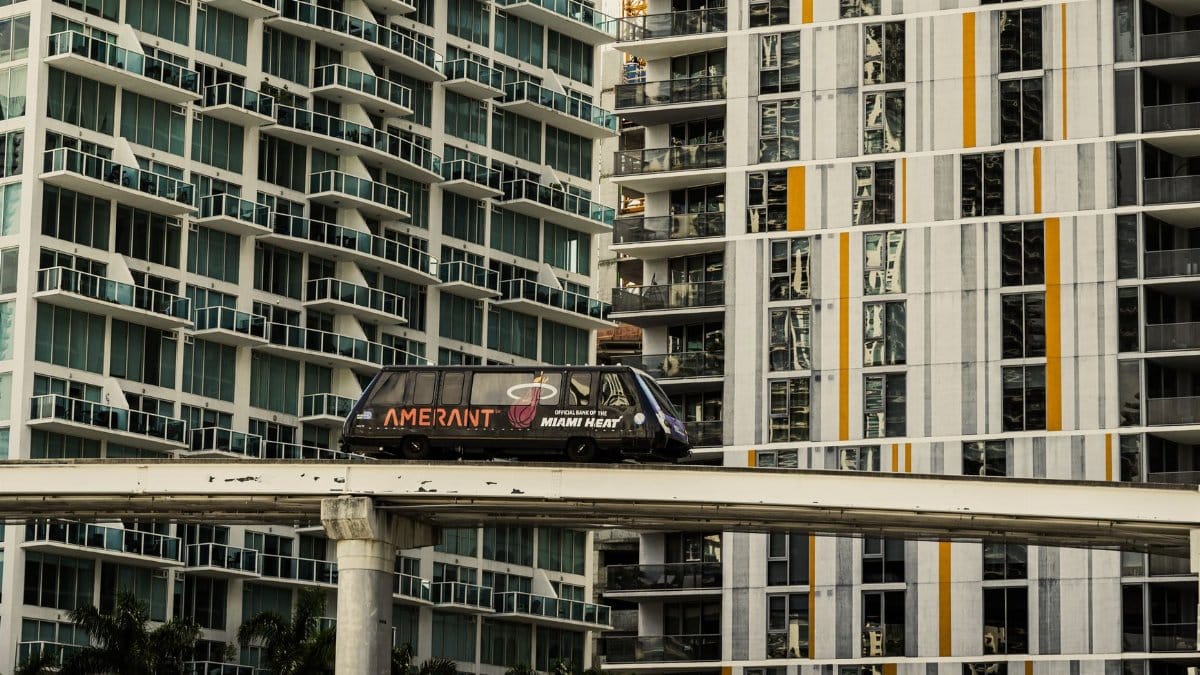
Miami is a shorthand. For Americans who do not follow Brazilian politics closely, South Florida means Miami, Cuban exile politics, and a long history of Latin American leaders passing through. Orlando does not carry the same myth. So the stay drifts south on the page even when reporters placed it farther north.
There is also a real Brazilian community across the region, from Broward County to Orlando, and a real appetite in parts of that community for a story in which Bolsonaro is a victim of persecution rather than a politician who lost an election and later faced serious cases at home. Geography becomes mood. Miami sounds like sanctuary. Orlando sounds like a rental house near the highway. The less cinematic version is the one with addresses attached.
Asylum talk is not an asylum case

American asylum is a legal process, not a mood and not a favor granted in a group chat. A person generally must be in the United States, or at a port of entry, and must show a well founded fear of persecution on protected grounds. Filing is public in the sense that it creates a case. It is not a secret stamp obtained because a foreign politician prefers Florida to Brasília.
There was speculation, in Brazil and in the United States, about whether Bolsonaro might try to remain and seek protection. Speculation is not a docket number. No credible public record shows that he was granted asylum, or that a completed asylum claim became the basis of his stay. He went home. Later legal trouble in Brazil unfolded there, in Brazilian courts, under Brazilian law. Treating rumor as a granted American refuge misstates both countries.
The son is not a stand in for the father

Some versions of the tale swap in Flávio Bolsonaro, the former president’s son and a senator. The meta version of the story has him fleeing after the election loss, moving through Argentina and Ecuador, and landing in Miami to discuss asylum in the United States. That itinerary does not match his public role. Flávio remained a working politician in Brazil. He gave interviews. He stayed inside the family political project. A senator who is voting, speaking, and appearing in Brasília is not a man who has vanished into an American asylum file.
Confusing father and son is easy if the only goal is a chase plot. It is also a basic reporting failure. Names are not interchangeable because they share a surname. If a claim cannot survive the question of which Bolsonaro, it cannot survive contact with a newsroom.
Argentina and Ecuador do not appear in the verified route

Transit stories are attractive because they feel documented. A reader imagines stamps, layovers, and a handler. In this case the extra countries function as atmosphere. Journalists who covered the December 2022 departure described a flight to the United States, not a wandering path through Buenos Aires and Quito arranged to shake pursuers. Adding countries without passenger records, official statements, or contemporaneous reporting is how fiction borrows the costume of investigation.
Could private travel by relatives or allies have touched those countries at other times? Private citizens move. That possibility does not convert an unevidenced chain into the former president’s escape. Precision is not pedantry. It is the difference between a route and a collage.
What the United States could and could not do

Washington had reasons to watch the visit closely. Bolsonaro’s movement included figures who rejected the election result. The January 8, 2023, assault on government buildings in Brasília echoed, for many observers, the January 6 attack on the United States Capitol. American officials did not need a hidden Miami plot to have a diplomatic problem. A former leader on a tourist stay, while his country absorbed institutional shock, was already enough.
What the United States did not do, on the public record, was install him as a protected exile. Visa status, length of stay, and political embarrassment were discussed in press accounts. Those are ordinary tools of immigration and diplomacy. They are not the same as sheltering a fugitive from Brazilian justice. When he chose to return, Brazilian authorities, not American marshals, became the relevant power.
How exile language travels faster than court files

The phrase Bolsonaro escape Miami thrives because it flatters two audiences at once. For critics, it paints a coward leaving the country he damaged. For loyalists, it paints a martyr hunted by rivals and saved, almost, by the United States. Both readings skip the dull middle, where a politician loses, travels, lingers, and comes back to face institutions that move slowly.
Spiritual language sneaks into political rumor more often than editors admit. Sanctuary, pilgrimage, betrayal, promised land: Miami becomes a holy city in a secular argument. That may explain why a political story keeps landing in feeds devoted to belief and trend. The hunger is not only for facts. It is for a moral ending. News cannot supply one on demand without inventing the route.
Legal trouble is not the same thing as a airport sprint

Bolsonaro’s troubles with Brazilian justice deepened after he returned. Electoral authorities had already acted against him over attacks on the voting system, including a ban on holding office for a set period. Police inquiries and court cases touched the post election period, the spread of false claims, and later allegations far more serious than a poorly sourced Florida rumor. Those matters deserve coverage on their own terms, with charges, rulings, and appeals named carefully.
Folding all of that back into a December flight is a category error. A man can be legally exposed and still have taken a normal plane. A man can be politically reckless and still not have slipped through Argentina under an alias. Conflating later accountability with an earlier vacation in Florida produces a cleaner villain and a worse history.
How to read a viral map
A useful test is simple. Who saw the tickets. Which government confirmed the stamps. Which court has the asylum receipt. If the answer is a screenshot, a forwarded audio note, or a headline that never names a document, the map is not ready for print. Brazilian and American outlets with correspondents on the ground are the right starting point, not a caption that treats every airport as a plot point.
Readers can hold two ideas without strain. Bolsonaro did go to Florida after losing. He did not, on the evidence, execute the Argentina to Ecuador to Miami asylum escape that the keyword implies. The second idea does not absolve him of anything he is accused of in Brazil. It only refuses to let a search phrase finish the reporting.
What remains worth watching
The durable questions are public, not cinematic. How should a democracy treat a former leader who undermined trust in the vote. How should the United States handle visits by defeated strongmen whose followers may still be volatile. How do immigrant communities in Florida become projection screens for fights happening thousands of miles away. Those questions do not require a false itinerary.
They do require patience with dates, names, and jurisdictions. Jair is not Flávio. Orlando is not Miami. A rumor of asylum is not a grant of asylum. A return flight is not the last chapter of a legal saga, and it is also not evidence that the first chapter was a jailbreak.
A phrase that should stay a question

Bolsonaro escape Miami will keep circulating because it is short, visual, and morally preloaded. That is exactly why it should be handled as a question rather than as a fact. The documented journey is already interesting: a defeated president skipping an inauguration, a long stay among supporters in Florida, a return to a country ready to put him under sharper legal scrutiny, and a son who never needed to be written into a vanishing act.
If new documents ever show a hidden route, a formal protection claim, or a role for Argentina and Ecuador that reporters have missed, the record can change. Until then, the honest version is the plainer one. The escape, as popularly told, is a story about what people wanted the winter of 2023 to mean. The trip that occurred is smaller, better sourced, and harder to mythologize. Journalism should prefer that smaller trip, even when the search bar is begging for a chase.