
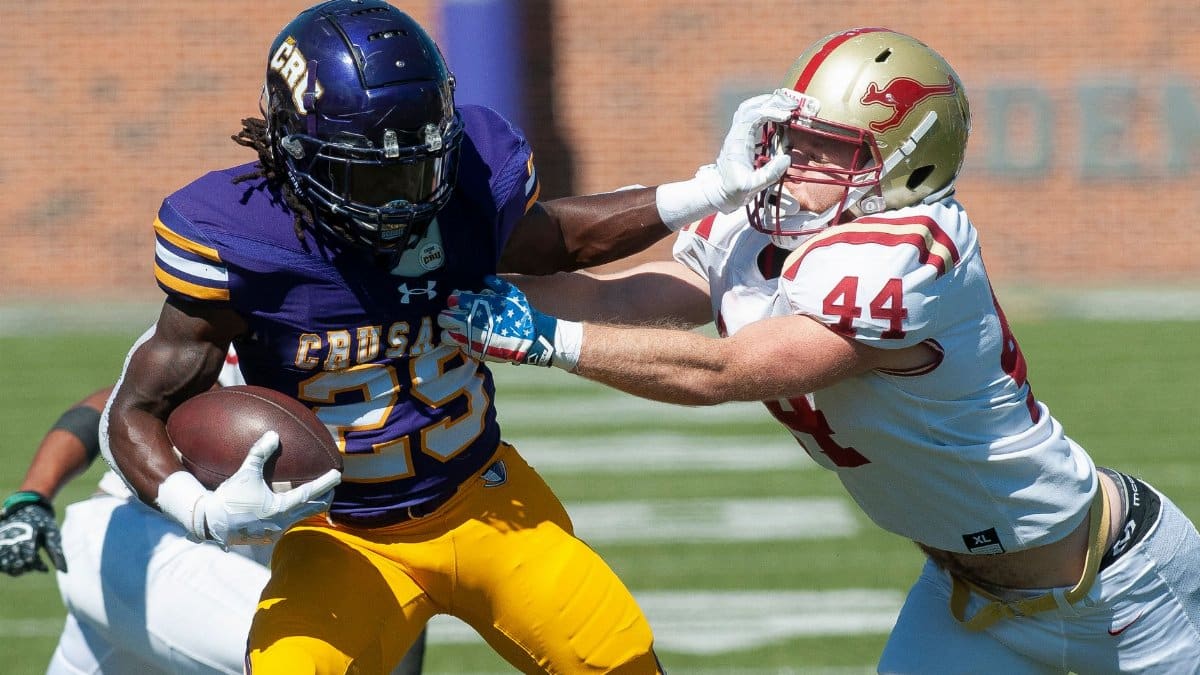
On a warm afternoon in California, the scoreboard told only part of the story. What lingered for coaches and evaluators was the steady rotation behind the line of scrimmage, the way one ball carrier yielded to another without a visible drop in purpose. For a program trying to prove it belongs among the more ambitious names in the sport, SMU running back depth became the quiet headline inside a louder win over California. The Mustangs did not need a single heroic afternoon to move the chains. They needed a room deep enough to absorb contact, protect a lead, and keep the offense honest when the first option needed a breath.
A win that revealed more than the final margin

Victories on the road tend to be remembered for the last drive or the loudest run. This one asked for a different kind of attention. California presented a defense willing to crowd the box and force SMU to earn yards in uncomfortable increments. The response was not a showcase built around one name. It was a sequence of carries, catches, and protection assignments spread across several backs who understood the down and distance. That distribution matters because it tells you whether a staff trusts the depth chart or merely hopes the starter stays upright. When the Mustangs needed a fresh set of legs, the next man did not look like a drop off. He looked like part of the plan.
Why a deep backfield changes the math

College football still sells the idea of the featured runner, the player whose name fills the highlight package. Coaches live with a colder calculation. Every carry is a collision. Every collision is a small withdrawal from a season that now stretches across September heat, November travel, and a postseason that no longer feels optional for programs with SMU ambitions. SMU running back depth changes that math. If three or four capable backs can share the load, the offense can stay physical without asking one body to absorb the full tax. Defenses also lose the comfort of a single scouting picture. One back may press the edge. Another may be better between the tackles. A third may be the reliable option on third down. Variety is not a luxury. It is a form of disguise.
The modern burden on college runners

The position has grown more complicated than the old image of a runner waiting for a handoff. Backs are asked to pass protect against linebackers who outweigh them, to sort blitzes, to release into the flat, and to sell play action with their eyes. That work does not show up cleanly in a rushing total, yet it decides whether an offense can stay on schedule. A deep room gives a coordinator permission to call the full menu. If only one back can be trusted in protection, the offense becomes predictable the moment he leaves the field. If several can handle those assignments, the staff can rotate without tipping the call. Fans notice the explosive run. Coordinators notice who can keep the quarterback clean on second and long.
How rotations protect the season
Injury luck is not a strategy. Rotation is. Programs that treat the backfield as a committee are not abandoning competitiveness. They are buying durability. A back who carries the ball eighteen times in September may still be decisive in November if his teammates have taken some of the early punishment. The reverse is also true. A thin room turns every bruise into a crisis and forces coaches to simplify. SMU’s approach, as the California game suggested, looks closer to the first model. The staff appeared willing to keep several runners involved rather than ride one hot hand until the hot hand cooled. That choice can frustrate a fan base that wants a single star. It can also be the reason a team still has a credible run game when the schedule hardens.
Recruiting a room, not a star

Building SMU running back depth is a recruiting problem before it is a Saturday problem. Elite runners have options, and many of them want a promise of touches that a committee cannot honestly make. The programs that stock the position anyway tend to sell something else: a chance to play early, a scheme that creates lanes, and a staff that will not bury a productive backup behind loyalty to a name. Dallas is not a hard place to recruit if the vision is clear. High school talent in Texas remains abundant, and college coaches who watch spring games know that production can come from players who were not the headliner on signing day. The art is evaluation. Vision, contact balance, and willingness to block often matter more than a camp forty time.
The transfer portal and continuity

The portal has rewritten roster building, and the backfield is one of the positions most exposed to it. A productive runner can leave after a strong year. A need can be filled in a week. That liquidity is useful, and it is also destabilizing. A room built only from short stays will struggle to develop the shared language that shows up in pass protection and in the small decisions after contact. Continuity still has value. Returners know the cadence of the huddle, the temperament of the line, and the situations in which the coach wants patience rather than a home run. Adding a transfer can raise the ceiling. Keeping a core of players who have already absorbed the offense keeps the floor from collapsing when plans change.
What the California tape suggested

Without turning one afternoon into a season long verdict, the tape from the win over California offered a useful sample. The Mustangs moved the ball on the ground in more than one way, and the offense did not appear to panic when the first back was not the one creating the highlight. That is the practical test of depth. It is not whether the second man can produce a splash play in garbage time. It is whether he can enter a live drive, against a defense that is still tackling, and keep the sticks moving. Reports on the game, including coverage in the Dallas Morning News, framed the performance as evidence that the position group is more than a single solution.
Looking ahead inside the conference

The opening win is a data point, not a destination. Conference play asks different questions. Travel, hostile crowds, and defenses that have a week to study tendencies will test whether the rotation holds or whether the staff narrows the circle. This is where SMU running back depth either becomes a real advantage or fades into a preseason talking point. If the Mustangs can keep multiple backs fresh into the later months, they can stay committed to the run on days when the passing game is unsettled. They can also absorb the ordinary misfortune of a tweaked ankle without rewriting the offense. Fans should watch snap distribution as closely as yardage. A healthy split, paired with efficient yards per carry, usually says more about sustainability than one long touchdown.
Special situations and trusted hands

Depth is not only about early down carries. It is about who the coach trusts when the field shrinks. Goal line work, two minute drives, and third down protection are separate auditions. A back can be a fine runner between the twenties and a liability when the quarterback needs time. Another can be modest as a between the tackles grinder and excellent in space. The best rooms sort those roles without ego becoming the story. They also give the offense a chance to hide intentions. If several players can line up in the backfield, in the slot, or as a lead blocker, the formation tells the defense less. That flexibility will matter against opponents who spend Monday studying personnel groupings.
A standard the staff can live with

There is a temptation, after a pleasing road win, to declare a position solved. That would be premature. Depth is proven across months, not afternoons. What the California result offered was a standard. The Mustangs showed they can win while sharing the carry load, and they showed that the next man in the rotation need not be treated as an emergency. If that standard holds, SMU running back depth will shape not only this season but the seasons that follow, because younger players learn fastest when they are allowed into real games rather than parked on a promise. A backfield with several answers gives a coach freedom, and freedom, in a sport this violent and this long, is a competitive edge that does not announce itself on the graphic.