
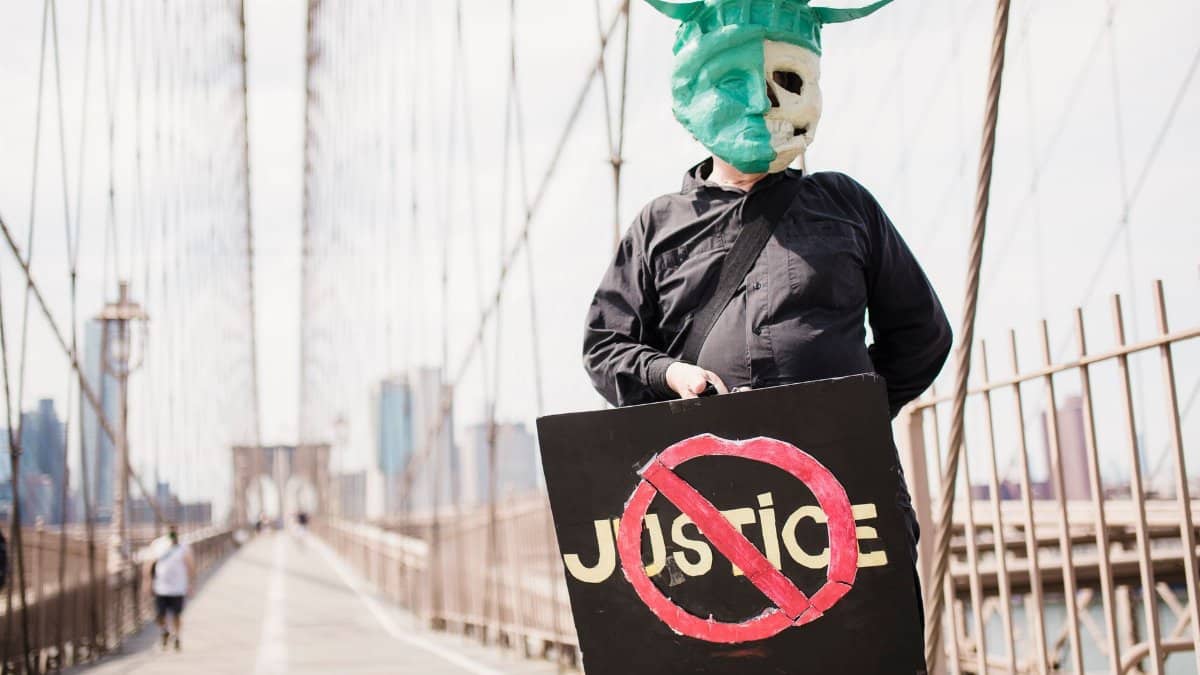
The wind off the harbor carried a thin rain onto Berkeley Street, where a knot of people had planted themselves across from a glass tower that most commuters pass without a second look. They were not there for wages or a strike vote. They had come for a figure that exists mainly in advertisements and in one widely shared video. The Liberty Biberty protest unfolded with more laughter than fury, yet the handmade placards were serious about one claim: a corporate mascot had become too present in the city’s visual life, and its grin no longer felt harmless.
A sidewalk crowd with a narrow complaint
By early afternoon the group numbered a few dozen, small enough that a single police officer could watch from the corner without raising his voice. Students stood beside office workers who had stepped out with paper cups. A man in a soaked wool coat held a sign that simply read, This face is not our liberty. Someone had brought a portable speaker, though the battery faded whenever a bus passed. The mood was closer to a skeptical block party than to a march. People introduced themselves, compared train delays, and then returned to the same subject: a cartoon presence they said they could not escape.
I kept to the edge of the curb, close enough to hear the jokes and far enough not to block the crosswalk. What struck me was how ordinary the anger sounded. No one shouted about markets or premiums. They talked about repetition, about a character that popped up between news clips and sports highlights until it began to feel like a neighbor who never left.
How a mascot left the commercial break
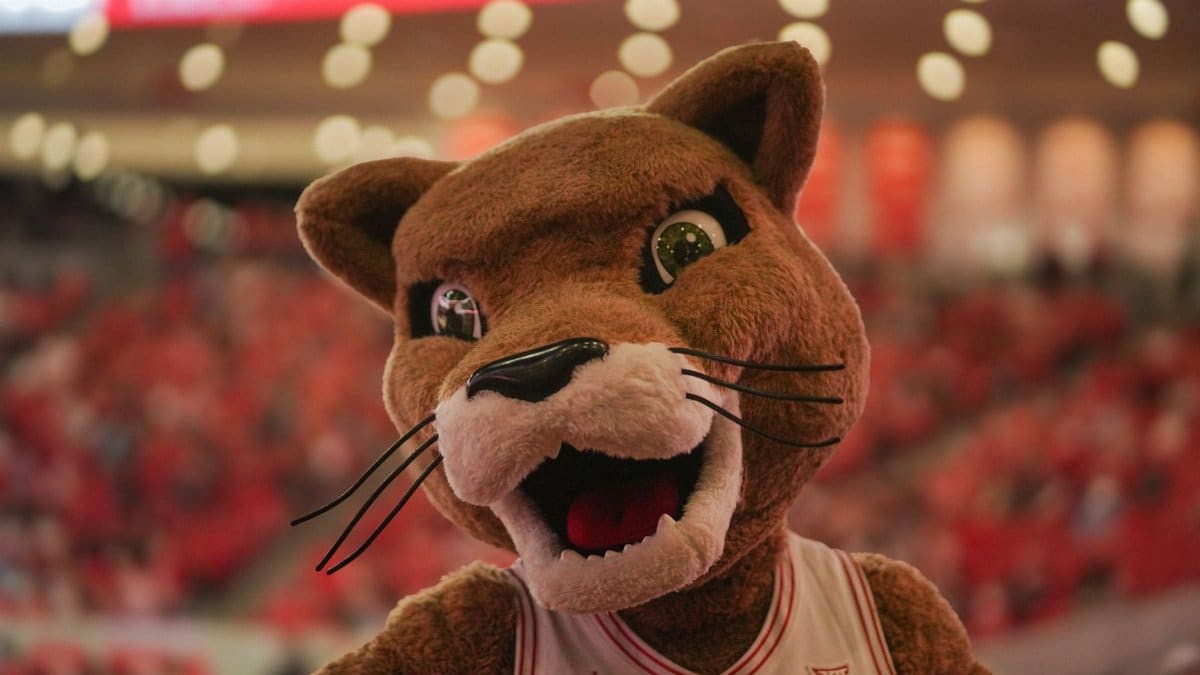
Liberty Mutual has long sold insurance with friendly imagery and a promise of help after trouble. Protesters argued that the latest face, which they call Liberty Biberty, pushes that friendliness into something stranger. In their telling, the character is not a statue and not quite a person. It is a polished grin, a costume of patriotism, a figure designed to make a vast company feel like a pal. Several people said they first noticed it in online ads, then on billboards near the highway, then in a clip that friends kept sending around.
Whether the company itself uses that exact name is a point the crowd treated as beside the point. They had given the figure a nickname, and the nickname had stuck. Once a mascot has a name that people can chant, it stops being only a marketing choice. It becomes a public character, available for affection, mockery, or rejection.
The video that set the route
Ask anyone in the cluster how they heard about the gathering and the answer was nearly the same. A YouTube critique, passed from group chats into group chats, had taken apart the ads with a mix of comedy and genuine irritation. The video did not unveil a secret ledger. It lingered on the smile, the colors, the way the character seemed to bless every ordinary errand with a corporate blessing. Viewers who might have ignored a policy debate stayed for the bit, then stayed for the argument underneath it.
That path from screen to sidewalk is now familiar in American cities. A joke becomes a shared reference. A shared reference becomes a meeting place. By the time people reached the headquarters, many could quote lines from the video more readily than they could quote a company slogan. The Liberty Biberty protest was, in that sense, a comment section that had decided to stand in the rain.
Signs, chants, and a revolution said with a shrug
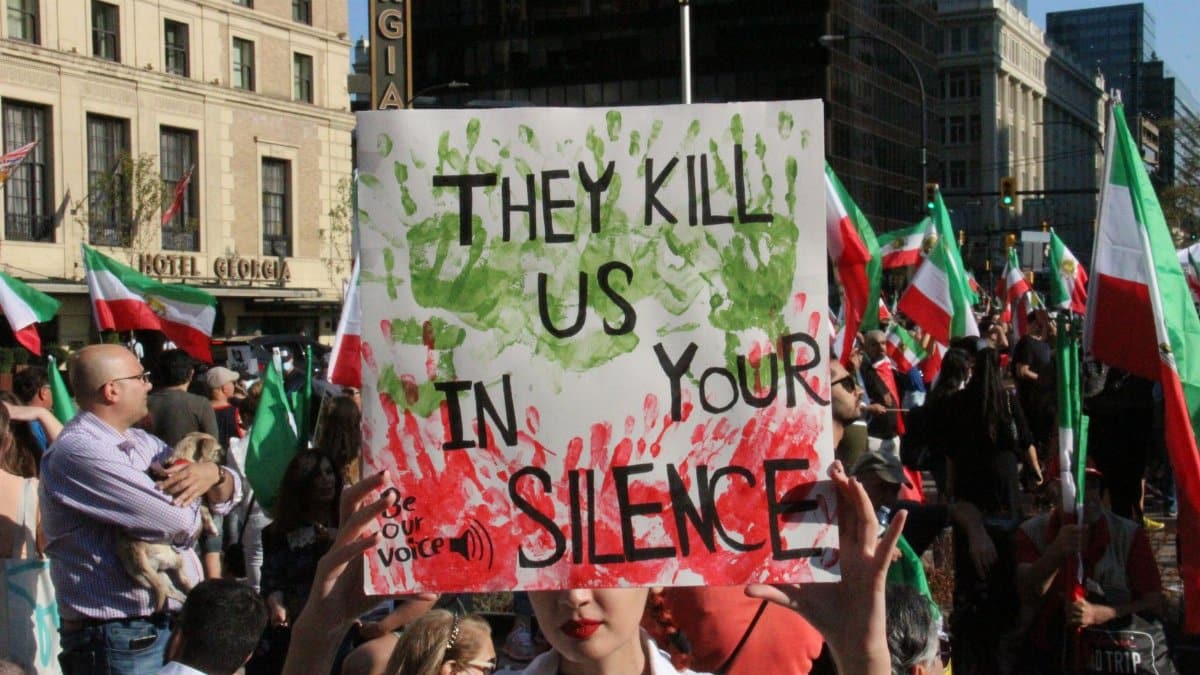
The line that traveled farthest was not especially poetic. A woman in a red knit hat lifted a poster and called out, This is a revolution, then laughed at her own volume. Others picked it up anyway. The phrase sat oddly against the modest size of the crowd, and that oddness seemed to be part of the appeal. People were testing how large a word could be when the target was a drawing.
Other signs were plainer. One asked the company to retire the character. Another compared the mascot to a saint painted on a store window, holy only because someone paid for the paint. A teenager held a phone high and narrated for friends who had not come, careful to show the tower, the wet pavement, and the small circle of bodies. Nobody tried to enter the lobby. The protest stayed on the public side of the glass.
Silence from the floors above
From the sidewalk the headquarters looked occupied in the usual way. Lights were on. Figures moved behind windows. No executive came down to debate the grin. Security remained inside the doors. A receptionist, visible for a moment when the revolving door turned, did not appear to notice the chant. For the people outside, that quiet read as confirmation. A company large enough to put a face on half the internet, they said, could surely spare a sentence about whether that face should stay.
Companies often meet mascot complaints with patience rather than speeches. Advertising is a bet that repetition will outlast annoyance. The crowd understood that bet and resented it. They were not asking for a new jingle. They were asking to be left unaddressed by a character they had never invited into their evenings.
When a drawing starts to carry belief
It is easy to dismiss a fight over a mascot as a fight over nothing. Insurance is a contract. A smile on a screen does not change a deductible. Yet symbols have always done work that contracts cannot. A flag, a seal, a patron painted above a shop door: these pictures tell people who is watching and who is on their side. Protesters borrowed that older language without quite meaning to preach. They said the character offered a counterfeit comfort, a liberty that belonged to a brand rather than to a public.
One retired teacher put it without raising her voice. She said she did not mind advertising, but she minded being asked to feel grateful to a costume. Gratitude, in her view, was a spiritual habit, close to trust and close to prayer. Spending it on a mascot felt like a small misuse of a serious feeling. Around her, people nodded as if she had named something they had only joked about.
Faith, irony, and the unease under the joke
Not everyone on the sidewalk shared a creed. A few described themselves as churchgoers. Others wanted nothing to do with pulpits. What they shared was a suspicion of forced cheer. In a city of old meeting houses and new glass, corporate icons can start to resemble the older ones, minus the community that once argued over their meaning. The mascot does not ask for hymns. It asks for recognition, again and again, until recognition feels like consent.
The spiritual note stayed light, almost embarrassed. People smiled when they used words like idol or blessing. Then they kept using them. Humor was the door. Unease was the room behind it. The Liberty Biberty protest gave that unease a place to stand, which is sometimes all a small gathering can do.
Neighbors who wanted the street back
Not every passerby joined in. A courier on a bicycle shouted that he had packages and no time for cartoons. Two women leaving a nearby cafe said the noise was minor but the signs blocked a dry patch of sidewalk. A man who worked in the tower, unwilling to give his name, said he liked the ads and disliked being cast as a villain for walking into his job. He paused, then added that the character was silly and that silly things were allowed to exist.
That last point landed. Several protesters conceded it. They were not calling for a ban on cartoons, they said. They were using the oldest civic tool they had, a visible objection, to say that this particular cartoon had worn out its welcome near their commute. The distinction mattered to them, even if a rushing pedestrian had no reason to parse it.
What the crowd thinks would count as winning
Victories are hard to define when the demand is the absence of a face. Some wanted the ads pulled in Boston. Some wanted the company to acknowledge the nickname and laugh with them. A smaller number spoke in larger terms, about who gets to occupy the visual commons of a city. They knew a single afternoon would not redraw a national campaign. They came anyway, because showing up makes a private irritation into a public record.
If the company never answers, the gathering may still have done its modest work. People who had only watched a video met one another. A joke acquired a street corner. The Liberty Biberty protest entered the day’s memory as a scene: wet signs, a fading speaker, a tower that kept its own counsel. In a media culture that forgets by evening, even that brief solidity can feel like a result.
After the chant, the ordinary city
Shortly after three, the rain thickened and the crowd thinned. Signs went into tote bags. The speaker clicked off. A few people lingered to take photographs of the empty patch of sidewalk, as if the absence might prove they had been there. Traffic resumed its indifferent rhythm. Inside the cafe, the televisions had already moved on to weather and sports.
What remained was a question the protest never fully settled, and perhaps did not need to settle. How much of the city’s imagination is available for rent, and how should a person respond when a rented smile starts to feel like a creed. The people who stood in the rain offered one answer, small and temporary and oddly sincere. They looked at a mascot and declined to smile back.