
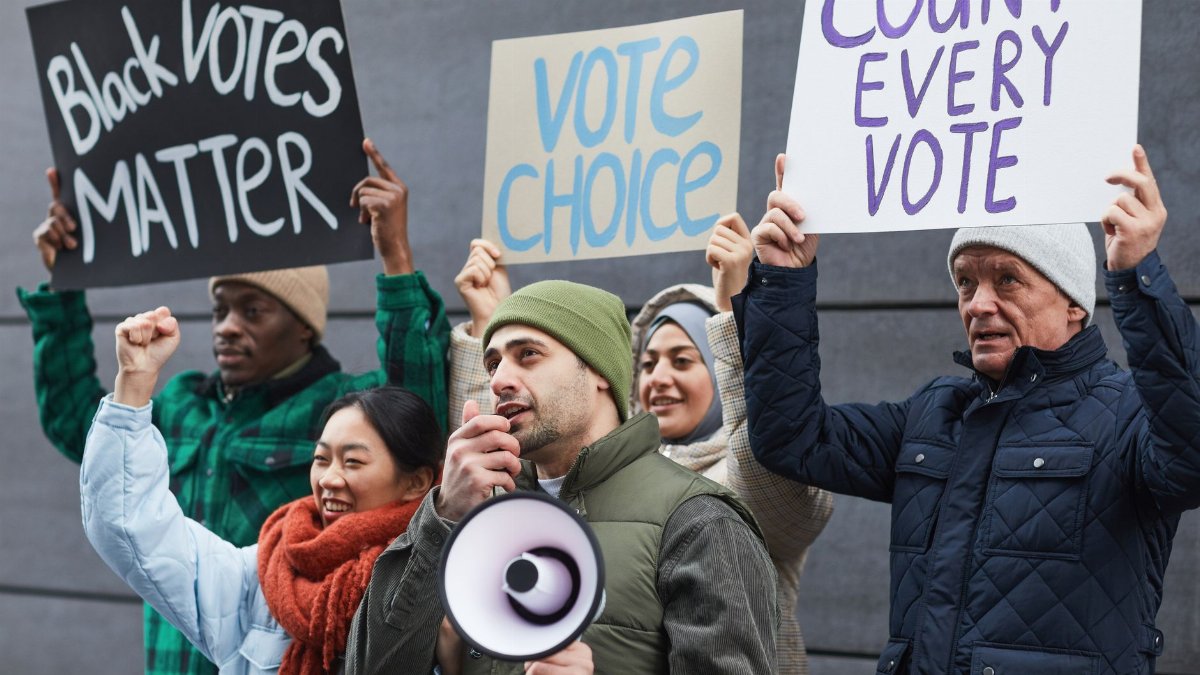
On a gray Saturday in Boston, the sound that usually fills a downtown plaza was missing. There was no bank of speakers, no dense crowd pressed against barricades, no chant rolling from City Hall toward the harbor. In its place, folding chairs appeared in library meeting rooms, union halls, and borrowed community spaces, where volunteers talked through sample ballots and the practical steps of casting a vote before Election Day. That quieter scene is what Boston No Kings early voting has come to mean in the weeks before the November midterm elections: a decision to trade spectacle for the slower work of getting people to the ballot.
A plaza falls quiet
Big rallies have a logic that is easy to understand. They photograph well. They reassure supporters that they are not alone. They create a public record that a grievance or a hope has been spoken in the open. Organizers who have spent years with public actions know that power. The turn toward Boston No Kings early voting is a strategic bet rather than a loss of nerve.
The bet is simple. A midterm is often decided by people who already lean one way but may skip the trip to the polls if nobody reminds them, answers a question, or helps them find the right hour. A speech does not complete a ballot. A conversation sometimes does.
Rooms replace a rally

The smaller format changes who speaks and who listens. At a rally, a few voices carry and thousands absorb. In a room of twenty or forty, the questions get specific. Which day is the library open. Does a mailed ballot need anything extra. What if a name on the registration does not match a lease. Those are not slogans. They are the friction that keeps eligible people from voting.
Volunteers in this model act less like marshals and more like guides. They pass out one page sheets, point to official maps, and urge people to make a plan with a date and a place. The tone is practical. A person who works a late shift does not need a chant. That person needs a site that is open before the shift starts.
Why the calendar matters
Early voting exists so that Election Day is not the only door. In Massachusetts, state law sets a period of early in person voting before the general election, and cities publish hours for designated sites. Boston adds its own layer of logistics: transit, work shifts, language access, and the simple fact that a voter in Dorchester does not experience the city the same way as a voter on Beacon Hill.
That is the terrain Boston No Kings early voting is trying to cover. The point is not to invent a new election system. It is to walk people toward the system that already exists, before the final weekend when attention spikes and capacity strains. Official pages from the city election department and the secretary of the commonwealth remain the authority on hours, sites, and deadlines. A volunteer script is only as good as its match to those pages.
The habits of a smaller gathering
A rally can be planned around a stage plot. A neighborhood session is planned around chairs, childcare, and whether the host remembered coffee. People who favor this scale talk about repetition. One session does little. Ten sessions, each in a different pocket of the city, start to look like coverage.
Repetition also disciplines the message. When the same explanation of early voting is given in Mattapan, East Boston, and Allston, weak lines get dropped and clear lines survive. People ask the same few questions. Volunteers learn to answer them without wandering into partisan speeches that make a hesitant neighbor shut down.
Conscience beside the checklist
It may seem odd to place a voting push in a conversation about spiritual life, yet Boston has long mixed public duty with rooms built for prayer and reflection. Meetinghouses, parishes, and campus chapels have hosted forums that were not worship and not quite politics either. They were attempts to treat civic obligation as a matter of conscience.
The smaller No Kings gatherings sit near that tradition even when they borrow a union hall instead of a sanctuary. A person who shows up is asked to pay attention: to a deadline, to a neighbor, to the claim that no leader stands above the law. Attention is a spiritual discipline as much as a civic one. It asks for patience. It refuses the thrill of a crowd in favor of a task that will not trend. No shared creed is required. A shared posture is enough: check the facts, invite rather than command, and leave the final mark to the voter.
What early voting asks of a voter
The act itself is plain. A voter confirms registration, chooses a site and a time, brings whatever the city says to bring, and completes the ballot with the same care as on Election Day. Early votes are not second class votes. They count in the same election. The advantage is time. A work conflict is less likely to erase a plan made two weeks out, and a confusing form can be reread before the window closes.
For people who move often, or who juggle two jobs, that margin is the whole election. Advising them to simply appear on the first Tuesday in November is advice written for a freer calendar than many households have. A smaller gathering can say that out loud without pretending the obstacle is laziness.
Neighborhoods instead of a single stage
Boston politics is local even when the office on the ballot is national. A Senate race or a House race still turns on ward level habits, on whether a block captain knocks, on whether a congregation mentions the date at the end of a service. Spreading effort across neighborhoods accepts that there is no single plaza that represents the city.
This is also where Boston No Kings early voting parts company with the romance of the mass rally. A mass rally claims the center. A ward by ward push admits that the center is a fiction and that power lives in accumulated errands. The glamour drops. The contact list gets longer. Success starts to look like a filled calendar rather than a filled square.
The case against shrinking the show
Not everyone in a broad coalition will like the trade. Visibility has a value that cannot be fully replaced by clipboards. Opponents and allies alike read crowd size as a proxy for strength. A quiet fortnight can be spun as retreat. Reporters looking for a picture may find none worth the front of a metro section. A Boston Globe account of the week captured the swap itself: big rally set aside, smaller early voting pushes put in its place.
There is a practical risk too. Small rooms reach the people who already know the hosts. If the invite list never leaves a familiar circle, early voting outreach becomes a mirror, not a bridge. The cure is unglamorous: new rooms, new languages, hours that fit night shifts, and a willingness to be told that the pitch is wrong.
A midterm with ordinary stakes
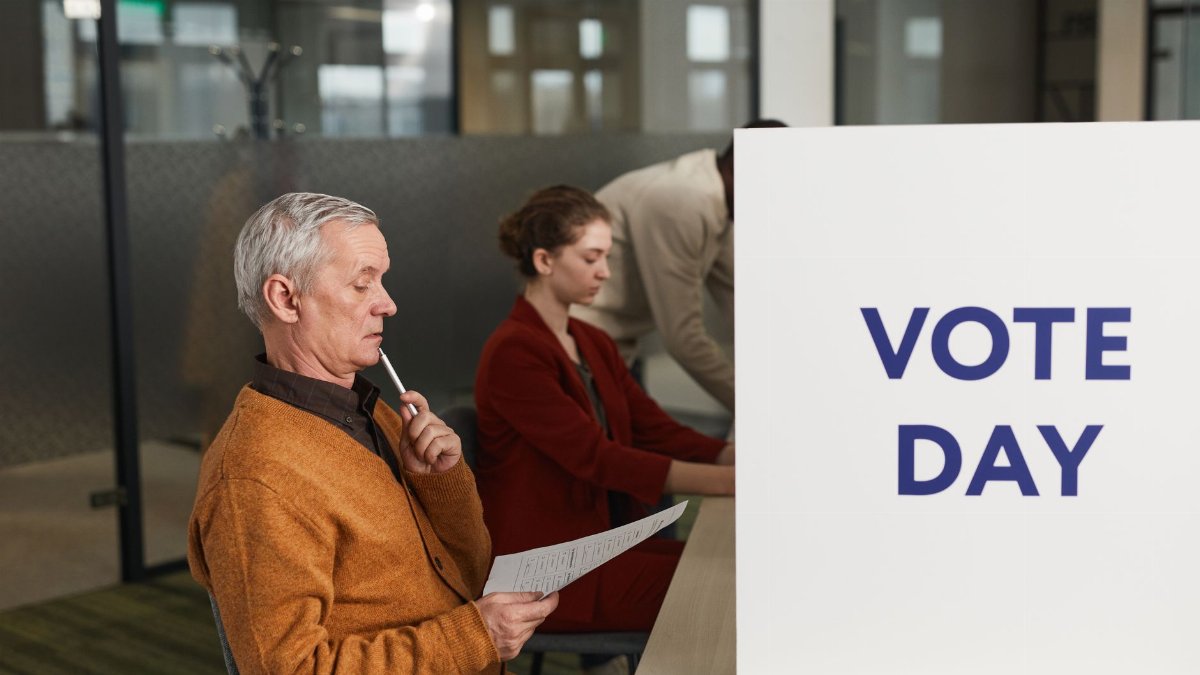
Midterm elections rarely feel like a coronation or a collapse. They feel like maintenance. Seats change. Margins tighten or widen. Policies that never get a presidential speech still move. Treating that maintenance as unworthy of a rally is a mistake. Treating it as unworthy of a conversation is a larger one.
The organizers choice, as local reporting framed it, is a wager that maintenance is the story. Readers who want a single dramatic scene may be disappointed. Readers who have missed an election because of a closed site or a confusing form may recognize themselves. The absence of a spectacle does not mean the stakes shrank. It means the work moved closer to the people who have to carry it out.
What other cities may copy

If the Boston experiment holds, other groups headed into future midterms may copy the sequence rather than the branding. Hold the large demonstration when the goal is to set a moral frame. Switch to rooms when the goal is a completed ballot. Do not confuse the two tasks. A frame without a ballot is a mood. A ballot without a frame can still change who holds office.
Copying also means accepting boredom: training volunteers, updating scripts when a city clerk changes a site, and measuring success by plans made rather than by the volume of a chant. That metric will not satisfy every activist. It will satisfy the election, which is indifferent to mood and exact about marks on paper.
After the chairs are stacked

When the sessions end, the city will look as it did before. The harbor will not record the conversations. The plaza will fill again for some other cause. What remains is a list of people who know where they will vote and when. In a loud political season, that list is a modest artifact. It is also the one artifact that touches the count.
Boston No Kings early voting, in this telling, is less a brand than a method. It says the absence of kings is not secured by a slogan shouted once. It is secured by citizens who keep ordinary appointments with the law. The rally can wait. The window for an early ballot will not.