
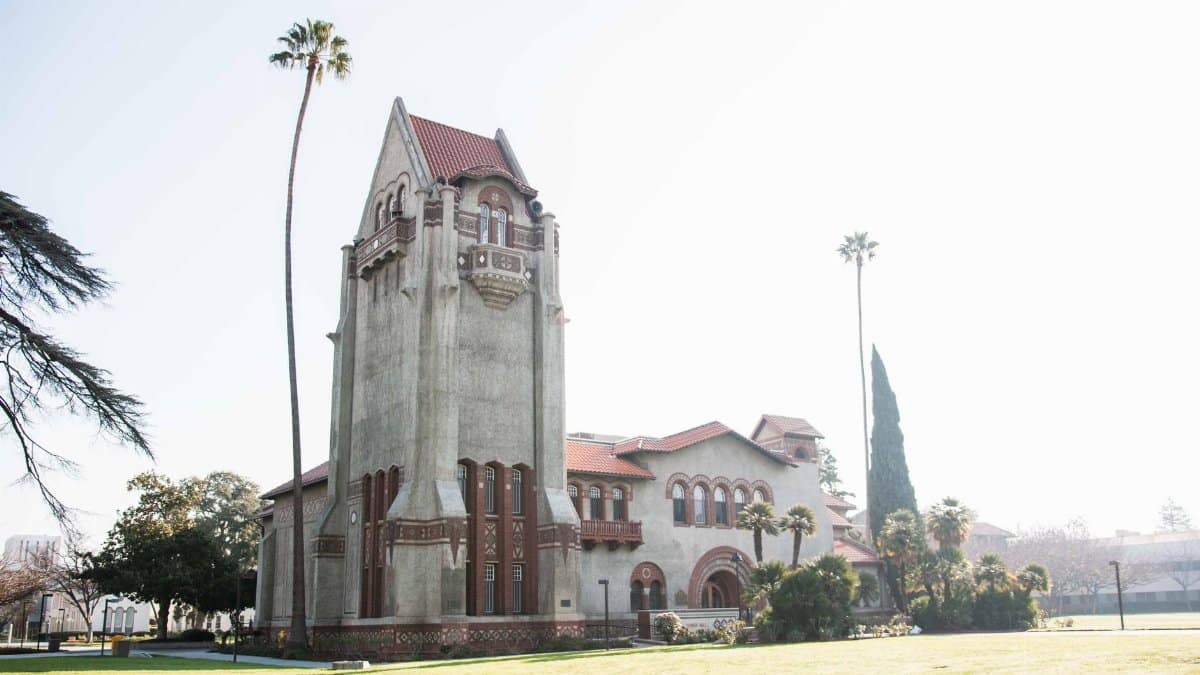
On a warm afternoon near Tommy Trojan, a mother on a campus tour asked whether a family connection still opened a door. The student guide smiled, mentioned essays and grades, and let the question drift. That small evasion now has a name in public argument: USC legacy admissions. President Kim has defended the university’s choice to keep weighing an applicant’s ties to alumni, even while signaling that the school will take another look at its SAT requirement. The defense lands in a season when selective colleges are being pressed to explain, in plain language, who receives a second glance and why.
A defense offered under bright lights

Private universities rarely volunteer the mechanics of their admissions files. They prefer the language of wholeness: character, curiosity, contribution to a class. Legacy status has long lived inside that language, treated as one factor among many rather than a formal quota. President Kim’s defense keeps that framing. The university, in this telling, is not selling seats to surnames. It is recognizing a relationship that already exists between families and a campus, and it is doing so inside a review that still claims to judge academic promise.
For readers outside the admissions office, the distinction can feel thin. A factor that is never decisive on paper can still move a borderline file. That is the quiet power of any preference, whether it is attached to a parent’s diploma, a donor’s name, or an athletic coach’s list. The president’s argument asks the public to trust that the factor is modest. Trust, after the last decade at this university, is not a small request.
What the phrase actually describes

USC legacy admissions, in ordinary use, means giving some positive weight to applicants whose parents or other close relatives attended the university. It is not the same thing as a guaranteed offer. It is also not the same thing as a scholarship reserved for children of alumni. The practice is a tilt, and tilts are hard to see from the outside because colleges do not publish the score each file receives for kinship.
Supporters describe the tilt as a way to sustain loyalty across generations. They argue that alumni who feel their children are welcomed remain donors, mentors, and ambassadors. Critics describe it as inherited advantage stacked on top of advantages that already shape test preparation, counseling, and the ability to visit campuses far from home. Both descriptions can be true at once. A practice can build community for some families and narrow the gate for others.
The scandal that still colors every explanation

Any conversation about favoritism at this university still passes through the Varsity Blues prosecutions. Wealthy parents, including some with ties to Los Angeles, paid to fabricate athletic profiles and to cheat on entrance exams. USC was not the only campus involved, but it became one of the most visible. The cases were about fraud, not about the ordinary legacy factor. Even so, they taught the public a simpler lesson: at the margins of a famous university, money and connections had found a way in.
That lesson clings. When a president now defends a lawful preference for alumni children, many listeners hear an echo of the unlawful schemes. The echo is unfair in a strict sense. A disclosed factor in a holistic review is not a bribe. Yet institutions do not get to choose which memories the public brings to the microphone. The defense has to be sturdy enough to survive that memory, not merely accurate enough to satisfy a general counsel.
Tests return to a crowded argument

Alongside the legacy defense, President Kim has indicated that the university will reconsider its SAT requirement. During the pandemic, large numbers of selective colleges stopped demanding the exam. Some have since restored it, arguing that a common measure helps them read transcripts from thousands of high schools. Others have kept the test optional, arguing that the exam tracks family income as much as it tracks talent.
A reconsideration is not a decision. It is a promise to look again, and promises of that kind can calm several audiences at once. Faculty who miss a shared academic signal may hear a possible return. Families wary of costly test prep may hear that nothing has been settled. The risk is that “reconsider” becomes a holding pattern while the harder fight, over who is preferred and on what grounds, continues underneath.
California chose a sharper line

Public universities in this state do not use legacy preferences. That fact shapes how private campuses are judged. Lawmakers have also moved to discourage legacy and donor preferences at independent colleges that participate in state student aid. The legal details matter, and they will be argued by people who are paid to parse them. The civic meaning is easier to state. A large share of Californians now expect admission to rest on the student in front of the committee, not on the parent behind the student.
USC legacy admissions therefore sits in a regional culture that has grown impatient with inherited advantage. A private university can still claim the freedom to define its own class. It cannot claim that the surrounding public shares its instincts. When a president defends the practice from a campus in Los Angeles, the defense is heard not only by alumni but by families whose children attend public high schools that have never sent anyone to the university at all.
Two messages in the same season

There is a tension in defending legacy status while reopening the question of the SAT. One move protects a preference tied to family history. The other flirts with restoring a metric that many reformers see as more transparent, if still imperfect. A university can argue that both moves serve fairness: kinship as community, tests as a check on inflated grades. A skeptic can argue the opposite: kinship as insulation for the already connected, tests as a second screen that wealthy families are best equipped to pass.
Readers do not need to pick a side on the first reading to notice the pairing. Institutions reveal their priorities by what they treat as negotiable. If the exam is up for review and the alumni tie is not, the alumni tie has won a kind of permanence that the test has lost. That ranking deserves to be said out loud, because it tells applicants which parts of the process are truly in motion.
Donors, tradition, and the ledger nobody posts

No serious account of this debate can ignore money. Alumni giving builds laboratories, scholarships, and the salaries that keep a research university running. Development offices track families across decades. A child of an alumnus who enrolls is, in that ledger, both a student and a renewal of a relationship. Pretending otherwise would be sentimental. Naming it does not, by itself, make the preference just.
The harder question is whether gratitude to donors must be expressed inside the admissions file. A university can honor alumni in a hundred other ways: reunions, advisory roles, named programs, preferential seating at a football game. None of those honors displaces another eighteen year old. The seat in the freshman class is the scarce good. Once a college treats that seat as a token of thanks, it has chosen a moral trade, whether or not the brochure admits the trade.
Students who arrive without a family name

Most students on any campus, including this one, are not legacies. They arrive from public schools, from other states, from countries where the university’s name is a rumor rather than a family story. Their presence is the strongest argument the institution has. A class that is only a reunion of surnames would be intellectually smaller and, over time, less interesting to the alumni who claim to love it.
Those students also carry the cost of opacity. When a rejection arrives with no explanation, a family that has no insider to call will assume the worst explanation available. Sometimes the worst explanation is wrong. Sometimes a file was simply not as strong as the ones beside it. The absence of a clear account invites the suspicion that a quieter file, attached to a familiar name, moved ahead. Suspicion is not proof. It is still a predictable result of a process that asks the public to take preference on faith.
After the court narrowed the tools

The Supreme Court’s decision on race conscious admissions removed one tool that selective colleges had used, for decades, to shape a class. It did not remove legacy preferences, athletic preferences, or the preferences that flow from development. The asymmetry is now part of the national argument. Practices that correlate with wealth and with whiteness, in the aggregate, remain easier to defend in court than practices designed to offset historical exclusion.
President Kim is not required to solve that national asymmetry in a single statement. The president is required, if the defense is to persuade anyone beyond the alumni association, to say why a kinship factor survives in a process that has been told to stop considering race. The answer may be legal. It may be financial. It may be cultural. An answer that is only “we have always done this” will sound, to many middle aged parents saving for a child who has no insider, like a door closing with a polite click.
What a real reconsideration would require

If the university is serious about reviewing the SAT, seriousness would look like a public account of what the exam did and did not predict for its own students. It would look like a comparison of applicants who submitted scores and applicants who did not, without hiding the income patterns inside those groups. It would look like a timeline, not a mood.
A parallel seriousness about legacy would look different, because the president has not put that practice on the table. Seriousness there would mean disclosing, at least in aggregate, how many admitted students carry an alumni tie and how their academic profile compares with the rest of the class. Colleges resist that disclosure because numbers make a tilt visible. Visibility is the point. A factor that cannot survive daylight is a factor that should not be described as minor.
The families listening from the parking lot

The mother on the tour is not a metaphor. She is one of thousands of parents who will drive home and try to translate a smiling nonanswer into a plan. Some will hire counselors. Some will tell a child to stop dreaming about a particular campus. Some will decide that the only honest path is a public university whose rules are posted in statute rather than implied in tradition.
Journalism should not pretend that one presidential defense settles their calculation. It does mark a choice. USC legacy admissions remains, for now, a practice the university is willing to own. The SAT, by contrast, is a practice the university is willing to revisit. That split will shape the next class more quietly than any slogan about excellence. Parents are already doing the arithmetic. The campus tour guide, smiling, cannot do it for them.