

On a morning when Italy usually moves with the confidence of a country that lives by trains, ferries, and crowded departure halls, the skies went quiet in a way passengers could feel before they understood it. Screens at major airports slowed. Gates filled with people who had done everything right and still could not leave. The phrase Italy air traffic delays moved from a seasonal complaint into a national interruption, the kind that turns a routine connection into an open question about when the country will fly again.
An overnight failure with a morning face

The disruption began in the dark hours, when most travelers were asleep and the network that keeps Italian airspace coherent was already in trouble. ENAV, the company that provides air navigation services across the country, later said a technical problem in its network had forced a sharp reduction in capacity. Controllers did not lose the sky. They lost the smooth digital fabric that lets them handle a normal volume of flights without stretching safety margins.
That distinction matters. A failure in communications or data systems does not look like a storm on a radar image, yet it can ground ambition just as effectively. Aircraft still fly. The system simply refuses to accept as many of them as the schedule promised. By dawn, the private inconvenience of a late alarm clock had become a public logistics problem.
Rome, Milan, and Bergamo take the first hit

The pain concentrated where Italian aviation is densest. Rome Fiumicino, Milan Malpensa, Milan Linate, and Bergamo, the low cost gateway that feeds much of northern Italy, all reported delays and cancellations as capacity was cut. Families with tight connections stood in lines that did not move at the speed of the departure board. Business travelers recalculated meetings that had seemed fixed the night before.
Bergamo is easy to underestimate until a network fails. It is not the ceremonial airport of the capital, but it is a hinge for budget carriers and for travelers who treat northern Italy as a single region rather than a set of cities. When that hinge sticks, hotel desks, rail platforms, and rental car counters absorb the overflow. A national air problem quickly becomes a local ground problem.
What a fifty percent cut actually means

Reports described Italian air traffic capacity falling by about half while engineers worked on the network. Half is not a poetic figure. It is an operational ceiling. If the system can safely accept only half the planned movements, airlines must cancel, hold, or reroute. The arithmetic is blunt, and it lands on individual itineraries with little regard for who booked early or who paid more.
Capacity in this sense is not the number of runways or the size of a terminal. It is the number of aircraft controllers can separate, sequence, and hand from one sector to another with reliable information. When that information path degrades, the safe answer is fewer airplanes, not bravado. Italy air traffic delays in this episode were the visible edge of a quieter decision to protect the invisible work of separation.
Restoration, and the uneven return of normal

ENAV said full capacity was restored after the overnight disruption, and airports began clearing the backlog. Restoration is not the same as instant normality. A system can be technically whole while still carrying the residue of missed slots, crews out of position, and aircraft sitting in the wrong city. Passengers who heard that the network was fixed still waited, because the schedule is a chain and one broken link rearranges every link after it.
Officials and airport managers described a return to ordinary operations rather than a lingering national shutdown. That is the right standard. It is also a modest one. Ordinary, after a morning like this, means the board moves again and the worst cancellations stop multiplying. It does not erase the hours already lost.
The passenger view from the gate
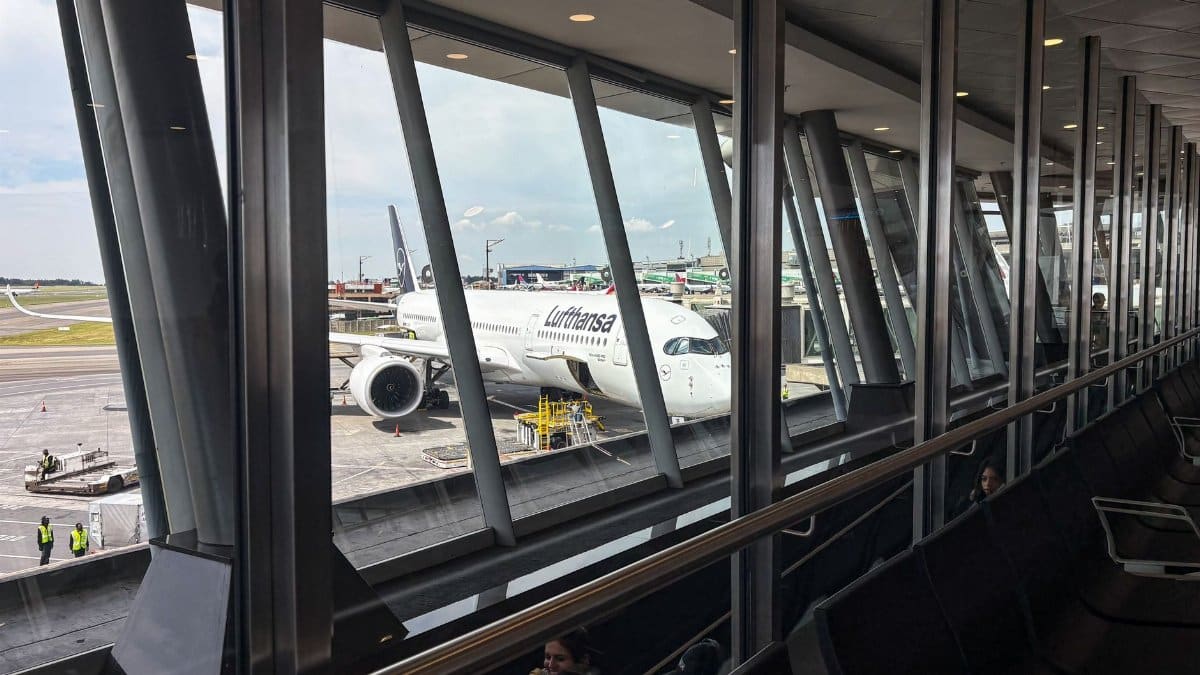
For people in the terminals, the technical story arrived late and in fragments. Some learned of the cut from airline messages. Others learned it from a gate agent who had no better information than the crowd. Children slept on coats. Older travelers asked whether a later train might be wiser than another hour of hope. The dignity of travel depends on being told the truth early, even when the truth is incomplete.
Airlines generally control rebooking, hotels, and meal vouchers. Air navigation providers control the sky. Passengers stand between those institutions and often cannot tell which door to knock on. Italy air traffic delays expose that gap. A clear public statement, repeated in plain language at the airports most affected, is not a courtesy. It is part of the service.
Why Italian airspace cannot fail quietly
Italy sits on routes that bind northern Europe to the Mediterranean, North Africa, and the Middle East. Domestic hops between Rome, Milan, Naples, and the islands share airspace with long haul arrivals and with overflights that never touch Italian soil. A network problem in Rome is therefore not only an Italian inconvenience. It ripples into schedules written in other capitals.
That geography is a strength in ordinary weeks and a liability in a bad night. Neighbors can absorb some traffic. They cannot absorb a sudden national ceiling without their own delays. European aviation is a shared room. When one country lowers the lights, everyone else adjusts their eyes.
Summer demand leaves little slack

The episode landed in a season when European skies are already tight. Tourism, island routes, and the return of business travel leave airlines with thin reserves of aircraft and crew. A delay that might be absorbed in February becomes a cancellation in July because the next aircraft is already committed and the next crew is already at the edge of legal duty time.
Italy feels this pressure with particular sharpness. Coastal airports and island links are not optional luxuries for the communities that depend on them. When mainland hubs slow, Sardinia, Sicily, and smaller fields feel the absence as a missed freight pallet or a postponed medical connection as much as a spoiled vacation. The romance of summer travel hides a supply chain.
What investigators and ministers will want to know

A restored network is not the end of the story. Transport officials and ENAV will be expected to explain what failed, how long the degraded state lasted, and whether backup paths worked as designed. The public does not need a schematic. It needs to know whether this was a rare fault in a resilient system or a warning that spare capacity exists mostly on paper.
Questions worth asking are practical. Were contingency procedures clear to controllers and to airlines at the same moment? Did airports receive capacity figures early enough to stop selling hope at the gate? Was there a single public voice, or a scatter of partial updates? Italy air traffic delays of this scale justify that kind of after action scrutiny without turning every technical fault into a scandal.
A pattern larger than one night

European passengers have lived through other mornings when software, staffing, or strikes bent the schedule. Each case has its own cause, and it would be careless to fold them into one morality tale. Still, the pattern of fragility is hard to ignore. Networks built for efficiency often run close to their limit. The margin that keeps a bad night from becoming a bad week is expensive, and it is easy to treat as waste until the morning it is needed.
Italy is not unique in that bargain. It is simply the country that had to explain it this time, at Rome and Milan and Bergamo, with cameras in the terminals and travelers filming the boards. Memory of those images tends to fade once flights resume. The invoices for rebooking do not.
What travelers can reasonably expect now

With capacity described as fully restored, the sensible posture is cautious normality. Confirm the flight. Arrive with time to spare. Keep rail and bus options in mind for short domestic hops if the airline offers a clean alternative. Do not assume that a technical all clear erases every knock on delay from the previous cycle of aircraft.
Travel insurance and airline care rules still govern refunds and care. Those rules are dull until they are the only lever a stranded person has. Reading them before a trip is less romantic than packing light, and more useful. The state can restore a network. It cannot restore a missed wedding from a control room.
The standard a modern sky should meet

Air traffic management is public infrastructure even when a company operates it. People consent to its invisible authority every time they board. In return they are owed redundancy, honest timelines, and a restoration that is verified rather than merely announced. Italy met the immediate test by bringing capacity back. The harder test is whether the next overnight fault finds a system that fails smaller and speaks sooner.
None of this requires panic about flying. Commercial aviation remains a tightly regulated activity, and the decision to cut movements was itself a safety choice. The discomfort belongs to the schedule, not to a casual doubt about whether controllers know their work. Respect for that work includes refusing to run the network at full tilt when the tools are impaired.
A country that measures itself in departures

Italy often tells its own story through piazzas, kitchens, and coast roads. It also tells that story through first flights of the day, the ones that carry nurses, tour guides, crates of produce, and people who simply need to be somewhere else by noon. When those flights hesitate together, the country feels smaller and more tangled at once.
The boards are moving again. That is the fact that matters most to anyone still holding a boarding pass. Italy air traffic delays of the kind seen after this network break should remain an exception, examined in daylight, not a summer ritual accepted with a shrug. Full capacity is the headline. Keeping it, under ordinary strain and under the next surprise, is the work that follows.