
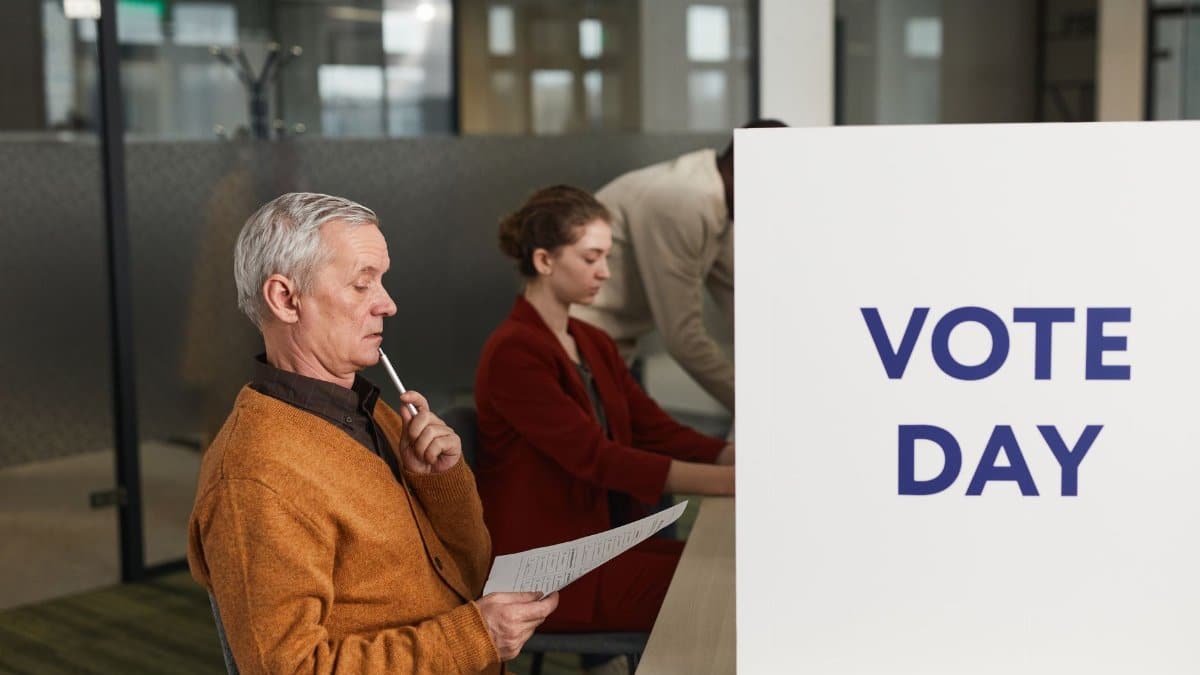
On a warm October afternoon in Austin, a fresh set of numbers moved through political offices with unusual speed. A University of Texas at Austin poll released October 14, 2026 found Democrats ahead in nearly every statewide contest, according to reporting by the Houston Chronicle. Within hours, strategists, donors, and county chairs were arguing over what a Texas Democrats poll lead would mean in a state that has rewarded Republicans for a generation. The survey did not crown a winner. It did something more disruptive. It made complacency look expensive.
What the survey puts on the table

The Chronicle account, available at the paper’s politics desk, describes a landscape in which Democratic candidates hold narrow advantages across most of the statewide ballot. That phrasing matters. Narrow is not the same as secure, and nearly every is not the same as all. Readers who want the full breakdown should consult the original report rather than rely on secondhand summaries that flatten small differences into a single slogan.
Still, the shape of the finding is hard to ignore. Texas statewide races usually travel together. A governor, an attorney general, and a slate of other executive offices share a partisan current even when personalities differ. When one party leads across that slate, the argument shifts from a single upset to a broader mood. Campaigns start asking whether the electorate is sampling a new habit or merely flirting with one.
A Republican era that still shapes the map
For decades, statewide Texas has been Republican terrain. Governors, attorneys general, and railroad commissioners have won on coalitions built in suburbs, rural counties, and energy corridors. Demographic change has been real, and so has Democratic growth in Houston, Dallas, Austin, San Antonio, and parts of the border. Growth has not automatically become victory. Registration, turnout, and candidate quality have repeatedly separated a promising poll from a winning night.
That history is the right frame for the new numbers. A lead in October of an election year is a photograph, not a film. It captures a moment when voters are paying attention, when advertising is rising, and when national arguments leak into local races. It does not freeze the electorate in place. Anyone treating the survey as a prophecy is asking a measuring tool to do a job it was never built to do.
Names that now carry the argument
Public attention has clustered around contests associated with James Talarico, Ken Paxton, and Greg Abbott, figures who represent very different styles of Texas politics. Abbott has defined the modern governorship through longevity, disaster response, and a close alliance with the national conservative movement. Paxton has been a polarizing attorney general, a magnet for loyalists and critics alike. Talarico has emerged as a Democratic voice fluent in classrooms, churches, and social media, a combination that travels well beyond a single district.
The point of naming them together is not to pretend their races are identical. It is to notice how a statewide current can lift or limit very different candidates at once. Personality still matters. So does scandal, money, and the simple question of whether a voter can picture a candidate doing the job. A party lead is a tide. Individual campaigns still have to sail.
Why a narrow advantage can deceive
Polls of large states are fragile instruments. Texas contains multiple electorates that barely share a news diet. A few points in Harris County do not mean the same thing as a few points in the Panhandle. Sampling error, turnout models, and the share of voters who have not yet tuned in can all move a narrow margin without any candidate making a mistake. That is why seasoned readers look for patterns across surveys rather than worshiping a single release.
The phrase Texas Democrats poll lead will travel faster than any footnote about methodology. Campaigns know this. They will clip the headline, ignore the caveats, and test whether enthusiasm can be converted into volunteers. Opponents will answer with their own numbers, their own internal surveys, and a reminder that early leads have evaporated before. Both responses can be true at the same time. Headlines mobilize. Margins of error humble.
How voters appear to be hearing the moment
Interviews and county chatter, as described in political coverage of the survey, point less to a sudden conversion than to a restless evaluation. Some voters are tired of rising insurance bills, school fights, and the sense that Austin argues more than it governs. Others remain firmly anchored in party identity and see Democratic gains as a warning rather than an invitation. A lead can reflect attraction to one side or exhaustion with the other. Those are different political facts, and they imply different closing arguments.
Language on the doorstep will matter more than language in a memo. Texans tend to punish campaigns that sound imported. A candidate who treats the poll as permission to nationalize every issue may discover that the same voters who leaned their way in a survey still want a local explanation for power prices, property taxes, and public schools. The survey opens a door. It does not write the speech.
Money, maps, and the machinery of turnout

A surprising poll changes budgets. National committees notice. Small donors notice. So do the consultants who sell television time in Dallas and digital ads in the Rio Grande Valley. If Democrats believe the Texas Democrats poll lead is real enough to contest, they will have to fund not one glamour race but a slate. Republicans, facing the inverse problem, will decide whether to defend everywhere or to concentrate on the offices they consider nonnegotiable.
Maps still constrain ambition. Legislative lines, media markets, and the geography of early voting reward organizations that already exist. A party that leads in a statewide average can still lose if its voters are concentrated in a handful of counties and fail to show up in the places where margins are made. The unglamorous work of voter contact, ballot chase, and election protection will decide whether October enthusiasm survives November logistics.
The national weather over a state race

Texas does not vote in a vacuum. Presidential approval, inflation, border policy, and the tone of Congress all seep into statewide contests. When the national climate favors one party, even entrenched state machines feel it. When the climate turns, local incumbents discover that their personal brands were partly borrowed from a larger mood. The October survey sits inside that weather system, whether or not any single respondent could name the mechanism.
Journalists should resist the temptation to declare a realignment on the basis of one release. Realignment is a verdict rendered over several elections, visible in party registration, in suburban voting habits, and in which candidates can win without apologizing for their label. A single poll can be an early tremor. It can also be noise that later surveys fail to repeat. The honest sentence is the shorter one: something moved, and we do not yet know how far.
Faith communities and the civic mood
Because so many Texans encounter public life through congregations, the spiritual temperature of the state is not a side issue. Churches, mosques, synagogues, and informal prayer groups are places where people test whether political claims sound like care or like contempt. Candidates who speak about schools, migrants, or the cost of living are also speaking, whether they admit it or not, to moral intuitions formed in those rooms.
A poll lead does not baptize a platform. Voters who describe themselves as faithful often split their ballots or stay home when they feel used. Campaigns that treat religious communities as delivery systems for talking points tend to learn that lesson late. The more durable approach is plainer: show up, listen, and accept that conscience is not a demographic cell in a spreadsheet. In a year when statewide numbers are tight, that kind of respect is not soft politics. It is competent politics.
What campaigns are likely to do next
Expect a rush of contrasting surveys. Parties rarely let an unfavorable public poll stand alone. They commission work that emphasizes their best issues, their best regions, and their most reliable voters. Some of that research will be serious. Some will be a press release wearing a lab coat. Readers can ask simple questions. Who paid for it? How many people were interviewed? Were they likely voters or registered adults? Was the sample large enough to say anything about Latino voters, Black voters, or rural whites without drowning in uncertainty?
Also expect message tests aimed at the exact anxieties the public poll appears to have surfaced. Democrats will try to turn a Texas Democrats poll lead into a story of momentum without sounding premature. Republicans will try to turn the same lead into a story of stakes, arguing that the state they built is at risk. Both messages can raise money. Only one of them, or neither, will match what voters actually feel when they mark a ballot.
Reading numbers without losing judgment

The healthiest habit is repetition. One survey from the University of Texas at Austin, as relayed by the Houston Chronicle, is a serious data point because the institution and the newspaper are serious. It is not a substitute for the average of credible polls, for campaign finance reports, or for the evidence of early vote. If later surveys echo this one, the case for a competitive statewide map grows stronger. If they do not, October will look like a gust rather than a change in climate.
Journalists owe readers that patience. So do candidates. Declaring the state transformed because a headline feels good is a form of disrespect to the people who have not yet voted. So is dismissing every uncomfortable number as biased before anyone has checked the methods. The adult posture is curiosity with a spine: take the finding seriously, demand the details, and wait for the electorate to finish its sentence.
Questions the next month must answer
Does the advantage hold among voters who have participated in recent midterms, or does it depend on people who rarely show up? Does it survive once both sides spend heavily on the names at the top of the ballot? Do rural deficits shrink, or do urban margins simply grow larger while the rest of the state stays put? And do candidates down the ballot benefit, or does the lead remain a phenomenon of the most famous races?
Those questions are answerable. They will be answered by more polling, by fundraising totals, and finally by ballots. Until then, the responsible description is the one the Chronicle’s reporting already suggests: Democrats are leading in nearly every statewide contest, the leads are narrow, and the political class has been forced to treat Texas as a live argument rather than a settled inheritance.
A lead is an invitation, not a verdict
There is a human stake beneath the graphics. Statewide offices decide how schools are funded, how elections are run, how criminal cases are pursued, and how a vast state responds when the grid fails or a storm comes ashore. Voters who move a number in a poll are also deciding what kind of competence they trust. That is why a statistical lead should be discussed with gravity rather than glee.
If the Texas Democrats poll lead endures, it will be because enough Texans concluded that a different roster of leaders matched their lived experience. If it fades, it will be because old loyalties, new doubts, or simple turnout reasserted themselves. Either outcome can be explained without mythology. The October survey has done its job. It has made the fall more interesting, and it has reminded anyone who cares about this state that power here is contested again.