
On a quiet block in Norwood Park, a white farmhouse still faces the street as if the prairie had never been paved. Neighbors pass it on the way to the train. School groups climb its stairs and peer into rooms that have outlasted fires, annexations, and the ordinary urge to tear down what no longer matches the block. Preservationists know the building by three family names, Noble, Seymour, and Crippen, but many Chicagoans reach for a simpler label. They call it the Chicago oldest house. Raised in 1833, four years before the city received its charter, it is widely recognized as the oldest surviving house inside the present limits of Chicago. Supporters are raising money so that claim does not end as a plaque beside a vacant lot. The work is slow: roofs, receipts, heating, and the patience of people who think a city should be able to touch its own beginning.
A farm before the grid had a name

When Mark Noble built the first portion of the house, Chicago was a small settlement on a wet prairie, not the metropolis that would later swallow the farms around it. The Noble place stood far from the river docks and the muddy streets where traders argued over lots. It was a working house on working land, meant to shelter a family through hard winters rather than to impress visitors from the East. That plain purpose is part of its authority. The rooms do not perform grandeur. They record a decision to stay.
The year 1833 matters because so little domestic fabric from that moment remains. Commercial buildings were replaced as the town grew rich. Houses burned, including vast stretches of the city in 1871, or were moved aside when streets were raised and sewers laid. Survival here was not a miracle so much as a sequence of owners who found the structure useful enough to keep. Use, in preservation, is often stronger than sentiment. A house that still holds people tends to hold its walls.
How later families changed the face without erasing the bones
The story is not a single frozen year. In the later nineteenth century the property passed to Thomas Hartley Seymour, a man tied to the railroads and to civic life, who enlarged the farmhouse and gave the street a more formal face in the Italianate taste of his time. The older volume did not vanish. It remained inside the newer one, a common Chicago habit of adding rather than starting over. In 1916 the Crippen family took ownership, and the house continued as a private home in a neighborhood that was no longer country.
Those additions are easy to misread as impurities. They are, instead, the evidence. A landmark that shows only its first decade tells a thinner truth than a landmark that shows how families adapted light, heat, and fashion while refusing to abandon the frame. Visitors who expect a cabin sometimes need a minute to understand the layered exterior. The lesson is worth the minute. Chicago grew by accretion, and so did this address.
Annexation turned a rural address into a city address
Norwood Park did not begin inside Chicago. It was a separate settlement with its own habits, later drawn into the city near the end of the nineteenth century. That political fact is why the phrase Chicago oldest house can sound like a riddle. Older structures may survive in towns that were never annexed. Inside the municipal line as it exists now, this farmhouse is the one historians and neighborhood advocates point to when they want a domestic survivor from the 1830s.
The distinction is not a trick. City limits are legal lines, and legal lines decide what a city is obliged to remember as its own. Once Norwood Park was Chicago, the house became a Chicago house with a country biography. That double identity is the point of visiting. You stand on a city sidewalk and look at a building planned for fields.
From private rooms to a public trust
Private ownership carried the house for a century and a half. Public stewardship is younger and more fragile. The Norwood Park Historical Society eventually took responsibility and opened the rooms as a museum, a shift that traded family maintenance for institutional maintenance. Museums do not get to ignore a leaking gutter because the family is away. They answer to visitors, to insurers, to artifact care, and to neighbors who treat the corner as part of the street rather than as a distant monument.
City landmark recognition gave the house a formal shield against casual demolition. Recognition is not a checking account. A protected building can still fail slowly if paint, masonry, porches, and mechanical systems are deferred until the damage is no longer cosmetic. Supporters understand that gap. Their campaign is less about winning a new title than about paying for the unglamorous years between titles.
What it costs to keep an old house honest
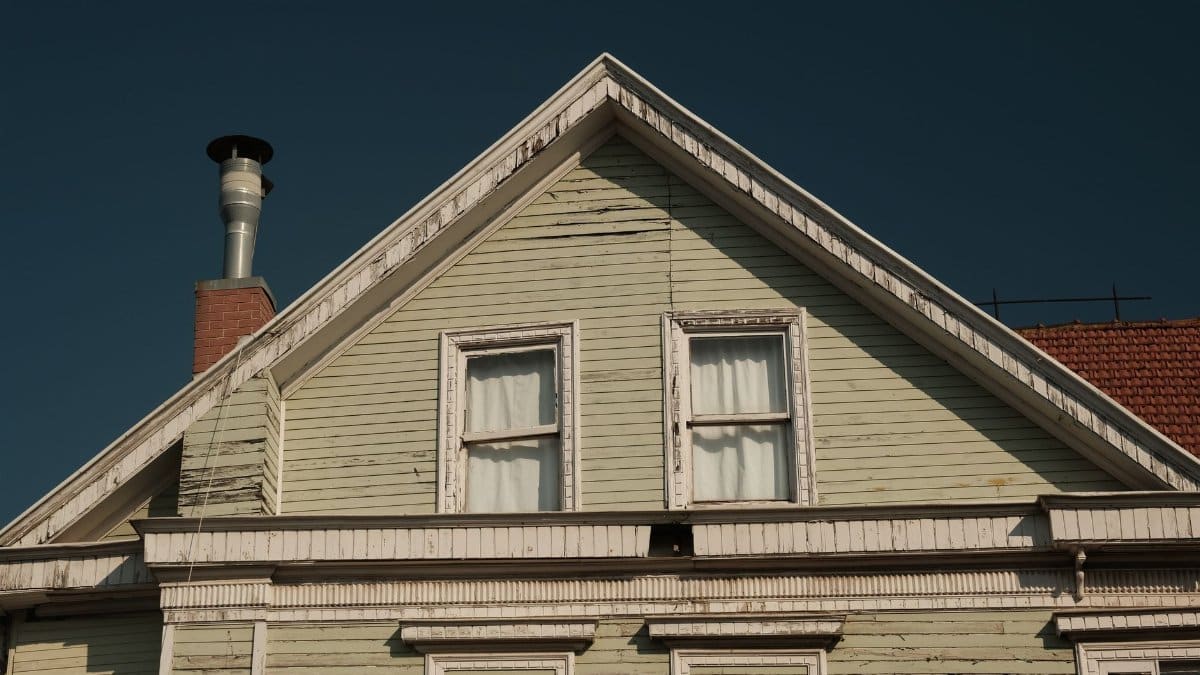
Old wood moves. Lime and modern paints argue with each other. A porch that looks charming in July can pull away from the wall after a cycle of freeze and thaw. Climate control for documents and textiles is not a luxury if the society intends to keep letters, photographs, and furniture from becoming debris. Accessibility raises another bill. A museum that only the sure footed can enter has already narrowed its public.
None of this is unique to Norwood Park, which is why the Chicago oldest house has become a local test of whether affection can be converted into maintenance. Fundraising for a landmark rarely photographs well. It looks like envelopes, membership renewals, small events, and grant applications written after work. The alternative looks quieter still: a locked door, a sagging eave, and a story told only from the sidewalk.
The people who treat upkeep as civic work
The supporters are not a single donor with a single check. They are neighbors who remember field trips, volunteers who staff open hours, and residents who would rather argue about a budget than explain to their children why the white house on Newark Avenue is gone. That coalition is typical of neighborhood preservation in Chicago, where grand downtown projects draw headlines and wooden houses depend on people who live close enough to notice a new crack.
Their argument is practical as well as sentimental. A maintained museum anchors a commercial strip with foot traffic that a vacant parcel does not. It gives teachers a destination that is not a screen. It gives newcomers a way to learn the area without being lectured. In that sense the campaign is a neighborhood services question dressed as history. Keep the building sound, and the block keeps a reason to gather.
Memory, reverence, and the hunger for a beginning
People come to old rooms for reasons that are not only architectural. Some want dates and floor plans. Others want the feeling that time has a texture, that a city of glass can still offer a stair worn by ordinary shoes. That longing is close to what many traditions call reverence, even when no one is praying. It is a wish to stand somewhere that was not invented for the present mood.
The Chicago oldest house meets that wish without theater. There is no invented legend required. The power is chronological. You can say, with a straight face, that this frame was raised when Chicago was still deciding what it would be. For readers who treat history as a spiritual resource, a place to steady themselves against fashion and noise, the house functions as a chapel of continuity. It does not ask for belief in anything except the value of staying put long enough to be changed by time.
What visitors actually encounter
A visit is modest, which is a virtue. You see the difference between the early volume and the later enlargement. You hear how a farm lane became a city street. You notice that domestic history is made of hinges, hearths, window light, and the names of people who were not mayors. Guides, often volunteers, tend to talk in specifics rather than in slogans. That tone matches the building. It does not need to shout to justify the trip from downtown or from the next suburb over.
The risk of modesty is invisibility. A house that does not gleam can drop out of the city’s mental map, especially for residents who never ride the line that serves Norwood Park. Public storytelling has to do some of the work the facade cannot do. Articles, school partnerships, and open days are not extras beside the capital campaign. They are how a new generation learns that the building is theirs to keep or to lose.
A standard for other quiet landmarks
If this campaign succeeds, it will not only secure one roof. It will show that a city can fund the unfashionable middle of preservation, the years after designation and before emergency. Chicago has many buildings with stronger name recognition and weaker claims to age. Letting the oldest house inside the present limits slip would make later appeals harder to believe. People notice when a community fails its clearest case.
Success should also stay local in spirit. A house museum that becomes a backdrop for private events and nothing else has traded one kind of privacy for another. The healthier path is the one the society has already sketched: public hours, neighborhood ownership of the story, and repairs chosen for longevity rather than for a single photogenic season. Glory is the wrong metric. Weather tightness is the right one.
The stake is whether the beginning remains visitable

Cities love origin stories and often misplace the objects that could prove them. A plaque can be installed in an afternoon. A house from 1833 cannot be rebuilt in an afternoon once the original fabric is gone. Supporters of the Noble Seymour Crippen house are asking for something narrower than immortality. They want the next repair, the next season of open doors, the next class of children who learn that Chicago did not begin as a skyline.
Call it the Chicago oldest house or call it by the families who kept it. Either name points to the same duty. History that cannot be entered becomes rumor. History that can be entered, even on a cold Saturday in Norwood Park, remains a public good. The fundraising is the unromantic price of that good. Paying it is how a city keeps its earliest domestic witness from becoming only a sentence in someone else’s article.