

A parent in Jacksonville can still open a phone and find a feed that never quite ends. That ordinary fact now sits inside a constitutional argument with a cumbersome public label, Florida social media law 11th Circuit, the phrase readers use when they try to follow whether the state may keep the youngest teenagers off certain apps. The statute speaks in the language of protection. The courts answer in the language of speech, jurisdiction, and proof. Between those registers lies a dispute that will shape how families, companies, and judges divide responsibility for the hours a child spends online.
What Florida actually wrote into law

The measure most people mean is the 2024 statute associated with House Bill 3, signed by Gov. Ron DeSantis and written to take effect in 2025. In plain terms, it tells social media platforms they may not let children under 14 create accounts. It requires parental permission for 14 and 15 year olds. It also presses companies to delete accounts and related data when a parent or the minor asks, and it pairs those rules with separate age checks for sites that distribute material the state deems harmful to minors.
Supporters describe the bill as a boundary around childhood, closer to a curfew than to a censor’s pen. Critics describe it as a speech law in a safety costume, because an account is the door through which a young person reads, publishes, organizes, and seeks help. Both descriptions can be true at once. A platform is a business. It is also, for many teenagers, a library, a hallway, and a diary.
The official bill text is public on the Florida Senate site, which remains the surest way to separate statute from slogan: https://www.flsenate.gov/Session/Bill/2024/3
Why the courthouse became the second draft
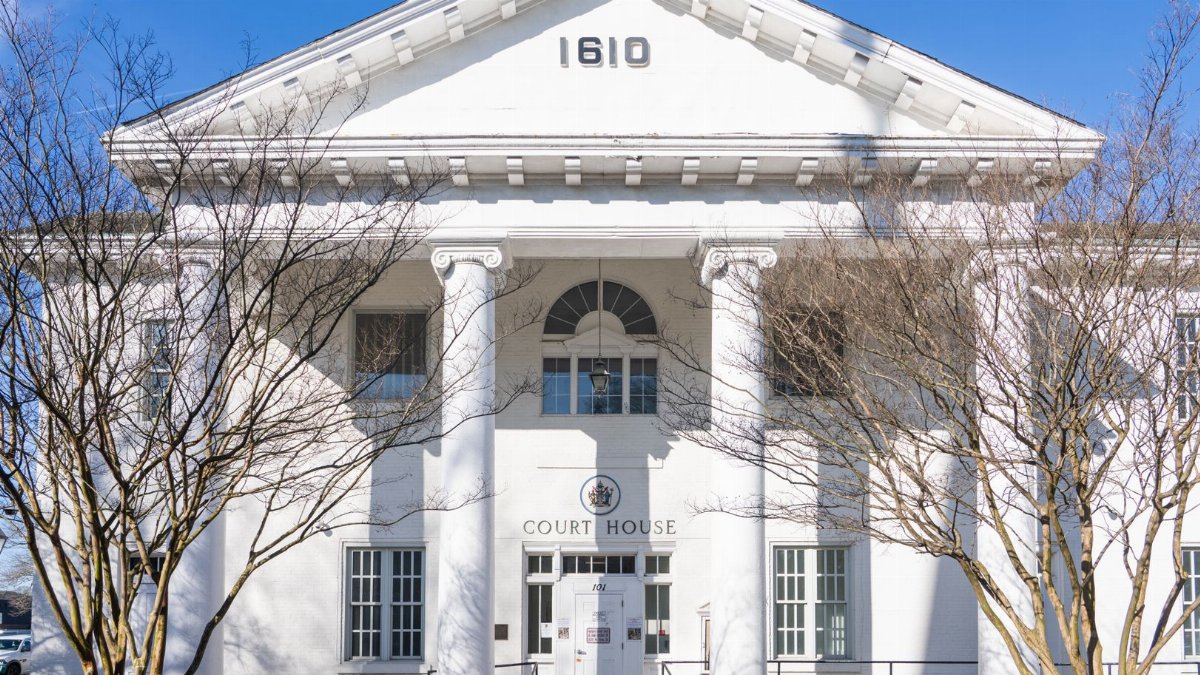
Technology trade groups, including NetChoice and the Computer and Communications Industry Association, sued. Their claim is familiar from a decade of internet cases. They argue that the state is regulating the editorial choices of private speakers, compelling age gates that chill lawful use, and imposing duties that smaller services cannot meet without collecting more personal data than the law claims to protect.
Florida answers that the state has long guarded minors from products and places that adults may enter freely. Alcohol, driving, and certain films already draw age lines. Lawmakers say social feeds, built to maximize time and engineered with tools a child cannot see, belong in that category. The state’s interest, in this telling, is not viewpoint. It is development.
A trial judge in Florida has been the first reader of those arguments, through requests for preliminary relief. Preliminary orders are not final judgments. They ask whether the challengers are likely to win, whether harm is irreparable, and whether the public interest favors a pause. That is why headlines can sound conclusive on a Tuesday and incomplete by Friday. Anyone tracking the Florida social media law 11th Circuit story should treat early orders as waypoints, not as the last word.
What the appeals court is for

The United States Court of Appeals for the Eleventh Circuit hears appeals from federal district courts in Florida, Georgia, and Alabama. When a Florida statute collides with the First Amendment, this is the court that usually speaks before the Supreme Court even considers a petition. Its job is not to vote on parenting. It is to test the law against precedent, the factual record, and the standards that govern injunctions.
That institutional role is why the phrase Florida social media law 11th Circuit has stuck in search bars and legislative offices. People are not only asking what Tallahassee wanted. They are asking which judges will review the record, how broadly any order will reach, and whether a ruling about accounts for 13 year olds will be written in a way that also governs adult political debate.
Readers should be wary of any summary that skips the opinion. Appeals courts affirm, reverse, vacate, and remand. They sometimes uphold a statute in part and block it in part. A clean verb like upholds can hide a narrower holding about standing, ripeness, or the difference between a facial challenge and a challenge to the law as applied. Precision is not pedantry here. It is the difference between a parent’s expectation and a company’s actual legal duty.
Speech doctrine that will not sit still

The Supreme Court has already warned lower courts not to treat social media laws as simple consumer rules. In Moody v. NetChoice, decided in 2024, the justices sent related disputes back for a more careful look at whether state efforts to control platform moderation violate the First Amendment when they interfere with editorial judgment. The opinion is here: https://www.supremecourt.gov/opinions/23pdf/22-277_d18f.pdf
Moody arose from a different Florida statute, one aimed at how platforms treat political candidates and journalistic outlets, not from the youth account rules. Still, the method matters. Courts must identify the speakers, the speech, and the burden before they bless a remedy. A law that keeps a 13 year old from opening an account is not identical to a law that tells a platform which political posts to carry. A judge can believe one is valid and the other is not. Conflating them is how bad commentary gets made.
There is also a line of cases about minors and harmful content, from older regulation of dial up bulletin boards to modern age gates on adult sites. Those cases do not hand states a blank check. They do show that childhood is not a constitutional blank space. The hard work is fitting a feed, which mixes news, friendship, advertising, and compulsion, into categories built for books, broadcasts, and storefronts.
Parents, attention, and the inner life

This argument reaches beyond party memos because it touches how a household forms a person. Many religious communities already treat attention as a moral practice. A Sabbath, a Friday gathering, a Sunday morning, or a nightly silence is a claim that not every hour belongs to the market. Psychologists and pastors do not always share a vocabulary, but they often share a worry: a child who never leaves the feed has a thinner chance to sit with boredom, prayer, homework, or a friend in the same room.
I have watched families try to invent those boundaries without a statute. Phones go in a basket at dinner. Bedrooms stay dark of screens. None of that requires a legislature. It also fails often, because the design of the product is stronger than a tired parent at 9 p.m. The spiritual question is not whether the state may replace a mother or a father. It is whether public law may support the private work of formation when the product is built to outlast that work.
A court will not answer that question in the language of faith. It will ask about tailoring. Could Florida have required stronger default privacy tools, school based media literacy, or limits on data driven advertising to minors, rather than a near ban on accounts? Did lawmakers leave open enough space for a teenager who needs a support group, a church youth page, or a way to read the news? Those are legal questions with a pastoral shadow.
The cost of proving an age

Age rules only work if someone can tell a 13 year old from a 16 year old from a 40 year old. Platforms can guess from behavior, demand a credit card, or ask for a government identity document. Each method fails someone. Guessing sweeps in adults who write like teenagers and misses children who borrow an older sibling’s habits. Documents exclude people without them and create new stores of sensitive data. Parental consent portals fail when parents disagree, when a child is in foster care, or when the adult who holds the password is not the adult who should decide.
Civil liberties lawyers stress the privacy injury. Safety advocates stress the injury of doing nothing while recommendation systems train compulsion. A serious article about the Florida social media law 11th Circuit has to hold both injuries in view. A ruling that ignores enforcement will read like a press release. A ruling that ignores anonymity will read like a permission slip for surveillance.
Companies will also calculate. If compliance means building identity systems for every state with its own age number, some services will geo block Florida teenagers rather than redesign the product. That outcome can look like victory to a lawmaker and like exile to a 15 year old whose classmates in another state remain inside the app. Geography as content policy is one of the stranger facts of American federalism, and it is already here.
A map of state experiments
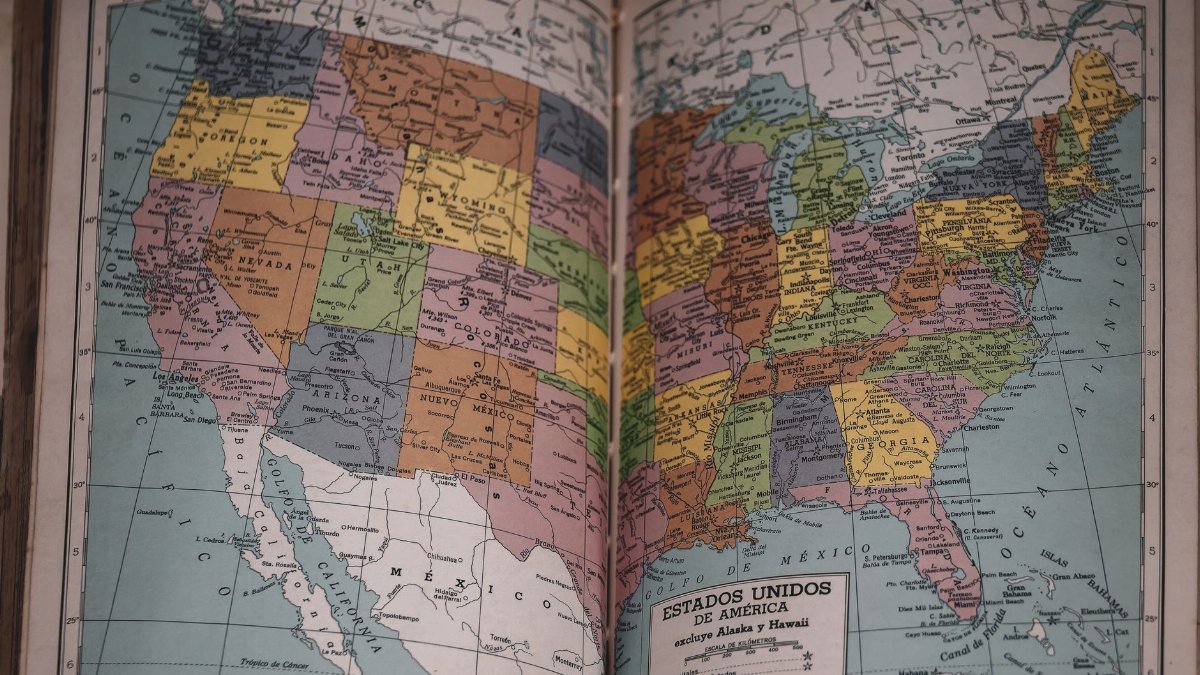
Florida is not alone. Utah, Arkansas, Texas, and other states have tried parental consent rules, default curfews, or limits on addictive design. Several of those laws have been paused or narrowed by federal judges who found First Amendment or vagueness problems. The pattern is not a conspiracy. It is what happens when fifty legislatures draft against a single national network of speech.
Industry groups often win the first round because preliminary injunction standards favor speech when the record is thin. States sometimes win later, or win on narrower adult content provisions, when they return with evidence about harm and with definitions a company can actually apply. That slow grind is easy to miss if a headline promises that one circuit has settled the culture war.
For readers who want the comparative picture without a partisan filter, the state legislative tracking pages and the published opinions are better than viral clips. The National Conference of State Legislatures maintains public summaries of youth privacy and social media bills, a useful index rather than a brief for either side: https://www.ncsl.org/technology-and-communication/social-media-and-children
Politics without a single villain

It is tempting to cast this as DeSantis against Silicon Valley, or as parents against elites. The coalitions are messier. Some progressive child advocates want aggressive limits on engagement based design and are uneasy with laws written by social conservatives. Some libertarians oppose both the Florida youth rules and older efforts to force platforms to carry political speech. Some parents who vote Democratic want the account ban. Some parents who vote Republican think the state should stay out of the living room.
The Florida social media law 11th Circuit fight is therefore a poor mascot for team loyalty. It is a test of whether American law can name a developmental harm without writing a statute so broad that it fails in court, and without writing one so narrow that it changes nothing about the product. Politicians will claim the result either way. Judges will have to live with the text.
What would count as a real answer

A meaningful appellate decision would do several plain things. It would identify which provisions are before the court. It would say whether the challenge is facial or limited to particular platforms. It would explain what evidence of harm the state offered, and what less restrictive paths it ignored. It would say who must comply, on what date, and what happens to data already collected. It would also say what it is not deciding, so that the next legislature does not pretend a youth account rule rewrote the whole First Amendment.
Until that opinion is public and read, certainty is a style choice, not a fact. Journalists can describe the stakes of the Florida social media law 11th Circuit litigation, the text of House Bill 3, and the path through the Eleventh Circuit without inventing a vote count or a quotation that the record does not contain. Readers can do the same. Open the statute. Open the order. Notice the verbs.
The deeper stake will remain after the mandate issues. A society that hands a child an infinite public square has to decide, in homes and in law, when that square should close for the night. Courts can police the method. They cannot supply the love, the boredom, or the quiet that a feed is designed to replace. That work still belongs at the kitchen table, whether or not an appeals court eventually agrees with Tallahassee.