
On a busy October afternoon, the ordinary rhythm of departures at George Bush Intercontinental Airport broke when a construction contractor damaged a fiber optic line, and the resulting disruption became known as the Bush Airport fiber optic delay. Flights that had been expected to push back sat at gates. Arrival boards filled with revised times. The Federal Aviation Administration imposed a ground stop, a blunt tool used when controllers and airline systems cannot safely keep the normal flow of traffic moving. For passengers in Houston, the episode was not an abstract infrastructure story. It was a missed connection, a long wait at a gate, and a reminder that modern air travel depends on cables most travelers never see.
A hub brought to a pause
George Bush Intercontinental, known by the code IAH, is one of the busiest airports in the country and a central connecting point for domestic and international travel. When operations slow there, the effect does not stay inside one terminal. Crews time out. Aircraft that should have continued to other cities remain on the ground. Passengers who planned a simple evening arrival find themselves searching for hotel rooms or later flights. According to reporting by the Houston Chronicle, the October 13 incident produced significant delays and an FAA ground stop after the line was damaged.
That combination matters. A delay can be absorbed by padding in a schedule. A ground stop is different. It tells airlines not to launch flights toward the airport, or not to depart from it, until the underlying problem is judged safe enough to resume. The order protects spacing in the sky and on the pavement. It also stacks inconvenience in a very visible way, because nothing about a full concourse looks calm when every screen says the same thing.
What a damaged line can interrupt
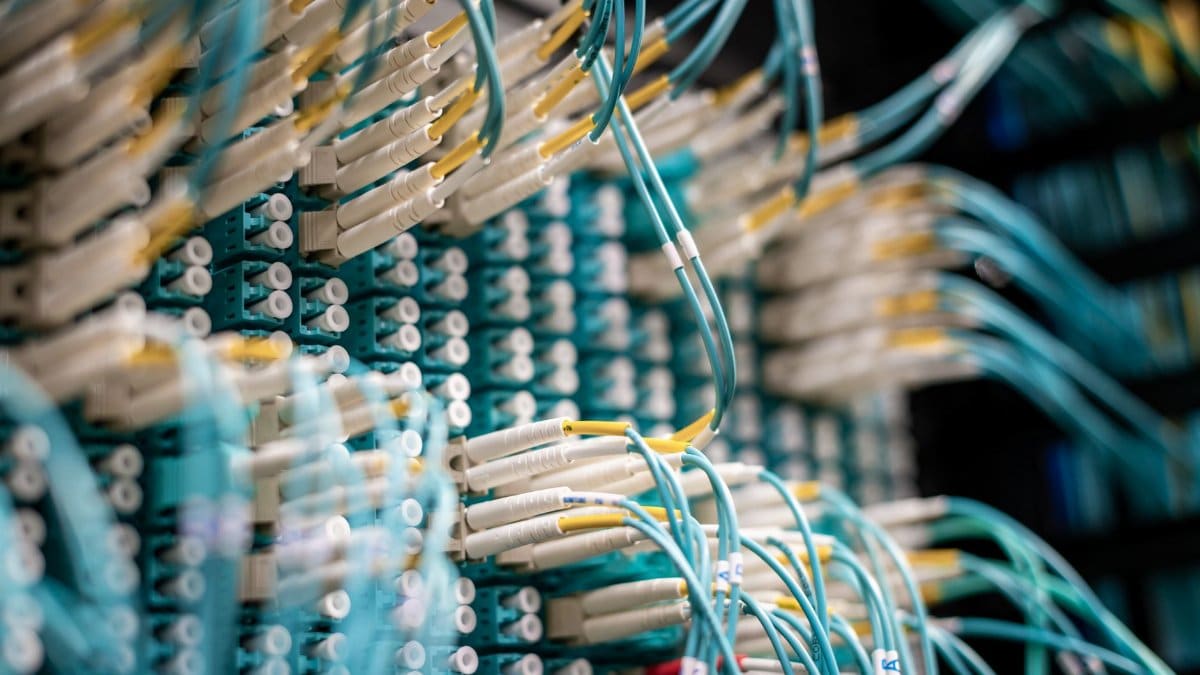
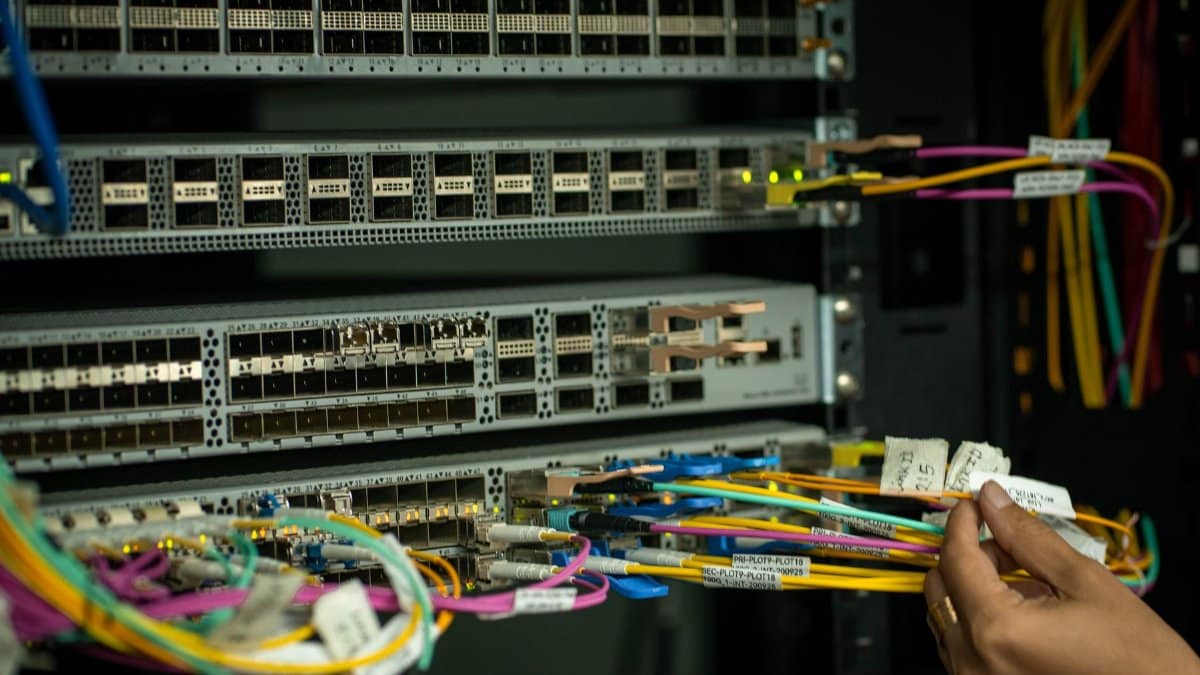
Fiber optic cable carries enormous volumes of data as pulses of light. Airports use those links for communications among airlines, ramp crews, baggage systems, security checkpoints, and the displays that tell a family which gate has changed. Some of that traffic is routine. Some of it is essential to the safe sequencing of aircraft. When a contractor cuts or crushes a line, the failure is physical even if the symptoms look digital. Screens freeze. Radios and data links drop. Backup routes may exist, but they are not always instant, and they are not always complete.
The Bush Airport fiber optic delay illustrated a familiar weakness in large public systems. Redundancy is planned on paper. In the field, a single trench, a single boring machine, or a single misread utility mark can still reach a cable that too many functions share. Engineers talk about diverse paths, meaning two routes that do not fail together. Travelers experience the absence of that diversity as a sudden quiet on the ramp.
How a ground stop works in practice
The FAA does not ground an airport because a coffee shop loses its card reader. A ground stop is reserved for conditions that make normal acceptance of traffic unwise. Weather is the classic cause. Equipment failure is another. In this case, damage to communications infrastructure was serious enough that controllers and airport operators needed time before flights could move again at a normal rate.
From the passenger side, the distinction among delay, cancellation, and ground stop is easy to miss. A delay means the flight still exists, only later. A cancellation means the airline has removed it from the schedule. A ground stop can produce both, because aircraft and crews are finite. If a departure cannot leave Houston, the aircraft cannot make its next trip from Dallas or Chicago. The first hour is a wait. The third hour is a broken chain.
The contractor and the cut

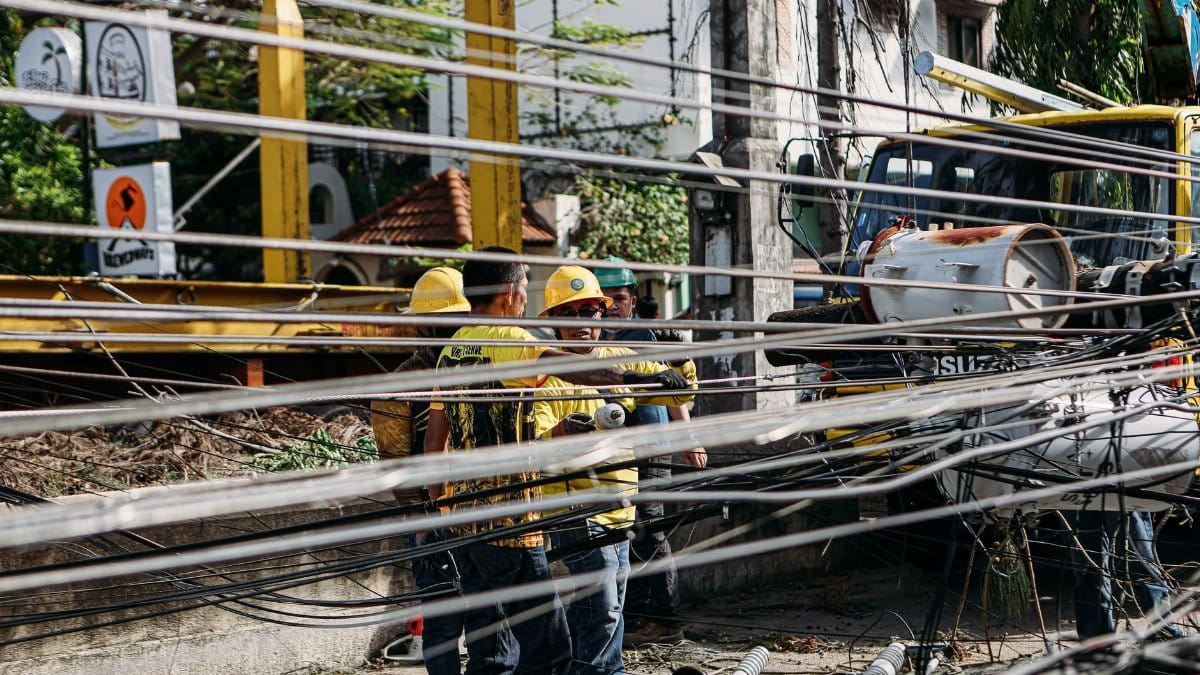
Public accounts describe a construction contractor as the party that damaged the line. That fact will matter in the weeks after the incident, when airport officials, the city, the FAA, and the firms involved sort out permits, locate maps, and decide who pays for repairs and for the operational mess. Construction near airports is constant. Terminals expand. Roads are rebuilt. Utilities are relocated. The work is necessary, and it is also risky, because the ground under a modern airport is a dense map of power, water, drainage, and communications.
Utility strikes are an old problem in American construction. Call before you dig rules exist because buried lines do not announce themselves. A careful crew still depends on accurate marks, current drawings, and a willingness to stop when the soil does not match the plan. None of those safeguards is glamorous. All of them are cheaper than an afternoon in which a major airport cannot talk to itself.
Why Houston felt the Bush Airport fiber optic delay so widely
Houston is not a city with a single quiet airfield on the edge of town. Bush Intercontinental serves a vast region, and it connects energy, medical, university, and family travel to the rest of the world. A slowdown on a weekday afternoon hits business travelers who cannot simply wait until morning, and it hits families whose connections were already tight. Rental car lots fill. Ride share prices jump. Hotel shuttles run late because the people they are meant to collect are still in a security line or still at a gate that has not been assigned.
The Bush Airport fiber optic delay also traveled beyond Texas in the way airline networks always travel. A passenger in another state may never have heard the phrase, yet still missed a meeting because the aircraft assigned to that route spent the evening in Houston. Network effects are the hidden tax of hub airports. They make travel efficient on ordinary days and contagious on bad ones.
Inside the terminal while systems recover
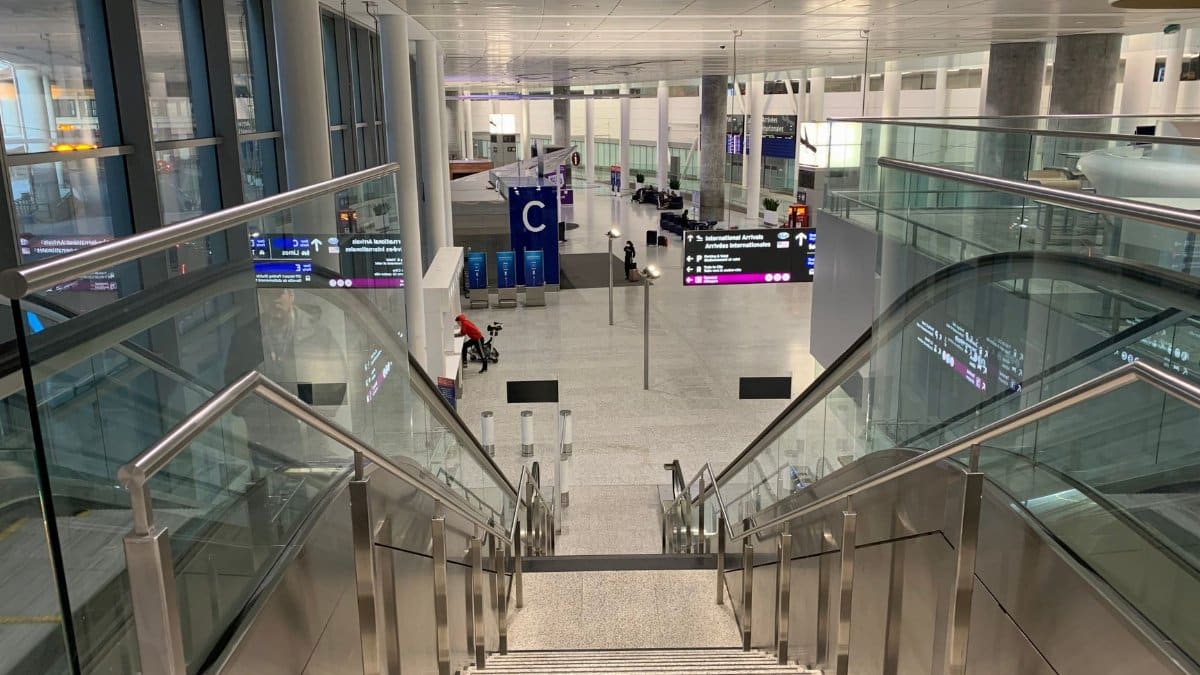
Recovery from a cable cut is not a single switch. Technicians must find the damage, expose the line, splice or replace it, test the path, and then confirm that each dependent system has returned. Airlines, meanwhile, rebuild schedules by hand and by software. Gates that were planned for one arrival become available for another. Crews who are close to their legal duty limits must be replaced or sent to rest. Baggage that was loaded for a flight that will not leave has to come off.
Passengers rarely see that sequence. They see an agent who cannot yet promise a new departure time, and a board that refreshes without improving. The honest message in those minutes is often the least satisfying one. The line is being repaired. The FAA has not yet released the airport. Stand by. In a culture that expects a tracking number for every package, that uncertainty feels like neglect, even when people on the ramp are working as fast as the physics of a splice allows.
What airlines owe people who waited

Federal rules and airline contracts set the floor for what travelers can expect after a disruption. Equipment problems and infrastructure failures do not always trigger the same compensation as a cancellation the carrier could have avoided by better planning. Still, airlines generally rebook passengers on later flights, and they sometimes provide meal vouchers or hotel rooms when an overnight stay becomes necessary. The details live in each carrier’s contract of carriage, a document almost nobody reads until the day it matters.
Travelers who kept receipts, noted delay times, and asked agents to record the reason for the disruption were in a better position to seek refunds for unused segments or to claim trip insurance. None of that restores a lost afternoon. It does turn a chaotic gate conversation into a paper trail. For an incident like the Bush Airport fiber optic delay, the practical question for each passenger was simple. Could the trip still be completed the same day, or had the network already moved on without them?
A larger pattern of fragile links

Aviation has spent decades adding computers to every task that used to be done with paper strips and radio calls alone. The gains are real. More flights can be spaced safely. Bags can be sorted with fewer hands. Weather can be shared across a continent in seconds. The cost is dependence. A fiber cut, a software fault, or a failed radio site can now idle a facility that, in an earlier era, might have continued at a reduced pace with voice alone.
This is not an argument for tearing out the computers. It is an argument for treating communications paths with the same seriousness as runways. Diverse fiber routes, clear construction oversight, and regular tests of backup links are not optional extras at an airport that moves tens of millions of people a year. They are part of the safety case, even when the failure looks, at first glance, like a customer service problem.
Questions officials should answer in public

After the immediate queues clear, the public record should answer a few plain questions. Where exactly was the line, and who was authorized to work near it? Were locate marks current? How long did it take to restore each critical function, not merely to declare the airport open? Which backups worked, and which existed only as a diagram? How many flights were delayed or canceled, and how were passengers rehoused?
Those answers belong in front of the Houston Airport System, the FAA, and the contractors, not only in a claims file. A city that depends on Bush Intercontinental has a right to know whether October 13 was a rare accident or a warning that construction oversight has drifted. Transparency will not splice a cable faster next time. It will make it harder to treat the next outage as an isolated surprise.
What travelers can take from the afternoon
Individual passengers cannot map buried fiber, and they should not have to. They can, however, treat hub travel with a little more slack than the cheapest itinerary allows. A longer connection, a backup flight later the same day, and a habit of screenshotting boarding passes are small defenses against a large system. Travel insurance that actually covers delays, rather than only lost luggage, is worth reading before the trip, not after the board turns red.
None of those habits fixes the cable. They acknowledge a truth the Bush Airport fiber optic delay made concrete. The journey is not only the airplane. It is also the unseen line under the pavement, the controller who needs that line, and the contractor with a machine a few feet away. When that chain holds, nobody notices. When it breaks, an entire city looks up at a board and waits.