

On a bright afternoon in Sacramento, two men who rarely share a podium stood close enough to trade compliments. Arnold Schwarzenegger, the former Republican governor, and Gavin Newsom, the Democrat who now holds the office, marked two decades since California put a hard target on greenhouse gases. The gathering, framed around Schwarzenegger Newsom climate AB 32, was less a rally than a reminder that a law written in a different political season still shapes how the state powers its homes, moves its goods, and argues with Washington.
A law that outlasted the men who signed it

Assembly Bill 32, the Global Warming Solutions Act, became law in 2006. Schwarzenegger signed it after a Legislature controlled by Democrats wrote the framework and after business groups, environmental advocates, and utilities spent months fighting over the details. The statute told the state to cut greenhouse gas emissions back to 1990 levels by 2020 and handed the California Air Resources Board the job of designing the rules.
That assignment was broader than a single smokestack rule. It covered power plants, refineries, vehicles, fuels, and eventually a market that put a price on carbon. Twenty years later, both governors treated the statute as a living achievement rather than a museum piece. Schwarzenegger has long described climate action as a conservative project of efficiency and innovation. Newsom has treated it as a test of whether a large economy can grow while burning less fossil fuel. Their joint appearance did not erase those differences. It simply put them in the same sentence.
What the numbers are said to show

The praise centered on two claims that California officials repeat often: emissions fell, and jobs did not collapse. State inventories show greenhouse gases dropping below the 1990 benchmark before the legal deadline, even as population and economic output rose. Supporters point to cleaner electricity, tighter vehicle standards, and a shift away from coal power imported from other states.
Critics answer that some of the decline came from a recession, from factories leaving, and from accounting choices about what counts inside state borders. Wildfire smoke, which can erase years of careful cuts in a single bad season, complicates the picture further. Neither governor spent the afternoon on those caveats. The public message was simpler. California tried a hard target, met the first one, and kept writing new ones.
Cap and trade as the quiet machinery

Much of the day to day work of the law sits in the cap and trade program, which limits total emissions from large sources and lets companies buy and sell allowances. Revenue from those auctions has flowed into transit, housing near stations, forest projects, and rebates meant to soften higher fuel costs. Supporters call that a dividend. Opponents call it a hidden tax that shows up at the pump.
The program has been extended and tightened more than once. Each renewal reopened the same argument: whether a market can cut pollution fast enough without punishing households that drive long distances because housing near jobs is scarce. At the anniversary, the two governors treated the market as proof that regulation and commerce can share a table. They did not pretend the table is always peaceful.
Jobs, factories, and the promise that green can pay
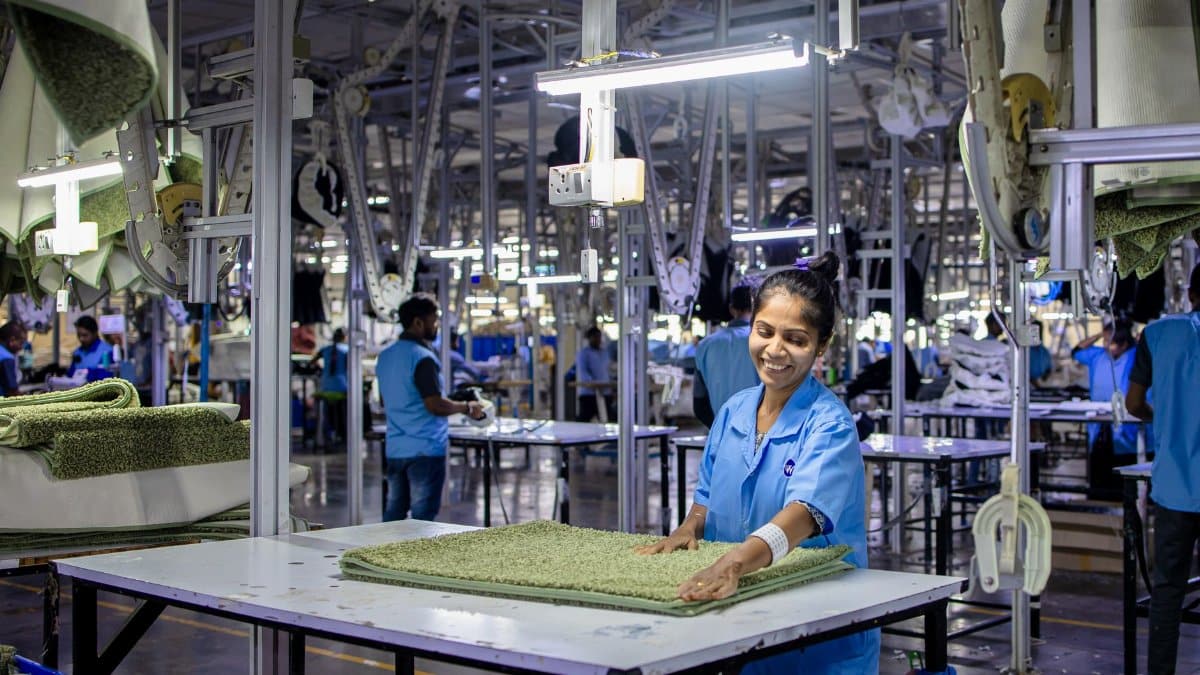
The jobs claim is the part of Schwarzenegger Newsom climate AB 32 that travels best outside environmental circles. California has added large numbers of positions in solar installation, battery manufacturing, electric vehicle supply chains, and building efficiency. Clean technology is no longer a boutique sector on the coast. It employs electricians in the Central Valley and warehouse workers moving components through Inland Empire logistics hubs.
Still, a job created in one county does not automatically replace a job lost in another. Refinery communities worry about a future with fewer shifts. Truck drivers weigh the cost of new equipment against rules that arrive on a schedule set in Sacramento. The anniversary rhetoric leaned on statewide totals. The harder politics live in zip codes where the transition feels like a deadline rather than an opportunity.
Why a Republican and a Democrat can share a stage

Bipartisan climate talk is rare enough that cameras notice it. Schwarzenegger left office in 2011. Newsom arrived as governor in 2019 after years as lieutenant governor and as mayor of San Francisco. They are not natural allies on taxes, housing, or the culture wars that now dominate national campaigns. Climate gave them a shared trophy and a shared opponent: the idea that states should wait for Washington.
Schwarzenegger has spent the years since his governorship scolding his own party for treating science as a partisan brand. Newsom has spent his tenure picking fights with oil companies and with Republican governors who market California as a warning. Standing together, they looked less like a governing coalition than like two salesmen for the same product, each pitching a different customer. One customer is the voter who wants lower bills. The other is the voter who wants faster cuts.
The national argument California keeps exporting
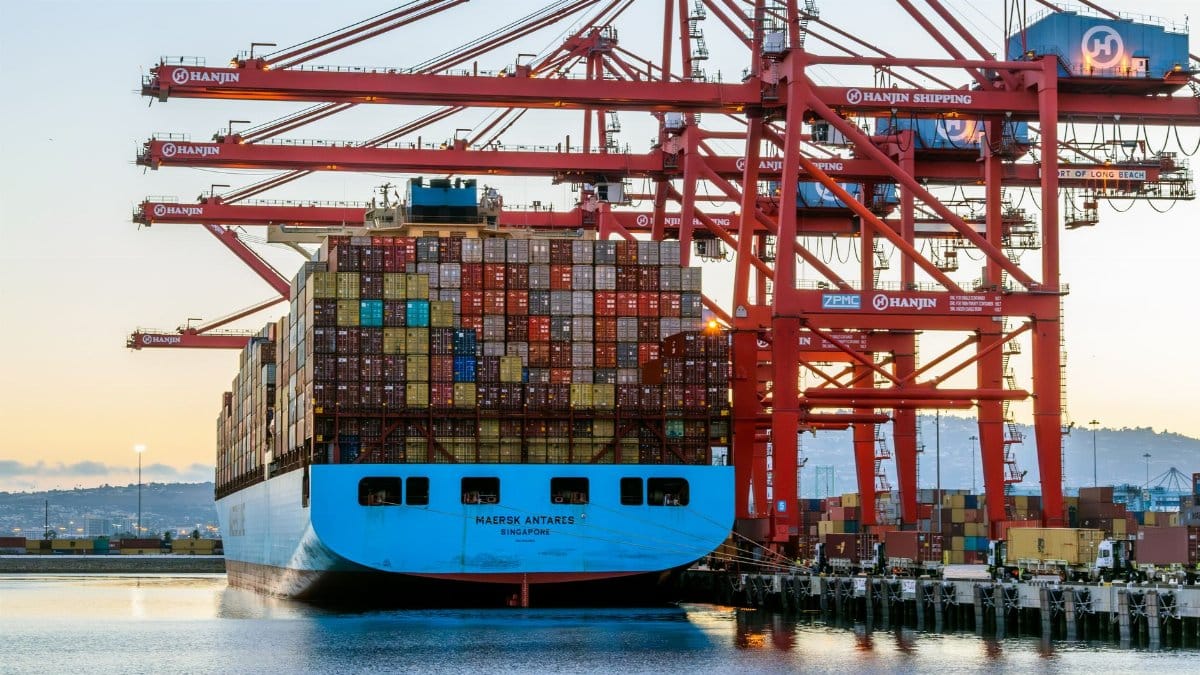
AB 32 was never only a state statute. Automakers, fuel suppliers, and appliance makers sell into a market of nearly forty million people. When California tightens a standard, boardrooms in Detroit, Houston, and Seoul adjust. That leverage is why other states copy pieces of the program and why opponents try to block it in Congress and in court.
The anniversary landed in a country still split over whether climate policy is industrial strategy or economic self harm. Federal rules swing with elections. California’s statute, amended and extended by later laws, has been harder to repeal. That durability is part of what Schwarzenegger Newsom climate AB 32 is meant to advertise: a target that survived changes of party, changes of governor, and a pandemic that rearranged the economy.
Costs that do not fit on a banner

Electricity rates in California are high by national standards. Drivers pay more for gasoline than residents of most other states. Housing costs push workers farther from job centers, which adds miles and emissions the original law did not fully anticipate. Newsom’s administration has tried to answer with rebates, utility bill relief, and a push to build more homes. Schwarzenegger’s generation of climate policy assumed efficiency would keep household costs in check. The last decade tested that assumption.
Honest accounting has to hold both facts at once. Emissions from many regulated sectors fell. Households still feel energy and housing as monthly stress. A celebration that mentions only the first fact will sound tone deaf in the second. The governors praised wins. Residents will judge the program by whether the next decade feels lighter or merely more complicated.
Fires, water, and the climate people can see

Abstract tons of carbon dioxide do not move voters the way a burned town does. California’s last twenty years included catastrophic wildfires, punishing drought, atmospheric rivers, and insurance markets that retreated from risky hillsides. Scientists link the severity of those hazards to a warming climate, while noting that forest management, development patterns, and aging infrastructure decide who pays.
The anniversary speakers tied AB 32 to that lived experience without claiming the law can stop the next fire season. Cutting emissions is a long bet on future risk, not a sprinkler system for this summer. That distinction matters. People support a distant target more readily when they also see crews thinning forests, utilities hardening lines, and insurers still willing to write a policy. Climate law and climate adaptation are siblings. They are not the same child.
What the next targets demand

Meeting a 2020 benchmark was the opening chapter. Later statutes pushed toward deeper cuts and toward carbon neutrality by midcentury. Those goals require more renewable power, more transmission lines, more storage, cleaner trucks, and industrial heat that does not depend on natural gas alone. Each of those projects collides with permitting delays, local opposition, and supply chains that stretch across oceans.
Newsom has argued that California must build faster or the targets become slogans. Schwarzenegger has argued that markets and technology, not only mandates, will carry the load. Their bromance, such as it is, papers over a real design question. A cap can set the ceiling. It cannot by itself site a substation or train the workforce that strings the wire. Schwarzenegger Newsom climate AB 32 works as a headline because the first law created the habit of setting numbers. The habit is not the same as finishing the construction.
Courts, oil companies, and the fights that never adjourn

Litigation has shadowed the program from the start. Challenges have targeted the scope of state authority, the design of auctions, and vehicle rules that reach beyond California’s borders. Oil producers have funded campaigns against new restrictions. Environmental groups have sued when they believed regulators moved too slowly or gave industry too much room.
An anniversary does not close those dockets. It does show that the core statute survived long enough to be celebrated by the man who signed it and the man who inherited its machinery. In American environmental politics, survival is its own kind of victory. Repeal is always available to a future Legislature. So far, no majority has chosen it.
The tone of the room

People who attended similar events in 2006 remember sharper elbows. Business lobbies warned of flight. Activists warned of loopholes. The twentieth year gathering had a softer register, closer to a reunion than a negotiation. Compliments flowed. Old arguments were acknowledged and then set aside for the cameras.
That softness can be read two ways. It can mean the fight moved from whether to act to how fast and who pays, which is a more mature argument. It can also mean officials prefer a victory lap to a frank ledger. Readers can hold both readings. Politics often celebrates the statute and leaves the invoice for later.
What middle aged Californians actually bought

For readers who have paid taxes, utility bills, and gasoline prices through the whole life of this law, the question is practical. Did the state get cleaner air along with lower carbon, and did the economy keep offering work? On air quality, many urban neighborhoods breathe easier than they did in the nineteen nineties, though diesel corridors and agricultural valleys still carry a heavy burden. On work, the state remains a giant economy with painful inequality. Climate policy did not create that inequality, and it has not cured it.
The fairest summary is modest. Schwarzenegger Newsom climate AB 32 names a political fact: a Republican signature and a Democratic follow through produced a program that cut a large share of emissions without the economic collapse opponents predicted in 2006. It did not produce cheap energy, fireproof hills, or a politics free of resentment. Modest facts are still facts.
A bromance with a deadline

Bipartisan warmth is pleasant and, in this season, newsworthy. It is not a plan. The next decade will ask California to build infrastructure at a pace its permitting culture rarely allows, to protect households from price spikes, and to keep measuring emissions honestly when fires and imports blur the charts. If those tasks stall, the anniversary will age into nostalgia.
If they proceed, the image of two governors from opposite parties praising the same statute may look less like a curiosity and more like a template other states can copy in pieces. Templates travel only when the results keep arriving. California has twenty years of results to argue over, and another twenty years of promises still on the books. The bromance is the photograph. The ledger is the story that remains open.