
On a quiet stretch of bluff country where church suppers still set the social calendar, health officials confirmed six measles cases tied together by household and community contact. The Fillmore County measles cluster has lifted Minnesota’s 2026 total to 24, a number that would have seemed improbable a decade ago and now reads as a warning about how thin the margin of protection has become.
What officials have confirmed
The Minnesota Department of Health reported six confirmed measles infections in southeast Minnesota, centered in Fillmore County. Investigators describe an unvaccinated cluster rather than a scattering of unrelated travelers. Cases share exposure pathways that public health nurses can map: homes, gatherings, and the ordinary traffic of a small county where people know one another’s routines.
Confirmation matters because measles is a clinical mimic until the rash declares itself. Fever, cough, runny nose, and red eyes can look like winter viruses. Laboratory confirmation turns suspicion into a case count that counties must act on, from contact tracing to exclusion from school and childcare.
Why this county is vulnerable

Fillmore County is rural, religiously varied, and proud of local independence. Those traits are not a diagnosis. They do help explain why vaccination coverage in some pockets sits below the level that keeps measles from finding a foothold. Measles needs only a modest gap. It is among the most contagious viruses known to medicine. In a fully susceptible group, one sick person can infect well over a dozen others.
State data in recent years have shown kindergarten MMR coverage in parts of southeast Minnesota lagging the statewide average. When coverage falls under roughly 95 percent in a community, herd protection frays. The virus does not negotiate with ideology. It moves through whoever lacks immunity, whether the reason is a missed appointment, a medical exemption, or a deliberate refusal.
A state total that keeps climbing
Twenty four cases statewide in 2026 is not a national emergency on the scale of the large outbreaks seen in under vaccinated communities elsewhere. It is still a break with the near elimination that the United States achieved after decades of routine immunization. Each new cluster consumes staff time, hospital beds, and public trust.
Minnesota has lived this story before. Outbreaks linked to travel and to communities with low uptake have recurred. The pattern is familiar to epidemiologists: an imported spark, a local group without immunity, then a race to vaccinate contacts before the next generation of cases appears about ten to fourteen days later.
How measles actually spreads
The virus travels in the air. Infectious droplets and finer aerosols can linger in a room for up to two hours after a sick person leaves. A brief overlap in a clinic waiting room, a church basement, or a school hallway can be enough. People are contagious from about four days before the rash until about four days after it starts, which means they often move through public life while feeling only vaguely ill.
That biology is why exclusion rules feel harsh to families and why they are not optional. One undetected case in a school with incomplete records can reset the clock for an entire classroom.
The vaccine that still works
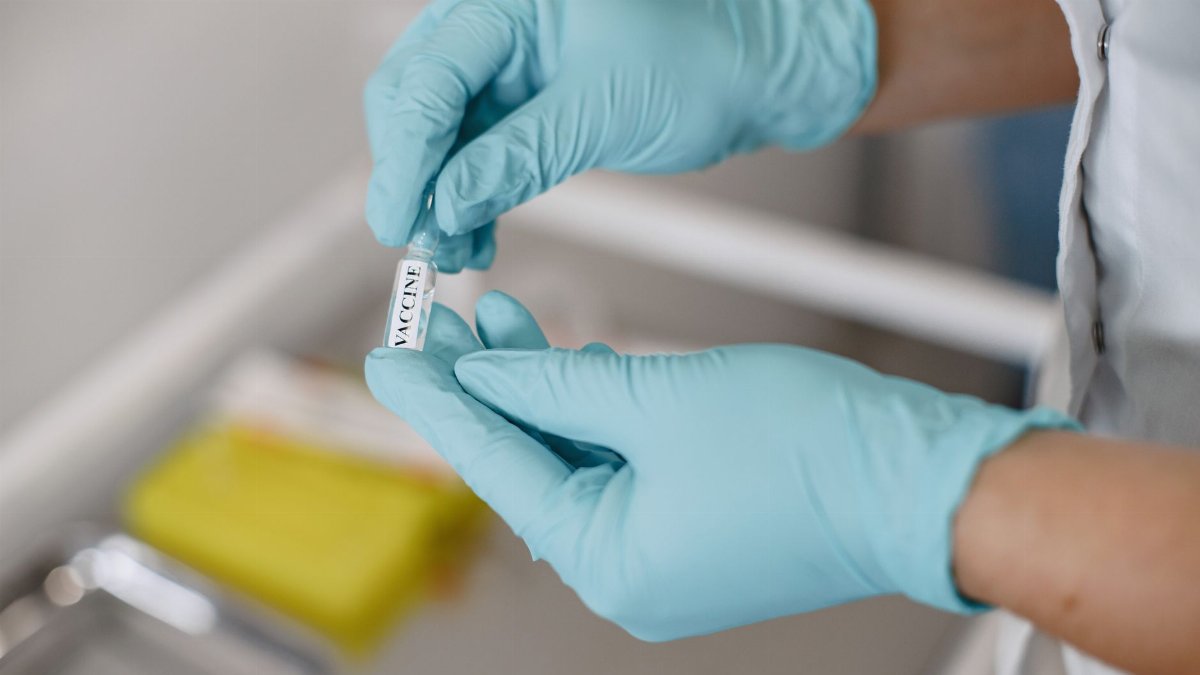
Two doses of measles, mumps, and rubella vaccine remain the standard protection. A single dose is highly effective. The second dose closes most of the remaining gap and serves as a safeguard against the small share of people who do not respond the first time. Serious adverse events are rare. The diseases the vaccine prevents are not.
Measles can cause pneumonia, brain inflammation, and, in a delayed and devastating form, a fatal neurological condition years later. Pregnant people face higher risk of severe illness and pregnancy loss. Infants too young for the first dose depend entirely on the immunity of the adults around them.
Public health agencies, including the Centers for Disease Control and Prevention, continue to recommend routine MMR vaccination on the childhood schedule and catch up doses for anyone without evidence of immunity. Guidance is available at https://www.cdc.gov/measles/vaccines/index.html.
Hospitals and clinics on alert
Southeast Minnesota’s clinics are not large urban trauma centers, but they are the front door. Triage questions now include travel, known exposures, and vaccination history. A patient with fever and rash may be asked to mask and wait apart from others, or to enter through a side door. Those protocols are inconvenient. They are also how a six case cluster stays a six case cluster.
Hospitals watch for complications that arrive after the rash fades: dehydration, ear infection, pneumonia, and, less often, seizures. Rural transfer patterns mean a severely ill child may end up in Rochester or another regional center, turning a county problem into a regional one within hours.
Schools, churches, and the social map

Contact tracing in a place like Fillmore County is both easier and harder than in a city. Easier because networks are visible. Harder because the same networks carry rumor as fast as fact. School nurses pull immunization records. Pastors and parish nurses sometimes become informal messengers, not because measles is a spiritual event, but because trust in small towns often runs through congregations before it runs through a state hotline.
Faith communities have no special susceptibility and no special shield. What they have is gathering. Potlucks, youth groups, and holiday services compress many households into one room. When coverage is high, those rooms are safe. When coverage is low, they are efficient transmission sites. Leaders who encourage families to check records do more practical good than any statement about fear.
What parents are weighing

Parents who declined MMR often cite a mix of online claims, concern about ingredients, and a sense that measles is a mild childhood illness from another era. Some of that hesitation is inherited from the long aftermath of a retracted paper that falsely tied the vaccine to autism. The scientific record since then has been consistent: large studies have not found such a link. A clear summary of the evidence lives with the National Academy of Medicine’s related reviews and with CDC vaccine safety pages at https://www.cdc.gov/vaccine-safety/vaccines/mmr.html.
Other parents delayed shots during the pandemic and never caught up. Their children are not ideologues. They are simply unprotected. Outreach that treats every unvaccinated child as a protest misses the families who need a Saturday clinic and a reminder, not a lecture.
The work of tracing contacts

Once a case is confirmed, investigators list locations and people from the infectious window. They call households, notify schools, and sometimes issue public exposure notices when they cannot identify everyone in a shared space. Exposed people without immunity may be asked to quarantine. In some situations, vaccine given within seventy two hours of exposure or immune globulin for higher risk contacts can blunt illness. Those tools work only if people pick up the phone.
Privacy rules limit what officials can say about individual patients. That silence fuels speculation. It also protects families who already feel scrutinized. The balance is imperfect, and it is the one the law requires.
Economic and civic costs

A measles response is expensive in ways that do not show up in a headline case count. Nurses work overtime. Clinics rearrange schedules. Parents miss shifts. Schools juggle staffing when teachers are excluded as contacts. A review of outbreak costs in the United States, discussed in CDC reporting on measles outbreaks, has repeatedly found that even modest clusters run into hundreds of thousands of dollars in public health response alone. See the agency’s outbreak overview at https://www.cdc.gov/measles/cases-outbreaks.html.
Those dollars come from the same budgets that fund routine immunization clinics. Every dollar spent containing a preventable cluster is a dollar not spent keeping the next one from starting.
What neighboring counties should watch

Fillmore County does not sit behind a wall. Commutes run toward Rochester. Families cross county lines for sports, shopping, and worship. Neighboring Houston, Winona, Olmsted, and Mower counties have reason to check school coverage and to remind clinicians that a febrile rash is measles until proven otherwise during an active cluster.
Travel remains the usual spark. A resident returning from a region with ongoing transmission can seed a local outbreak if immunity is patchy. International and domestic advisories change, but the personal question does not: are you protected before you go, and before you come home to a baby who cannot yet be vaccinated?
A practical path for households
Households can do a short audit without waiting for a letter from the county. Find the immunization record. If it is missing, a clinic or the state registry can often reconstruct it. Anyone born in 1957 or later who lacks documented immunity should talk with a clinician about MMR, unless a medical reason rules it out. Infants should receive the first dose on schedule, and earlier in some outbreak settings if a clinician advises it.
Isolate at the first sign of fever and rash and call ahead before arriving at a clinic so staff can limit exposure to others. That single phone call is an act of neighborliness as concrete as shoveling a sidewalk.
Trust, doubt, and the long repair
Journalists sometimes frame outbreaks as a clash between science and belief. The closer view is messier. People want to protect their children. They disagree about which risks are real. Public health succeeds when it meets that disagreement with clear facts, accessible clinics, and respect that does not slide into deference to false claims.
The Fillmore County measles cluster will end. Clusters do, once the susceptible people in the exposed network are exhausted or immunized, and once the last infectious period closes. What should not end is the quieter work of raising coverage so the next introduction dies out in a single household instead of a county.
The record Minnesota is writing
Six cases can sound small beside national totals in heavier years. Scale is the wrong comfort. Measles was eliminated as an endemic disease in this country because communities accepted a shared schedule of shots. Endemic return is not a speech. It is a series of clusters that public health can no longer box in.
Readers far from the bluffs have a stake in that record. The same virus, the same vaccine, and the same gaps in uptake exist in suburbs and cities. Fillmore County is not a morality play. It is a place where the arithmetic of contagion became visible again.
Where to follow official updates

Case counts and exposure notices change faster than feature writing. The Minnesota Department of Health posts measles updates and guidance for families and clinicians. The initial regional reporting on these six cases appeared in the Star Tribune at https://www.startribune.com/six-measles-cases-confirmed-in-southeast-minnesota/601899525. Residents with symptoms or questions about exposure should contact their clinic or local public health office rather than relying on social media threads.
The Fillmore County measles cluster is a local fact with a national lesson. Immunity is a communal asset. It is built one record, one appointment, and one honest conversation at a time. The alternative is a familiar spring of fevers, rashes, and phone trees, repeated until the gaps close.