
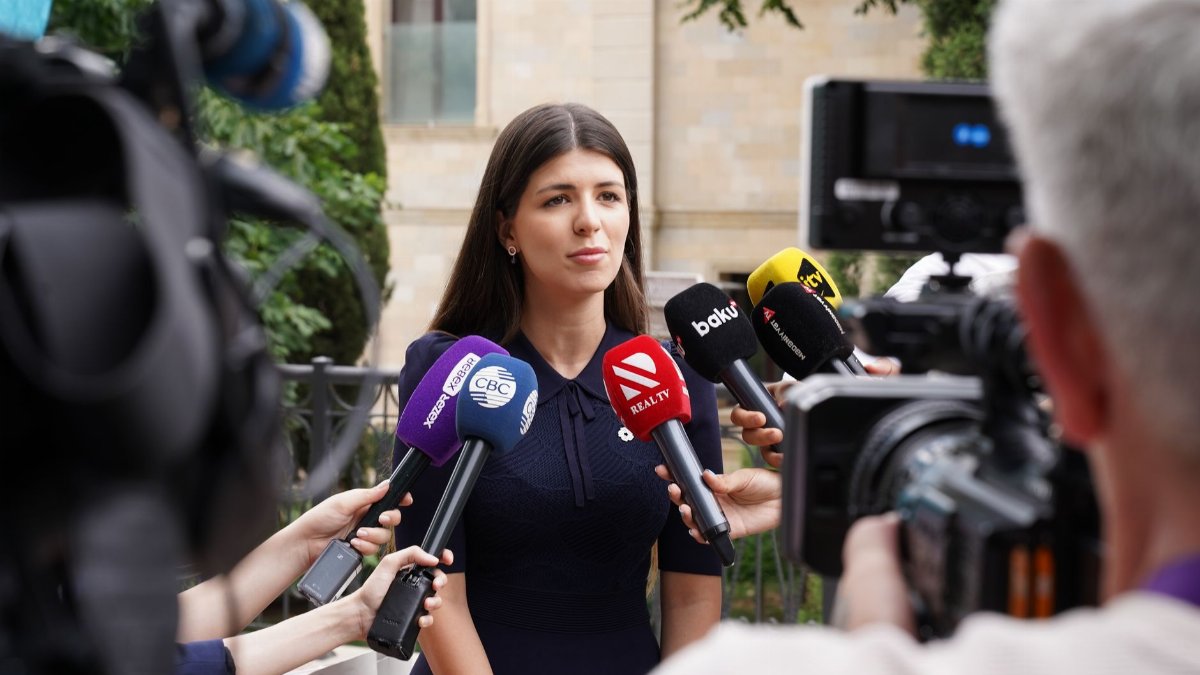
Washington has a habit of treating a personnel announcement as a verdict on the country itself. This one arrives with a sharper edge than most. President Trump has chosen a commentator from his own media company for the role, and the naming of Katie Zacharia White House press secretary places a loyal broadcast voice at the front of the daily briefing. She is set to succeed Karoline Leavitt, who is leaving the administration for Fox News. The move shortens a distance that many voters already regarded as thin. It also raises an old question in a new costume: when the person explaining the government is drawn from a company tied to the president, who is the briefing for?
A choice that reads as continuity

Allies are likely to hear continuity rather than rupture. The modern White House has long preferred communicators who already speak the president’s language, who can absorb a hostile question without flinching, and who treat the camera as a familiar instrument rather than a threat. A commentator seasoned inside a friendly media company arrives with that fluency. She knows the cadences of the audience the administration most wants to hold. She knows which phrases travel and which ones die in the room.
That practical case is not frivolous. Briefings are performances under pressure. A press secretary who freezes, hedges into nonsense, or picks fights she cannot finish becomes a liability by lunch. Experience at a microphone is a real skill. The trouble is that skill and independence are not the same thing, and this appointment invites the country to confuse them.
From a company microphone to a government one

The distinctive fact is not that Katie Zacharia has opinions. Every press secretary has opinions, and most have had them in public before they took the job. The distinctive fact is the employer. She comes from the president’s own media company, a venture built to carry his voice, his grievances, and his version of the news to people who already share them. That is a different apprenticeship from a newspaper city hall beat, a campaign war room, or even a cable network that must at least pretend to serve more than one owner.
A company microphone rewards alignment. A government microphone is supposed to answer to a broader public, including people who did not vote for the man at the top and who will never subscribe to his channel. Those two habits do not transfer cleanly. One trains a person to rally. The other, at its best, trains a person to account. The announcement of Katie Zacharia White House press secretary collapses those habits into a single career step, and it does so in full view.
What the podium is actually for

The daily briefing has never been a seminar. It is a contest over the first draft of the day’s story, conducted in front of cameras that reward heat. Still, the office has a civic job that outlasts any single president. It is where the executive branch is expected to say, in plain language, what it did, what it intends, and what it will not yet disclose. Reporters press. The secretary parries. Somewhere in that friction, a usable public record is supposed to form.
When that friction disappears, the briefing becomes a commercial. Viewers can feel the difference even if they cannot name it. A real answer has texture. It includes a date, a number, a limit, a correction of yesterday’s overstatement. A brand answer has music. It returns, again and again, to the villain of the hour and the loyalty test of the hour. Both can be delivered by a talented person. Only one serves people who are trying to make a decision about their government.
The Leavitt exit and the Fox landing

The other half of the story is the departure. Karoline Leavitt is leaving the administration for Fox News, a path so well worn that it barely surprises anymore. Government spokespersons have been migrating to television for decades, and television personalities have been migrating into government for just as long. What feels newer is the speed and the lack of embarrassment. The revolving door used to be described as a temptation. It is now described, by the people walking through it, as a promotion.
Leavitt’s move and Zacharia’s arrival form a closed circuit. A press secretary heads to a network that has been a home for this political movement. A commentator from the president’s own media shop heads to the podium she vacates. Nobody in that circuit needs to learn a new language. That is efficient for the White House. It is less useful for a country that still expects at least one official voice to be aimed outward, past the faithful, toward the unconvinced.
Loyalty as the loudest qualification

Every president wants loyalty. To pretend otherwise is naive. The question is whether loyalty is the first qualification or the only one that matters in public. A press secretary must be trusted by the principal. She must also be capable of telling that principal, in private, that a claim will not survive contact with a document. If her public identity has been built on never breaking ranks on air, the private courage becomes harder to imagine, and harder for the rest of us to credit.
This is not a verdict on her character. Character is not visible from a job title. It is a verdict on incentives. A person whose recent professional home was a media company identified with the president has been rewarded for devotion. The briefing room will reward devotion too, at least from the audience that already agrees. The incentive to disappoint that audience, in the service of a precise fact, is weak. Institutions are shaped by such incentives more than by inaugural promises.
How critics and allies will talk past each other

Critics will call the choice a merger of state and studio. They will say the White House has stopped borrowing the language of its media allies and has simply hired the allies. Some of that criticism will be fair, and some of it will be theatrical, delivered by people who were quieter when their own side blurred the same line. Partisan memory is short, and it is selective on purpose.
Allies will answer that every administration spins, that the press is hostile, and that a fighter is what the moment requires. They will note that commentators have entered government before, under both parties, and that outrage blooms or fades according to the letter next to the president’s name. That answer has a point. It does not dissolve the ownership problem. A network is not the same as a company that belongs to the president. The second arrangement is tighter, more personal, and harder to square with the idea of a briefing offered to the whole country.
The audience that is neither choir nor enemy

Lost in that exchange is the large middle of the audience, the people who are tired of being cast as extras in someone else’s media war. They do not attend briefings. They catch a clip while waiting for weather, or they hear a summary from a child who saw it online. For them, the press secretary is not a factional hero. She is a signal about whether the government still bothers to explain itself in sentences that can be checked.
I have watched enough of these sessions, in person and later on a screen, to know that tone often outruns substance. A calm refusal can be more honest than a passionate speech. A heated defense can be a way of not answering. The test for this appointment will not be whether Zacharia can win a clip. She almost certainly can. The test will be whether a skeptical citizen, after ten minutes, knows something he did not know before, including something inconvenient to the president.
A civic ritual under strain

There is a spiritual dimension to this, if the word is allowed to mean something sturdier than mood. Public life depends on rituals that teach people what to expect from power. The briefing is one of those rituals. It says, however imperfectly, that authority must stand in a room and face questions. When the ritual is staffed entirely from inside a single media family, the lesson changes. The lesson becomes that explanation is a brand asset, and that the proper feeling toward outsiders is suspicion.
That shift does not require anyone to be a cynic. It can arrive through sincere belief. A communicator who thinks the other side is not merely wrong but illegitimate will experience hard questions as attacks, and she will answer them as attacks. Over time the country learns the new liturgy. Trust thins. People retreat to the channel that already flatters them. The briefing continues, often at a high volume, and yet it stops functioning as a shared act.
What to watch once she takes the lectern

The early weeks will tell more than the announcement. Watch whether corrections are made in the same forum where the original claim was made, and at a similar volume. Watch whether questions from outlets outside the friendly circle are taken in good faith, or whether they are used as props. Watch whether numbers are sourced, whether limits on knowledge are admitted, and whether yesterday’s line survives contact with today’s document. These are ordinary tests. They are also the only tests that matter.
Watch the relationship with the media company she is leaving, too. A clean break is different from a soft one. If former colleagues become a privileged pipeline for talking points, the podium and the company will keep speaking in one voice, which is precisely the fear this appointment stirs. Distance, if it is real, will be visible in small refusals: a question declined because it is not ready, a boast walked back, a rival outlet quoted without a sneer.
The standard she inherits, whether she wants it or not

Press secretaries are judged against the worst and the best of their predecessors, which is an unfair and unavoidable burden. The worst turned the room into a theater of contempt. The best could be fiercely partisan and still leave behind answers that a historian could use. Zacharia does not get to choose a quieter era. She inherits a polarized press, a president who treats communication as combat, and a public that has heard too many briefings that aged badly by evening.
She also inherits a chance, narrow but real, to widen the job rather than shrink it. Nothing in the title requires her to be a mascot. The title requires her to speak for the presidency to people who did not elect her boss and who will not be hired by his company. If she treats those people as a constituency rather than a foil, the appointment will look wiser than it does today. If she does not, the country will have learned, once more, that the briefing was never meant for them.
A shorter distance, and why it should bother us

The selection of Katie Zacharia White House press secretary is legal, predictable, and within the president’s power. None of that makes it healthy. Democracies do not usually fail in a single dramatic hire. They thin out through arrangements that feel efficient to the people inside them. A commentator moves from the president’s media company to his podium. A press secretary moves from the podium to a friendly network. Each step has a rationale. Together they describe a political world that talks mainly to itself.
Readers do not need to dislike Zacharia to dislike that world. They need only to ask a plain question the next time the briefing appears on their screen. Is this an accounting, or is it a sequel? The answer will not be settled by the announcement that put Katie Zacharia White House press secretary in the job. It will be settled by whether her sentences can stand up, a week later, in front of someone who does not already agree.