
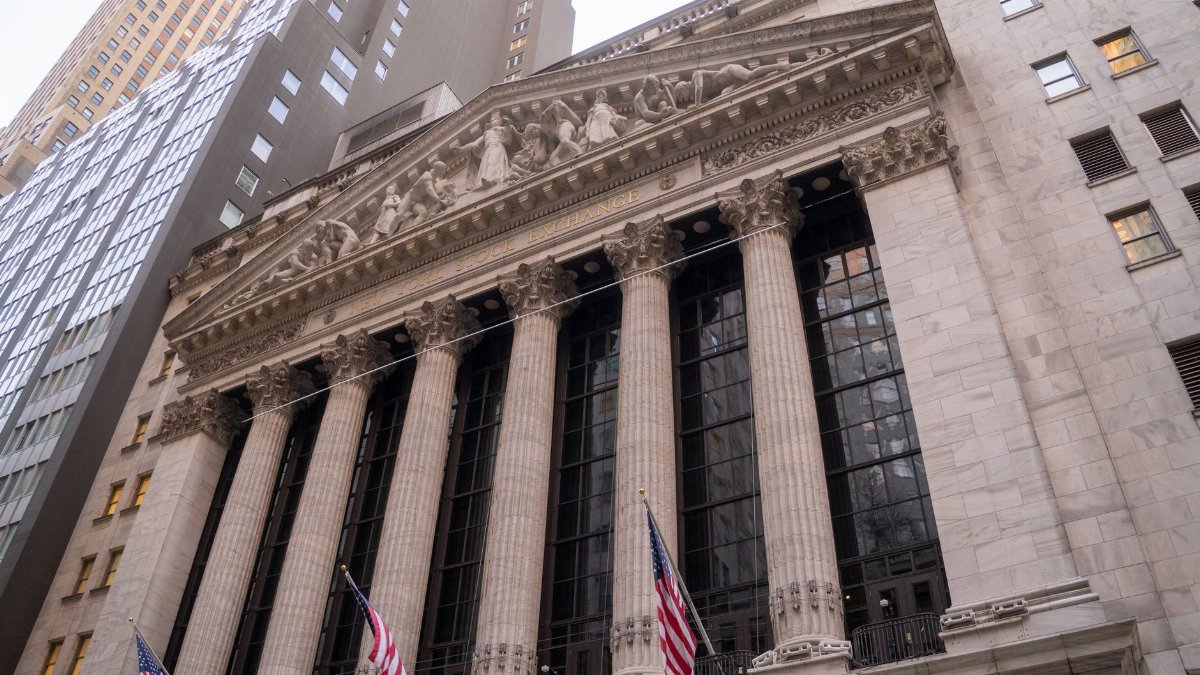
On a quiet Friday afternoon in lower Manhattan, the closing bell did not so much roar as settle. Screens that had flickered red at midday turned green by the final print, and the trading floor exhaled. Wall Street record week gains arrived not as a spectacle but as a slow accumulation of confidence, the kind that shows up in retirement accounts and payroll plans more than in champagne. Oil prices swung through the session as headlines tied to Iran kept energy desks alert, yet equity buyers refused to abandon a week that had already pushed major indexes into fresh territory. For households far from the exchange, the question was simpler. Did the week change anything real, or did it only change the number on a statement?
How a calm Friday capped a restless week

The week did not feel calm while it was happening. Traders opened Monday with one eye on energy futures and another on the political calendar. By midweek, dips that once would have invited panic instead drew buyers who had spent months waiting for a cheaper entry and never quite got one. Friday did not invent the rally. It confirmed it. That distinction matters. A single strong session can be noise. A string of sessions that keeps major benchmarks near highs, even while oil lurches, suggests a market that has decided uncertainty is a cost of doing business rather than a reason to leave.
Desk chatter, the informal kind that never makes a formal forecast, centered on positioning. Many large funds were not wildly optimistic. They were simply unwilling to be underexposed if the indexes kept printing records. That is a thinner kind of faith than the boom years, and it can reverse quickly. Still, it was enough to turn a jittery week into Wall Street record week gains rather than a retreat.
Three indexes and one shared message

The S&P 500, the Dow, and the Nasdaq did not move in lockstep every hour, but they finished the week on the same side of the ledger. That shared direction is the headline. The texture underneath is more interesting. The Dow still leans on industrial names, banks, and consumer staples that live or die by the domestic economy. The Nasdaq still concentrates the market bet on software, chips, and the companies that sell the tools of artificial intelligence. The S&P 500 sits between them, broad enough to be called the market and narrow enough, in practice, that a handful of giants can still steer the average.
When all three close higher in a week already marked by records, investors tend to read it as permission. Permission to stay allocated. Permission to treat geopolitical noise as a trading factor rather than a regime change. Permission is not the same as proof. Breadth, the share of stocks actually rising, can lag the indexes even on a good week. A record on the surface can hide a quieter struggle among smaller companies that do not enjoy the same access to cheap capital or global customers. Anyone reading only the closing print misses that split.
Oil prices and the Iran question

Energy was the subplot that refused to stay in the background. Crude did not march in a straight line. It fluctuated, sometimes sharply within a single session, as traders tried to price the chance of disruption against the chance that diplomacy, or simple inertia, would keep barrels moving. Iran sits at the center of that calculation because of geography as much as politics. The Strait of Hormuz remains one of the narrow corridors through which a large share of seaborne oil must pass. Even a rumor of friction there can reprice futures before a single ship changes course.
The Energy Information Administration publishes weekly petroleum data that professionals use to separate headline fear from physical supply. Those reports, available through the agency site at https://www.eia.gov/petroleum/supply/weekly/, track inventories, imports, and refinery activity inside the United States. They do not settle a geopolitical argument. They do remind markets that oil is a physical commodity with tanks, pipelines, and seasonal demand, not only a fear gauge. This week, equities managed to rise even as that gauge twitched. That resilience is notable. It is also conditional. A sustained supply shock would test the idea that stocks can ignore energy for long.
Why stocks and crude can diverge

There is a tidy story in which expensive oil always hurts stocks, because fuel costs squeeze households and margins. There is another tidy story in which expensive oil helps stocks, because energy producers are themselves large index members and because higher crude can signal strong global demand. Neither story held exclusive rights this week. Oil moved. Stocks rose. The divergence is a reminder that markets price expected paths, not the last tick.
If traders believe a spike is temporary, they discount it. If they believe central banks will look through an energy bump rather than tighten into it, equity valuations can hold. If corporate America has already hedged a portion of its fuel needs, the immediate earnings hit is smaller than the cable news graphic implies. None of those beliefs is permanent. They are wagers, and wagers get marked to market every afternoon. The fact that Wall Street record week gains coincided with unstable oil says more about those wagers than about any new law of finance.
The bond market kept its own counsel

Equities get the photographs. Bonds often get the last word. Yields on Treasury securities are the price of waiting, the compensation investors demand for lending to the government instead of owning a company. When yields jump, stock valuations face a higher hurdle, because future profits are discounted more harshly. When yields ease, the hurdle drops, and records become easier to defend.
This week the bond market did not stage a revolt. That calm, more than any single stock story, helped equities finish higher. The Federal Reserve still sets the short term policy rate, and its communications remain the text that every trading desk rereads. The central bank publishes decisions, minutes, and speeches at https://www.federalreserve.gov/, a public record that is dull on purpose and decisive in practice. Investors are not waiting for poetry. They are waiting to see whether inflation, growth, and the labor market still justify patience. A record week in stocks is easier to sustain when that patience looks intact.
Earnings season waits just offstage

Index records are backward looking in one sense and forward looking in another. The price is set today. The justification arrives later, in quarterly reports, guidance, and the conference calls where executives try to sound confident without promising too much. The coming earnings stretch will test whether the rally has a floor of profits or only a ceiling of hope.
Banks will speak first in the usual rotation, offering a window onto credit card delinquencies, commercial real estate, and the appetite for loans. Technology firms will be asked, again, whether spending on artificial intelligence is producing revenue or only invoices. Consumer companies will be pressed on whether shoppers are trading down. Energy producers will be asked how they plan around a price that will not sit still. If those answers disappoint, the week just ended will look like a high water mark. If they hold, Wall Street record week gains will read as an early vote rather than a final one.
What households actually own

Most Americans do not experience the market as a ticker. They experience it as a 401k balance, a pension assumption, or the mood of a spouse who checks an app after dinner. A higher close is not spending money. It is paper wealth, real enough to change confidence and retirement math, unreal enough to vanish in a correction without a single store changing its prices overnight.
That gap between paper and pantry is why a record week can feel abstract. Grocery bills, rent, and insurance premiums do not reset because the Nasdaq had a good Friday. The link is slower. Stronger markets can support hiring and capital spending. They can also widen the distance between people who own assets and people who mostly owe bills. A responsible reading of this week holds both facts. The indexes finished higher. The distribution of that gain is uneven, and it always has been.
Records are not a forecast

Market history is full of weeks that looked like turning points and were only pauses. Records cluster. They also break. The useful question is not whether this week set marks. The useful question is what would have to change for the marks to stop mattering. A lasting jump in oil that feeds into inflation. A labor market that weakens fast enough to threaten earnings. A policy surprise from Washington or from a central bank abroad. A credit accident that starts in a corner of finance nobody was watching closely.
None of those risks announced itself as a done fact on Friday. Several of them remained visible. Iran related uncertainty did not resolve. It fluctuated, much like the crude price itself, and markets chose to live with the ambiguity. Living with ambiguity is what professional investing is, most weeks. The danger is mistaking endurance for invincibility.
The data that can rewrite the mood

The next stretch of the calendar is ordinary and therefore powerful. Inflation readings, job figures from the Bureau of Labor Statistics at https://www.bls.gov/, and corporate guidance will either ratify the rally or pick at it. Oil inventories will either calm the energy desk or rearm it. Political headlines will keep arriving on their own schedule, indifferent to the closing bell.
Investors who treat Wall Street record week gains as a personality trait of the market, something that simply continues because it has continued, are borrowing confidence they may have to return. Investors who treat the week as information, a snapshot of how buyers and sellers balanced growth hopes against geopolitical risk, can use it without worshiping it. The closing prices were higher. The argument about what they mean is still open, which is the only honest ending a market week ever has.