
On a week when summer concerts usually fill the Bay, a different kind of notice moved through fan circles. The phrase John Paris Earth Wind Fire rehab began appearing beside a canceled arena date, a hospital discharge, and very little else. Silence, in these cases, is often the first honest sentence. What can be said, and said carefully, is that the drummer left a San Francisco hospital after an August 6 emergency and entered rehabilitation, and that the Chase Center concert did not go on.
A quiet exit from a city hospital
San Francisco has long been a stop on the circuit that treats joy as a public service. Earth, Wind & Fire built a career on that promise: horns in lockstep, voices stacked like a choir, a rhythm section that makes a room feel larger than its walls. Against that history, a hospital discharge reads as a blunt interruption. The available account is spare. Paris left care in the city after the August 6 emergency. He then entered rehab. No bedside narrative has been offered to the public, and none should be invented to fill the gap.
That spareness matters. Entertainment coverage often rushes to complete a story the principals have not finished telling. A drummer’s body is both instrument and private life. Readers can register the facts without demanding a diagnosis, a prognosis, or a moral. The civic fact is simpler. A working musician needed emergency care in San Francisco, left the hospital, and began a period of rehabilitation rather than a soundcheck.
What the August 6 emergency changed

An emergency on a tour calendar is not a single event. It rearranges crews, venues, travel, and the quiet expectations of people who bought tickets months earlier. August 6 now sits in the public record as the date attached to Paris and to the decision that followed. Rehabilitation is not a pause button. It is a structured interval in which medical judgment, rest, and retraining take priority over the next downbeat.
For a drummer, that interval has a particular weight. The kit is a full body instrument. Wrists, shoulders, back, breath, and attention all have to agree. A player can be famous for power and still be vulnerable to the ordinary failures of flesh. The public does not need a diagram of what failed. It needs the humility to accept that the show, for once, was not the most important room in the building.
The Chase Center date that will not happen
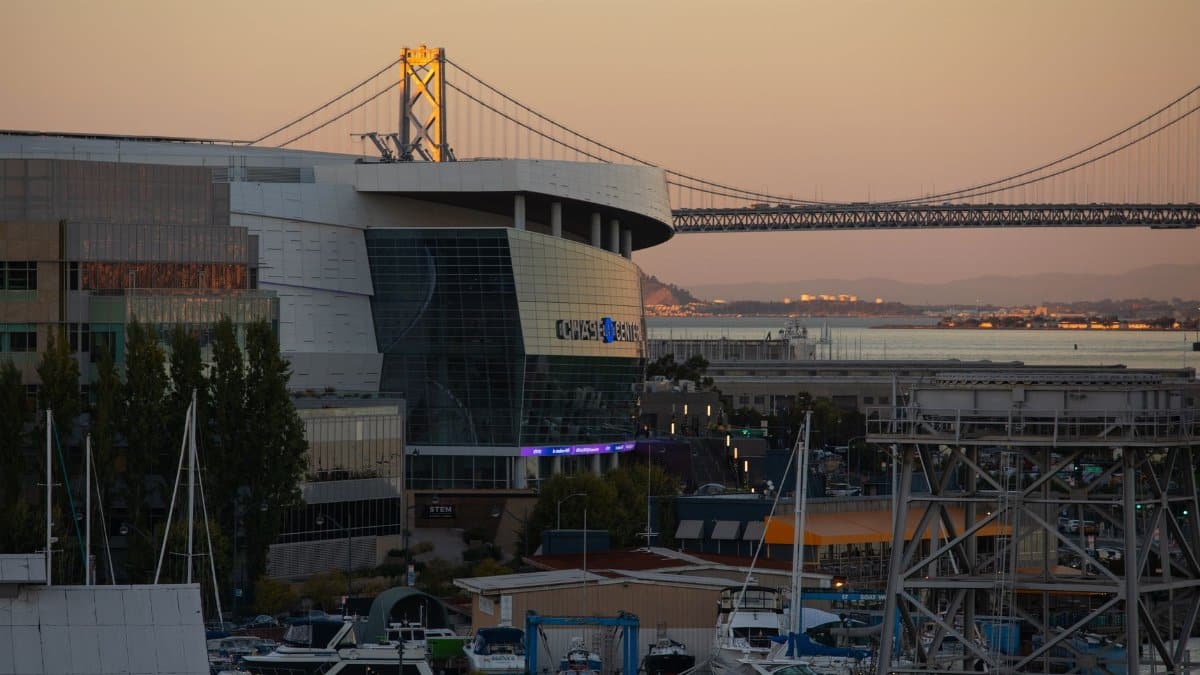
The Chase Center concert was canceled. That sentence is short and expensive. Arena shows are machines: union calls, truck schedules, local crews, guest lists, and thousands of people who planned a night around a band they may have loved since childhood. Cancellation is not a slight. It is the visible cost of putting a person ahead of a production.
Fans are entitled to disappointment. They are also capable of holding two feelings at once. A lost night at Chase Center is a real loss of ritual, money, and anticipation. It is still smaller than the question of whether the drummer on the poster can recover well enough to play again on his own terms. Promoters can reschedule a room. They cannot reschedule a body.
How the John Paris Earth Wind Fire rehab note traveled

News of this kind now moves less like a press release and more like weather. A line appears, then a repost, then a fan account trying to translate hospital language into something comforting. The John Paris Earth Wind Fire rehab formulation is itself a product of that weather: a compressed label for a human event that does not compress well. It is useful as a search phrase and clumsy as a life.
Journalists have a duty here that is easy to forget when the clicks reward certainty. Attribute what is known. Mark what is not. Resist the urge to treat rehabilitation as either scandal or saint story. Paris is a working drummer in a historic band. He had an emergency. He left a San Francisco hospital. He entered rehab. The Chase Center show was called off. Everything beyond that belongs to him and to the clinicians who are actually in the room.
A band built on uplift meets an ordinary crisis

Earth, Wind & Fire occupies a rare place in American popular music. The songs are dance music and devotion at the same time, secular radio that still sounds like a congregation. Maurice White’s vision mixed tight funk with a language of unity that audiences treated as spiritual even when they came only to move. That inheritance does not make the members immune to illness. It does shape how listeners hear an absence.
When a band associated with lift goes quiet for a night, people reach for meaning. Some will call the canceled concert a test of faith in the group. A clearer reading is available. Joy was never a guarantee against emergency rooms. The catalogue remains. The drummer’s recovery is a separate chapter, and it does not need to be folded into a myth in order to deserve attention.
Rehabilitation as a practice, not a headline

Rehab is a word that popular culture has narrowed until it means only one kind of struggle. In medicine it is broader. It can mean the slow return of strength after a crisis, the retraining of a skill, the supervised interval between discharge and ordinary work. Readers looking up John Paris Earth Wind Fire rehab should not assume a single plot. The public note does not supply one, and guessing would be a form of trespass.
What the word does confirm is sequence. Hospital first. Then a program. Then, if all goes as hoped, a life that includes music again. That sequence is unglamorous. It involves appointments, fatigue, and the frustration of measuring progress in small units. It is also one of the more honest structures a culture can offer a performer: time that is not sold by the hour to a crowd.
The drummer’s place in the larger sound
Paris has carried the pulse in a group where the pulse is not background. Earth, Wind & Fire arrangements leave little room for a drummer who is merely keeping time. The kick and snare are part of the hook. Horns answer the groove. Vocal harmonies sit on top of a grid that has to feel both exact and human. Replacing that feel for a night is possible. Erasing the person who supplies it is not.
Touring bands solve absence in practical ways. A substitute may sit in. A date may be cut. Neither solution is a judgment on loyalty. It is logistics. The audience that knows the records by heart will hear the difference anyway, which is another reason a cancellation can be the more respectful choice. Better an empty date than a counterfeit continuity.
What fans owe a private recovery
Devotion can turn invasive without anyone intending harm. People who have danced to these songs for decades feel a kind of kinship. Kinship is not a key to the chart. Speculation about causes, substances, family, or prognosis travels faster than correction, and it lands on a person who is trying to get well. The ethical minimum is dull and sufficient: repeat the confirmed facts, wish the work of recovery well, and stop.
There is a spiritual dimension to that restraint, if the word spiritual is allowed to mean attention rather than spectacle. Many listeners already treat these concerts as gatherings. A gathering can include intercession, patience, and the refusal to consume someone else’s emergency as content. That refusal is not cold. It is a form of respect that does not require a stage.
San Francisco as more than a pin on the route

The city is not only the site of the hospital. It is a music town with its own memory of rooms, from small clubs to arenas that now carry corporate names. Chase Center belongs to a newer map, built for basketball and for the kind of pop spectacle that fills every seat. Placing a rehabilitation story against that map is a reminder that infrastructure does not care for bodies. People do. When the show stops, the building remains, and the care happens elsewhere, in rooms without spotlights.
Leaving a San Francisco hospital is a geographic fact with an emotional afterimage. Discharge is not the same as restored health. It is permission to continue under a different plan. For Paris, that plan is rehab. For the band, it is a hole in the August itinerary. For the audience, it is a night that will not arrive as advertised.
Money, labor, and the unseen payroll

A canceled arena date disturbs more wallets than the headliner’s. Stagehands, caterers, local musicians, security, and box office staff build their weeks around the assumption that the trucks will arrive. Their loss is not the headline, and it should not be used to guilt a sick drummer. It should complicate the easy story in which only the star is real. Entertainment is a labor market. When John Paris Earth Wind Fire rehab becomes the reason a call is scrubbed, the payroll feels it in quiet ways that rarely make the homepage.
Responsible coverage can name that ripple without ranking suffering. Paris did not cancel a city for drama. An emergency did. The industry’s habit of treating performers as infinitely available is part of why these announcements still shock people who ought to know better. Bodies fail. Calendars should be written as if that were true.
What the public record can honestly hold

Honesty here is mostly a matter of edges. Confirmed: an August 6 emergency, a departure from a San Francisco hospital, entry into rehabilitation, and a canceled Chase Center concert. Not confirmed in the public note: the medical cause, the length of rehab, the date of any return, or the private conversations inside the band. A feature that colors past those edges is not richer. It is less true.
That limit is also a kindness to readers. Middle aged fans who grew up with this music do not need a thriller. They need a clear account of why a beloved night disappeared. The account is that the drummer required care. The music can wait. Waiting is not abandonment of the songs. It is the condition under which the songs might be played again by the person audiences came to hear.
A different kind of encore

Recovery rarely offers the clean crescendo that a concert ending supplies. There may be no announcement that feels like a final chord. There may only be a later gig, or a later silence, and either outcome will have to be met without the mythology that every setback becomes a triumph montage. The dignified posture is expectant and unintrusive.
If there is a lesson in the John Paris Earth Wind Fire rehab story, it is not a slogan about resilience. It is a correction of scale. A famous groove can fill an arena and still depend on one person’s pulse. When that pulse needs help, the correct response from the culture that profited from it is space. The horns can rest. The room can go dark. The work of getting well does not require an audience, and it should not be asked to perform.