

The clock in Foxborough did not hurry, and neither did the young quarterback who finally took the afternoon by the collar. When New England held on, the phrase Patriots Bills Drake Maye stopped sounding like a scheduling note and started sounding like a verdict. The final margin was 29 to 26. Buffalo had the better first half and, for long stretches, the cleaner plan. New England had the last answer, a sideline that refused panic, and a passer who looked older than his resume in the moments that decide seasons. I have watched enough of these games to know the scoreboard can lie for three quarters. On this Sunday it told the truth only at the end.
A first half that belonged to Buffalo

Buffalo opened as if the script had already been filed. Josh Allen moved the chains with his arm and his legs, and the Bills defense squeezed the middle of the field until New England throws became hopeful rather than certain. Drake Maye was not poor so much as crowded. Protection slid late. Routes converged. A promising drive died on a dropped ball near the Buffalo thirty. Another ended in a field goal when the down and distance asked for more courage than the call sheet allowed.
The crowd, loud at kickoff, grew thinner in sound if not in number. You could hear the old worry in the pauses between snaps: another year of almost, another rival that arrives already sure of itself. Buffalo led by ten at the break. The statistics favored the visitors in yards, in third down conversions, and in the simple feeling that the game was proceeding on their terms. None of that would matter as much as what came after, but it mattered then, because comebacks are not romantic while they are still only deficits.
The turn that did not announce itself

There was no single thunderclap. The change arrived in smaller pieces. A punt pinned Buffalo deep. A tackle for loss on second down forced a predictable third and long. Maye, on the next New England series, took a check down that last year he might have forced into a tighter window, then came back to the same side on the following play and found a receiver in stride. Eleven yards became a first down. The next snap was play action, and the linebacker who had been living in the throwing lane all afternoon took one false step. The ball was gone before the rush arrived.
Football people love to name the moment. Sometimes the moment is a sequence. New England scored, then stopped Buffalo without a point, then scored again. The lead changed hands late. What had looked like a Buffalo afternoon became a shared argument, and arguments in this stadium have a way of bending toward the home team once the noise returns.
Drake Maye and the discipline of waiting

The interesting part of Maye on this day was not arm talent, which has never been the question, but selection. He threw fewer hero balls than the situation seemed to invite. He slid instead of lowering a shoulder on a scramble that would have drawn cheers and a trainer. He took a sack rather than a dangerous throw across his body, then made Buffalo pay on the next series with a timing route that looked practiced rather than invented.
Veterans talk about seeing the game slow down. What spectators saw was a quarterback who stopped hunting the spectacular and started hunting the available. That is a less glamorous skill and a more durable one. When Buffalo brought pressure, he got the ball out. When Buffalo sat, he took the check and trusted the next play. The stat line will be quoted for days. The more lasting image is the way he stood in the pocket on the drive that put New England ahead for good, feet quiet, eyes downfield, as if the noise had been turned down for him alone.
Mike Vrabel and a sideline that stayed level
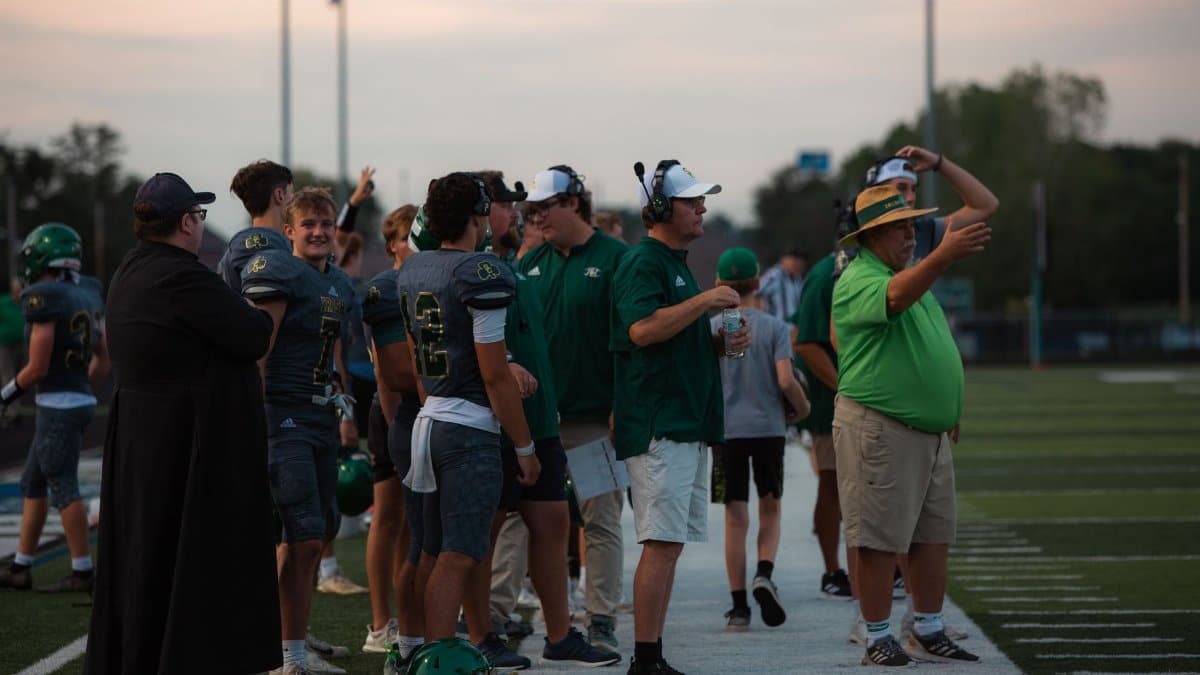
Coaches reveal themselves when the plan fails. Mike Vrabel did not chase the game with trickery or with anger that the cameras could sell. He simplified. More runs between the tackles after halftime. More defined reads for Maye. A fourth down decision near midfield that looked reckless until the conversion, and then looked like the only honest choice. New England had spent the first half playing not to fall further behind. After the break it played to win, which is a different set of risks.
Vrabel has been here before, on other sidelines and in other uniforms, and the benefit showed in the small things: timeouts held until they mattered, challenges declined when the replay was a coin flip, substitutions that kept the defensive front fresh for Allen. The Boston Globe called the result a season saving win and gave the credit, rightly, to Maye and to Vrabel together. One supplied the throws. The other supplied the nerve to keep calling a game that could still be lost.
How Buffalo let the afternoon slip

Credit should not erase the visitors. Allen was excellent for long stretches, and the Bills still look like a team built to win in January if health and patience hold. What failed them was the ordinary cruelty of road football. A penalty on a third down stop extended a Patriots drive. A dropped pass in the red zone turned seven points into three. A late throw, hurried by a corner who had been beaten earlier and was now sitting on the route, sailed past an open hand.
Buffalo also seemed surprised by the version of New England that appeared after halftime. The Bills had prepared for a young quarterback who would press. They got a young quarterback who would wait, and a run game that suddenly found creases the first half tape had not promised. Good teams lose games this way every autumn. The sting is sharper when the opponent is a divisional rival and the deficit felt safe.
The phrase that now means a result

Search interest and bar talk will keep pairing the clubs with the quarterback, and Patriots Bills Drake Maye is likely to remain a shorthand for this Sunday long after the film is cut. Shorthand can flatten a game. This one deserves the longer reading. It was not a coronation. Maye missed throws. The offensive line was uneven. Buffalo moved the ball too easily in the opening half for anyone in New England to declare a corner turned. What the shorthand does capture is the pairing that mattered: a divisional opponent, a young passer, and a result that arrived only because both the player and the plan improved while the clock was still an enemy.
Fans collect these afternoons because they are rare and because they teach a roster what it can be. A loss would have been explainable. A win, especially a win that required repair rather than domination, is harder to dismiss as luck.
The defense that bent and then held
New England did not shut Allen down. Pretending otherwise insults the tape. What the defense did, particularly late, was tackle in space and rally to the quarterback without abandoning the deep middle. Allen is most dangerous when a free runner forgets the spy or when a corner bails early. On the final Buffalo possession the rush arrived from the edge, the middle linebacker stayed home, and the throw that might have tied the game never had a window large enough to trust.
There will be criticism of the yards allowed. There should be. A 29 to 26 game is not a defensive masterpiece. It is a defensive rescue, which is a different compliment and a fairer one. The unit bought just enough empty possessions for the offense to finish what it started after halftime.
Special teams and the hidden margin
Games this close are often decided by men who do not appear in the highlight packages. A punt that died inside the ten changed field position for a full series. A kickoff that reached the end zone removed a returner Buffalo had been eager to use. The New England kicker, asked twice from distances that feel longer in October wind, converted both, including the points that proved to be the difference once Buffalo answered with a late field goal of its own.
Coaches say hidden yards because the broadcast rarely lingers on them. They are not hidden to the people who chart them. In a three point game, a single shanked punt would have rewritten the story. The fact that it did not happen is part of why the comeback held.
What the standings cannot yet say

One win against Buffalo does not reorder the conference. It does change the mood inside a building that has spent several seasons learning how to lose close games with dignity and not much else. The AFC East remains a weekly argument. Buffalo still has the more proven quarterback and a roster assembled for deep January nights. New England has something it did not have on Saturday morning: evidence that its young passer can author a comeback against a real opponent, with a real crowd, and with the rival wearing white.
Evidence is not a conclusion. The schedule will test whether Sunday was a peak or a floor. If Maye plays with the same patience on the road, against noise that is not friendly, the franchise conversation changes again. If he reverts to forcing throws when the first read fails, this afternoon becomes a lovely exception. Both outcomes are still available. That is the honest condition of October.
The crowd and the memory it wanted

Gillette Stadium has hosted louder nights and larger margins. What it hosted here was recognition. You could feel it when the lead changed, a collective intake that was not quite belief and not quite disbelief. People stood because standing is what you do when you are afraid to sit through the next snap. They stayed standing after the final whistle, not in the wild way of a championship, but in the grateful way of a fan base that had begun to wonder whether those afternoons were finished.
I do not think nostalgia won the game. Nostalgia does not block Allen or complete a third down. Still, memory was in the building, and memory is not nothing. It tells a young team what the standard used to sound like. On Sunday the standard sounded like patience, then noise, then a final stop.
Film that both staffs will hate and need

Monday in both buildings will be less romantic than the parking lots were. Buffalo will circle the penalties and the red zone empty trips. New England will circle the early protection and the drives that settled for field goals when touchdowns were available. Maye will see throws he wants back, including at least one that could have been intercepted if a safety had broken a step sooner. Vrabel will see a first half call sheet that asked a young offense to be perfect before it was comfortable.
That discomfort is useful. A blowout teaches less than a rescue. The Patriots learned they can fall behind a good team and still impose a second half identity. The Bills learned that a ten point cushion in New England is a suggestion, not a verdict. Both lessons are expensive. Only one club got paid for absorbing them.
Why the credit is shared

It is tempting to hand the entire story to the quarterback, because quarterbacks are the grammar of modern football coverage. Maye earned a large share. He did not earn all of it. The offensive line stabilized. The receivers won late contested catches. The defense produced the stop. Vrabel kept the plan narrow enough to execute. When the Globe pairs Maye with his coach, it is not hedging. It is describing how the win actually occurred.
Shared credit is also a warning. If any of those pieces regresses next week, the result will not repeat itself out of momentum. Momentum is a story we tell after the fact. Preparation is what shows up on the first snap of the next game, when Buffalo is no longer the opponent and the memory of 29 to 26 is only a clipping.
A season that now has a reference point

Every young quarterback needs a game he can point to when the next deficit arrives. Not a myth, a reference. Patriots Bills Drake Maye is that reference now, clumsy as the bundle of names may sound, precise as the memory is. He can recall the feel of a pocket that held, the choice to take the check down, the throw that traveled only as far as it needed to. His teammates can recall that the sideline did not fracture. The fans can recall that the building got loud again for a reason that was happening in front of them, not behind them in a highlight from another era.
Reference points expire if they are not followed by others. For one Sunday, though, the reference is enough. New England beat Buffalo. The score was 29 to 26. The quarterback who had been a question mark left the field as an answer, provisional and real at the same time. In this league, that is as close to certainty as October ever offers, and it is worth writing down before the next kickoff tries to erase it.