
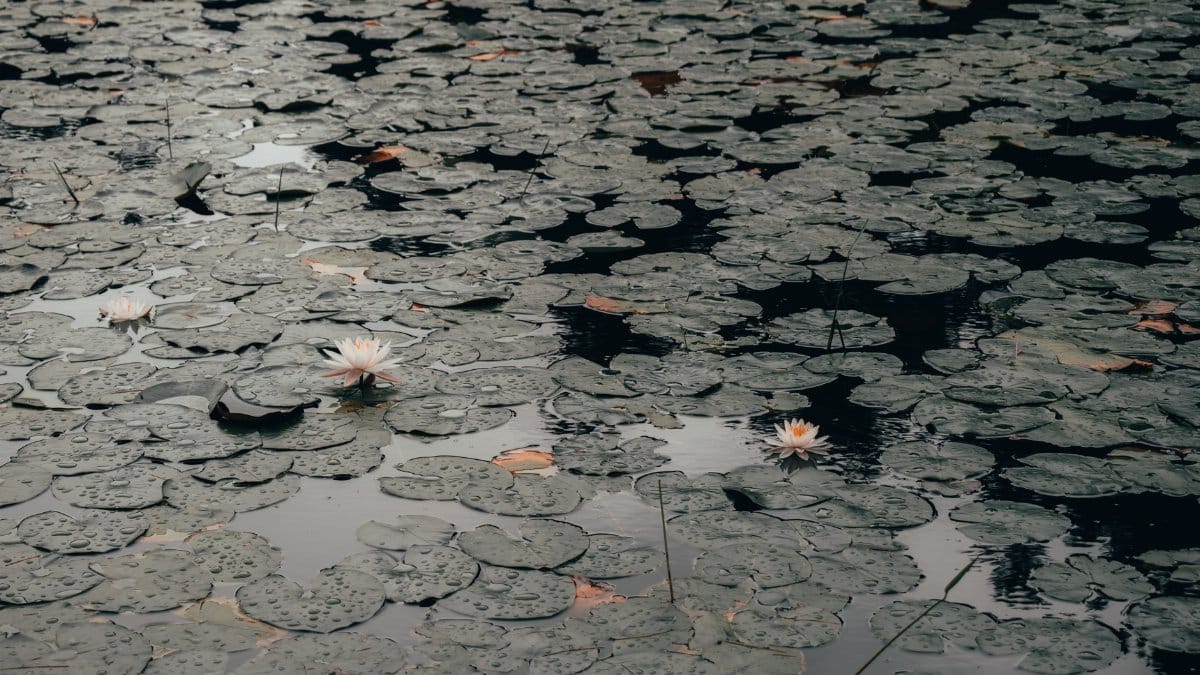
On a mild Houston evening, guests in formal dress moved through galleries where a canvas of water and light held the room in a quieter register than the music outside. The occasion was the MFAH Grand Gala Ball, the Museum of Fine Arts, Houston fall gathering that raised $2.06 million and drew more than 275 people, according to a Houston Chronicle account of the evening. Organizers said the total topped the fall fundraising goal. Around Claude Monet and the famous Water Lilies, talk moved from brushwork to budgets, from private memory to the plain question of how a museum keeps its doors open.
A painting sets the tone
Water Lilies is an odd centerpiece for a party, and that oddness is part of its power. Monet spent decades at Giverny watching a pond change under weather, season, and the slow work of his own eyes. The paintings that came out of that watch are not portraits of important people and not scenes of civic triumph. They are surfaces of reflection: lily pads, clouds, the far bank dissolving into color. To build a gala around them is to ask a dressed crowd to pause in front of something that refuses spectacle.
Museums do this more often than outsiders notice. A single work, or a single series, becomes the social weather of a night. It gives photographers a backdrop and gives speakers a sentence they can trust. It also gives guests a shared object, so that conversation has somewhere to land when the small talk runs out. In Houston, where the museum sits inside a district built for looking, that choice carries extra weight. People already know how to walk from one building to another in search of a picture. On this night the picture was waiting for them before the first toast.
The risk is that a famous painting becomes wallpaper. Monet is so reproduced, on calendars and phone cases and hotel lobbies, that a real encounter can feel delayed by recognition. A gala either fights that delay or gives in to it. From the public record of this gathering, the museum chose to put the lilies at the center rather than treat them as décor. That is a curatorial decision as much as a party plan. It says the evening is about attention, not only about attendance.
The number that mattered
Two million and sixty thousand dollars is a precise figure, and precision matters in a city that judges institutions by what they can sustain. The Chronicle reported that more than 275 guests helped carry the museum past its fall fundraising goal. That is not a stadium crowd. It is a room, or a sequence of rooms, in which each table has a job. American art museums have long relied on this scale: small enough for hosts to know who came, large enough for the total to change a budget.
What the public report does not do is itemize every dollar. Readers should not invent a pie chart the museum has not published. What can be said, because it is how museums of this kind actually work, is that a fall gala is rarely a vanity line. It sits beside membership, endowment draw, city and foundation support, and the quieter income of the shop and the cafe. A strong night does not replace those streams. It steadies them. It tells trustees and staff that the social promise of the institution still converts into cash.
Goals exist so that a night can be judged without waiting for the annual report. Topping a goal is not the same thing as solving a structural deficit, and no serious observer should pretend otherwise. It is evidence that a particular appeal landed. In a year when cultural organizations across the country talk openly about costs, attendance, and donor fatigue, clearing a stated mark is news of a practical kind. It means the ask was credible and the room was willing.
A crowd small enough to feel chosen
More than 275 guests is a number that sounds modest until you picture the logistics. Coat check, seating, security, timing of remarks, the path from gallery to dinner, the moment when speeches must end so that people can still talk to one another. A gala of this size is a machine. The glamour is the surface. Under it are staff lists, vendor contracts, and the unglamorous work of making sure a donor does not feel lost between buildings.
Houston knows this machinery. The city has a long habit of funding culture through evenings that mix civic pride with private generosity. Oil fortunes, medical fortunes, real estate fortunes, and newer money from technology and trade all pass through the same ballrooms and the same museum halls. The MFAH Grand Gala Ball belongs to that habit. It is not a secret society, but it is not a public festival either. Tickets and tables sort the room. That sorting is the point and the problem. Museums need concentrated gifts. They also need to remain legible to people who will never buy a table.
The guests who do come are not a single type. Some have sat on boards for decades. Some are newer to the circuit and are learning the codes: when to applaud, which gallery talk is worth staying for, how a pledge differs from a toast. A good evening makes room for both without announcing the difference. The painting helps. In front of Water Lilies, tenure on a board does not improve your eyes. Looking is briefly democratic, even if the invoice is not.
Why these lilies still stop people
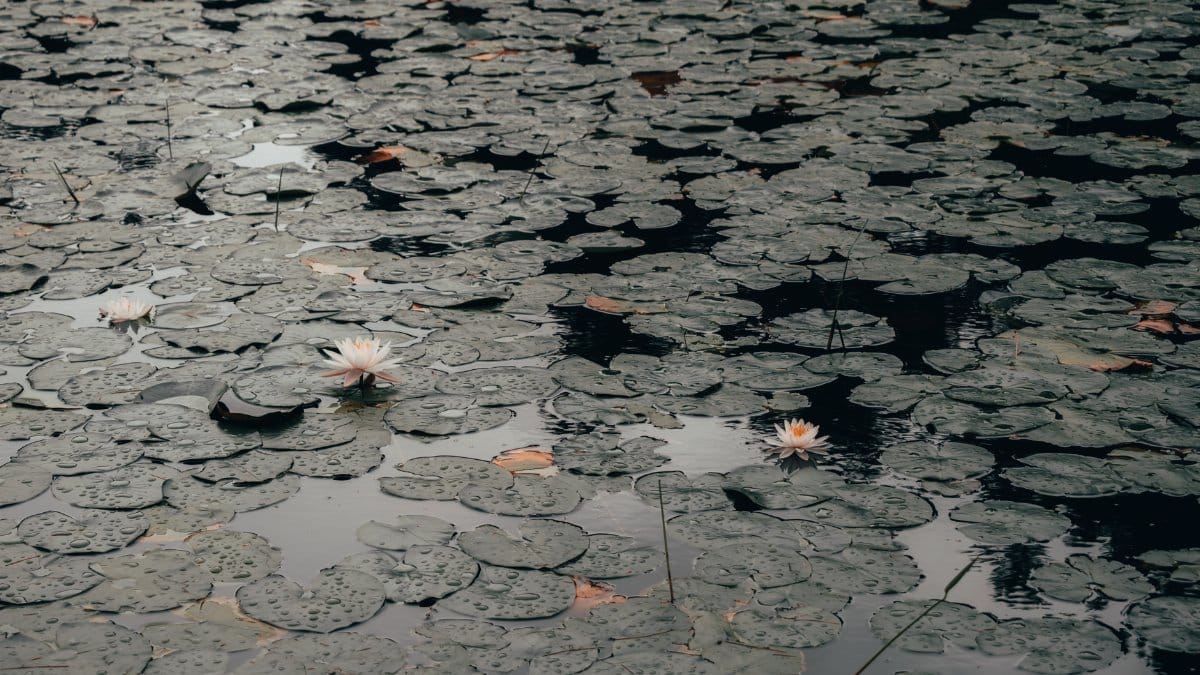
Monet began the great water landscapes late, when his sight was failing and his garden had become both subject and refuge. The paintings do not tell a story with a beginning and an end. They ask the viewer to stay. That request is unfashionable in a culture of quick images, which is why it still works in a museum. A person who has spent the day on a phone can stand in front of a pond and feel time change speed.
Scholars have written for a century about these canvases as studies of perception, as late experiments that point toward abstraction, as records of a garden the artist controlled down to the plants. None of that scholarship is required to feel the pull. What guests meet is color organized with extreme care: greens that are not one green, blues that hold both sky and water, flowers that sit on the surface like punctuation. The fame of the series can hide the labor. Each canvas is a decision about how much of the world to let dissolve.
Putting that labor in the middle of a fundraiser is a kind of argument. It says the museum is not only a vault and not only a social stage. It is a place where difficult, slow seeing is protected. Houstonians who know the permanent collection, the modern and contemporary holdings, the decorative arts, and the buildings by Mies van der Rohe and others already understand that argument in architectural form. A gala themed on Water Lilies restates it in a single image that travels well beyond the membership list.
The labor that never appears in the photographs
Public pictures of a gala show gowns, glasses, and a few familiar faces near a work of art. They do not show the conservator who worried about light levels, the educator who wrote a short text a guest might actually read, or the development officer who spent months matching interests to asks. They do not show the guards whose evening is a shift, not a celebration. If the $2.06 million is the headline, those people are the reason a headline is possible without damage to the thing being celebrated.
This is worth saying plainly because museum glamour has a bad habit of erasing museum work. A ball can look like the institution. It is not the institution. The institution is weekday school tours, storage rooms at the right humidity, loans negotiated across borders, labels argued over, and exhibitions that take years. A fall night that clears its goal feeds that weekday life. Guests who understand this tend to give with less theater and more patience. Guests who do not can still have a lovely evening. The museum has to serve both, then go back to work on Monday.
There is also the labor of the city around the museum. Drivers, caterers, florists, lighting crews, and hotel staff absorb a gala as one more large order on a calendar full of them. Their pay does not appear in the fundraising total, yet the evening does not happen without them. A clear eyed account of the MFAH Grand Gala Ball has to hold that fact next to the Monet. Beauty at this scale is a coordinated effort, not a spontaneous glow.
What a gala is really buying

People outside the donor world sometimes hear a sum like $2.06 million and imagine a single purchase: one painting, one wing, one named gallery. Sometimes that is true. Often it is not. Galas buy time. They buy the ability to say yes to an exhibition that will not pay for itself at the door. They buy scholarships for programs, support for conservation, and the unromantic costs of keeping a large building honest: climate control, security, insurance, the wages of people who know how to move a crate.
They also buy confidence. A museum that misses its own fall mark has a harder winter, not only in cash but in mood. Staff read the number. Trustees read it. Peer institutions read it. Clearing the goal, as this gathering did, sends a signal that Houston still treats the visual arts as a civic obligation rather than a luxury that can wait. That signal is not the same as a balanced budget for the decade ahead. It is still a signal worth sending, because culture is partly sustained by the belief that other people will keep showing up.
There is a harder purchase too, and it is social. A gala buys a story donors can tell themselves about belonging. That story can be generous or self regarding. The museum cannot fully control which version a guest takes home. It can control the objects in the room and the seriousness of the appeal. Anchoring the night in Water Lilies leans toward seriousness. A pond painted by an aging artist is a poor prop for empty boasting. It keeps asking, quietly, what the money is for.
Attention as a kind of shared practice

It is easy to treat a black tie evening as the opposite of spiritual life, if spiritual life means withdrawal, silence, or a community that does not price its seats. The opposition is too neat. For many people in a city like Houston, the closest thing to a regular rite is not a sanctuary but a room where strangers agree to look at the same thing. A museum gala is an imperfect rite. It is exclusive, expensive, and full of distraction. It is also, at its best, a training in attention.
Attention is not a small virtue. Monet’s late paintings are about little else. They record what happens when a person returns to one corner of the world until the corner stops being scenery and becomes an event. Guests who give the lilies more than a glance are practicing a skill the rest of the culture keeps trying to steal: the ability to remain. That practice does not require a creed. It does require a body in a room and a willingness to be slightly bored before the picture opens.
Institutions that care about this should not be shy about it. The language of fundraising is full of impact, reach, and engagement, words that can mean anything. The older language is simpler. Come and see. Stay longer than you planned. Let a made thing rearrange an hour of your life. The MFAH Grand Gala Ball, organized around a series that demands exactly that, sits closer to this older language than a party built only on celebrity would. Whether every guest accepted the invitation to stay is unknowable. The invitation was visible.
How Houston reads a successful night
In this city, cultural success is rarely judged by critics alone. It is judged by whether an institution can gather people who might otherwise spend the evening in private clubs, and whether those people leave with a reason to return on an ordinary Saturday. A gala that raises $2.06 million and beats its goal will be counted, rightly, as a win for the development office. It should also be counted by a second measure: did the art survive the party as art?
Early signs, from the way the evening has been reported, suggest the museum wanted that second measure to matter. Naming the night around Water Lilies is a choice against generic splendor. Generic splendor can be staged in any hotel. A Monet cannot. By tying the social calendar to a specific body of work, the Museum of Fine Arts, Houston asked its patrons to sponsor not a vibe but a relationship with looking. That is a higher standard, and it is the right one.
Readers who were not in the room can still take something from the public facts. More than 275 people came. The fall goal was passed. The sum was $2.06 million. The image at the center was a pond, not a logo. Those facts describe a museum that still believes a difficult painting can organize a crowd. In a noisy season for the arts, that belief is not sentimental. It is operational. It is how an institution tells its city what it thinks is worth gathering for.
After the last glass is cleared

When the tables come down, the painting remains. That is the plain advantage a museum has over every other kind of party. The reason for the night does not leave in a car at midnight. Water Lilies, whether encountered in Houston or remembered from another gallery, keeps doing the work it was made to do. It slows the eye. It refuses a single correct viewing. It makes reflection literal and then makes it moral, because staying with uncertainty is a form of respect.
The money remains too, in the less visible sense that a cleared goal becomes salaries, programs, and plans. Staff will translate $2.06 million into schedules. Trustees will hear a report and ask what the spring requires. Visitors who never heard of the gala will walk through galleries that the gala helped keep lit. This is the unromantic afterlife of a beautiful evening, and it is the afterlife that justifies the evening.
None of this erases the exclusions built into a ticketed ball. A museum that lives only on such nights would shrink into a club. The task after a success is to widen the door without pretending the door was never narrow. Education programs, free hours, community partnerships, and a collection that speaks to more than one history are the answers, and they cost money of the kind this night raised. The MFAH Grand Gala Ball can be admired for its total and still be held to that larger promise.
Houston has the habit, and the means, to keep the promise if it chooses. A fall evening organized around Monet’s pond is a reminder of what the choice looks like when it is going well: a crowd, a number that meets its mark, and a work of art that does not need the crowd in order to matter, but is willing, for a few hours, to host it.