
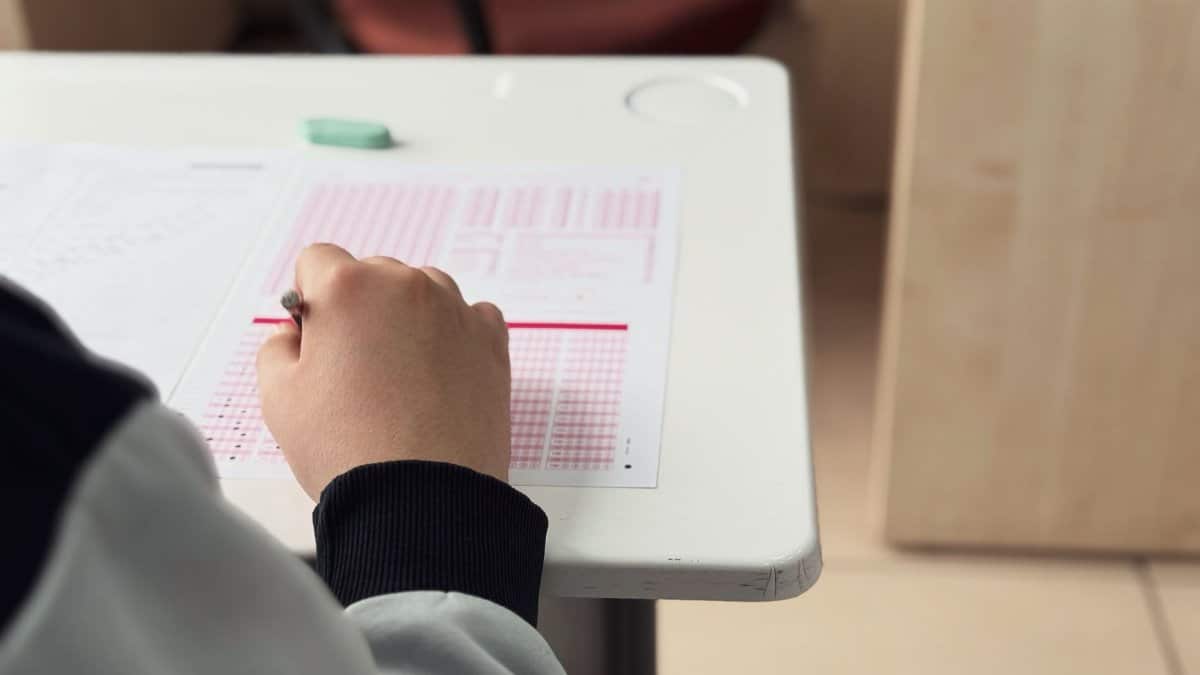
On a Tuesday evening in a Minneapolis kitchen, a parent scrolls past a color coded chart and tries to decide whether flat means fine. The note from school is careful. It says the latest Minnesota MCA test scores barely moved in math, science, and reading, and that a 28 member task force will spend the coming months asking whether the exams still measure what families think they measure. For a state that has treated these spring assessments as a public temperature check, stillness is its own kind of news. It does not announce a collapse. It also refuses the comfort of a rebound.
What barely moving actually means

Flat is an unsatisfying word in education, because it can hide two opposite stories. One story is stability after years of disruption. The other is a plateau that arrives before students have recovered the ground they lost. Minnesota officials and news outlets have described proficiency in the core subjects as essentially unchanged from the prior round of Minnesota Comprehensive Assessments, the exams most people simply call the MCAs. That description matters more than a single headline, because a state cannot claim a turnaround it has not earned, and it cannot treat a stall as a crisis without looking at who is stalled and for how long.
Readers should be wary of any chart that collapses a million different classrooms into one line. A statewide average can sit still while one district climbs and another slides. It can sit still while older students inch forward and younger students do not. The honest reading of a flat year is narrower than the political reading. The tests did not deliver a clear statewide lift. They also did not deliver a fresh collapse. Everything else depends on the cut of the data, and on whether the public is shown that cut at all.
Why these exams still set the tone

The MCAs are not the only way a school knows a child. Teachers have quizzes, essays, reading conferences, and the ordinary evidence of a year spent in a room together. Yet the state tests occupy a different role. They are common. They are public. They let a legislator in St. Paul compare a rural district with a suburban one without pretending that every local grading scale means the same thing. That common yardstick is why Minnesota MCA test scores keep returning to the front page even when the movement is small.
Families sometimes hear the exams as a verdict on a child. State agencies hear them as a verdict on a system. Both readings are incomplete. A single spring sitting cannot capture a student’s curiosity, a teacher’s craft, or the stability of a home. It can show whether large groups of students are meeting a standard the state has defined in public. When that signal stops moving, the argument shifts from celebration or blame toward a harder question: is the instrument still the right one, or has the work of improvement simply become slower than the news cycle wants.
A task force with a familiar assignment

The decision to convene a 28 member task force is the other half of this year’s story. Reviews of state tests arrive on a predictable schedule in American education. After a period of anxiety about scores, someone proposes that the test itself be rethought. Sometimes that impulse is serious. Tests grow old. Standards change. The burden of testing days, makeup sessions, and score reports can crowd out instruction. Sometimes the impulse is political cover, a way to change the conversation when the numbers refuse to improve.
Minnesotans have reason to watch the membership and the mandate more closely than the press release. A panel that includes teachers, parents, assessment experts, and district leaders can ask useful questions about timing, length, and what the results are allowed to do to a school. A panel stacked with one constituency will produce a document that pleases that constituency and changes little in May, when students again sit for the exams. The public record, including materials from the Minnesota Department of Education at education.mn.gov, is the place to test whether this review is about measurement or about messaging.
Reading, the subject everyone claims

Reading proficiency is the result that parents tend to understand first. A child who cannot make sense of a passage will struggle in science and social studies even if the science teacher is excellent. When reading results sit nearly still, the temptation is to declare that nothing schools tried has worked. That conclusion is too neat. Early literacy laws, new curricula, and tighter training for teachers do not rewrite a cohort in a single year. They also do not repair attendance problems, staffing gaps, or the uneven access to tutoring that followed the pandemic.
The more useful question is whether flat reading results are uniform. If students who were already near the standard are holding steady while students far below it remain far below it, the state has a concentration problem, not a general malaise. Minnesota has spent years arguing about how to teach reading, including the shift toward methods with stronger evidence on phonics and language structure. A flat statewide number does not settle that argument. It does say that whatever mix of methods is now in classrooms has not yet produced a visible statewide rise on this particular test.
Math after the long disruption

Math has its own stubborn pattern. Skills stack. A shaky year with fractions becomes a shaky year with algebra, and algebra does not wait for a district to finish its recovery plan. Nationally and in Minnesota, math was hit hard when schools closed and then reopened in uneven ways. A year in which math proficiency barely moves can mean that the worst of the slide has stopped. It can also mean that the students who missed key lessons are now older, and the missing pieces are harder to insert into a crowded secondary schedule.
Districts have tried tutoring, double doses of math, and summer programs. Those efforts are real, and some of them help the students who actually receive them. They rarely reach every student who needs them, and they rarely show up as a dramatic jump in a statewide proficiency rate. Proficiency is a threshold. A student can learn a great deal and still land on the same side of the line. That is one reason flat math results can coexist with teachers who swear their classes are stronger than they were two years ago. Both descriptions can be true if the gains are real but not yet large enough to cross the state’s cut score.
Science, quieter and easier to ignore

Science sits in a stranger place in the public conversation. It is tested less often in the headlines than reading and math, and it is easier for a busy district to treat as a subject that will take care of itself once literacy improves. That is a gamble. Science proficiency depends on reading, yes, but it also depends on labs, materials, and teachers who are certified in the field rather than covering a section because the schedule required it. When science results barely move alongside the other two, the stall is broader than a reading curriculum fight.
A task force reviewing the MCAs will have to decide how much weight a science exam should carry, and how often students should face it. Less testing can mean more time for investigation and projects. Less testing can also mean that a quiet decline stays quiet until a later grade, when the gap is obvious and the schedule is rigid. Families who care about this subject should ask for the science numbers with the same insistence they bring to reading, even if the charts are shorter and the political slogans are fewer.
The gaps that a statewide flat line conceals

Minnesota’s education debates have never really been about the average student in the abstract. They have been about the distance between students who have always had stable schools and students who have not: children in poverty, students learning English, students with disabilities, Black students, Indigenous students, and children in districts that cannot match the tax base of their neighbors. A year of flat overall results is compatible with a slight narrowing of those gaps. It is also compatible with gaps that hold their shape while everyone argues about the font on the score report.
Any serious review of Minnesota MCA test scores has to publish the disaggregated picture early, not as an appendix. If the task force talks only about test length and parent opt outs, it will miss the reason these exams still have defenders. The defenders are not in love with testing days. They want a public number that a district cannot soften when the students who struggle are also the students with the least political voice. That defense collapses if the state stops showing the gaps, or if it changes the test so often that one year cannot be compared with the next.
What teachers live with in April and May

Ask a teacher about the MCAs and you will often hear a calendar, not a philosophy. There is the week of the test, the week of makeups, the students who arrive late, the students who are anxious, and the units that get squeezed because the testing window does not care about a novel that is three chapters from done. Some of that friction is unavoidable in a state exam. Some of it is a choice about how much of the spring a school is willing to surrender.
The flat results add a particular frustration. If the scores had jumped, a faculty could at least argue that the lost days bought a visible return. If the scores had fallen, the argument for relief would be louder. A stall leaves teachers in the least rewarding position: they carried the logistical burden and cannot point to a statewide payoff. That does not prove the tests are useless. It does explain why a rethink will find a receptive audience in buildings where testing season already feels like a second job.
Parents, opt outs, and the thinness of a single number

Parents occupy an awkward middle. They want to know whether their child is on track, and they do not want their child reduced to a color on a chart. Opting out has become more common in some communities, sometimes as protest and sometimes as protection for a student who finds the setting miserable. High opt out rates can also distort what a school appears to have achieved, if the students who sit for the exam are not a fair sample of the students who enroll.
A better score report would tell a family where a child is strong, where the trouble starts, and what the school intends to do next, in language that does not require a statistician. Minnesota has improved some of that communication over time, and it still has work to do. The task force could spend its political capital on clearer reports and a shorter exam and leave the accountability purpose intact. Or it could sand down the exam until it no longer bothers anyone and no longer tells anyone much. Those are different projects, and the public should not be asked to treat them as the same reform.
The politics waiting outside the testing window

Test scores in Minnesota are never only about tests. They enter fights over school funding, integration, charter schools, and the power of local boards. A flat year is useful to almost every side, which is a warning. Critics of the current system can say the status quo has failed to move the numbers. Defenders can say the panic is overblown because the numbers did not fall. Candidates can promise a review, which is cheaper than promising the tutoring, the stable staffing, and the attendance work that actually change what students know.
Journalists and readers can refuse that menu. The relevant follow up is concrete. Will the state keep a comparable test long enough to see whether this year’s programs matter. Will districts with the least improvement get help that is more than a webinar. Will the 28 member group publish drafts in time for the public to answer, or will the recommendations arrive as a finished package. Those questions do not require a person to love standardized testing. They require a person to notice when a review is being used as a substitute for a plan.
What improvement would look like next spring

If the scores stay flat again, the state will face a choice it has postponed. It can keep describing stability as a kind of progress, which is fair only if the level being held is one the public accepts. Or it can admit that holding a disappointing line is not the same as climbing. Improvement, if it comes, is unlikely to arrive as a dramatic statewide leap. It is more likely to show up first in a grade, a subject, or a group of districts that stuck with a coherent approach long enough for students to feel it.
That is a less cinematic story than a comeback. It is also the story that matches how schools actually change. A curriculum adopted in a hurry, a teacher who leaves in October, a tutoring grant that reaches forty students in a school of eight hundred: these are the scales at which a year is won or lost. Minnesota MCA test scores can register the sum of those choices only after the choices have been repeated. A single flat year is a signal to look closer, not a license to declare the effort finished or the measure broken.
How to read the next report without being played

When the next results arrive, a few habits will serve readers better than a headline. Look for the same subjects, the same grades, and the same student groups as this year, and ignore any comparison that quietly changes the rules. Ask whether more students were tested, or fewer. Ask what happened to students who were well below the standard, not only whether the statewide rate ticked by a fraction of a point. And read whatever the task force proposes beside those numbers, not instead of them.
The state is allowed to rethink a test. Tests are human instruments, and human instruments age. The state is not allowed to treat a rethink as evidence that the underlying problem has been handled. Math, science, and reading proficiency barely moved. That sentence is plain enough to survive a change in branding. Families who want more than a new name for the same spring ritual should keep it in view while the 28 member panel does its work, and while another cohort of students moves through classrooms that cannot wait for the final report.