
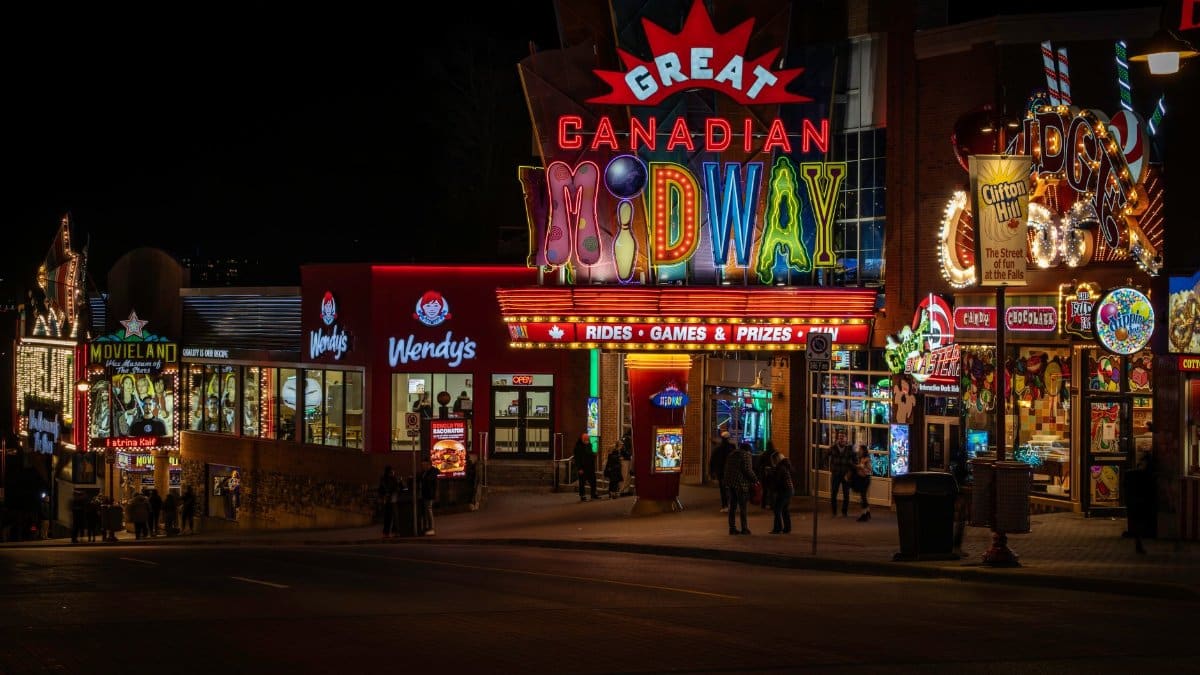
On a weeknight when City Hall usually empties early, the civilian commission charged with watching the Chicago Police Department sat through a long silence that felt louder than any speech. Members had come prepared to press the superintendent about what followed a major enforcement push known around the city as Midway Blitz, and about whether the department would answer for how that push was planned, staffed, and explained to the neighborhoods it touched. The questions were drafted. The public seats were not vacant. What failed was the shared will to proceed. By the time the chair moved on, CPD Midway Blitz oversight had become less a hearing than a portrait of a body unable to agree on its own next step. For a commission built to turn public anger into a record, that failure was the story.
A hearing that never quite started
Chicago has spent years building civilian structures that are supposed to stand between a powerful police department and a public that no longer accepts reassurance as a substitute for facts. The commission at the center of this dispute is one of those structures. Its members are not officers. They are appointed to ask hard questions, to demand documents, and to tell the city, in public, whether the answers hold. On the night in question, that machinery seized.
Accounts of the session describe a body split over how far a follow up should go. Some members wanted the superintendent in the room, under questioning, with a timetable for records. Others warned that a rushed confrontation would produce theater rather than truth, or that the commission lacked a clean procedural path. The result was neither a full inquiry nor a clean adjournment. It was a stall, and stalls have a way of becoming policy when no one is willing to own them.
What the operation left in the neighborhoods
Midway Blitz is the kind of name a department gives an operation when it wants the public to hear speed, focus, and resolve. Names like that travel well in news releases. They travel less well on blocks where residents remember lights, stops, and the feeling that an entire corridor was treated as a problem to be cleared. Without a public after action account, people fill the gap with what they saw and what they fear.
That is why the follow up matters more than the branding. An operation can be lawful and still be poorly explained. It can reduce one harm and create another. It can be defended by commanders and still leave aldermen, pastors, and parents asking who decided the footprint, who was stopped, and what happened to complaints filed in the days after. Those are not radical questions. They are the ordinary questions of a city that has been promised a more open police department and has learned to test the promise.
The mandate on paper
On paper, civilian oversight in Chicago is no longer a suggestion. The city created a commission with authority to set policy direction, to weigh in on leadership, and to insist that the department explain itself. The superintendent remains the chief executive of the force. The mayor remains a political actor with enormous influence. The commission sits in the space between them, powerful in statute and fragile in practice.
Fragility shows up in moments exactly like this. CPD Midway Blitz oversight was supposed to be a test of whether the commission could convert a controversial operation into a set of answerable questions. Could members agree on scope. Could they compel a timetable. Could they distinguish a demand for facts from a verdict rendered in advance. A mandate that cannot survive that test is a mandate that exists mainly in ordinances.
Two ideas of what oversight is for

The split inside the room was not only personal. It reflected two ideas that often share a table and rarely share a definition. One camp treats oversight as a public forum. In that view, the superintendent should face residents directly, because legitimacy is built when power answers in the open. Delay looks like protection. A missed night looks like a broken promise.
The other camp treats oversight as a record building exercise. In that view, a hearing without documents is a press conference with worse lighting. Members want inventories of deployments, complaint data, and a clear account of command decisions before they stage a confrontation. They worry that a premature grilling teaches the department to prepare talking points rather than files. Both camps can claim the language of accountability. They cannot both control the clock.
The superintendent and the empty exchange
The meta fact of the episode is simple and damning. The commission stalled while trying to question the superintendent. Questioning a superintendent is not a courtesy. It is one of the few moments when civilian authority becomes visible to people who will never read an ordinance. When that moment slips, the public does not parse the procedural excuse. It hears that the person in charge of the department did not have to answer.
None of this requires a presumption that the superintendent refused in bad faith, or that every member who urged caution was running cover. Stonewalling can be active. It can also be ambient. A calendar that never quite locks, a motion that dies for lack of agreement, a list of questions that remains in a folder: each of those can deny the city an answer without anyone slamming a door. The effect on trust is similar either way.
Procedure as a quiet form of power

People outside government tend to treat procedure as the boring part. Inside government, procedure is where outcomes are chosen. Quorum rules, agenda control, the order of motions, the definition of what counts as a completed request: these are the tools that decide whether a controversial item lives or dies. A divided commission is especially vulnerable, because any member can frame delay as prudence and speed as recklessness.
That vulnerability is not unique to police matters. School boards, hospital boards, and legislative committees all know the move. What is distinct here is the subject. Police operations touch liberty in a direct way. When the body charged with watching those operations cannot agree on how to watch, procedure stops being neutral. It becomes the decision. CPD Midway Blitz oversight, in that sense, was conducted less through questions than through the absence of a vote that would have forced questions into the open.
What residents were allowed to say
Public comment is often described as the democratic heart of these meetings. It is also, too often, a ritual that absorbs anger without changing the agenda. Residents can describe a stop, a frightened child, a block that felt occupied. They can praise officers they know by name. They can demand resignations. If the commission cannot translate any of that into a formal inquiry, comment becomes a exhaust valve rather than a path.
I have sat in enough public meetings, in this city and others, to know the particular quiet that follows a passionate speaker when the chair says the item will be taken up later. Later is not always a lie. Sometimes it is the only honest word available to a divided body. But later has to land somewhere. If it does not, the people who rearranged work shifts to attend learn a durable lesson: the microphone was real, and the follow up was not.
Chicago politics at the edge of the dais
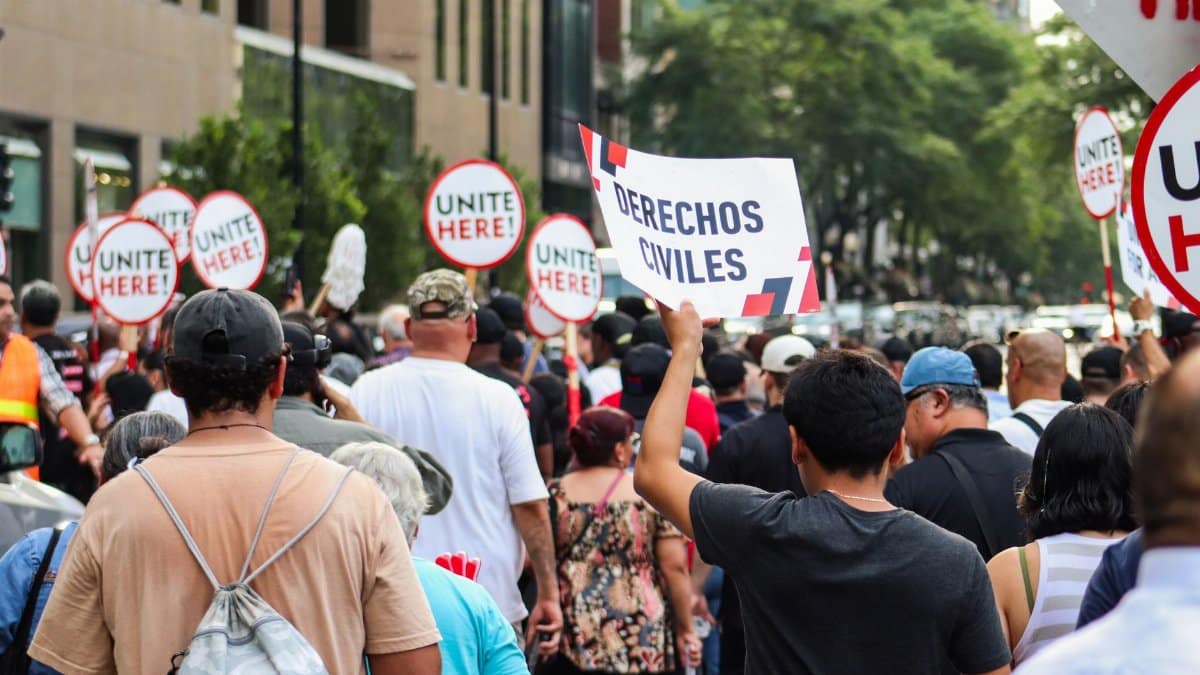
No police commission in this city operates in a sealed room. Aldermen watch. The mayor’s office watches. Unions watch. Activists who spent years fighting for civilian power watch to see whether the structure they won can survive contact with a live controversy. A split over Midway Blitz is therefore never only about one operation. It is about whether oversight will be allowed to inconvenience the political calendar.
There is a temptation, on all sides, to treat the commission as a proxy battlefield. Supporters of aggressive policing hear delay as sabotage. Critics of the department hear caution as capture. Both readings flatten the members, who may be struggling in good faith with incomplete information and with the fear of getting a public fact wrong. Flattening them is easy. It is also how oversight bodies lose the middle they need in order to function.
The record the city still does not have
Whatever one believes about the operation, the city still needs a record. Not a slogan, not a leak, not a stack of competing social media clips. A record: what the objectives were, what units were used, how long the push lasted, what metrics commanders used to call it a success, what complaints arrived, and how those complaints were sorted. Absent that, debate becomes a contest of moods.
Oversight exists to build that record when the department will not volunteer it in full. When the oversight body itself cannot agree to ask, the absence hardens. Historians of this era of Chicago policing will not lack for speeches. They may lack the plain documents that would let a reader judge speeches against facts. That is a civic loss even for people who never attended the meeting.
What a serious follow up would require

A serious follow up does not require the commission to arrive united in condemnation or in praise. It requires a narrower agreement. First, a written list of questions that any reasonable superintendent could answer without a fishing expedition. Second, a date certain for documents, with a public note if the date slips. Third, a hearing format that separates fact finding from speech making, so that members who distrust one another can still share a transcript.
That is unglamorous work. It will not satisfy everyone who wants a reckoning in a single night, and it will not satisfy everyone who wants the subject to fade. It is, however, the kind of work the ordinance imagined. CPD Midway Blitz oversight can still become that work if members treat agreement on process as a victory rather than as a concession. Process, in this setting, is not the enemy of justice. It is the only way a divided body produces something a court, a newsroom, or a family can later check.
The cost of letting the stall stand
If the stall stands, the lesson will not stay inside one agenda. Commanders will learn that a controversial operation can outlast the news cycle if the watchdog cannot bite in concert. Commissioners will learn that ambiguity is safer than a recorded vote. Residents will learn, again, that the distance between a promised forum and an actual answer can be measured in months.
There is a further cost that rarely makes the headline. Officers who did the job within the rules also lose when no clear account is published. A cloud that is never examined does not disperse. It just moves. A department that wants internal discipline and external trust needs the same thing the critics need: a follow up that is specific enough to praise, correct, or refute. Silence serves neither the badge nor the block.
A narrower way through the division

The way through is not a sudden conversion to one camp. It is a decision to shrink the fight. Members who want the superintendent on the record can accept a sequenced inquiry, documents first and testimony on a published date. Members who fear a spectacle can accept that a date, once set, is not a suggestion. The chair can put the sequencing motion in plain language and require a vote, so that delay, if it wins, wins in the open.
Chicago has tried the alternative. It has tried speeches without files, and files without public explanation, and meetings that end with everyone claiming the high ground. The commission was created because those habits were not enough. CPD Midway Blitz oversight will be remembered less for the passion in the room than for whether anyone was willing to turn passion into a calendar, a request, and an answer. Until that happens, the split is not a debate about policing. It is a debate about whether oversight, in practice, is allowed to finish a sentence.