
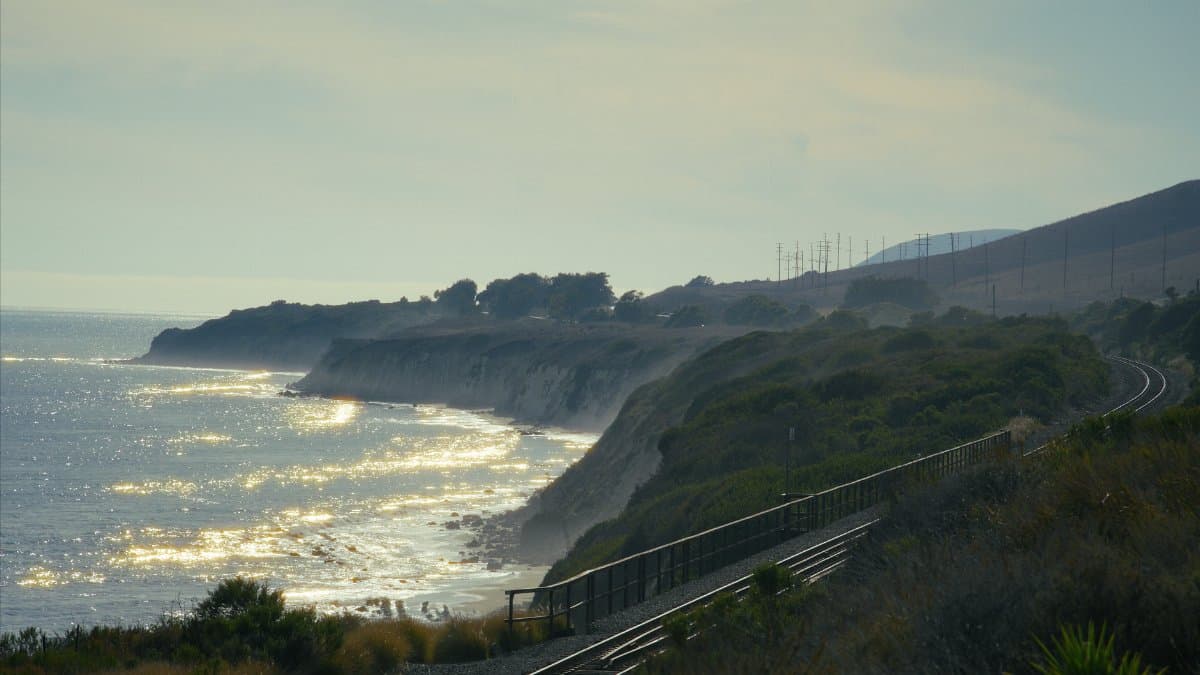
On a bright afternoon the Pacific can look almost gentle from the bluff above San Clemente, a sheet of blue that makes a commute feel like a holiday. Riders on the coastal railroad know the trick. Storm seasons have already pulled sand from beneath the tracks, loosened slopes above them, and forced buses to stand in for trains. Forecasters are warning that a strong El Niño is likely this winter, with heavier surf and saturated ground. For the Pacific Surfliner El Nino is not a distant climate phrase. It is a question of whether the narrow shelf of railroad through Orange County will still carry passengers when the big swells arrive.
A line drawn where the land is already leaving

The Pacific Surfliner is the passenger train that stitches San Diego to Los Angeles and, on its longer runs, continues toward Santa Barbara and San Luis Obispo. For much of that distance the route is ordinary railroad: industrial yards, freeway edges, station platforms with coffee and delayed connections. In southern Orange County the ordinary ends. The tracks drop onto a thin terrace between the town of San Clemente and the open ocean, then thread past cottages, a state beach, and bluffs that have been failing in slow motion for years.
Geologists describe this stretch as a coast in retreat. Waves undercut the toe of the slope. Rain loads the soil above. When both happen in the same season, the terrace that holds the rails can slump, crack, or simply wash out. The railroad was built for a shoreline that no longer matches the one outside the window. Each repair buys time. None of them moves the ocean.
That geography is why a winter forecast matters here more than it does on an inland freeway. A missed connection in Irvine is an inconvenience. A failed embankment in San Clemente is a regional shutdown.
What a strong El Niño usually means for this shore
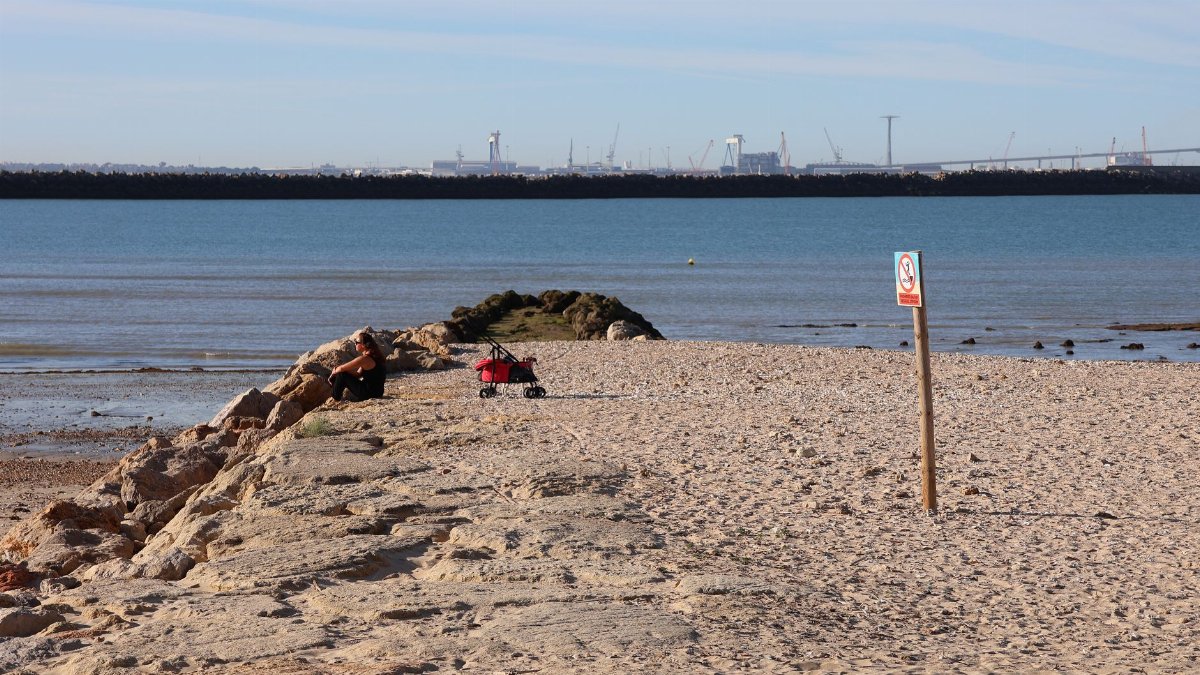
El Niño is a warming of the equatorial Pacific that rearranges storms across the ocean basin. In a strong event, California often sees a juicier storm track, higher surf from distant swells, and a greater chance that atmospheric rivers will stall over the southland. The National Oceanic and Atmospheric Administration explains the pattern in plain language on its climate site, including why some winters run wet while others do not. The page is here: https://www.climate.gov/enso
Reporting on the current outlook has put the chance of a strong event near 97 percent. That figure is a probability, not a promise of a particular storm on a particular week. It does mean planners should assume a harsher coastal winter than the quiet years riders remember between crises. King tides, long period swells, and a week of heavy rain do not have to coincide to cause trouble. Any one of them can be enough if the bluff is already soft.
Residents who walk the beach after a big set know the signs. Cobble replaces sand. Stairways hang over nothing. A new scarp appears at the base of a slope that looked stable in August. Railroad inspectors look for the same evidence with a tape measure and a sense of dread.
Closures that already rewrote the commute
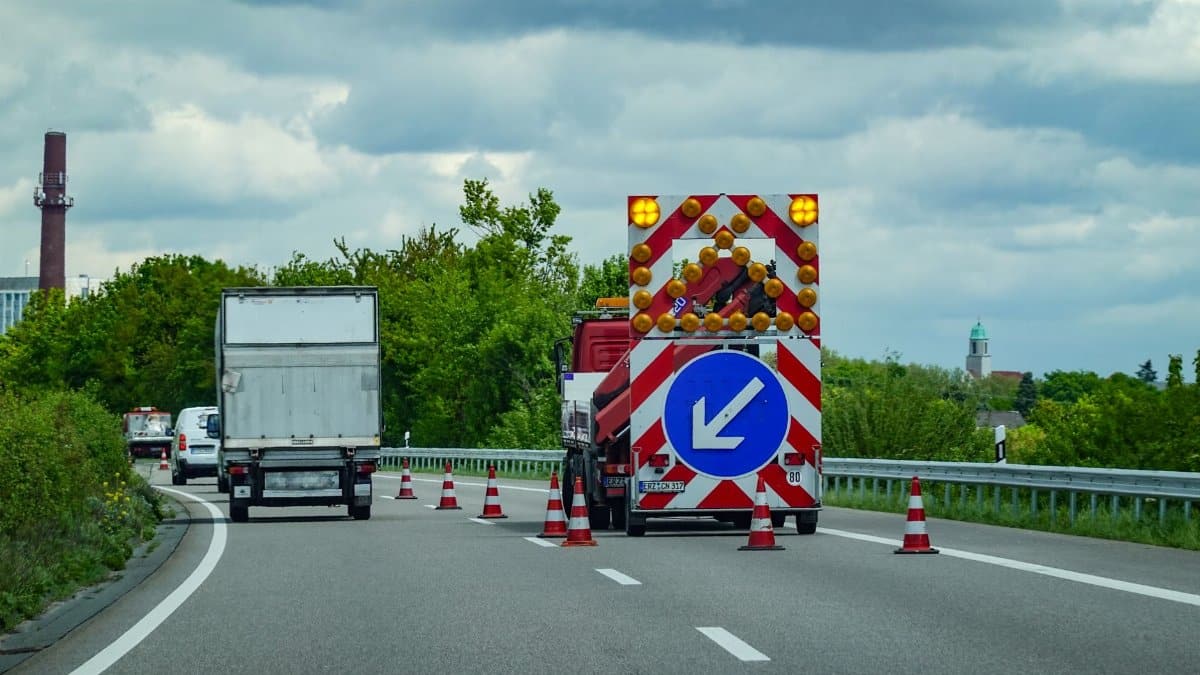
This is not a hypothetical first meeting between the train and the sea. In recent years the San Clemente segment has been shut for weeks and, at times, for much longer after landslides and track bed failures. Passengers were put on buses that crawled along the freeway while crews rebuilt the terrace below. Metrolink service on the shared corridor stopped with the Amtrak trains. Freight movements that use the same rails had to be rerouted or held.
The memory of those months still shapes how people talk about the line. Regulars learned which bus bridges were tolerable and which ones ate an entire evening. Students missed classes. Workers in San Diego and Los Angeles started driving again, then stayed in their cars after the trains returned because trust is slower to repair than ballast. A winter framed by El Niño lands on a public that has already practiced the disruption.
Officials have spent those same years arguing over rock armor, catchment walls, and whether the long term answer is a new alignment away from the water. Construction on a living coast is slow, permitted in pieces, and always racing the next swell.
Riders who built a life around the window
The train is not only a piece of infrastructure. It is how some people chose to live in a region that otherwise demands a car for nearly every errand. Nurses ride north before dawn. Families visit relatives in San Diego without fighting the merge at the county line. Tourists treat the coastal stretch as the point of the ticket, faces turned to the glass when the tracks skim the surf.
When service breaks, the loss is practical and personal at once. A bus bridge can move bodies. It cannot reproduce a seat with a table, a predictable schedule, or the odd civic pleasure of sharing a car with strangers who all decided not to drive. For the Pacific Surfliner El Nino threatens that choice again, not with a policy memo but with water and gravity.
Station agents tend to hear the worry before the official alerts do. People ask whether weekend trips should be booked as refundable fares. They ask whether the beach stops will be the first to go. They ask, more quietly, whether this is the winter the line finally gives up on the cliff.
A corridor shared by passengers and freight
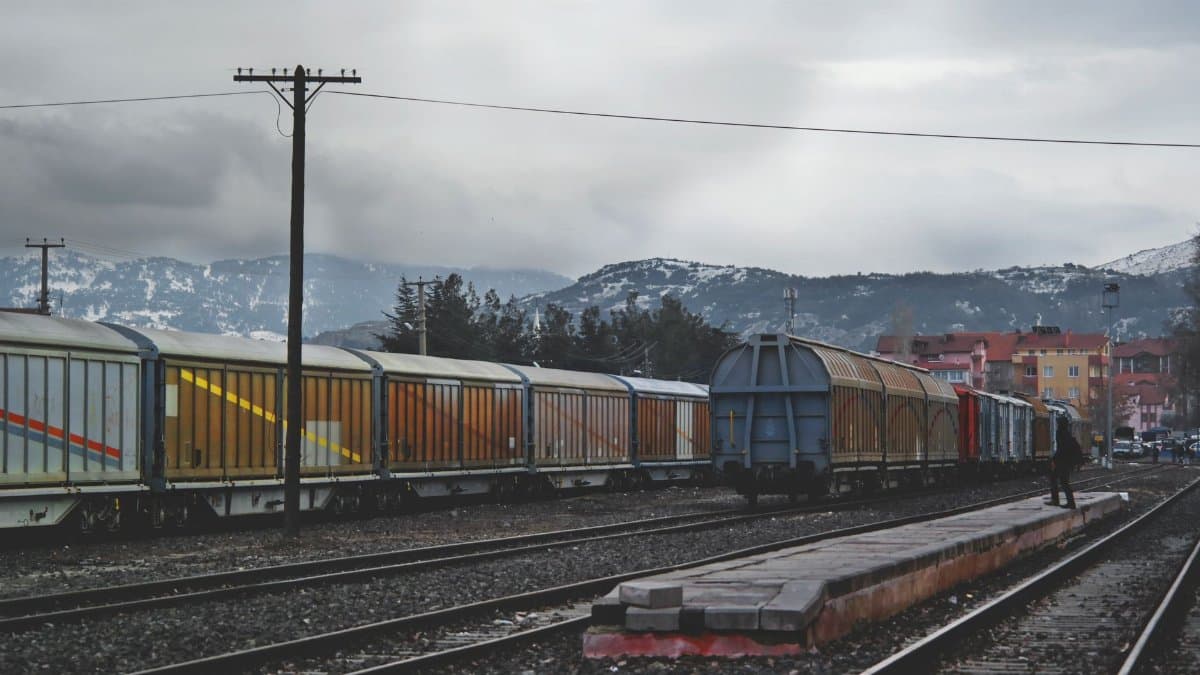
Amtrak does not own the problem alone. The Orange County coast is a shared railroad, used by Metrolink commuter trains and by freight carriers moving goods between the ports and the rest of the country. A closure that looks, from a passenger’s point of view, like a missed Surfliner is also a hole in a freight network that has few parallel routes along this shore.
That shared use is why repairs draw so many agencies into the same narrow work zone. Passenger schedules, freight windows, city streets above the bluff, and a state beach below all have to be negotiated while waves keep working the site. Environmental rules limit how much rock can be dumped into the surf zone. Homeowners above the tracks fear both the slides and the construction that is meant to stop them. Nobody gets a clean win.
The result is a patchwork: emergency rock, temporary walls, speed restrictions, and service plans written in pencil. A strong El Niño does not create that patchwork. It tests how much of it will hold.
Engineering that cannot outrun a season
Engineers have a menu, and none of the items is fast. Rebuilding the track bed in place means working between tides, often at night, with materials hauled in on the same rails that just failed. Adding protection at the toe of the slope can buy years if the ocean cooperates and can look futile after one exceptional winter. Moving the railroad inland would spare the beach and the bluff, but it would also mean new right of way, new bridges, years of design, and a price tag that makes legislators pale.
Climate scientists are clear that sea level is rising and that extreme water levels will reach farther inland over the coming decades. The federal climate assessment summarizes those coastal risks for the broader public: https://nca2023.globalchange.gov/chapter/9/ The San Clemente terrace is a local version of a national argument about what to defend and what to relocate. A single El Niño winter will not settle that argument. It can force the next emergency decision before the long argument is finished.
Until a permanent alignment exists, the honest description of the line is conditional. Trains run if the ground agrees.
How agencies watch a forecast become a work order

Railroad operations staff do not wait for a washout to start planning. They watch buoy readings, tide tables, and rainfall forecasts the way a harbor master watches a bar. When a series of swells lines up with high tides, inspectors increase their walks. When rain is forecast on already saturated slopes, they prepare for speed limits or outright holds. Buses are lined up before the public sees a cancellation, because a stranded train on a failing bluff is the outcome everyone is paid to avoid.
Passengers experience that caution as whiplash. A morning train is listed, then bused, then restored by evening. The Pacific Surfliner El Nino season is likely to produce more of those reversals, not because the railroad is indecisive but because the hazard changes by the tide. A track that passed inspection at noon can show a new crack after a night of surf.
Travelers who depend on the line should treat winter reservations as provisional. That is dull advice. It is also the advice that matches the physics.
The towns above the rails
San Clemente did not ask to become a case study. The tracks predate many of the houses. The beach is a civic living room. When slides close both the railroad and bits of the sand, the town absorbs noise, truck traffic, lost visitors, and a feeling that the map is being edited without consent. Local officials press for protection that keeps the beach usable. Railroad officials press for protection that keeps the rails intact. Those goals overlap and also collide.
There is a quieter stake as well. People walk the pier and the sand because the coast is how this place explains itself. A winter that chews the terrace does not only threaten a timetable. It threatens the ordinary rituals that make a beach town feel continuous with its past. Spiritual language is easy to overuse here, and most residents would not reach for it. They would say they want the stairs to meet the sand, and the evening train to pass on time. Those wants are modest. The ocean is not obligated to honor them.
Money, politics, and the cost of waiting

Every closure has a bill that is larger than the construction invoice. Lost rides, extra bus contracts, freight delays, and the slow leak of riders who do not return all sit outside the bid documents. So does the political cost of explaining, again, why a famous train cannot cross a few miles of its own route. Lawmakers have funded emergency work after past failures. Funding a full relocation is a different order of decision, one that competes with housing, water, and the rest of the state rail program.
Waiting has its own price. Each emergency repair can make the next one slightly harder, as rock and concrete accumulate in a surf zone that was never meant to be a construction yard. Critics of a big inland move argue that the money could protect more people elsewhere. Supporters argue that a railroad which fails every wet winter is not really a railroad. Both sides can point to a winter like the one now forecast and claim vindication in advance.
What a careful winter looks like for passengers
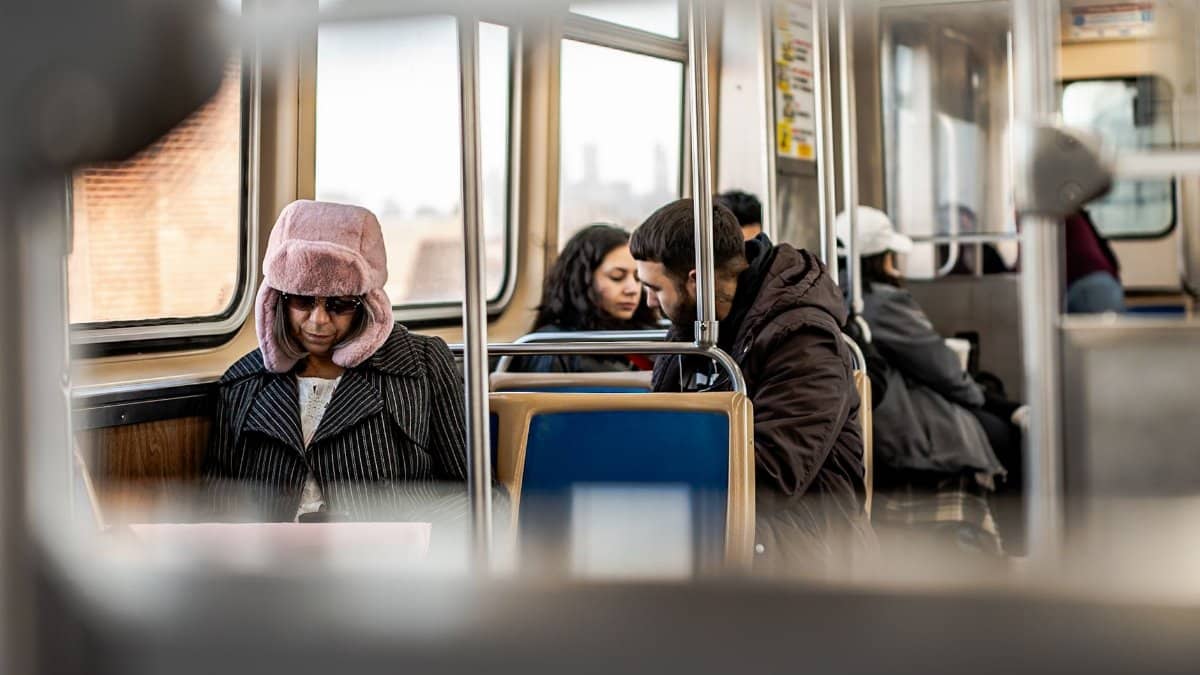
None of this requires panic, and panic would not help. A strong El Niño raises the odds of trouble. It does not schedule a collapse. Riders can still plan trips, especially on segments far from the bluff, and they can build slack into any journey that must cross San Clemente on a storm week. Checking the Amtrak service alerts before leaving home is more useful than refreshing a weather app and guessing. So is knowing the bus bridge in advance, including how long it actually takes when the freeway is ugly.
Employers who rely on staff riding the Surfliner might treat this winter as they treated the last long closure: with flexible start times rather than speeches about resilience. Schools and hospitals already learned that lesson. The rest of the corridor can borrow it without waiting for a formal disaster declaration.
There is also a public habit worth keeping. When the trains are running, ride them. A line that is empty on fair days is easier to abandon on foul ones. The case for spending serious money on a safer alignment is stronger when the railroad is obviously used.
A forecast, a bluff, and an unfinished decision

California has spent a generation learning that the coast is not a fixed edge. Fires, floods, and failing cliffs keep tutoring the same lesson in different counties. The San Clemente tracks are simply one of the places where the lesson has a timetable attached. A 97 percent chance of a strong El Niño does not tell engineers which week will be worst. It tells them that hoping for a gentle season is no longer a plan.
The Pacific Surfliner El Nino story will be written in small operational choices long before it is written in a ribbon cutting for a new route. Inspectors will walk the terrace. Dispatchers will hold trains. Buses will idle in station lots. Some weeks the surf will look worse than it is. Some week it may not. The honest work, for riders and for the agencies that serve them, is to treat the coast as active ground rather than as scenery.
If the winter is kinder than the odds, that will be luck worth taking, not proof that the bluff has finished moving. If it is not kinder, the region already knows the shape of the inconvenience and the shape of the repair. What it still has not settled is whether the next generation of passengers will look out at this same water from these same rails, or from a line that finally stepped back from a shore that will not hold still.